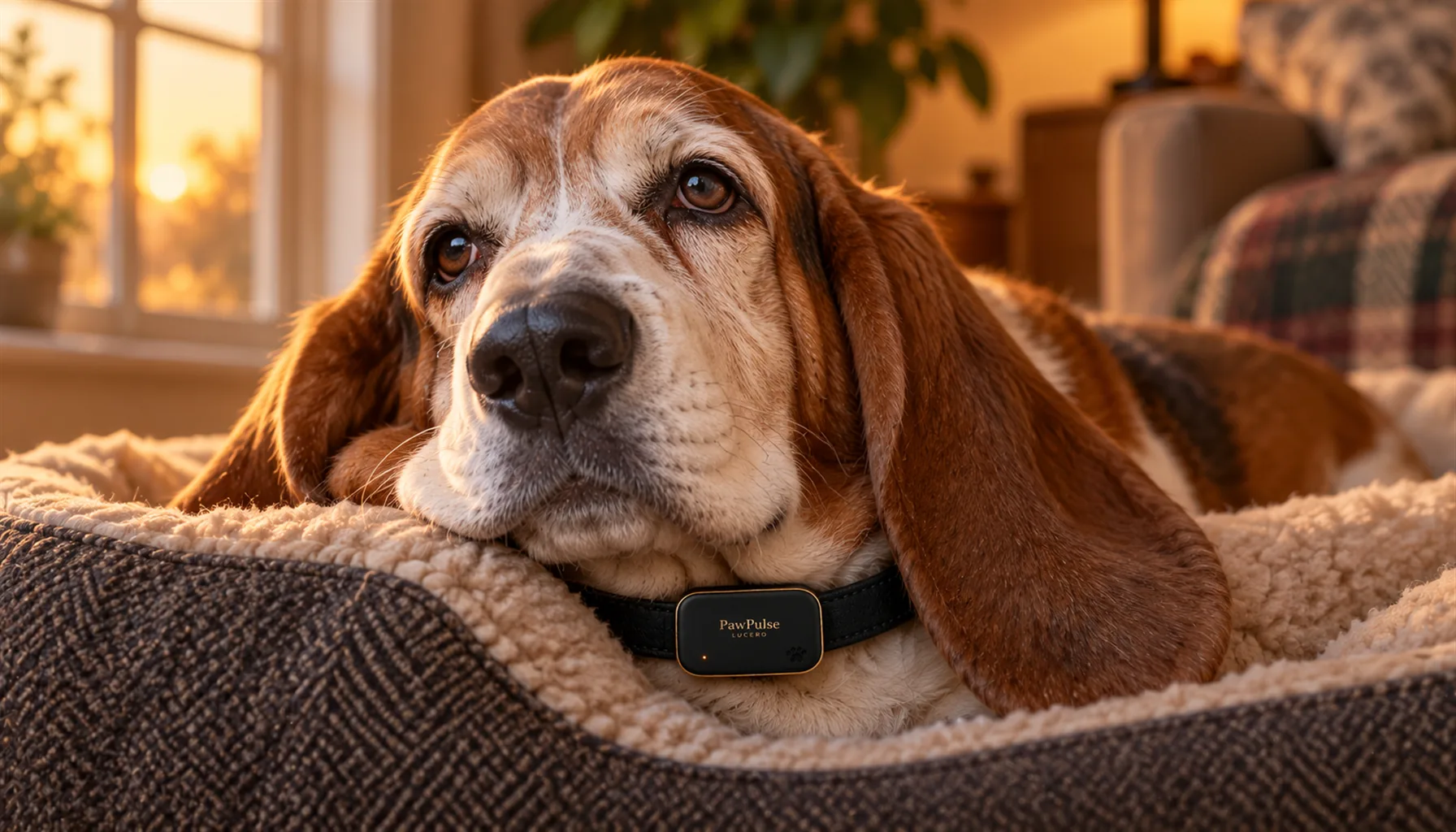
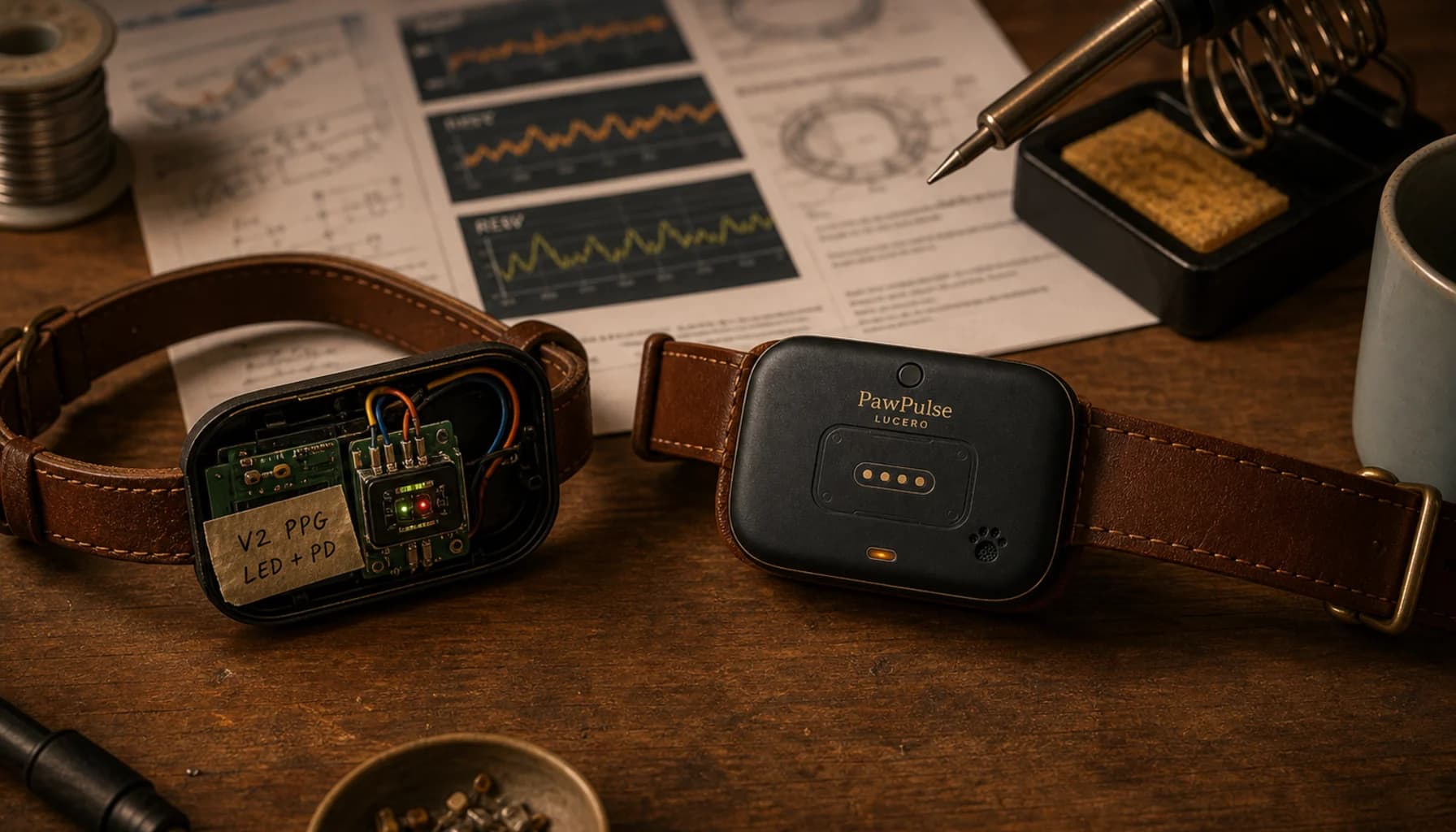
Key takeaway: A virtual fence for dogs does not need to shock anyone. The American Veterinary Society of Animal Behavior (AVSAB, 2021) says aversive tools, including electronic shock collars, should not be used in dog training. An alert-based virtual fence notifies the owner when the dog leaves a set area, so recall and reward-based training do the teaching instead of pain.
Why Are People Rethinking Shock-Based Invisible Fences?
Electronic containment has been around for decades. Bury a wire around the yard, put a receiver collar on the dog, and near the line the collar beeps, then delivers an electric stimulus. Manufacturers call it "static correction." The dog calls it something else.
To be fair, it often works in the narrow sense: many dogs learn to stay back from the line. The question is what they learn along the way. PawPulse is a smart dog collar with contactless heart rate and breathing monitoring, and one of our first decisions about boundaries was that it would never deliver a correction. Here is the evidence that pushed us there, and what we built instead.
What Does the Research Say About Shock and Aversive Training?
The professional consensus is clearer than most product boxes suggest.
The AVSAB Position Statement on Humane Dog Training (2021) recommends reward-based methods for all dog training and names electronic shock collars among the tools trainers should avoid. It lists documented fallout from aversive methods, including increased anxiety, fear-related aggression, avoidance, and learned helplessness, and it states there is no evidence that aversive methods are more effective than reward-based ones in any context.
A 2020 study in PLOS ONE by Vieira de Castro and colleagues followed 92 companion dogs from seven training schools. Dogs trained with aversive methods showed more stress-related behaviors during training, larger post-training rises in salivary cortisol, and a more "pessimistic" response on a cognitive bias test than dogs trained with rewards.
A 2014 PLOS ONE study by Cooper and colleagues compared dogs trained with remote electronic collars to dogs trained with rewards. Owners in both groups reported similar improvement, but the e-collar dogs spent more time tense and yawned more. The authors concluded there was "no consistent benefit to be gained from e-collar training but greater welfare concerns."
Containment systems specifically have a smaller literature, and we want to be honest about that. A 2000 paper by Richard Polsky in the Journal of Applied Animal Welfare Science, summarized by Purdue University's Canine Welfare Science program, described five severe attacks on people by dogs with no notable history of aggression. Every attack happened near the property boundary while the containment system was active. Five cases is not a prevalence study, but it is a pattern worth taking seriously.

Where Do Shock Fences Fall Short in Practice?
Welfare is the big one, but not the only one. Five gaps kept showing up when we looked at buried-wire systems in real yards.
1. The Dog Learns Fear of a Place
The dog is not learning "this is where my yard ends." It is learning "bad things happen over there." Stress signals near the perimeter (lip licking, yawning, pinned ears, hesitation) are the visible part of that lesson. The AVSAB statement notes that fear learned this way can spread to other contexts.
2. A Motivated Dog Runs Through It
A dog in full chase after a deer, or bolting from fireworks, may simply absorb the stimulus and keep going. Now the dog is outside, and coming home means crossing the same line again. The system that let the dog out makes the trip back harder.
3. Nobody Gets Told
A buried wire cannot tell you the dog crossed it. You find out when you look outside and the yard is empty.
4. It Stays in One Yard
The wire lives in the ground at home. It does not come with you to the vacation rental, the campsite, or your parents' house, which are exactly the unfamiliar places where dogs are most likely to wander.
5. It Knows Nothing About Your Dog
A correction collar has one job. It cannot tell you that your dog's resting heart rate has been creeping up or that sleep has been restless all week.
How Does an Alert-Based Virtual Fence Work?
The core idea is to change who the boundary talks to. Instead of a signal that punishes the dog, the boundary becomes a notification for the owner. Here is how we designed it on the PawPulse Lucero smart dog collar:
- You set the area. In the PawPulse app you create a Safe Zone around the space you care about: the yard, a campsite, a friend's property.
- The collar watches its own position. When your dog leaves the Safe Zone, the collar is designed to register the exit.
- Your phone gets the alert. The notification is designed to show where your dog is now, so you are not guessing which way to walk.
- You respond like a trainer, not a jailer. Call your dog back, reward the recall, or go get them. Nothing on the collar hurts.
Away from home, the alert has to travel somehow. Lucero uses cellular where it exists and is designed with satellite-ready backup for places where it does not. Satellite availability depends on carrier support and certification. We wrote about why that matters in the dead zone problem with GPS collars.
| Question | Shock-based invisible fence | Alert-based virtual fence (PawPulse Lucero) |
|---|
| What happens at the boundary? | Electric stimulus to the dog | Notification to the owner |
| What does the dog experience? | Discomfort or pain, by design | Nothing from the collar |
| Do you know the dog left? | No | Yes, with current location |
| If a motivated dog crosses anyway? | Dog is outside and the line discourages return | You still get the alert and can respond |
| Does it travel? | No, the wire stays buried at home | Yes, set a new Safe Zone wherever you are |
| Off-grid alerts? | Not applicable | Designed with satellite-ready backup |
| Health insight included? | No | Heart rate, HRV, breathing, sleep, and activity trends |
Where Does a Virtual Fence Help the Most?
The unfenced yard. You rent, your HOA does not allow fences, or the property is simply too big to fence. A Safe Zone is designed to give you a heads-up without digging anything.
The campsite. Dispersed camping usually means no fences and no cell signal. A boundary around camp, with an alert path that does not depend only on cellular, means you hear about it while your dog is still close. If you hike with your dog, our post on what most owners get wrong about hiking safety covers the rest of the checklist.
The unfamiliar rental. New smells, unknown gaps in the hedge, no idea where the property line is. Setting a Safe Zone takes a minute and needs no permission from the landlord.
Different rules for different spaces. A buried loop gives you one boundary. Software can give you several that you switch on and off as needed.
How Accurate Is a Virtual Fence Compared With a Buried Wire?
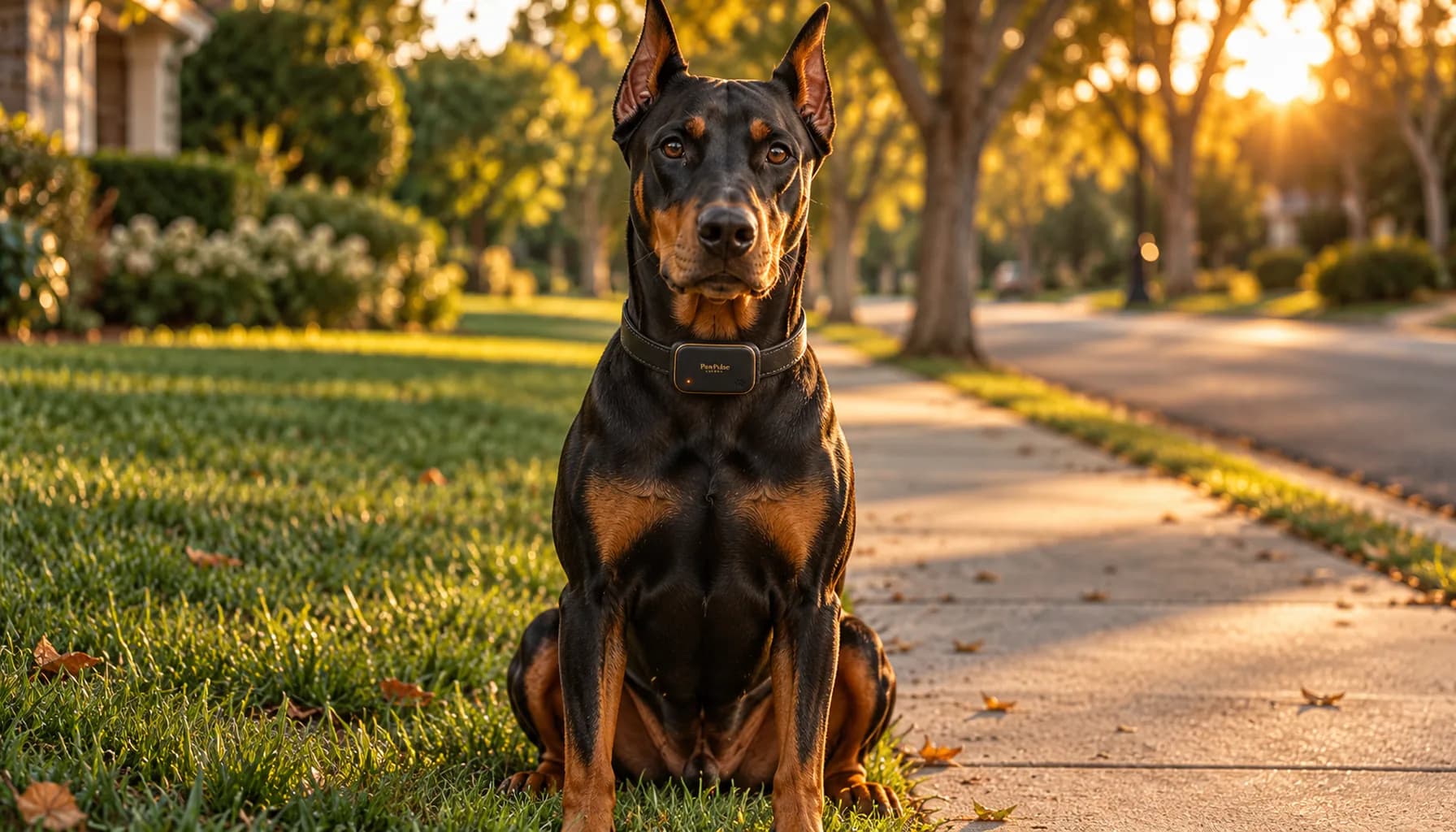
This is the honest trade-off. A buried wire puts the trigger at a fixed physical line. Satellite positioning is very good but not perfect: GPS.gov notes that GPS-enabled smartphones are typically accurate to within 4.9 meters (16 feet) under open sky, and that accuracy worsens near buildings, bridges, and trees.
So draw a Safe Zone with a little margin rather than tracing the exact property line. For a system whose job is to tell a person, not to punish a dog, a few meters of tolerance is a reasonable price. A false alert costs you a glance at your phone. A misplaced shock costs your dog something real.
How Do You Teach Boundaries Without a Shock Collar?
The alert tells you when to act. Training is what makes the alert rare. A simple reward-based plan looks like this:
- Walk the edge on leash. Several short sessions a day, walking the boundary and rewarding your dog for checking in with you near it.
- Mark the line visually. Flags or a garden border give your dog a landmark, the same way invisible fence trainers use flags, minus the stimulus.
- Build a rock-solid recall. Practice in the yard with high-value treats, then add distractions slowly. Recall is what you use when the alert arrives.
- Reward staying, not just returning. When your dog notices something beyond the line and stays in, that is the moment to celebrate.
- Supervise early. Alerts are a safety net, not a babysitter, especially in the first weeks or in a new place.
For dogs who already associate the edge of the yard with stress, perhaps from a previous shock fence, go slower. Pulse Rhythm is the calming feature built into Lucero, and a session is designed to be started manually from the app while you work near the boundary, pairing it with treats so the edge of the yard starts to mean something better. If your dog's anxiety is broader than the yard, our post on separation anxiety in dogs goes deeper, and a veterinary behaviorist is the right call for serious cases.

A containment system should keep your dog safe without making the edge of home a scary place. From the porch, a shock fence and an alert-based fence can look the same. From your dog's point of view, they are not.
Frequently Asked Questions
Are shock-based invisible fences bad for dogs?
Professional bodies advise against them. The AVSAB 2021 position statement says electronic shock collars should be avoided and links aversive methods to anxiety, fear-related aggression, and avoidance. A 2020 PLOS ONE study found more stress behaviors and higher cortisol rises in aversively trained dogs. Reward-based training achieves the same goals without those costs.
How does a virtual fence work without shocking the dog?
The boundary sends a message to you instead of a stimulus to your dog. You set a Safe Zone in the app, the collar is designed to register when your dog leaves it, and your phone is designed to show an alert with your dog's current location. You then call your dog back or go get them, and reward the return.
Does a virtual fence work without cell service?
It depends on the collar. Most location collars rely on cellular, so alerts stall in dead zones. PawPulse Lucero is designed with satellite-ready backup so boundary alerts can still reach you off-grid, though satellite messages arrive on the next available pass rather than instantly. Satellite availability depends on carrier support and certification.
How accurate is a GPS dog fence?
Less precise than a buried wire. GPS.gov says GPS-enabled smartphones are typically accurate to within 4.9 meters (16 feet) under open sky, with accuracy worse near buildings and trees. Draw your boundary with a few meters of margin and treat each alert as a prompt to check, not an exact line crossing.
Can I set more than one boundary?
Yes, with software-based fences that is one of the main advantages. You can create separate zones for the yard, a campsite, or a relative's house and switch them on or off as plans change. A buried-wire system gives you one fixed loop that stays at a single address.
My dog was trained on a shock fence. Can I switch to an alert-based fence?
Yes, and many dogs benefit from the change. Remove the correction collar, keep the old flags as visual landmarks, and retrain the boundary with treats and recall practice. Go slowly near the edge if your dog shows stress there, and ask your veterinarian or a veterinary behaviorist for help if fear persists.
Learn more about PawPulse Lucero, the smart dog collar with shock-free Safe Zone alerts, contactless heart rate and breathing monitoring, and built-in Pulse Rhythm for the moments boundary training meets nerves.
-- The PawPulse Team