Key takeaway: To check a dog's pulse, press two fingers gently on the inside of the back leg where it meets the body, over the femoral artery, and count the beats for a full minute while your dog is calm. The Merck Veterinary Manual (updated 2024) lists a resting heart rate of 70 to 120 beats per minute for dogs, but your own dog's normal matters most.
Why a Pulse Count Is Worth Learning
Most of us never touch a dog's pulse until something feels wrong. That is the worst moment to learn a new skill: your hands are shaking, your dog is moving, and you have no idea what number to expect.
Learn it on a quiet evening instead. Find the spot once, count a few times, write the number down. Next time you are worried, you already know where to put your fingers and what normal feels like for your dog. The VCA Pet Emergency Care Handbook (VCA Northwest Veterinary Specialists, 2011) tells owners to practice counting when their pet is at rest "so you know what is normal" for them.
We are the team behind PawPulse, which makes Lucero, a smart dog collar designed to measure heart rate and breathing through fur without touching the skin. Building a heart rate sensor for dogs teaches you quickly how much one dog's numbers move across a day, which is why this guide spends as much time on when to count as on how. This is owner education, not veterinary advice.
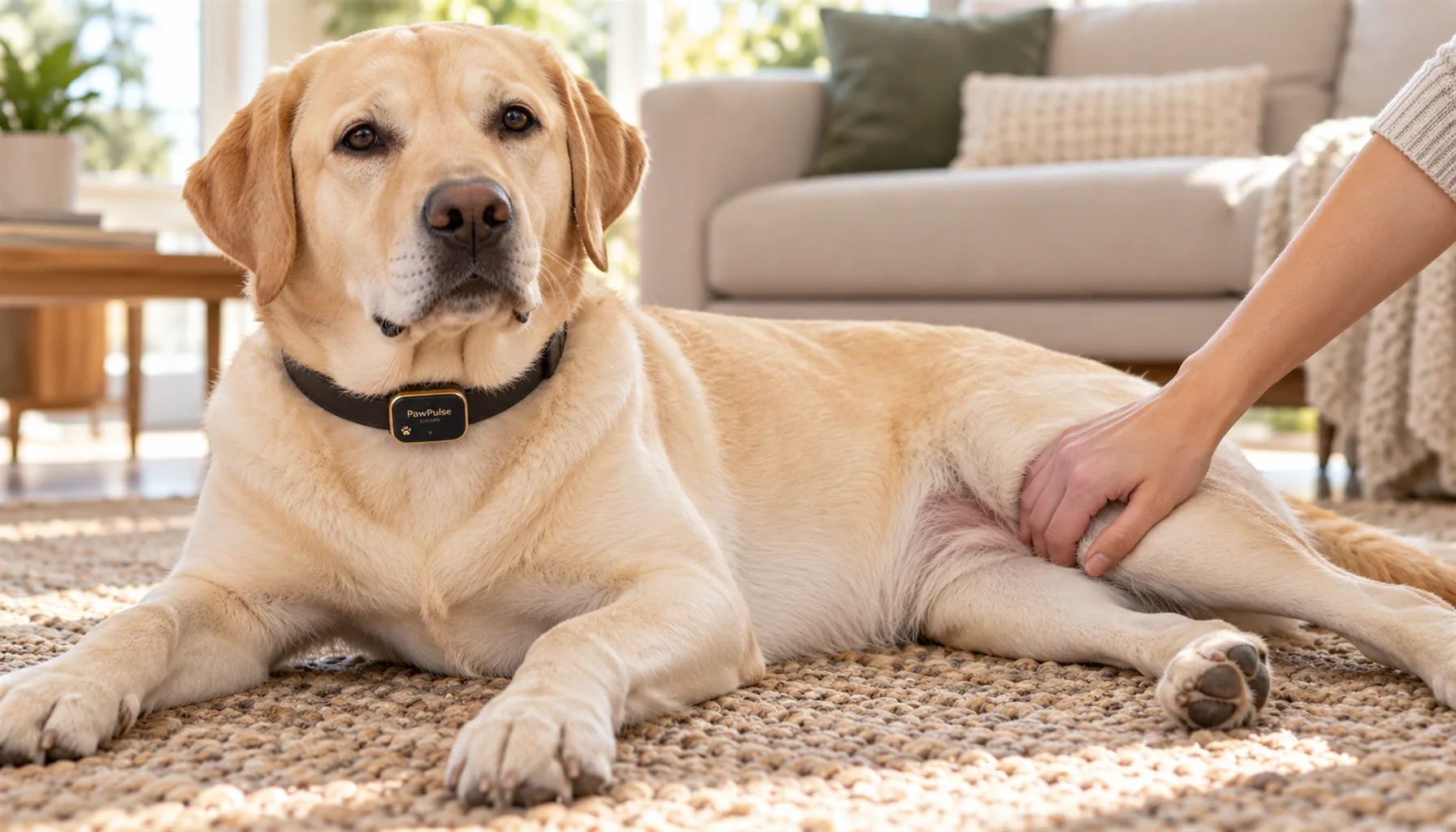
Where Is a Dog's Pulse?
The easiest place to feel a dog's pulse is the femoral artery, on the inside of the back leg. The Merck Veterinary Manual (Kittleson, updated 2025) notes that in dogs "the arterial pulse is typically palpated at the femoral artery," which is also where your vet checks it.
You can also feel the heartbeat itself on the chest. In her pet first-aid guide for Pet Poison Helpline (Dr. Justine Lee, DACVECC, 2013), emergency specialist Dr. Justine Lee describes two options: hands on both sides of the chest just behind the elbows, or two fingers on the inside of the thigh near where the leg meets the body.
| Method | Where to feel | Best for | Watch out for |
|---|
| Femoral pulse | Inside of the back leg, in the groove where the thigh meets the body | Most dogs, lying on their side | Pressing too hard can flatten the pulse |
| Chest heartbeat | Left side of the chest, just behind the elbow, with your palm flat | Small dogs, deep-chested dogs, or when the leg pulse is hard to find | Breathing movement can feel like beats |
| Both at once | One hand on the chest, two fingers on the thigh | Checking that every heartbeat reaches the leg | Needs a very calm dog, or a second person |
How to Check a Dog's Pulse, Step by Step
- Pick a calm moment. Wait until your dog has rested quietly for at least 10 minutes. A count right after a walk or a doorbell tells you about the walk, not your dog's resting heart.
- Get your dog lying on its side on a familiar bed or rug. Sit behind them, not over their face.
- Find the groove. Slide your hand down the inside of the upper back leg toward the body. Near the top of the thigh is a shallow channel between the muscles. The femoral artery runs there.
- Use two fingers, not your thumb. Your thumb has its own noticeable pulse, which can confuse the count.
- Press lightly, then adjust. Move a few millimeters at a time until you feel a soft, regular push. If it disappears, you are pressing too hard.
- Count for a full minute. Counting for 15 seconds and multiplying by four, as the Pet Poison Helpline guide suggests, works in a hurry. The VCA handbook counts for one minute, which is more forgiving when the rhythm speeds up and slows down (more on that below).
- Write it down with the time and what your dog was doing beforehand. One number is a snapshot. Five calm evenings start to show you your dog's normal.
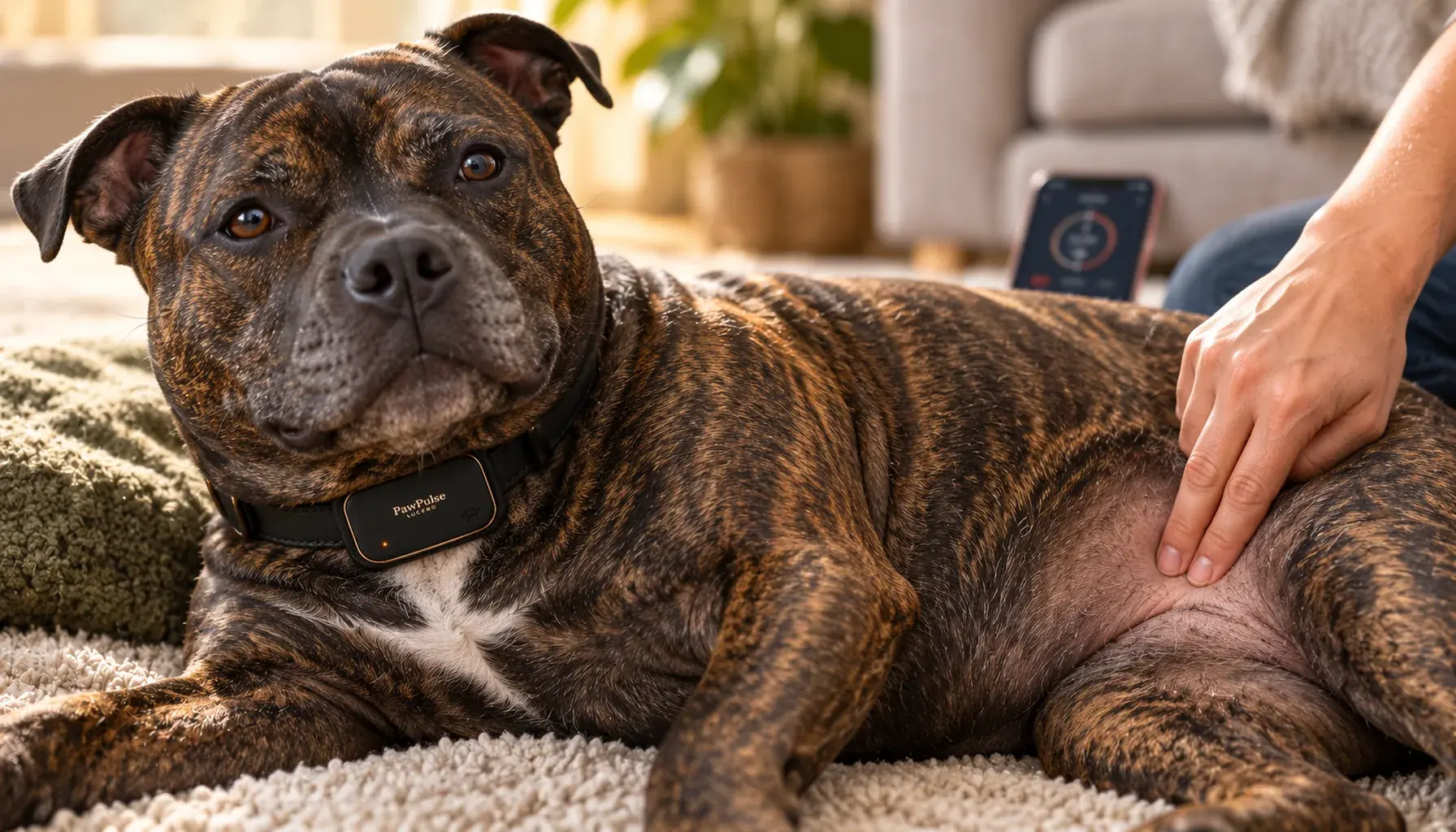
What Is a Normal Pulse for a Resting Dog?
Sources broadly agree but do not use identical numbers, which is normal for population reference ranges.
| Source | Resting dog heart rate | Notes |
|---|
| Merck Veterinary Manual (Fielder, updated 2024) | 70 to 120 bpm | Single range for dogs |
| VCA Pet Emergency Care Handbook (2011) | 80 to 120 bpm | "Rates can be higher in puppies and small dogs" |
| Pet Poison Helpline (Lee, 2013) | 70 to 140 bpm small and medium dogs; 50 to 120 bpm larger dogs | Splits by size |
The takeaway: small dogs and puppies tend to run faster, large dogs slower, and every range is a starting point. Ranges vary by dog, and your vet can tell you what to expect for yours.
That is why the most useful number is your dog's own resting average. We went deeper on this in how AI learns your dog's normal so it can spot abnormal: the same reading can be routine for one dog and unusual for another.
Getting a True Resting Number
Excitement, play, heat, a visitor and even your hands on their leg can push a dog's heart rate up for a while. A few habits make your counts comparable:
- Same time, same place, after the same kind of quiet stretch.
- Let your dog get used to it. Rest your hand on the leg for a minute before you start counting.
- Skip the post-walk count unless you are deliberately checking recovery.
- Count more than once. If two counts disagree by a lot, take a third and use the middle value.
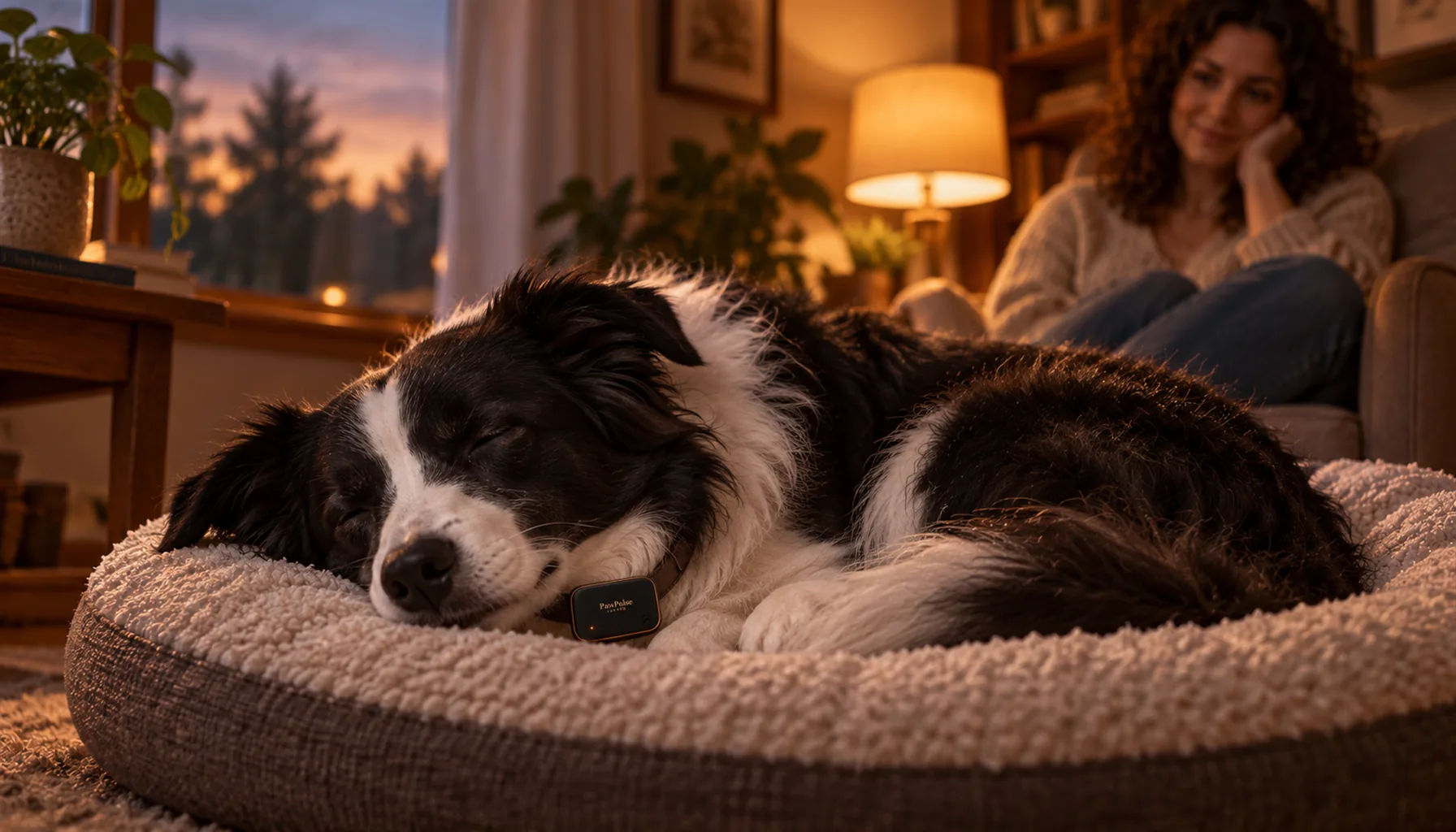
Why Does My Dog's Pulse Feel Irregular?
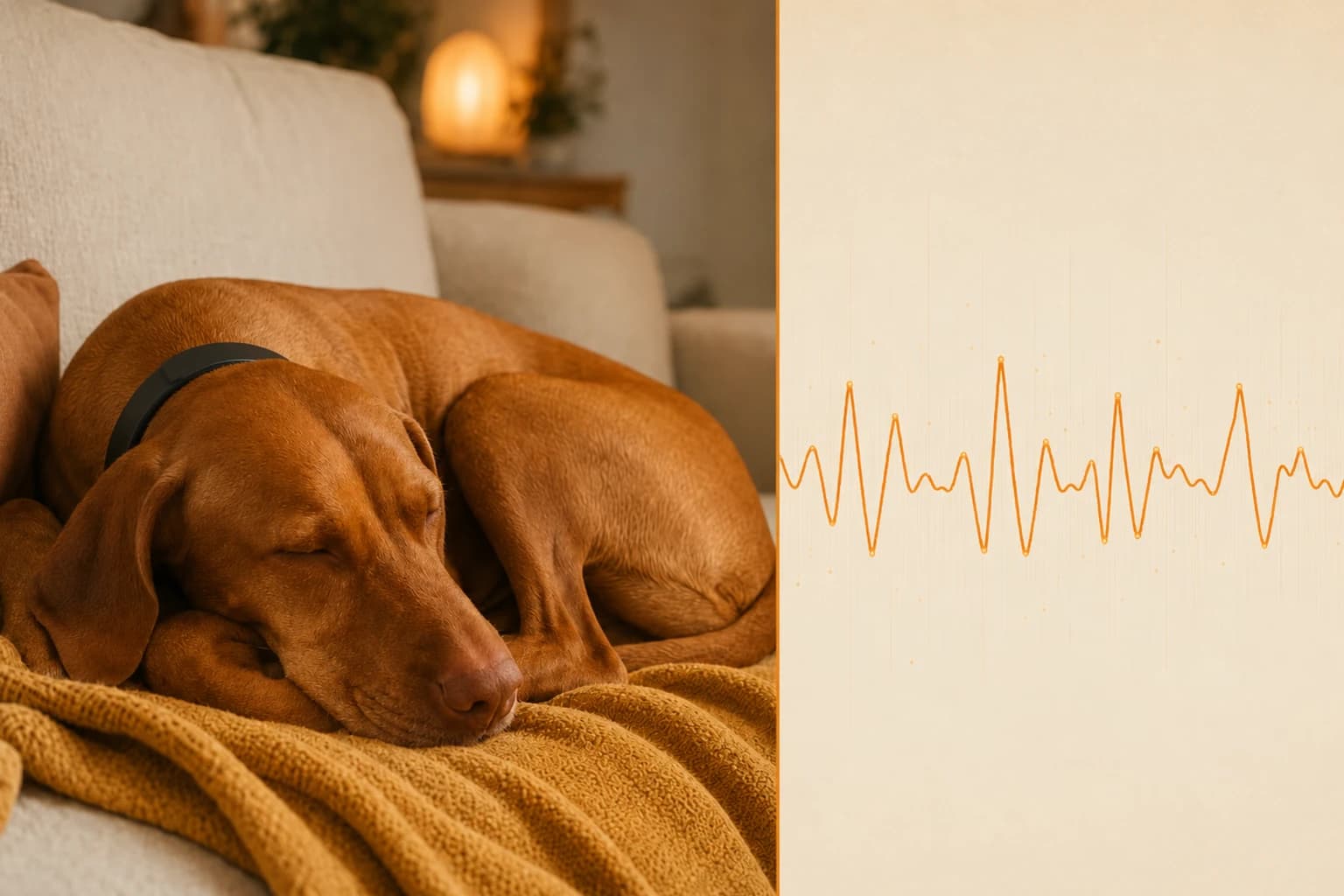
First-time counters are often surprised to feel the beats speed up, slow down, then speed up again. In many dogs that is normal.
The Merck Veterinary Manual (Kittleson, updated 2025) states that "sinus arrhythmia is a normal finding in dogs" and explains that the respiratory form is "an increase in heart rate with inspiration and a decrease with expiration." Watch the chest while you count. If the speeding up matches each breath in and the slowing down each breath out, you are most likely feeling this normal pattern, and a full minute will give a steadier number than 15 seconds. We cover the bigger picture of beat-to-beat variation in our post on heart rate variability in dogs.
What is not normal is a rhythm that is chaotic with no link to breathing, long pauses, or beats you hear on the chest that never show up in the leg. Merck defines that last one as a pulse deficit: "an absent pulse despite auscultation of a heartbeat." You do not need to sort these out at home. If the rhythm feels erratic rather than breath-linked, tell your vet.
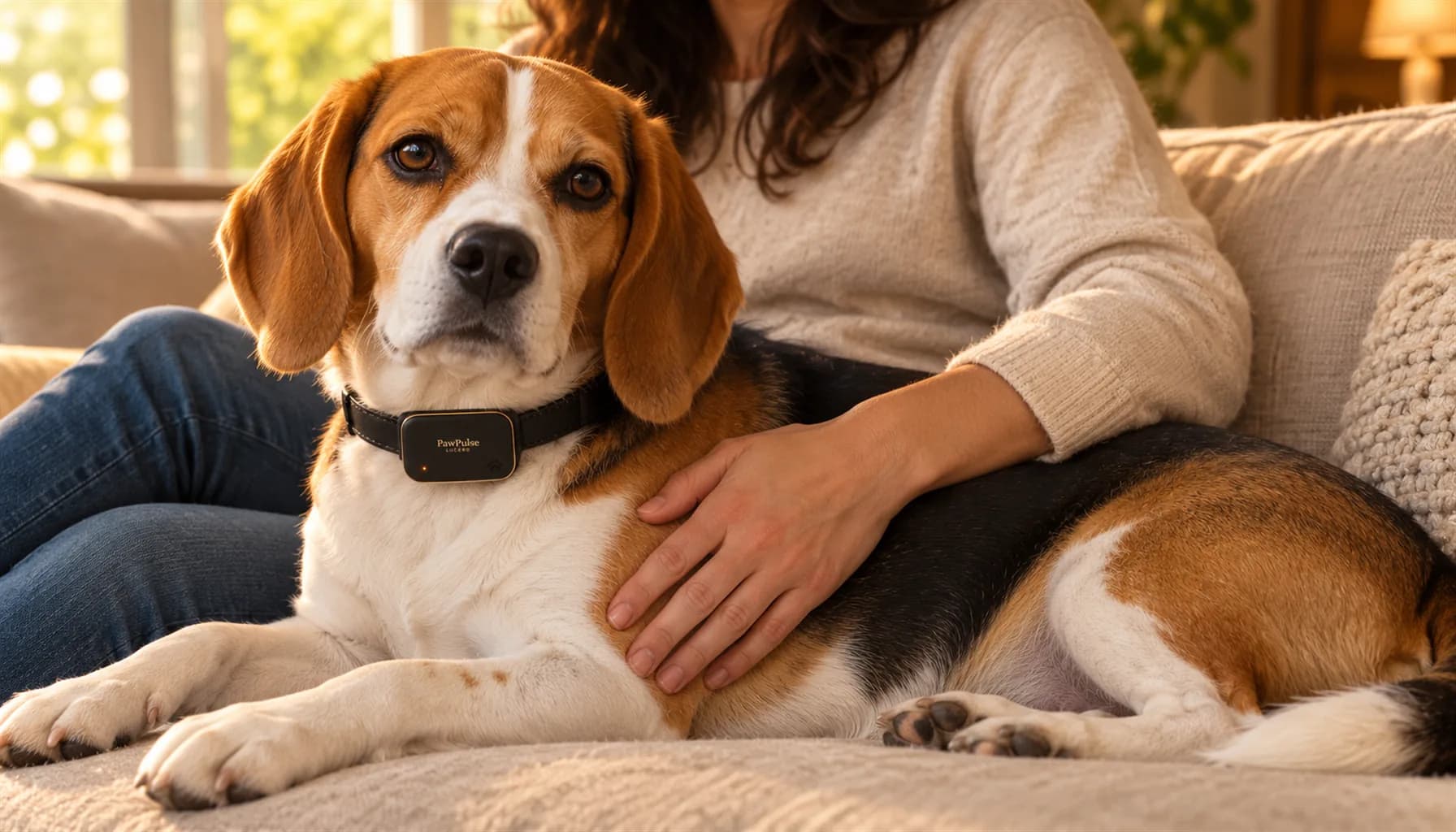
Why Can't I Feel My Dog's Pulse?
In a healthy, relaxed dog the usual culprits are technique: pressing too hard (the femoral pulse is soft), a spot too low on the thigh, thick fur or extra padding (try the chest instead), or a dog that is still wiggling. If your dog is otherwise acting normally, practice another day. If your dog is weak, collapsed or has pale gums and you cannot find a pulse, do not keep searching. Go to a vet.
When to Call Your Vet
These thresholds come from the sources above and are deliberately conservative. If your vet gives you different numbers for your dog, theirs take priority.
Seek veterinary care immediately if your dog shows any of the signs the VCA handbook lists as a cardiac emergency: collapse, weakness, bluish or gray gums, a rapid or slow heart rate, an increased breathing rate, coughing, or difficulty breathing. The same handbook notes that white, lavender, gray or blue gums mean a pet "is not circulating blood adequately," and that poor or absent pulses are a warning sign of their own. Do not wait to recount.
Call your vet the same day if a resting count, repeated after your dog has been calm for 10 minutes, is clearly outside the published ranges or clearly different from your dog's usual resting number, or if the rhythm feels erratic and does not follow breathing.
Mention it at the next visit if your counts are drifting slowly over weeks, even within the normal range. Bring your log. Our post on what your vet wishes you would bring to every appointment covers how to make that kind of record useful.
Where a Collar Fits In
A hand count is a good snapshot, but you only take it when you think to, usually when your dog is awake and watching you.
That is the gap we designed PawPulse Lucero for. Its Kinetic sensing is designed to measure heart rate and breathing through fur without touching the skin, so resting trends build up without anyone holding a leg. PawPulse Lucero gives you trends and context to share with your vet. It does not replace counting or your vet, and it is not a medical device. Learn the hand count anyway. It is free and takes a minute.
Frequently Asked Questions
Where is the easiest place to find a dog's pulse?
The femoral artery on the inside of the back leg is the easiest spot for most dogs. Lay your dog on its side, slide two fingers into the groove where the thigh meets the body, and press lightly. Veterinarians check the pulse in the same place. For small dogs, the heartbeat behind the left elbow is often easier.
How long should I count a dog's pulse?
A full minute gives the most reliable resting number, especially because many dogs' heart rates speed up and slow down with each breath. If you are in a hurry, count for 15 seconds and multiply by four. Whichever you choose, use the same method every time so your counts are comparable.
What is a normal pulse for a resting dog?
The Merck Veterinary Manual lists 70 to 120 beats per minute for a resting dog. Other veterinary sources give slightly wider ranges, with small dogs and puppies often running faster and large dogs slower. Ranges vary by dog, so the most useful benchmark is your own dog's calm, repeated average.
Why does my dog's heartbeat speed up and slow down?
In many dogs this is respiratory sinus arrhythmia, which the Merck Veterinary Manual describes as a normal finding: heart rate rises when the dog breathes in and falls when it breathes out. If the changes follow breathing, that is usually expected. A chaotic rhythm unrelated to breathing is worth mentioning to your vet.
Should my dog's pulse and heartbeat match?
Yes. Each heartbeat you feel on the chest should produce a pulse in the leg. A heartbeat with no matching pulse is called a pulse deficit, and Merck lists it as something vets check for during a heart exam. It is hard to judge alone, so if you suspect a mismatch, ask your vet to check.
Can I check a puppy's pulse the same way?
Yes, the femoral and chest methods work for puppies too, though they wriggle more. Expect a faster rate: the VCA handbook notes that heart rates can be higher in puppies and small dogs. Count while the puppy is drowsy, and ask your vet what range to expect at each age.
Learn more about PawPulse Lucero and the Kinetic sensing technology behind it, designed to measure heart rate and breathing through fur without touching the skin, so you have trends and context to share with your vet.
-- The PawPulse Team