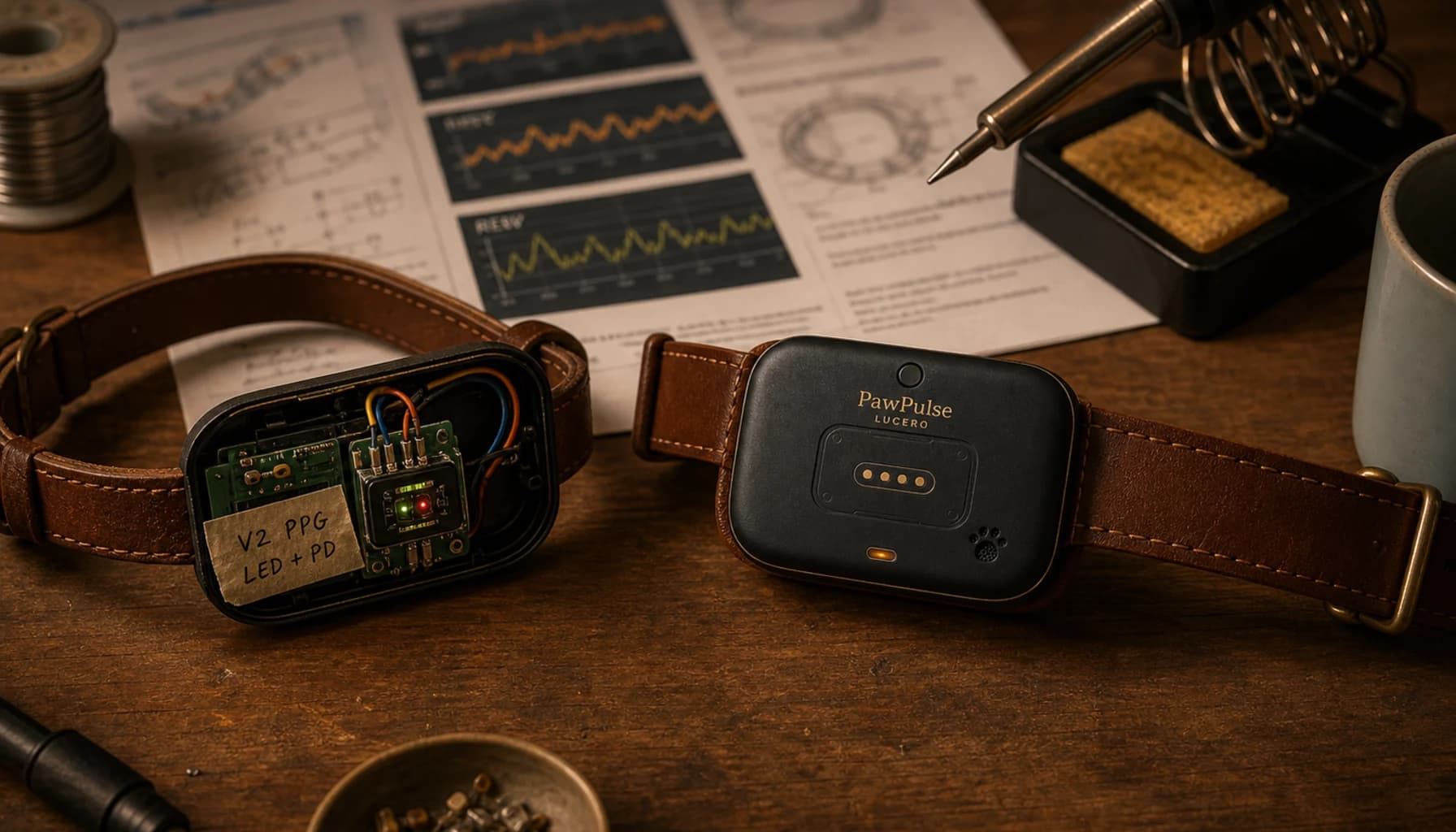
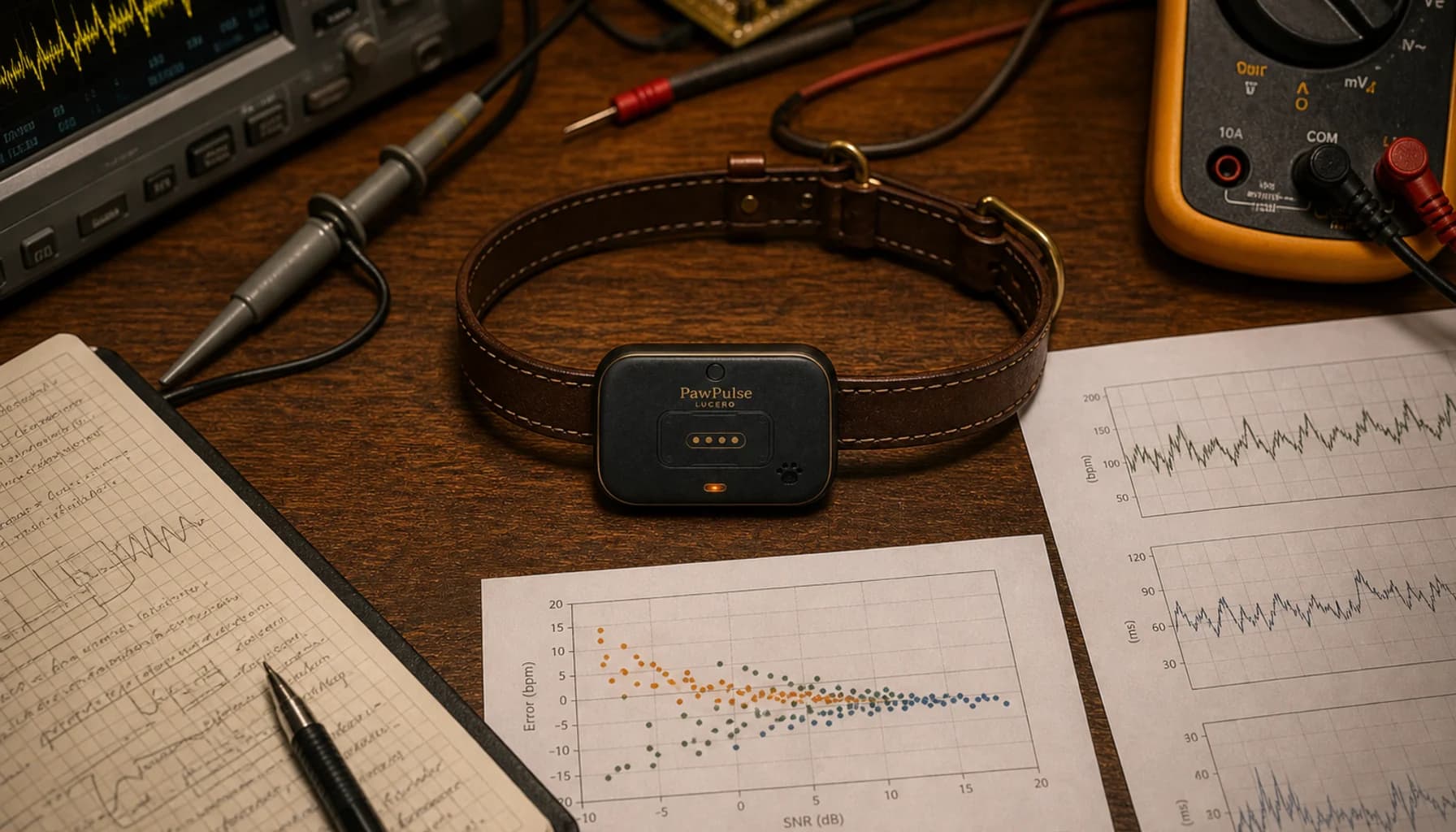
Key takeaway: PawPulse originally prototyped with PPG optical sensors - the same tech in every human fitness tracker and every competing pet wearable on the market. After months of testing across 15 dog breeds and 6 cat breeds, PPG returned usable heart rate data less than 30% of the time on medium and long-coated breeds. We ripped it out entirely and rebuilt around Kinetic sensing, our millimeter-wave radar approach that works on every coat, regardless of fur length or color.
We Tried the Easy Path. It Didn't Work.
Every smart collar startup starts the same way: slap a PPG sensor on it and call it a health monitor. Makes sense on paper. PPG (that little green light on the bottom of your Apple Watch) is cheap, proven, and the supply chain practically runs itself. Human fitness trackers have used it for over a decade, and the components cost pennies. If you want to ship a pet wearable fast and cheap, PPG is the obvious play.
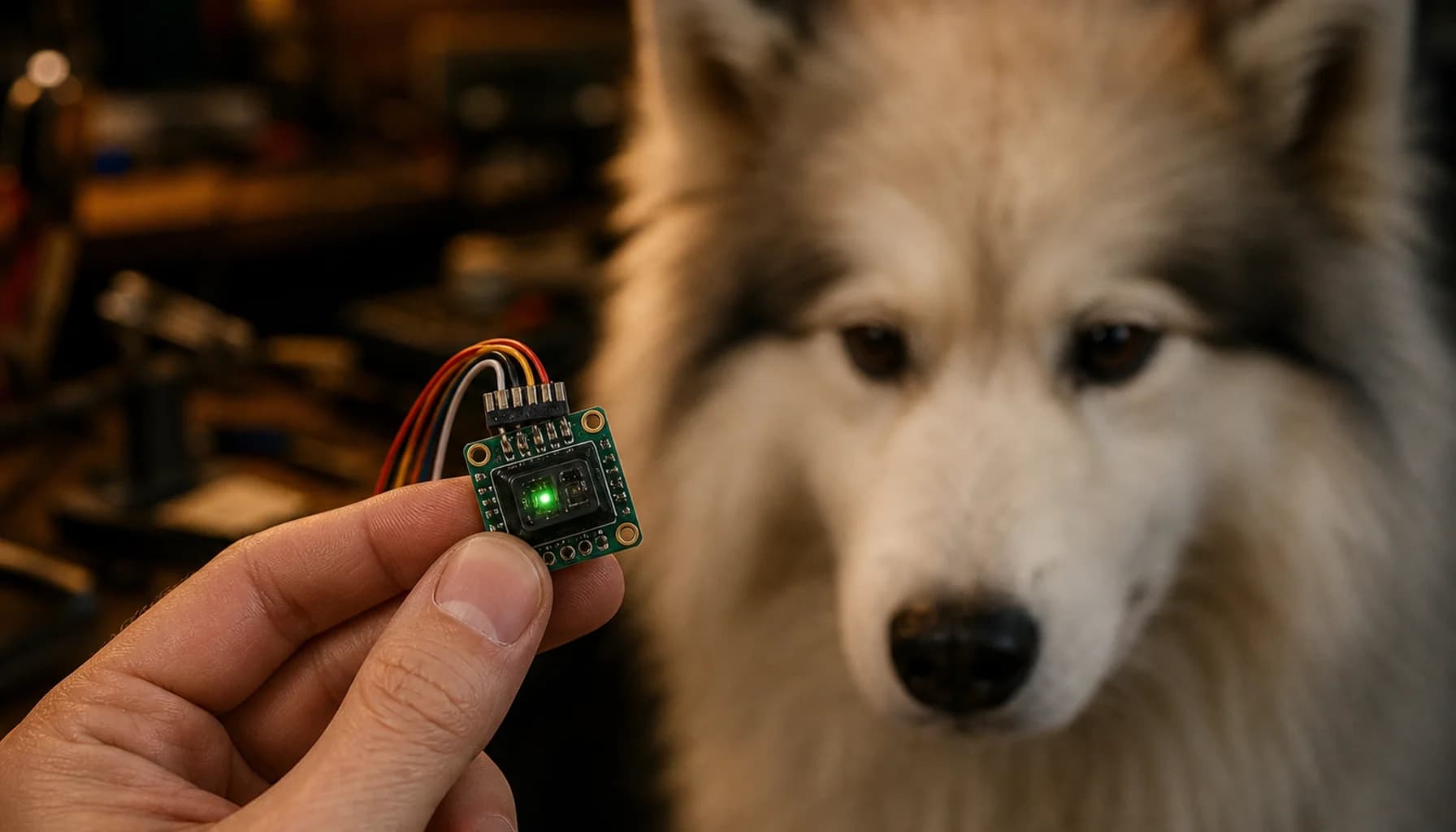
We made the exact same bet. Our first three prototypes had green-light PPG sensors pressed against the underside of the collar, right up against the dog's neck. Seemed brilliant.
And honestly? On a short-haired Boxer sitting still in our lab, the data looked amazing. Clean waveforms, rock-solid heart rate readings, textbook signal quality. We high-fived. We moved forward. We started planning production.
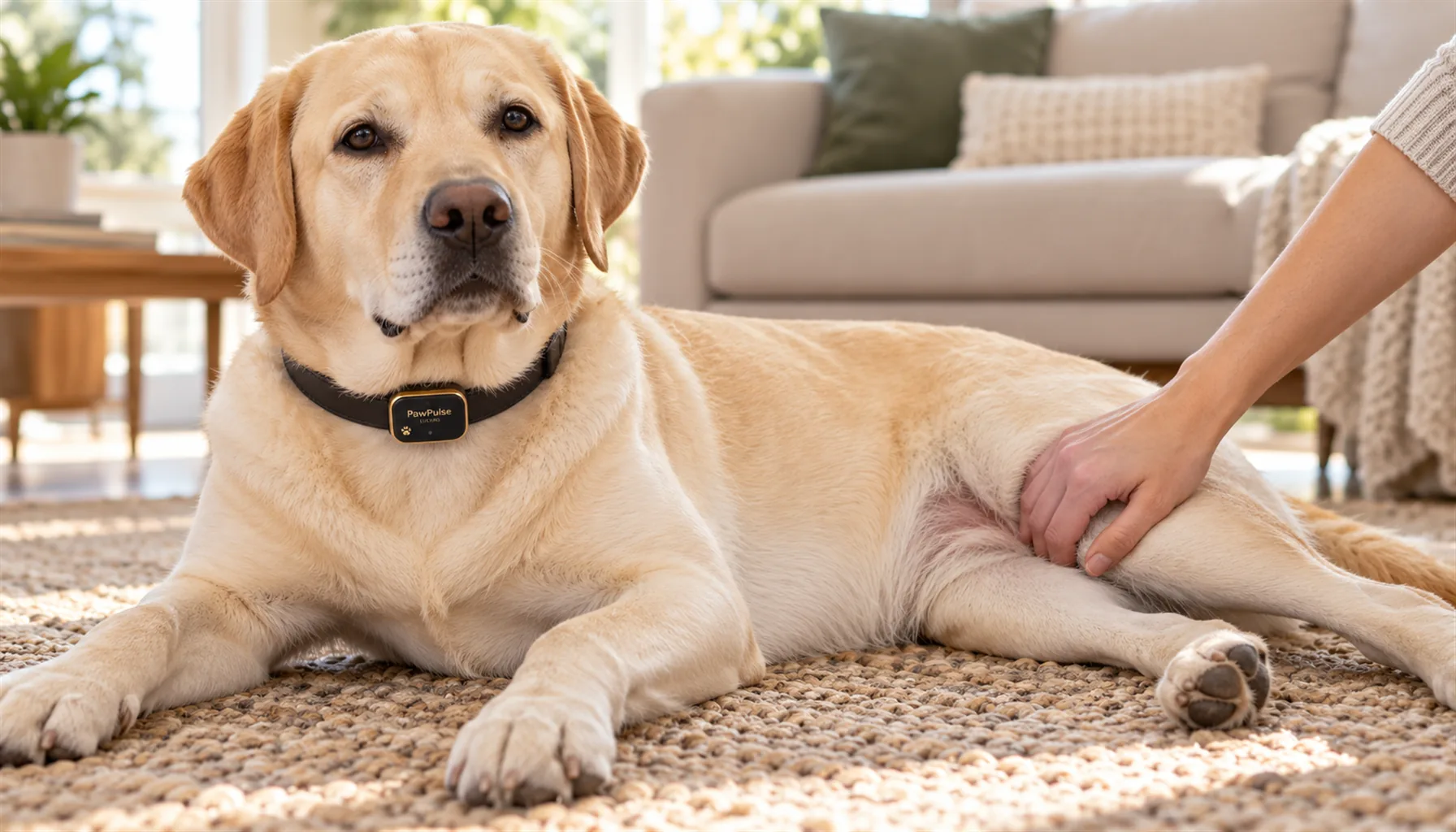
Then we strapped it on a Golden Retriever. Then a Husky. Then a Maine Coon.
And the whole thing fell apart.
Five Reasons PPG Was a Total Bust for Our Dogs
We didn't yank the optical sensor on a whim. We spent months documenting every way it failed in the real world. Here is what we found.
1. Fur Blocks the Light (The Big One)
PPG works by shining an LED into tissue and measuring the light that bounces back. The signal depends on photons reaching blood vessels and returning to the detector. Fur - even a single layer - reflects and scatters that light before it gets anywhere near the skin. Your dog's coat is basically a tiny, adorable wall.
Research published in Scientific Reports (Nature) confirmed that even small changes in contact pressure between skin and sensor mess up the signal. On a furred animal, there is no contact. The sensor is reading light bouncing off hair, not blood flow.
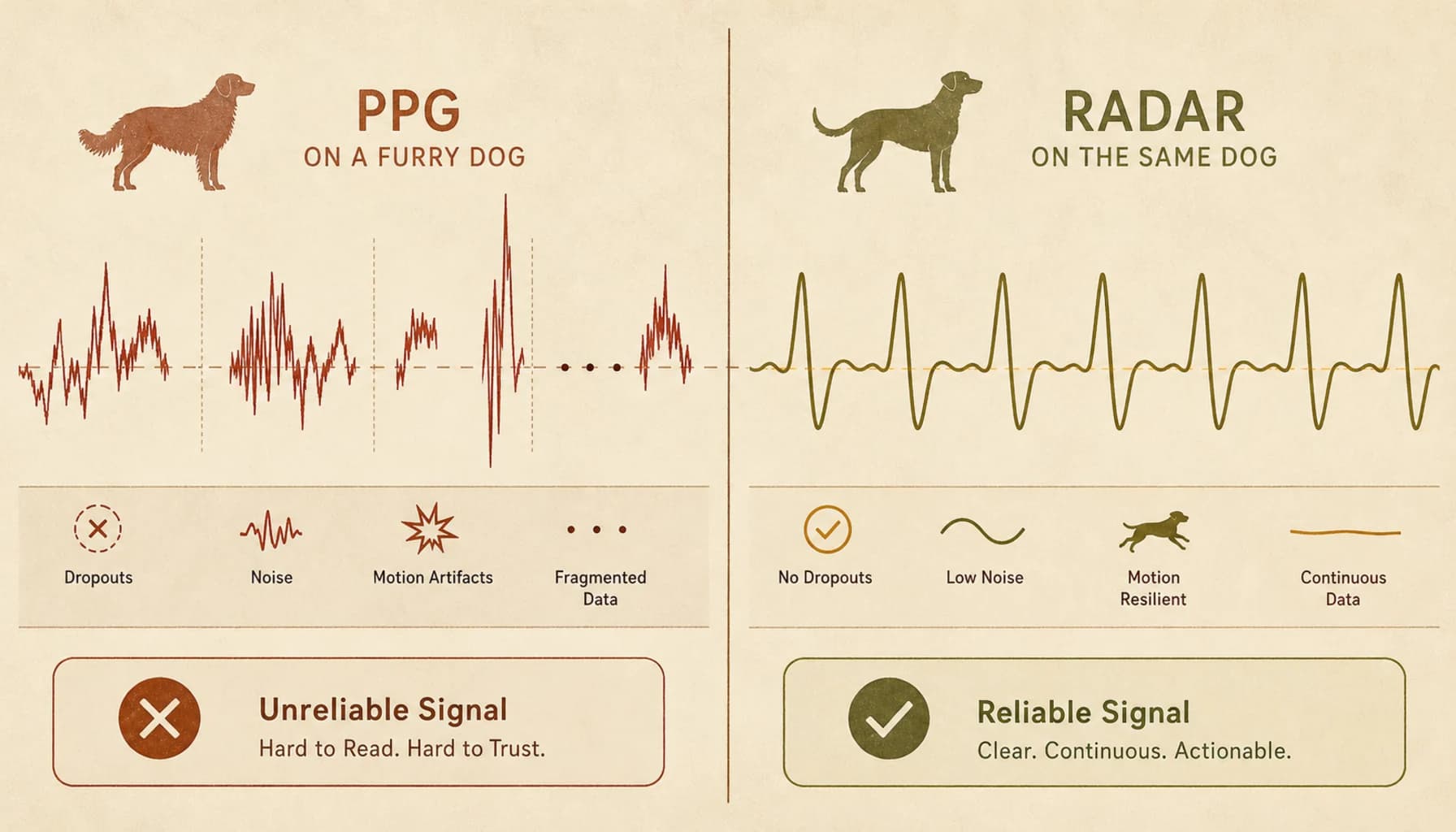
In our testing, PPG accuracy on short-coated breeds sitting still was about 70%. Medium coats dropped to under 40%. Long or double-coated breeds like Huskies, Samoyeds, and Collies? Below 15%. On cats - with their dense fur and zero tolerance for tight collars - it was basically a random number generator.
2. Any Movement Killed Everything
Even when we got a clean signal at all (rare enough), the second the dog moved, it was game over. Walking, scratching, shaking, adjusting the collar - any motion created artifacts that drowned out the actual heart rate signal. Published research confirms motion artifacts are the number one reliability problem for PPG in wearables, with studies showing even human wrist sensors struggle during exercise.
Dogs are not sitting at a desk checking email all day. They are running, rolling, digging, and being dogs. A study in Sensors (MDPI) confirmed that PPG accuracy drops significantly as activity increases. A sensor that only works when the animal is perfectly still is a lab instrument pretending to be a consumer product.
3. Sunlight Messed With the Readings
PPG photodetectors cannot tell the difference between light from the LED and light from the sun. Direct sunlight, bright indoor lighting, even reflections off light-colored surfaces all add noise. For a collar that spends half the day outdoors, this was a constant headache.
4. Mud, Water, and Drool Caused Dropout
Anything on the sensor window - mud, water, saliva, general outdoor grime - created optical interference. A dog that swam, rolled in dirt, or drooled on its collar (so literally every dog) would produce garbage readings until someone manually wiped the sensor. That is not a realistic workflow for a product you should be able to forget about once it is on.
5. You Cannot Keep Consistent Pressure on a Dog's Neck
PPG accuracy depends entirely on steady contact pressure between sensor and skin. A study in PMC showed that PPG accuracy changes significantly with pressure, and that the ideal pressure differs between individuals. On a dog's neck - where the collar shifts every time they turn their head, scratch behind their ear, or play - keeping consistent contact is physically impossible without making the collar uncomfortably tight.
The Decision That Changed Everything
After four months of testing, the pattern was crystal clear. PPG was not a sensor with some edge cases to iron out. It was fundamentally the wrong technology for animals with fur.
We had two options:
Option A: Ship with PPG anyway. Call it "heart rate monitoring," bury the coat compatibility issues in fine print, and accept that it would really only work on 20-30% of dogs. This is what most of the market does.
Option B: Scrap the sensor, eat the sunk cost, push back the timeline, and find a technology that actually works on every dog and cat regardless of coat.
We went with B. It was expensive. It set us back months. And it was the best decision we have ever made.
Why Radar Was the Answer
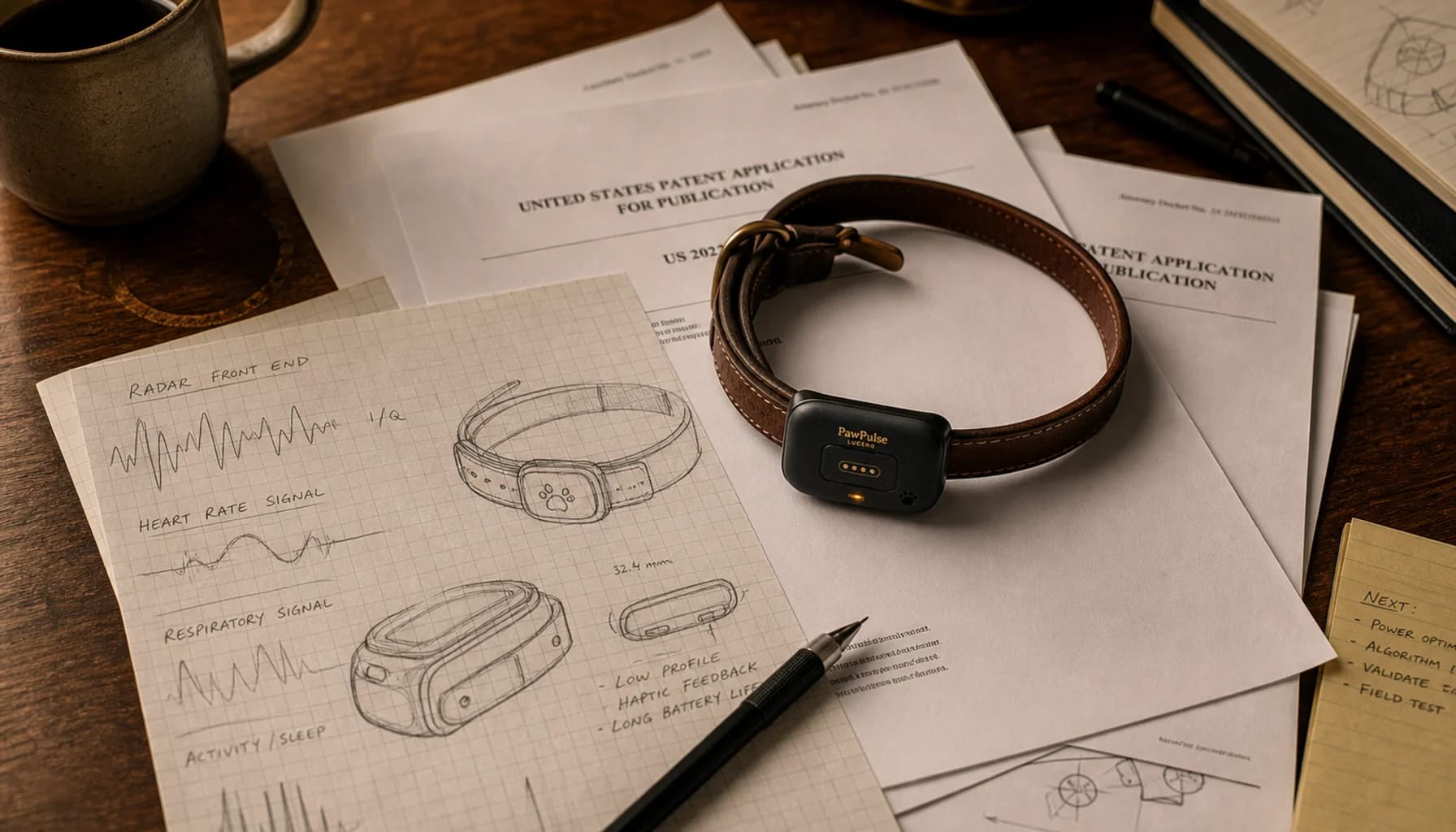
We call this approach Kinetic sensing. It pairs low-power, millimeter-wave radar, which works on every coat the way light can't, with signal processing tuned to the chest wall's mechanical movement: the subtle displacement from each heartbeat (as small as 100 micrometers) and the rhythmic expansion of breathing. It does not use light at all, so fabric, plastic, mud, and water barely register as signal loss.
This sidesteps every single problem that killed PPG:
| PPG Problem | How Radar Handles It |
|---|
| Fur blocks light | Radar works on every coat, no signal loss |
| Motion artifacts | Signal processing separates chest movement from body movement |
| Ambient light | Radar does not care about light at all |
| Mud and moisture | Electromagnetic waves are unaffected by surface gunk |
| Contact pressure | Non-contact sensing removes the pressure problem entirely |
The first time we tested a radar prototype on the same Husky that had produced nothing but PPG noise for weeks, we got a clean heart rate signal in under 10 seconds. That was the moment.
The Trade-Offs (Because We Are Being Honest)
Switching to radar was not all upside, and we think the trade-offs are worth being straight about.
Higher component cost. A radar module costs a lot more than a PPG LED and photodetector. This raises our bill of materials and, eventually, the price tag. We decided a sensor that actually works is worth more than a cheap sensor that does not.
Trickier signal processing. Pulling heart rate from radar return signals takes more sophisticated processing than PPG's relatively simple peak detection. We invested heavily in firmware and algorithms. The payoff: our processing now extracts heart rate, respiratory rate, and HRV all from the same radar data - something PPG could never do even on a good day.
Smaller supplier pool. The supply chain for millimeter-wave radar in wearable form factors is still young. Fewer vendors means more careful component planning. We manage this actively.
More power per measurement. Radar draws more power per read than PPG. We compensated with smarter duty cycling and power management, so the hungrier sensor doesn't send you running for the charger.
Every trade-off pointed the same direction: harder engineering, better results. We would rather solve hard problems than ship easy compromises.
What This Actually Means for Your Pet
If you are shopping for smart collars, the sensor technology is not a footnote buried in a spec sheet. It is the foundation everything else depends on. Prism Insights AI cannot build an accurate baseline if the sensor drops out every time your dog moves. Pulse Rhythm cannot kick in when anxiety rises if the heart rate data is unreliable. The Vet Dashboard cannot show your veterinarian a meaningful trend if half the readings are missing.
PawPulse's radar-based sensing platform is why every other feature in the Lucero collar actually works. The sensor is not the product. But without the right sensor, there is no product.

The Rest of the Industry Will Catch Up. Eventually.
Every pet wearable currently using PPG for vitals runs into the same physics problem we documented. Fur blocks light. Contact pressure is impossible on a dog's neck. Motion artifacts are constant. The data just is not reliable on most breeds.
Some companies will keep shipping PPG because it is cheap and it checks a marketing box. Others will eventually land where we did: if you want continuous, reliable health data from a furred animal, optical sensing is not going to cut it.
We got there first. Not because we are smarter, but because we tested honestly, wrote down what failed, and made the harder call.
Frequently Asked Questions
Why do other smart collars still use PPG optical sensors?
PPG is cheap, well-documented, and has a mature supply chain from human wearables. It is the path of least resistance for companies prioritizing speed to market over whether the sensor actually works. The fundamental problem - fur blocks light - has no fix, but PPG still checks the "heart rate monitoring" checkbox on a product page.
What went wrong with PawPulse's original PPG prototypes?
In testing across 15 dog breeds and 6 cat breeds, PPG returned usable heart rate data roughly 70% of the time on short-coated breeds sitting still, under 30% on medium coats, and below 15% on long or double-coated breeds. Motion, sunlight, moisture, and collar shifting all made it worse. The sensor was fundamentally not built for how real pets actually live.
How does radar fix what PPG could not?
Radar works on every coat, fabric, and surface gunk without losing signal. It measures chest wall micro-displacement rather than light absorption, which is why fur density, contact pressure, and collar fit are no longer failure points. It works regardless of ambient light and is less affected by body movement because signal processing isolates the cardiac signature.
Is radar more expensive than PPG?
Yes. The radar module costs more, needs more complex processing, and comes from a smaller vendor pool. Those trade-offs raise the collar's cost. We accepted them because a sensor that works reliably on every dog and cat is more valuable than a cheaper one that fails on most breeds.
Does PawPulse's radar sensor work on cats?
Yes. Cats were the hardest test subjects for PPG - dense fur plus zero tolerance for tight collars. Radar works on all cat breeds regardless of coat density or collar fit, making it practical for cats who flat-out reject body wraps and tight wearables.
What vitals does the radar sensor measure?
The PawPulse Lucero radar sensor continuously measures heart rate, respiratory rate, and heart rate variability (HRV) from the same radar return signal. PPG, even when it cooperated, could only estimate heart rate - it could never reliably pull respiratory rate or HRV from the optical waveform on a furred animal.
Learn more about PawPulse Lucero and the radar sensing stack behind contactless heart rate and breathing monitoring that works without an optical sensor.
-- The PawPulse Team