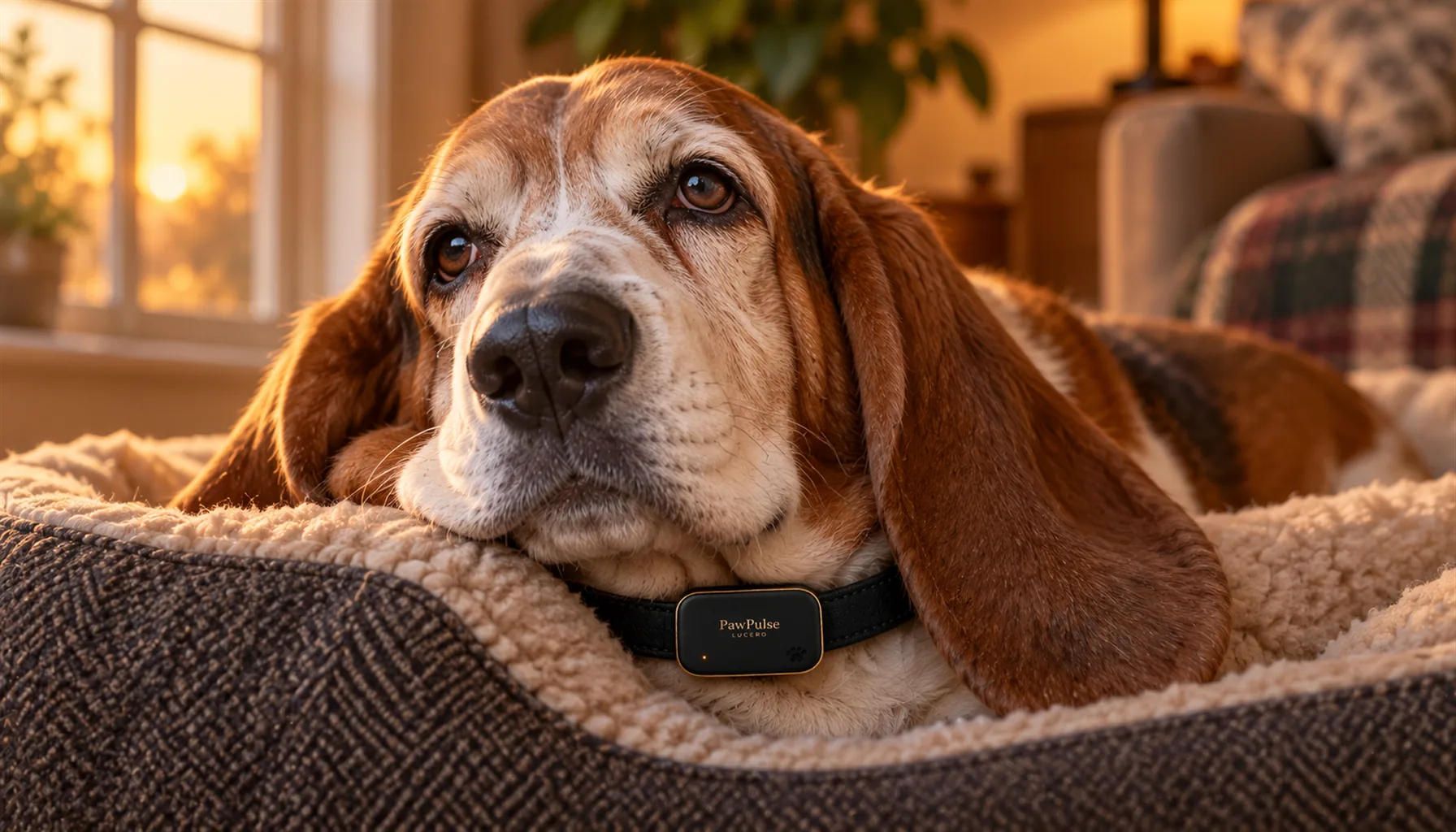
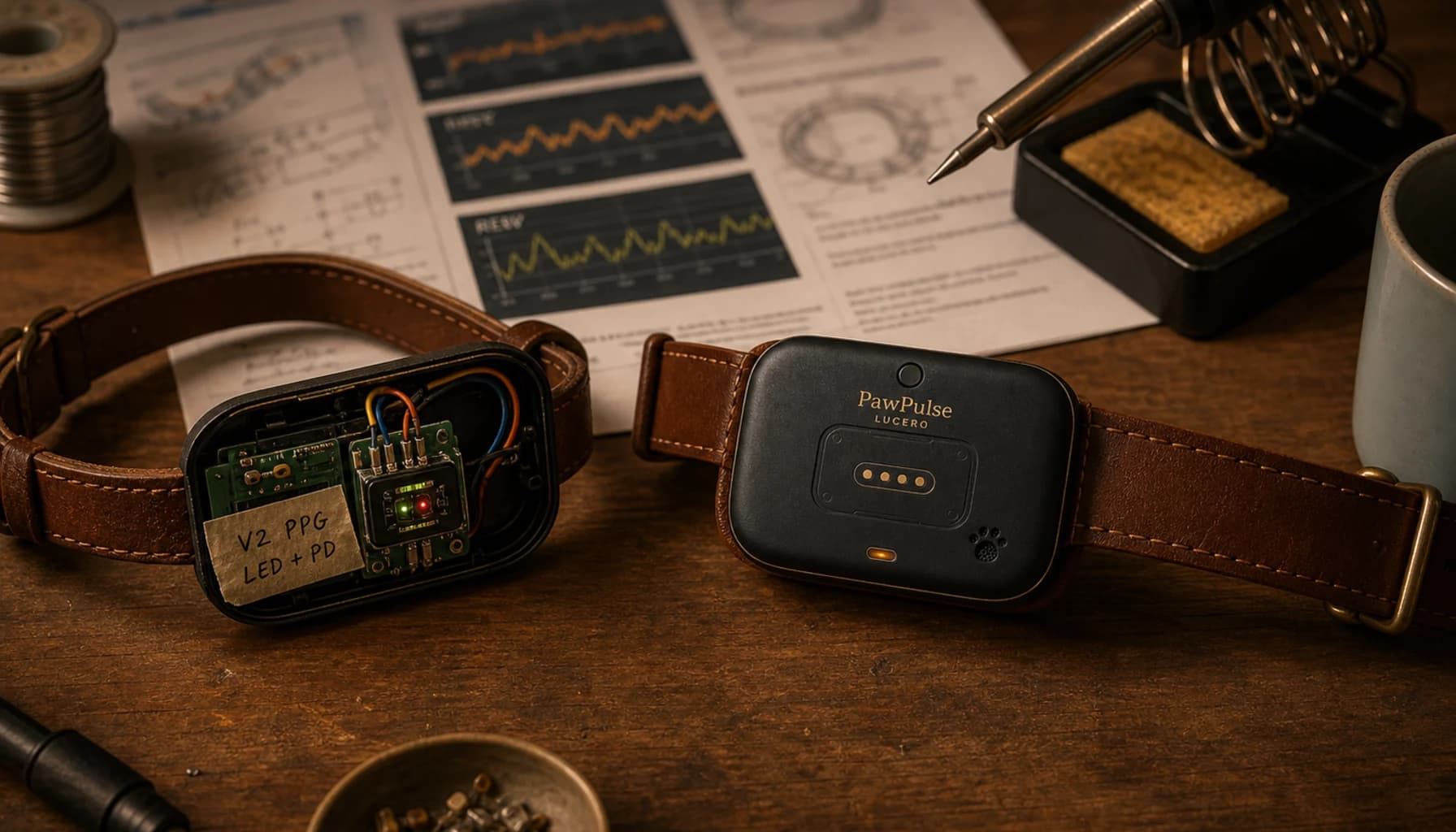
Key takeaway: The ASPCA found that 15% of pet owners lose a dog or cat within any five-year period, and 7% of lost dogs are never recovered. Microchipped dogs are returned at a rate of 52.2% compared to just 2.2% for dogs without chips. GPS tracking and geofencing add a critical layer, but only when the collar maintains connectivity, which most cellular-only collars cannot do off-grid.
One Bad Moment Is All It Takes
A gate left open. A startled reaction to fireworks. A deer on the trail. A contractor who didn't latch the fence. Every lost dog story starts with a single moment that no one planned for.
The statistics are more sobering than most owners realize. Published research by the ASPCA (Weiss et al., JAVMA) found that 11-16% of dog owners and 12-18% of cat owners experience a lost pet within a five-year period. A separate ASPCA shelter study showed that dogs without microchips were returned to their owners just 2.2% of the time, while microchipped dogs were returned 52.2% of the time.
Those numbers tell two stories. First: losing a pet is far more common than people assume. Second: identification and technology dramatically change the outcome.

The Numbers Behind Lost Dogs
Here's what the research tells us about how dogs get lost, how they're found, and what goes wrong.
| Statistic | Source |
|---|
| 15% of pet owners lose a dog or cat within 5 years | ASPCA (Weiss et al.) |
| 71% of lost dogs are eventually recovered | Lord et al., JAVMA |
| Median recovery time: 2 days | Lord et al., JAVMA |
| 7% of lost dogs are never found | ASPCA |
| Microchipped dogs returned: 52.2% | Lord et al., JAVMA |
| Dogs without microchip returned: 2.2% | Lord et al., JAVMA |
| 93% of lost pets with ID are eventually recovered | ASPCA |
| 6% of lost dogs are found through shelters | ASPCA |
The 93% recovery rate for identified pets versus the single digits for unidentified ones is the clearest data point in animal welfare: identification saves lives.
Why GPS Tracking Is Necessary (But Not Sufficient)
Microchips are essential, but they're passive. They don't tell you your dog is missing. They don't tell you where your dog went. They only work when someone finds your dog, brings it to a shelter or vet, and scans the chip. For a dog lost in a rural area, a national park, or any place without nearby shelters, a microchip sits and waits.
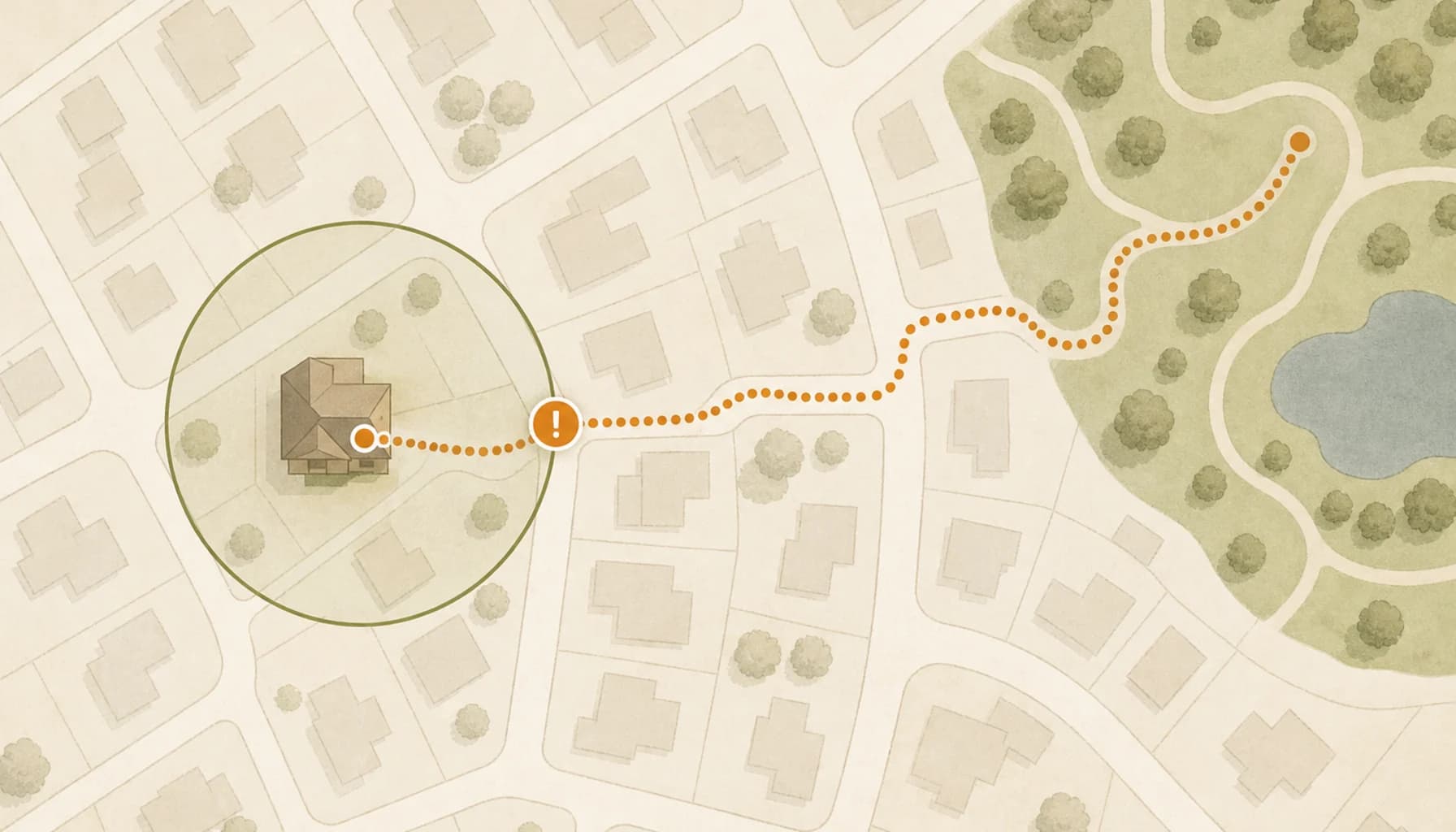
GPS tracking adds the active layer: real-time location, direction of travel, and geofence alerts that notify you the moment your dog crosses a boundary. The problem, as we covered in our post on the dead zone problem, is that most GPS collars rely on cellular networks. No cell coverage means no tracking. The collar knows where your dog is but can't tell you.
This is where PawPulse's hybrid connectivity changes the equation. Cellular when available, satellite when not. Geofence alerts that work over both. The Lucero collar maintains connectivity in the exact environments where dogs are most likely to run: trails, rural property, open land, and anywhere beyond the reach of a cell tower.
Where Dogs Actually Get Lost (and Found)
The methods that recover lost dogs depend entirely on the environment. Published research by Lord et al. in JAVMA documented the primary recovery methods for 132 recovered dogs:
| Recovery Method | Percentage |
|---|
| Call or visit to animal agency/shelter | 34.8% |
| License or ID tag | 18.2% |
| Neighborhood signs | 15.2% |
| Dog returned on its own | 12.1% |
| Other (word of mouth, social media) | 19.7% |
Notice what's missing: GPS tracking barely registered in this study because it was conducted before GPS collars were widespread. Today, GPS adds a recovery method that none of the traditional approaches can match: knowing where your dog is right now, not relying on strangers, shelters, or luck.
But also notice what dominates: identification. Tags, microchips, and licenses. The dog needs to be identifiable no matter what. GPS is the active search tool. Identification is the passive safety net. Both matter.
The Rural Problem
Recovery rates cited in most studies skew toward urban and suburban environments where shelters, neighbors, and foot traffic are nearby. Rural and wilderness recovery is a different story entirely.
A Pet911 analysis of lost pet data found that 75% of all lost dog cases occur in rural states. In these areas, the infrastructure that supports urban recovery (dense shelter networks, neighborhood density, social media groups, community boards) simply doesn't exist. A dog lost on a 500-acre ranch or a backcountry trail is in a fundamentally different recovery situation than a dog that slipped out of a backyard in a subdivision.
For rural and outdoor dog owners, continuous GPS with satellite backup isn't a premium feature. It's the baseline requirement for responsible safety.
The Cost of a Lost Dog
Beyond the emotional toll, losing a pet carries real financial consequences.
Search efforts (professional pet trackers, drone operators, printed flyers, reward postings) can cost $1,000-5,000 or more. Emergency vet care for a recovered dog that was injured, dehydrated, or exposed adds another layer. Shelter fees, boarding, and quarantine periods add up. And for dogs that are never recovered, the emotional cost is immeasurable.
A Lucero collar with continuous GPS, satellite backup, and geofence alerts costs a fraction of a single professional search effort. Prevention is always cheaper than recovery.
What Actually Prevents a Dog From Getting Lost
Technology helps, but the data shows that the most effective prevention is layered.
Geofencing with real-time alerts. Not a GPS breadcrumb trail you check hours later. An immediate notification the moment your dog crosses a boundary you set. PawPulse's geofence alerts work over both cellular and satellite, so they function in the backyard and on the trail.
Proper identification. Microchip (registered and updated), collar with tags, and a GPS collar. Each covers a different failure mode. Tags are instant for anyone who finds your dog. Microchips are permanent. GPS is active.
Secure environments. Auditing your fence, gates, and entry points regularly. Most escape stories start with a gate that wasn't latched, a fence section that was weaker than it looked, or a door that was left open for 30 seconds too long.
Training and recall. No technology replaces a solid recall command. But even the best-trained dog has a prey drive, and a deer doesn't wait for your whistle.

Cats Go Missing Too (and They're Harder to Find)
Cats are actually more likely to go missing than dogs, and their recovery rates are significantly lower. The same ASPCA shelter study found that cats without microchips were returned just 1.8% of the time, compared to 38.5% for microchipped cats. The ASPCA reports that only about 74% of lost cats are eventually recovered, compared to 93% for dogs.
Cats are harder to find because they hide when stressed, travel shorter distances but become invisible in dense cover, and are less likely to approach strangers. Microchipping and clear ID tagging remain the most important safety nets for cats, and continuous health monitoring adds visibility into a pet that is otherwise nearly impossible to search for.
Frequently Asked Questions
How common is it for a dog to get lost?
ASPCA research found that 15% of pet owners experience a lost pet within any five-year period. One in three pets is estimated to go missing at some point in their lifetime. Most lost dogs are recovered within 2 days, but 7% are never found.
What's the best way to find a lost dog?
The most effective approach is layered: real-time GPS tracking to know where your dog is now, microchip and ID tags for passive identification if someone finds them, shelter and agency contact for institutional recovery, and neighborhood outreach (signs, social media, word of mouth). GPS tracking adds the active search capability that traditional methods lack.
Do GPS collars actually help find lost dogs?
Yes, when they maintain connectivity. Cellular GPS collars provide real-time tracking in areas with cell coverage. PawPulse adds satellite backup for off-grid environments where most cellular collars go offline. Geofence alerts notify you the moment your dog crosses a boundary, often before you realize they're missing.
Are microchipped dogs more likely to be found?
Significantly. Published research shows that microchipped dogs are returned to their owners 52.2% of the time, compared to just 2.2% for dogs without microchips. However, microchips are passive: they only work when someone scans them. GPS tracking provides the active, real-time component.
How does geofencing prevent a lost dog?
Geofencing creates a virtual boundary around a defined area (your yard, campsite, or property). When your dog crosses that boundary, you receive an immediate alert on your phone. This turns a "lost dog" situation into a "dog just left the yard" situation, giving you minutes to respond instead of hours to search.
Do lost cats ever come home?
About 74% of lost cats are eventually recovered, but recovery rates are much lower than dogs because cats hide when stressed and are harder to search for. Microchipped cats are returned at 38.5% versus 1.8% for cats without chips. For outdoor cats, continuous health monitoring paired with proper identification can compensate for the cat's tendency to hide rather than seek help.
Learn more about PawPulse Lucero, the smart dog collar with cellular plus satellite-ready backup and geofence alerts that work where every other GPS collar quits.
Related reading: why most GPS dog collars fail when you need them most and how satellite connectivity closes the coverage gap.
-- The PawPulse Team