Key takeaway: Senior dog health problems rarely arrive overnight. AAHA's 2023 Senior Care Guidelines define a senior dog as one in the last 25% of its expected lifespan, and a 2001 JAVMA study found cognitive changes in 28% of dogs aged 11-12 and 68% of dogs aged 15-16. Continuous monitoring turns those slow shifts into trends you and your vet can actually see.
Is "He's Just Getting Old" the Whole Story?
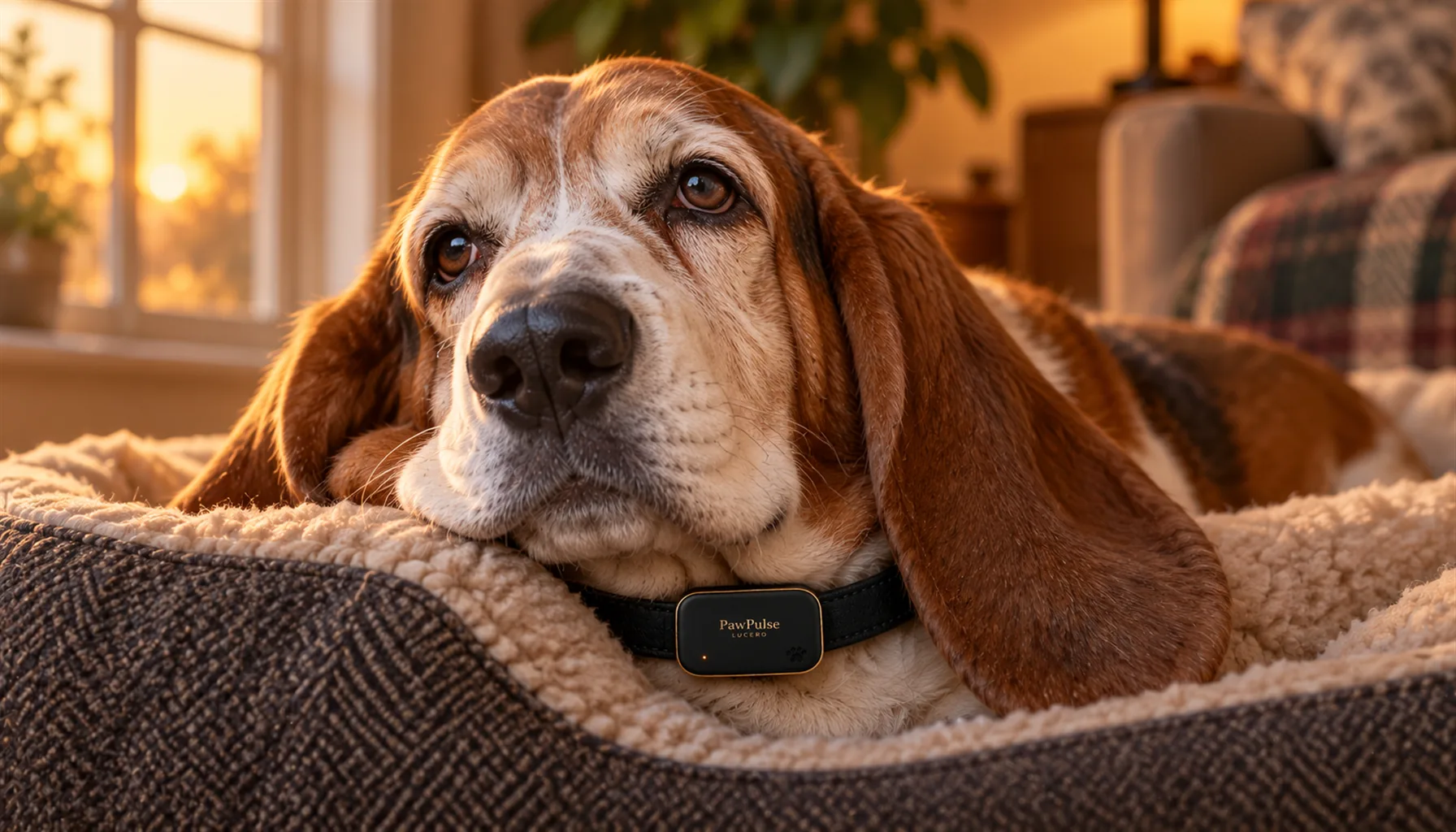
It is the most common thing we hear from owners of older dogs: "He's slowing down, but that's just age." Sometimes that is true. Older dogs sleep more, move more carefully, and skip the second lap of the yard.
The trouble is that "just getting old" is also where a lot of manageable problems hide. The dog that is slowing down may have joint pain that a vet could help with. The dog that is sleeping more during the day and pacing at night may be showing early cognitive change. The dog that tires faster on walks may have a heart that is working harder than it used to.
These problems also feed each other. A 2023 study in Animals (Wrightson et al.) surveyed owners of senior dogs and found a strong correlation between cognitive decline scores and a cluster of musculoskeletal, neurological and sensory signs. The authors suggest chronic pain may be part of the link, though a survey cannot prove cause and effect. In plain terms: a sore dog sleeps badly, and a dog that sleeps badly does not think as clearly.
The difference between normal aging and aging with a problem that could be managed usually comes down to visibility. That is the part most owners of senior dogs are missing, through no fault of their own.
PawPulse is a smart dog collar with contactless heart rate and breathing monitoring, and senior dogs are one of the main reasons we built it.

When Is a Dog Considered Senior?
There is no single birthday. The 2023 AAHA Senior Care Guidelines define senior as the last 25% of a dog's estimated lifespan, which means size matters a lot. A giant breed expected to live about 9 years is senior by around 7. A small breed expected to live about 15 years is not senior until around 11.
Once a dog enters that last quarter, AAHA recommends a medical workup once or twice a year. That is good care. It is also a long time between data points for conditions that move week by week.
What Is Actually Changing Inside an Aging Dog?
Here is what the research says about the most common age-related conditions, and why each one is easy to miss at home.
| Condition | What the research shows | Why owners miss it |
|---|
| Osteoarthritis | North American estimates run as high as 80% in dogs over 8, based on referral radiographic and clinical data (Anderson et al., Scientific Reports, 2018) | Dogs shift weight and change how they lie down long before an obvious limp |
| Cognitive dysfunction | Changes in 28% of dogs aged 11-12 and 68% aged 15-16 (Neilson et al., JAVMA, 2001) | Night waking and disorientation creep in over months |
| Mitral valve disease | Affects 20-25% of dogs aged 9-12 and 30-35% over 13 (Merck Veterinary Manual) | Dogs can stay compensated without signs of heart failure for a long time |
| Chronic kidney disease | Signs caused directly by kidney disease usually appear only after about three-quarters of function is lost (Merck Veterinary Manual) | Increased thirst is often the first clue, and it is easy to shrug off |
| Cancer | Cancer and neurologic causes of death become more common as dogs age (Fleming et al., JVIM, 2011) | Signs vary widely and are often vague early on |
The pattern across every row is the same. The change starts quietly, the dog adapts, and the owner reasonably files it under "getting older" until it is hard to ignore.
What Do These Changes Look Like Over Time?
Arthritis: The Slow Shuffle
A dog with developing arthritis does not wake up limping one morning. Cartilage wears, inflammation builds, and range of motion shrinks. The dog compensates by shifting weight, avoiding stairs, and taking longer to settle into a comfortable position. A 2018 UK study in Scientific Reports (Anderson et al.) notes that osteoarthritis may not be clinically recognized until it reaches a more advanced stage with obvious outward signs.
What continuous monitoring is designed to surface: a gradual drop in daily activity over weeks, longer rest periods, more position changes during sleep, and resting heart rate or HRV shifts that can go along with ongoing discomfort. None of these says "arthritis" on its own. Together, over a month, they are a very good reason to book a vet visit.
Cognitive Change: The Night Shift
Canine cognitive dysfunction usually starts small: staring at walls, getting stuck behind furniture, forgetting house training, and a scrambled sleep-wake cycle. The 2001 JAVMA study by Neilson and colleagues tracked exactly these categories in 180 dogs aged 11 to 16 and found the share with changes rose steeply with age. AAHA lists daytime sleeping and nighttime restlessness among the most common signs in dogs. We covered why sleep is such a useful signal in our post on what your dog's sleep pattern reveals about their health.
The research backs this up. A 2023 polysomnography study in Frontiers in Veterinary Science (Mondino et al.) recorded sleep in 28 senior dogs and found that dogs with higher dementia scores spent less time in both NREM and REM sleep. What a collar can watch for is the trend: restless nights going from once in a while to a few times a week to most nights.
The Heart: Quiet Until It Isn't
Mitral valve disease is the most common heart disease in dogs, and the Merck Veterinary Manual notes it is most common in older small breeds. A slowly rising resting heart rate during sleep, a creeping respiratory rate, and declining heart rate variability are the kinds of shifts that are hard to catch in a clinic, where stress pushes vitals above true resting levels anyway.
What continuous monitoring is designed to provide: resting vitals recorded at home, while the dog is actually resting, tracked over months so a slow drift shows up as a line instead of a guess.

Why Do Senior Dogs Benefit Most From Monitoring?
AAHA's 2023 Senior Care Guidelines are direct about where the field is heading: pet wearable technology "may allow real-time monitoring of the senior pet," and these tools are meant to augment in-person care, not replace it. We agree with both halves of that sentence.
Senior dogs are the group where:
- Several conditions are often developing at the same time
- Those conditions move slowly enough to slip past daily observation
- Dogs have had years of practice working around discomfort
- Earlier conversations with the vet can shape the comfort of the time that is left
- Every good month matters to the family
This is the gap the PawPulse Lucero is built for. It uses Kinetic sensing, our millimeter-wave approach that reads the tiny chest movements of each heartbeat and breath through fur, to track heart rate, respiratory rate and HRV alongside sleep and activity. Prism AI builds a baseline that moves with your dog as they age, so a slow decline does not quietly become the new normal. Sustained changes are surfaced as patterns worth sharing with your vet.
Can Quality of Life Be Measured?
One of the hardest parts of loving an old dog is the quality-of-life question. Is he still enjoying his days? Is she hurting? Are we doing this for the dog or for ourselves?
Those questions usually get answered on feel. Trend data adds something steadier underneath:
- Activity trends show whether daily engagement is holding, sliding, or bouncing back after a medication change.
- Sleep patterns show whether nights are settled or broken up by restlessness.
- Resting heart rate and HRV give context on how the body is coping day to day.
- Breathing rate at rest is easy to track at home and worth watching in older dogs with heart concerns.
- Recovery after a walk shows whether your dog settles back to baseline quickly or takes hours.
None of this replaces your judgment. You know your dog better than any sensor does. What it gives you is a record, so the hardest decisions rest on weeks of patterns instead of one bad afternoon or one unexpectedly good one.
How Does Trend Data Help Your Vet?
The PawPulse Vet Dashboard is designed with senior dogs in mind:
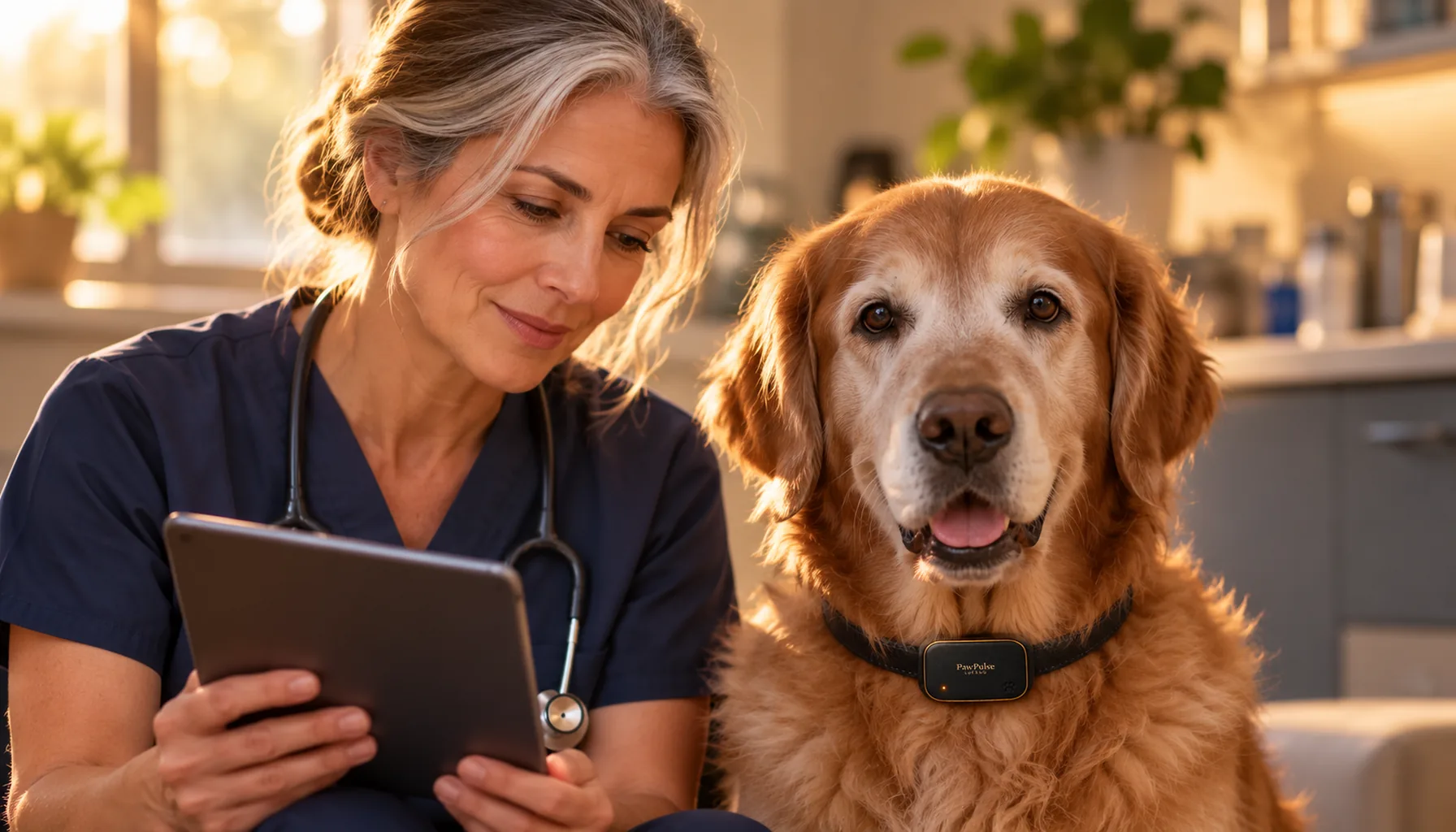
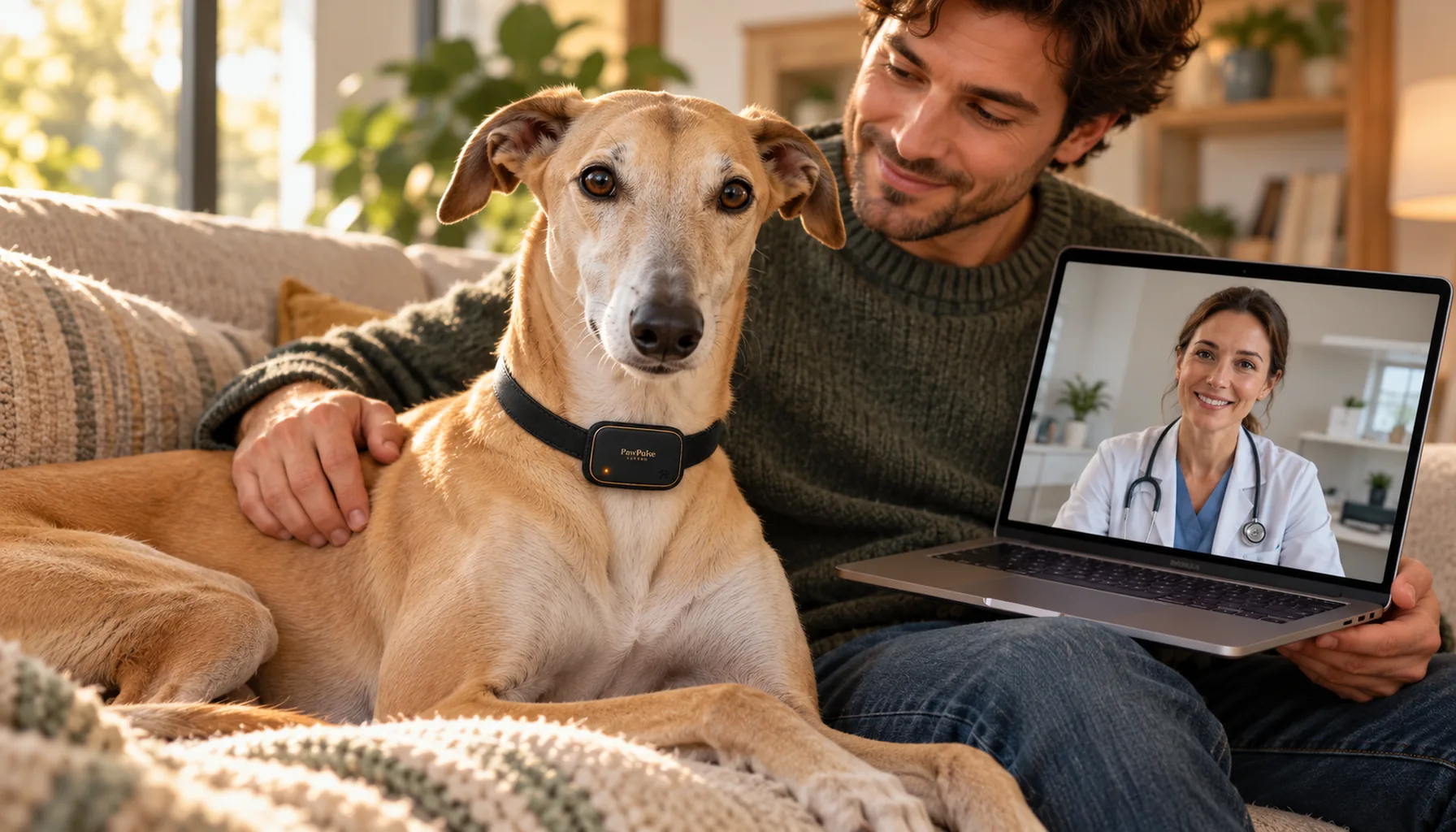
Longitudinal view. With your permission, your vet can look back over 3, 6 or 12 months. Slowly progressive conditions often look "stable" at any single visit and only show their direction over time.
Before-and-after comparison. When an older dog starts something new, like pain management or cardiac medication, the dashboard is designed to show how activity, sleep and vitals changed relative to the old baseline. That gives the vet more than "I think he seems better."
Support for hard conversations. For families facing end-of-life decisions, a clear record of the trajectory can bring some clarity, and sometimes some peace.
Frequently Asked Questions
When is a dog considered senior?
AAHA defines a senior dog as one in the last 25% of its estimated lifespan, so there is no single age. Giant breeds can be senior by about 7, while small breeds with longer lifespans may not get there until 10 or later. Once a dog is senior, AAHA recommends a medical workup once or twice a year.
How common is arthritis in older dogs?
Very common. A 2018 Scientific Reports study by Anderson and colleagues cites North American estimates as high as 80% in dogs over eight, based on referral data. Because dogs compensate by shifting weight and moving differently, visible limping often shows up well after joint changes begin, which is why gradual activity and sleep trends are worth watching.
What are the first signs of canine cognitive dysfunction?
Common early signs include disorientation at home, staring at walls, getting stuck behind furniture, changes in how a dog interacts with family, house-training lapses, and a disrupted sleep-wake cycle. AAHA lists daytime sleeping with nighttime restlessness among the most common signs. These changes are gradual and easy to put down to age.
How does continuous monitoring help senior dogs?
It records resting heart rate, breathing rate, HRV, sleep and activity every day, then compares them against your dog's own baseline. Slow changes that are invisible from one day to the next become visible as trends over weeks. That gives you and your vet earlier context for a conversation, without replacing hands-on exams or lab work.
How often should a senior dog see the vet?
AAHA's 2023 Senior Care Guidelines recommend a medical workup for senior pets once or twice a year, often including bloodwork and urinalysis. Many vets suggest exams every six months for older dogs. Even then, months pass between visits, so keeping notes on appetite, thirst, sleep and mobility at home makes each appointment more useful.
Can PawPulse help with quality-of-life decisions?
PawPulse Lucero is designed to track activity, sleep, resting heart rate and breathing rate, which can give you and your vet a clearer picture of how an older dog is doing over weeks. It does not make the decision for you or replace your vet's judgment. It helps ground a hard conversation in patterns rather than a single day.
Learn more about PawPulse Lucero and the PawPulse Vet Dashboard, built to give senior dog owners and their veterinarians weeks of trend data instead of a single snapshot.
-- The PawPulse Team