Key takeaway: A dog's sleeping respiratory rate is the number of breaths it takes per minute during calm sleep, counted as one rise and fall of the chest. In a 2012 study of 114 healthy adult dogs (Rishniw et al.), the average was 13 breaths per minute, and VCA Animal Hospitals considers rates consistently above 30 abnormal. Ask your vet what number matters for your dog.
What Is a Normal Sleeping Respiratory Rate for a Dog?
Most healthy adult dogs breathe slowly when they are truly asleep. The best data we know of comes from a study in Research in Veterinary Science (Rishniw et al., 2012), where owners of 114 apparently healthy adult dogs recorded 12 to 14 one-minute counts each at home. The average sleeping rate per dog was 13 breaths per minute, no dog averaged above 23, and the rate was not affected by age, body weight or where the dog lived. Only three dogs ever had a single reading above 30.
VCA Animal Hospitals' home breathing rate guide (current as of 2026) describes a normal resting or sleeping rate as roughly 15 to 30 breaths per minute, notes that sleeping rates usually run a little lower than resting rates, and says rates consistently above 30 are increased and considered abnormal. Lower numbers are generally fine if your dog is otherwise acting normally.
Two caveats before you reach for a stopwatch. First, these are population numbers, and ranges vary by dog. VCA itself says some dogs may be abnormal below 30, so the most useful number is the one your vet gives you for your dog. Second, the figure you may have seen elsewhere, 18 to 34 breaths per minute, is an awake resting range, not a sleeping one.
We are a team of engineers and dog owners building PawPulse, a smart dog collar with contactless heart rate and breathing monitoring. Of all the vital signs, this is the one owners can most easily learn to measure at home.
Why Do Vets Ask for the Sleeping Rate Instead of the Awake Rate?
Because sleep removes most of what makes breathing noisy. An awake dog breathes faster when it is warm, excited, stressed, sniffing or mildly annoyed that you are staring at it. VCA notes that breathing rates are expected to be much higher when dogs are hot, stressed or active. Calm sleep strips most of that away, so what is left is closer to the dog's true baseline.
You can see the gap in the numbers. The Merck Veterinary Manual resting respiratory rate table lists 18 to 34 breaths per minute for a dog at rest, which is an awake reference range adapted from a physiology textbook. In the 2012 Rishniw study, the dogs that recorded both kinds of counts averaged 19 breaths per minute resting awake and 15 asleep, a statistically significant difference.
That stability is what makes the sleeping rate useful. The 2019 American College of Veterinary Internal Medicine guidelines on mitral valve disease in dogs (ACVIM consensus, Keene et al., 2019) state that an increase in resting respiratory rate above a dog's normal baseline has the best predictive value among the home-monitored signs for a worsening heart condition, and they recommend home monitoring of breathing and heart rate as part of long-term care. That is why your vet may hand you a log sheet after a heart check.
How Do I Count My Dog's Breaths Per Minute?
The method is simple. Consistency is the hard part.
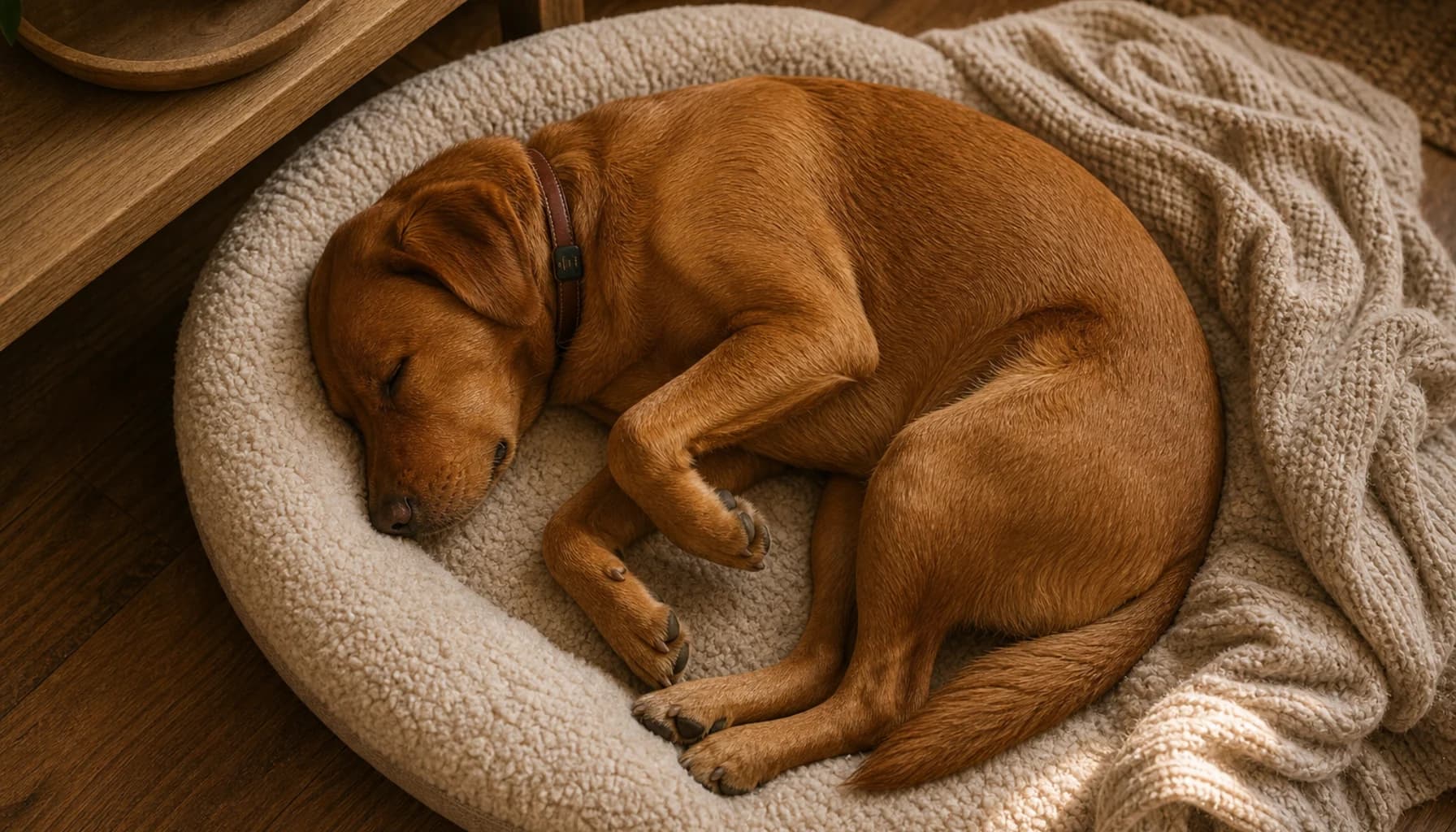
- Wait for real sleep. Pick a moment when your dog has been asleep and settled for a while, not just lying down after a walk. If your dog is twitching, paddling or making small dream noises, wait for calm, even breathing.
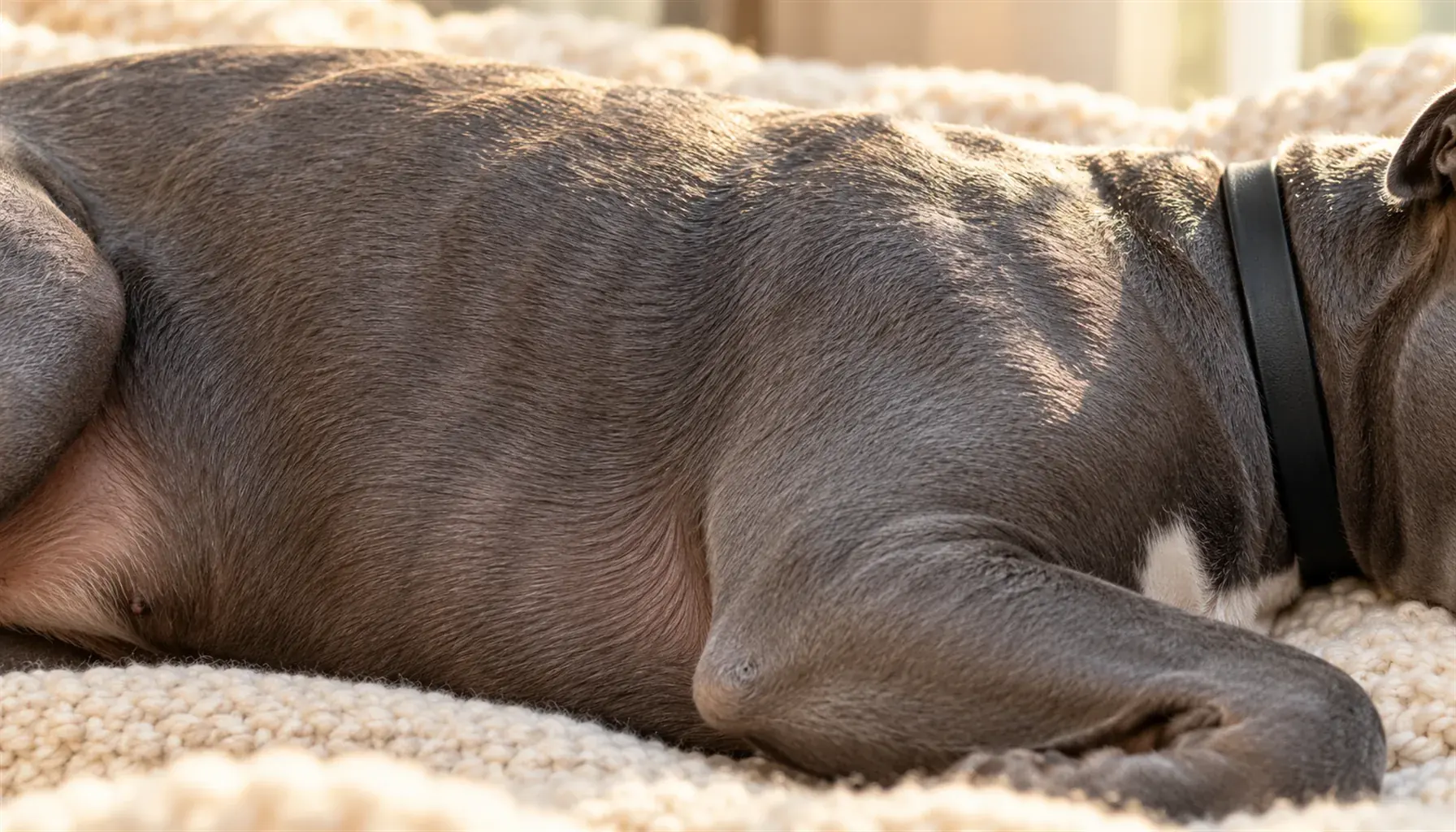
- Watch the chest, not the nose. Stand or sit where you can see the side of the ribcage. One rise plus one fall counts as one breath.
- Time it. Use a watch or a phone timer. Count for 30 seconds and double the result, or count for a full 60 seconds. VCA describes both.
- Count again if it is high. One fast count is not a trend. If the number surprises you, wait a few minutes and repeat it.
- Write it down. Date, time, the number, and anything unusual: a hot room, a late walk, a new medication, a thunderstorm.
- Do not wake your dog to check. A dog that half-wakes because you leaned in gives you an awake number.
Also skip counts in a warm room or right after exercise, and put the phone down while you count. We say that with love, because we have all done it.
How Often Should I Record It?
VCA describes a learning week: count once a day for about a week so you get comfortable with the method and you and your vet learn your dog's normal sleeping rate. After that, the schedule depends on your dog:
- Healthy dog, no heart concerns: your vet may not ask for routine counts, but one learning week gives you a baseline worth having.
- Dog with heart disease but no symptoms: VCA notes monitoring may not be needed unless your vet advises it, and when it is, once or twice a week is typical, sometimes daily.
- Dog with heart failure on medication: VCA advises checking at least once a day.
Always follow the schedule your own vet sets. They know your dog's history.
A 7-Day Sleeping Respiratory Rate Log
This is the table we would print and stick on the fridge. One row per night, counted the same way each time.
| Day | Date and time | Breaths in 30 s | Breaths per minute (x2) | Recount if high | Notes (room temp, walk, meds, stress) |
|---|
| 1 | | | | | |
| 2 | | | | | |
| 3 | | | | | |
| 4 | | | | | |
| 5 | | | | | |
| 6 | | | | | |
| 7 | | | | | |
Reference points from the sources above (ranges vary by dog; your vet's number for your dog comes first):
| Measure | Value | Source |
|---|
| Healthy adult dogs, average sleeping rate | 13 breaths/min (no dog averaged above 23) | Rishniw et al., 2012 |
| Normal resting or sleeping rate | about 15 to 30 breaths/min | VCA Animal Hospitals |
| Rate considered increased and abnormal | consistently above 30 breaths/min | VCA Animal Hospitals |
| Awake resting reference range | 18 to 34 breaths/min | Merck Veterinary Manual |
| Dogs with stable, treated heart failure | median sleeping rate 20 breaths/min | Porciello et al., 2016 |
Bring the completed log to your next appointment. A week of numbers in your own handwriting is exactly the kind of thing we covered in what your vet wishes you would bring to every appointment.
Is 40 Breaths a Minute While Sleeping Too High?
For most dogs, yes, it is above the range the sources above describe. A sleeping count of 40 is well past VCA's 30 threshold and far above the 13 breaths per minute healthy dogs averaged in the 2012 study. But one count is not a verdict. Recheck after a few minutes of undisturbed sleep and make sure the room is not hot and your dog has not just been active.
If the recount is still high, treat it the way VCA describes: a rate that stays elevated is a reason to call your vet promptly, and an elevated rate together with other signs can be an emergency.
It also helps to know what "high" looked like in research on dogs that already have heart failure. In a study in The Veterinary Journal (Porciello et al., 2016), owners of 51 dogs with stable, medically controlled heart failure recorded sleeping rates at home. The median was 20 breaths per minute, and only one dog averaged 30 or more. The authors also found that sleeping rates were stable from day to day. Even dogs with treated heart disease mostly stayed under 30 while stable, which is why a sustained climb matters more than one number.
When Should I Call My Vet?
These thresholds come from the VCA home breathing guide. They are conservative, and your vet may give you different ones for your dog.
Call your vet as soon as possible if:
- The sleeping or resting rate is consistently above 30 breaths per minute on repeat counts.
- The rate is above the number your vet told you to watch for, even if it is under 30.
- Your log shows a steady climb over several days compared with your dog's usual numbers.
Treat it as an emergency, and go to an emergency vet if your clinic is closed, if a raised rate comes with:
- Visible effort to breathe (labored breathing)
- Restlessness, agitation or trouble finding a comfortable position to sleep
- Coughing or gagging
- Weakness
- Collapse or fainting
If your dog is struggling to breathe at any rate, do not wait to count. Go.
Where PawPulse Lucero Fits
Counting by hand works and costs nothing. Its weak spot is that it depends on you catching your dog in the right kind of sleep, once a day at best. Dogs breathe all night.
That gap is part of why we built PawPulse Lucero. It is designed to measure heart rate and breathing through fur without touching the skin (Kinetic sensing), and it looks at those readings while your dog rests, so you can see a trend over nights and weeks instead of a single stopwatch snapshot. The idea is the same one behind how our software learns your dog's normal: the baseline that matters is your dog's own.
We want to be clear about what that is and is not. Lucero is not a medical device. It does not replace hand counts your vet has asked for, and it does not replace your vet. It gives you trends and context to share with your vet, and if your vet wants hand counts, keep doing them. We also wrote about what else overnight patterns can tell you in what your dog's sleep pattern reveals about their health.
If you also want to know how to take a pulse, see how to check a dog's pulse at home.
Frequently Asked Questions
What is a normal sleeping respiratory rate for a dog?
Most healthy adult dogs breathe well under 30 times a minute in calm sleep. A 2012 study of 114 healthy dogs found an average of 13 breaths per minute, and VCA Animal Hospitals describes about 15 to 30 as normal. Ranges vary by dog, so ask your vet for the number that matters for yours.
How do I count my dog's breaths?
Wait until your dog is in calm, settled sleep. Watch the side of the chest and count one rise plus one fall as one breath. Count for 30 seconds and double it, or count for a full minute. If the number seems high, wait a few minutes and count again before deciding anything.
Why do vets ask for the sleeping rate instead of the awake rate?
Sleep removes the things that speed breathing up, like heat, excitement, activity and stress. That makes the sleeping rate stable from night to night, so a real change stands out. The 2019 ACVIM heart disease guidelines say a rise in resting rate above a dog's own baseline has the best predictive value of the signs owners monitor at home.
Is 30 breaths per minute normal for a sleeping dog?
Thirty is the upper edge VCA uses: rates consistently above 30 are considered increased and abnormal. Healthy dogs in research usually sit far lower, around 13 to 15. A single count near 30 is worth rechecking. Repeated counts above 30, or above the number your vet gave you, are a reason to call your vet.
How often should I record my dog's sleeping breathing rate?
VCA suggests counting once a day for about a week while you learn the method and set a baseline. After that, your vet decides: healthy dogs may need no routine counts, dogs with heart disease may need weekly or daily counts, and dogs on heart failure medication are usually checked at least daily.
Can a collar replace counting my dog's breaths?
Not if your vet has asked you for hand counts. A collar such as PawPulse Lucero is designed to show breathing trends across many nights, which can add context to your log, but it is not a medical device. Use it alongside the counts and checkups your vet recommends, never instead of them.
If you want to see how we read resting breathing through fur and turn it into trends you can share with your vet, take a look at PawPulse Lucero and the Kinetic sensing technology behind it. Reservation holders get their Lucero first.
-- The PawPulse Team