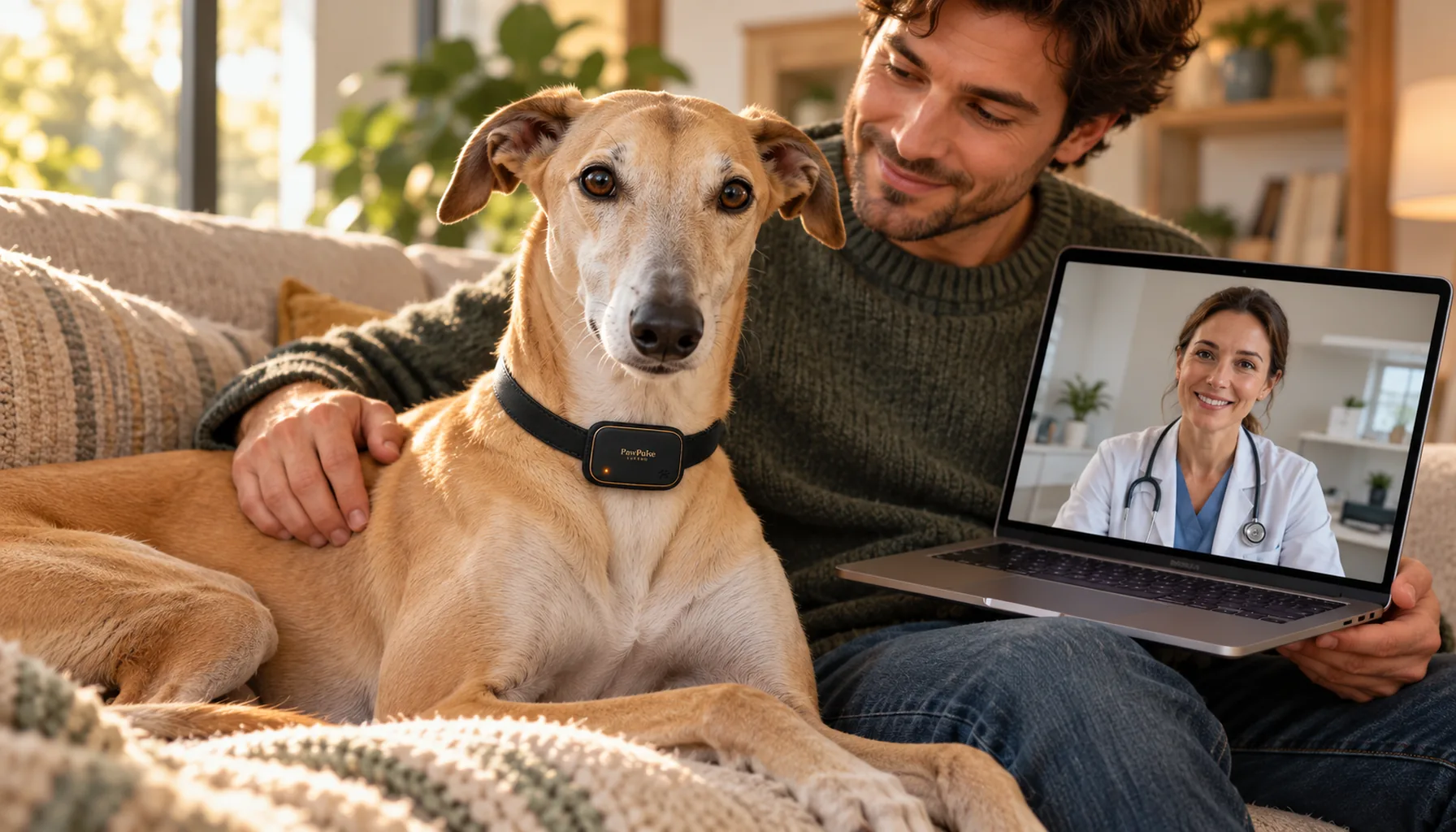

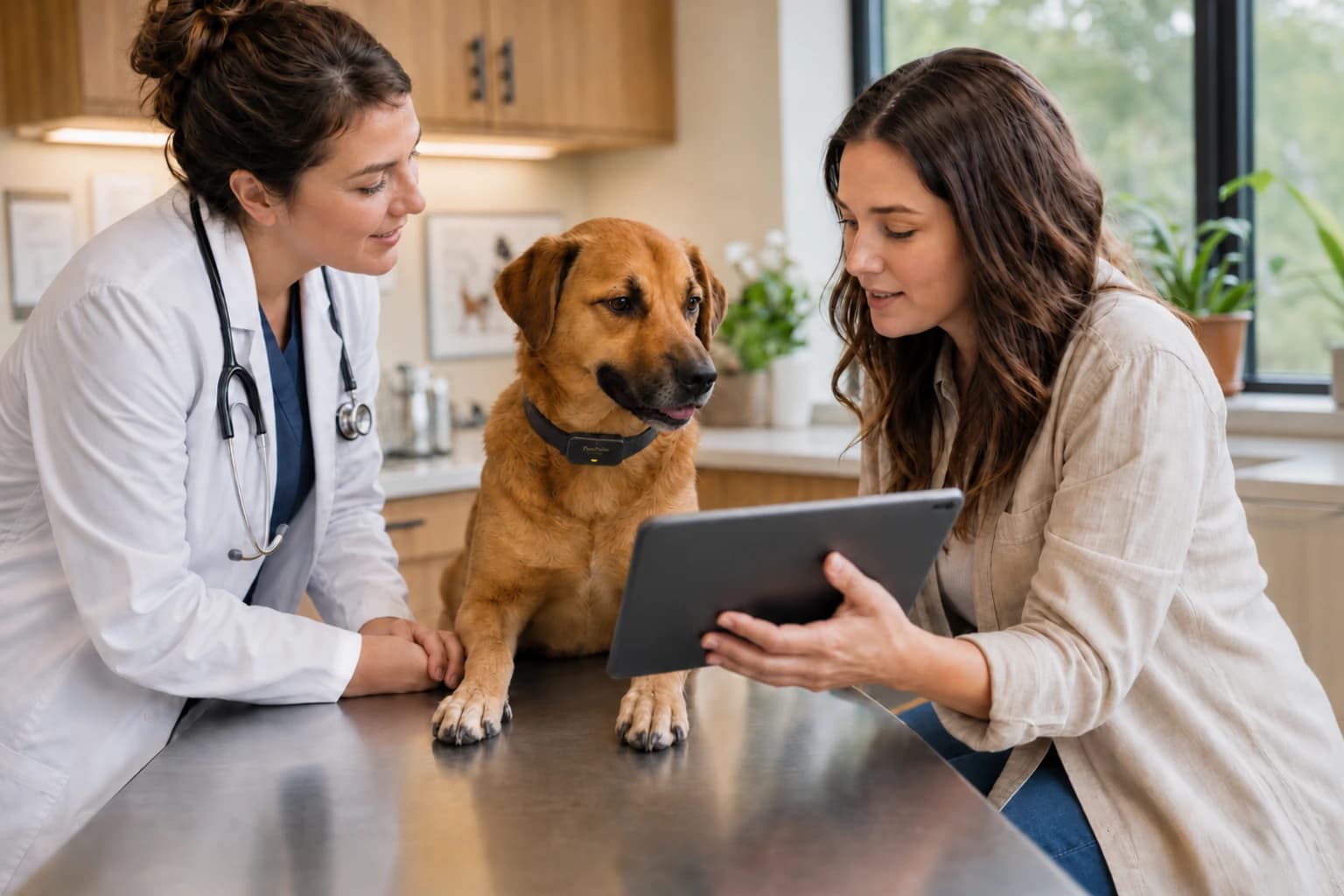
Key takeaway: The average dog owner spends $580 per year on veterinary care, with diagnostic tests accounting for a significant share. Bringing weeks of continuous heart rate, respiratory, sleep, and activity data to every vet visit helps veterinarians narrow diagnoses faster, skip exploratory tests, and focus treatment, saving both time and money.
The Information Gap That Costs You Money
Your vet asks: "So, what's been going on with Max?"
You answer: "He's been acting weird. Kind of sluggish. Maybe eating less? I'm not sure when it started, maybe a couple of weeks ago?"
This is the conversation veterinarians have dozens of times a day. It's not the owner's fault. Dogs and cats can't describe their symptoms, and most changes in behavior are gradual enough that they blend into daily life until something becomes obviously wrong. But for a veterinarian trying to diagnose the problem, vague descriptions mean one thing: more tests.
More blood panels. More imaging. More exploratory work to compensate for the absence of objective data. According to the AVMA, veterinary prices have outpaced general inflation every year since 2019, and vet visits have declined roughly 3% as owners make harder choices about what they can afford. The economics are squeezing both sides of the exam table.
What if you could hand your vet a timeline instead of a guess?
What Vets Actually Need (and Rarely Get)
Objective Data, Not Anecdotes
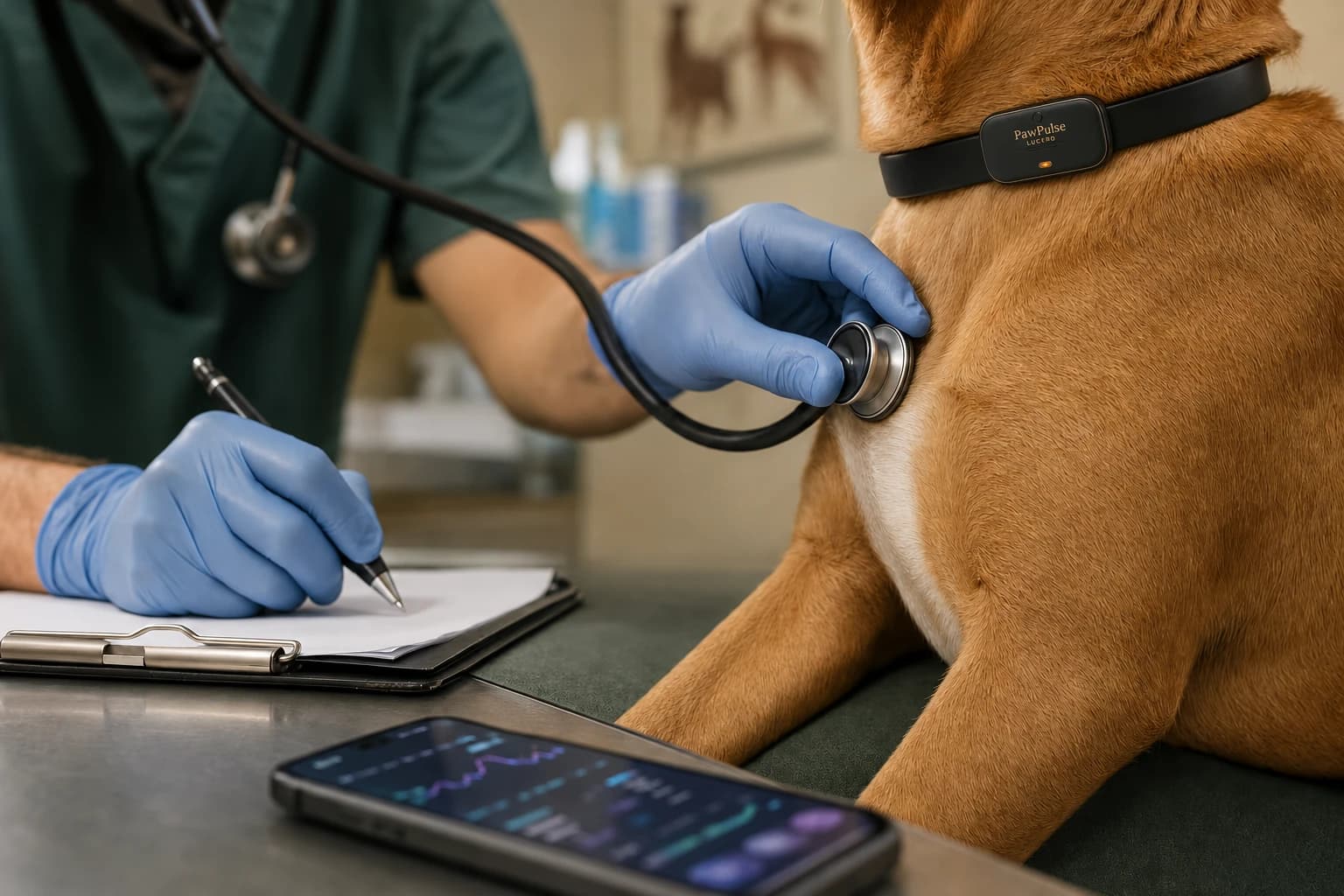
Veterinarians are trained to work with observable, measurable information. In human medicine, doctors rely on patient history, verbal symptom reports, and often wearable data from smartwatches. In veterinary medicine, the patient can't talk, and until recently, there was no equivalent of a health tracker providing continuous data between visits.
A comprehensive review published in Animals (MDPI) on remote vital sensing in veterinary medicine found that continuous monitoring technologies can identify health problems in early stages while reducing stress for animal patients. The key insight: periodic 15-minute vet exams capture a snapshot. Continuous monitoring captures a trend.
The difference matters enormously for diagnosis. A single elevated heart rate reading could mean your dog is stressed from the car ride to the clinic. Four days of gradually increasing resting heart rate at home, captured while your dog sleeps, tells a completely different story.
The Data That Changes the Conversation
Here's what transforms a vet visit from a guessing game into a targeted consultation:
| Data Type | What It Tells the Vet | What It Replaces |
|---|---|---|
| Resting heart rate trend | A steady climb your vet will want to see | Exploratory blood panel to rule out systemic causes |
| Heart rate variability (HRV) | Autonomic nervous system health, chronic stress | Behavioral observation + cortisol testing |
| Respiratory rate pattern | A change that might prompt a quick heart or lung check | Chest X-ray ordered "just to check" |
| Sleep duration + quality | A clear before-and-after for your vet | Owner estimate ("I think he's sleeping more?") |
| Activity level trend | Mobility decline, lethargy onset, recovery progress | Repeated follow-up visits to assess improvement |
| Anomaly timestamps | Exact date symptoms began | Owner guess ("maybe two weeks ago?") |
This is what PawPulse's Vet Dashboard delivers. Weeks or months of continuous data, collected passively by the collar's 60GHz radar sensor, organized into a timeline that any veterinarian can read in under a minute.
How Data-Driven Visits Actually Save Money
Fewer Exploratory Tests
When a vet has no objective baseline, they have to cast a wide diagnostic net. Blood chemistry panels, CBC, urinalysis, thyroid screening, imaging. Each test adds to the bill, and many come back normal because they were ordered to rule things out rather than confirm a suspicion.
Continuous health data narrows the possibilities before the appointment starts. If your dog's resting heart rate has been steadily climbing for 10 days while activity levels dropped, the vet can focus on cardiac and systemic causes rather than ordering a full workup. If sleep patterns are unchanged but daytime activity cratered, that points toward musculoskeletal pain rather than systemic illness.
The data doesn't replace the vet's judgment. It sharpens it.
Faster, More Confident Diagnoses
The AVMA's 2024 Pet Ownership Sourcebook found that 69.1% of pet owners visited a veterinary practice in the previous year. But the quality of those visits varies enormously based on the information the owner brings. A vet who sees a clear data trend can move from exam to diagnosis to treatment plan in a single visit. Without data, that same case might require a follow-up appointment, a recheck after a trial medication, and another round of tests if the first treatment doesn't work.
Each additional visit adds exam fees on top of diagnostics and treatments.
Real Examples of Data Changing Outcomes
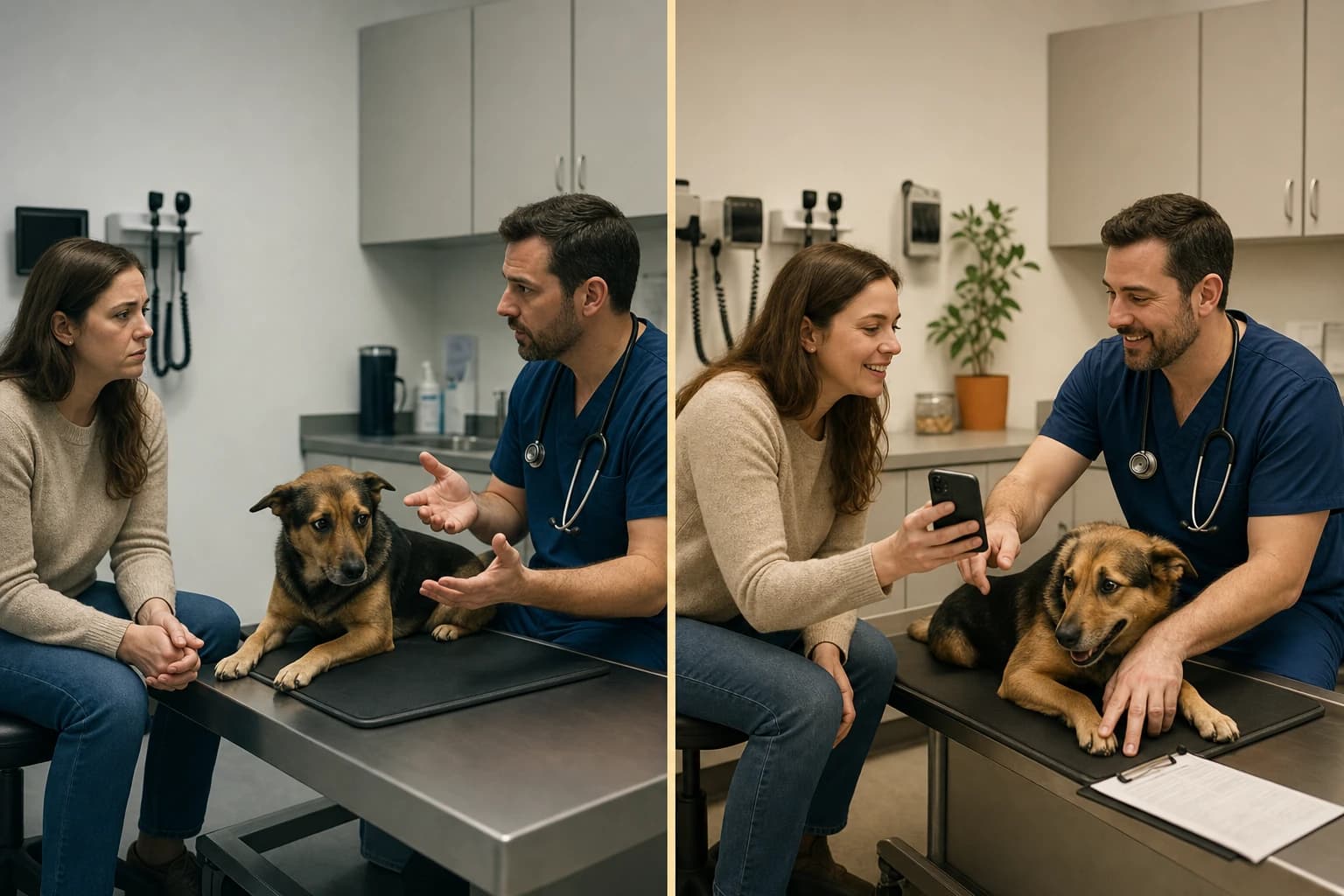
The "sluggish" dog. Owner reports decreased energy for "a while." Without data: vet orders CBC, chemistry panel, thyroid, urinalysis. With PawPulse data: vet sees resting heart rate elevated over 8 days, respiratory rate normal, sleep increased per day. Pattern suggests systemic inflammation or early infection. Vet orders targeted CBC and C-reactive protein. Faster answer, half the cost.
The "picky eater." Owner says the cat stopped eating as much "recently." Without data: vet runs GI panel, dental exam under sedation, and possibly ultrasound. With PawPulse data: activity log shows the cat's food intake declined gradually over 3 weeks alongside a slow rise in resting respiratory rate. Vet checks cardiac function first. Catches early stage heart disease that would have been missed on a GI workup.
Post-surgery recovery. Dog had knee surgery two weeks ago. Owner says "he seems to be doing better." Without data: vet schedules a recheck visit to assess progress. With PawPulse data: vet reviews the recovery curve remotely via the Vet Dashboard, confirms activity levels are increasing on schedule and resting heart rate has returned to pre-surgery baseline. Recheck either happens via telehealth or gets deferred, saving the owner a trip and a fee.