Key takeaway: An IDEXX study of over 220,000 patients found that up to 1 in 5 apparently healthy dogs and 1 in 3 apparently healthy cats had abnormal findings during routine wellness screening. Most conditions that develop between annual vet visits are invisible to owners until they progress to obvious symptoms, by which point treatment is more complex and more expensive.
"He's Fine" Is the Most Dangerous Diagnosis in Pet Health
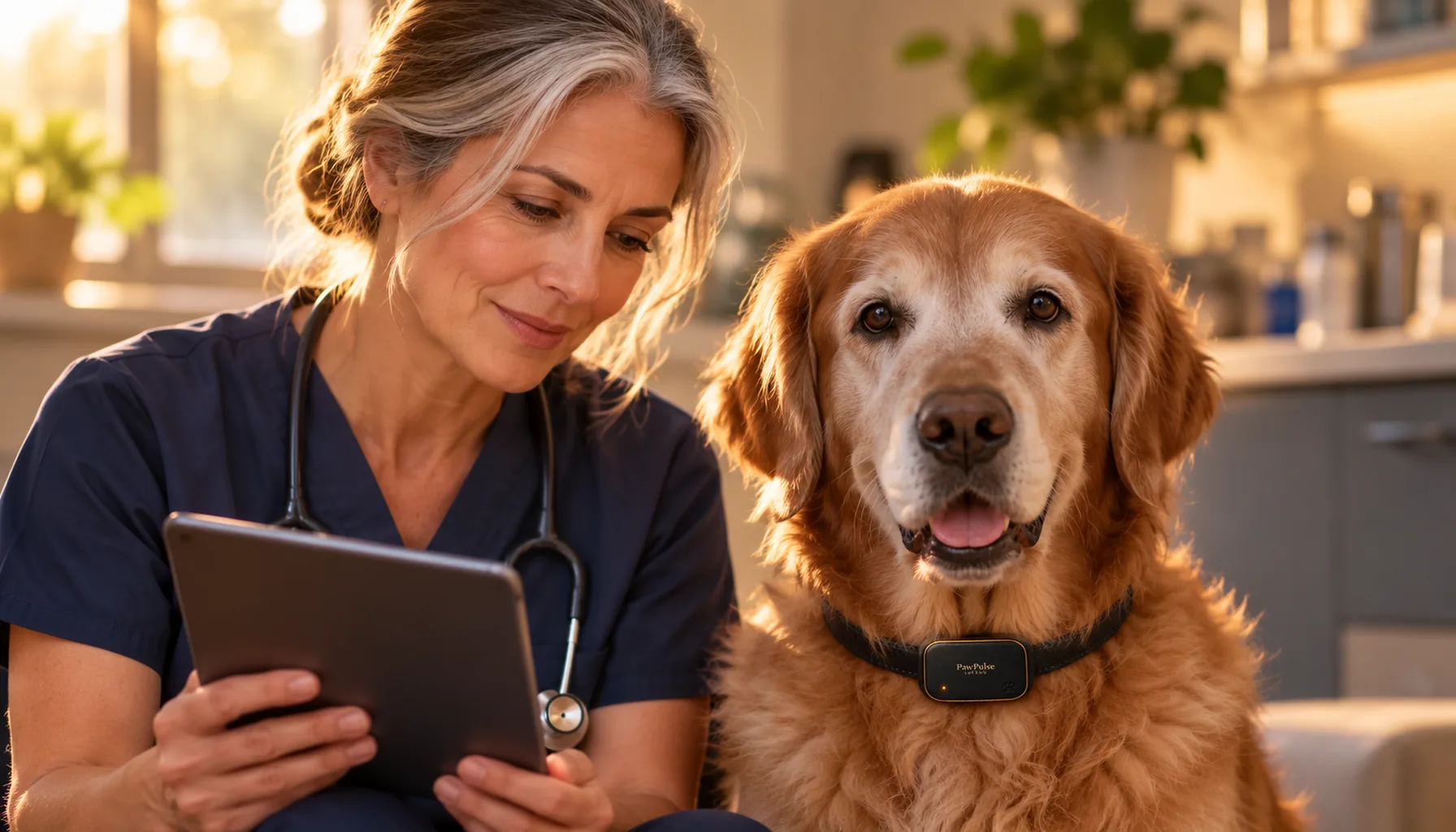
Your dog is eating normally. Playing fetch. Sleeping the usual amount. Tail wags when you come home. By every metric a pet owner uses to evaluate their dog's health, he's fine.
But here's a stat that should make you uncomfortable: a large-scale IDEXX study of over 220,000 pets found that wellness screening reveals abnormal findings in up to 1 in 5 dogs and 1 in 3 cats who showed no outward symptoms at the time of testing. For mature adult dogs aged 4-8, roughly 20% had something going on that neither the owner nor the dog was advertising.
Your dog isn't lying to you. He genuinely doesn't know his kidney values are drifting. He can't feel his thyroid slowing down. He doesn't register early cardiac changes the way you'd notice a sore throat. By the time he shows you something's wrong - by eating less, moving slower, sleeping more - the underlying condition has had months of runway.
The myth of the "healthy" dog isn't that your dog is secretly sick. It's that "looks healthy" equals "is healthy." Those are two very different things.
What Happens in the 364 Days Between Checkups
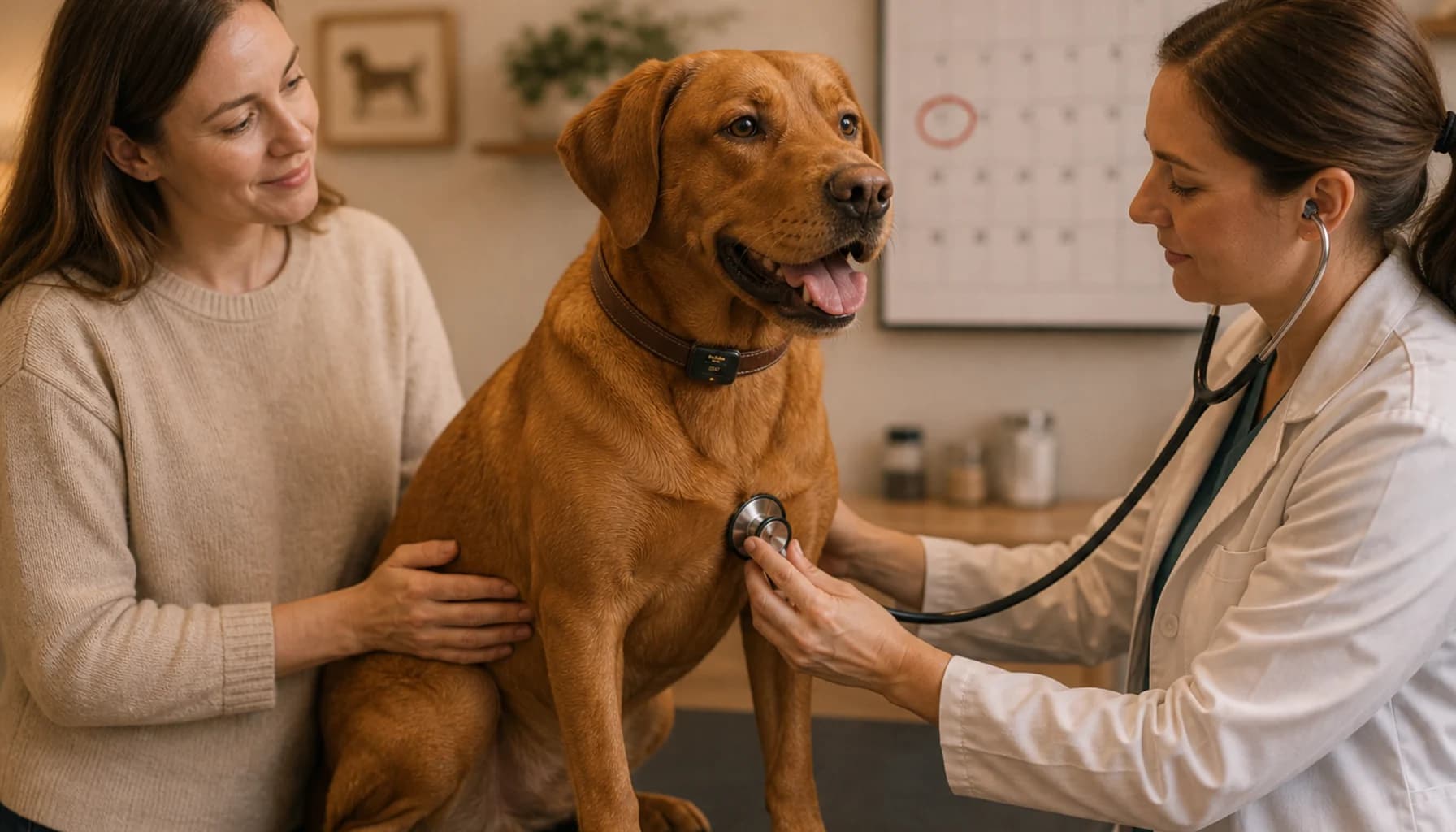
The average dog sees a vet once a year. Some see a vet even less. That annual visit typically lasts 15-20 minutes, during which the vet performs a physical exam, maybe runs bloodwork, administers vaccines, and asks you the standard questions: appetite, energy, bathroom habits.
It's a snapshot. A good one - annual exams are important and you should keep doing them. But it's still a single frame from a 365-day movie. And most of the interesting plot developments happen off-camera.
What Can Develop in 12 Months
A lot. Conditions like early kidney disease, hypothyroidism, cardiac changes, arthritis, dental disease, and certain cancers don't appear overnight. They build gradually, often over months, with subtle physiological shifts that precede any behavioral change.
Research published in Frontiers in Veterinary Science on wellness visit classification emphasized that early disease identification depends on finding subclinical abnormalities in animals that appear healthy. The problem: you have to be looking to find them, and once-a-year looks aren't frequent enough for conditions that move on a monthly timeline.
The Numbers Are Worse Than You Think
According to IDEXX's preventive care research, wellness testing can uncover potential issues in up to 40% of dogs and 60% of cats. The younger cohort isn't immune either: 1 in 7 young adult dogs (aged 1-4) had abnormal findings during routine screening. These aren't sick dogs. They're dogs whose owners said "he's fine" - because from the outside, he was.
The AAHA published supporting findings noting that little variation exists in the rate of significant findings between adult and senior dogs, which means age alone isn't a reliable trigger for when to start paying closer attention. The subclinical stuff starts earlier than most owners assume.
Why "Looks Healthy" Fools Even Good Owners
This isn't about bad pet parenting. It's about biology conspiring against visibility.
Dogs and Cats Are Hardwired to Hide Weakness
We've covered this in previous posts, but it bears repeating: your pet's evolutionary survival strategy is to appear healthy even when they're not. In the wild, a visibly compromised animal is a target. That instinct doesn't switch off on a living room couch. Your dog will compensate for joint pain by shifting weight. Your cat will eat less gradually enough that you don't notice the trajectory. By the time the behavioral change is obvious to you, the physiological change has been underway for weeks or months.
Humans Are Bad at Spotting Gradual Change
Even if your pet weren't hiding it, you'd probably miss it anyway. Humans are wired to notice sudden changes and blind to gradual ones. If your dog's activity dropped 30% overnight, you'd be at the vet tomorrow. If it dropped 2% per week for four months - the same total decline - you'd adapt to the new normal without registering the shift.
This is the fundamental gap that annual exams can't bridge and that observation alone can't solve.

What Continuous Monitoring Actually Changes
The fix isn't more vet visits (though twice-yearly exams are increasingly recommended for senior pets). The fix is filling the gap between visits with objective, continuous data that catches gradual shifts your eyes can't.
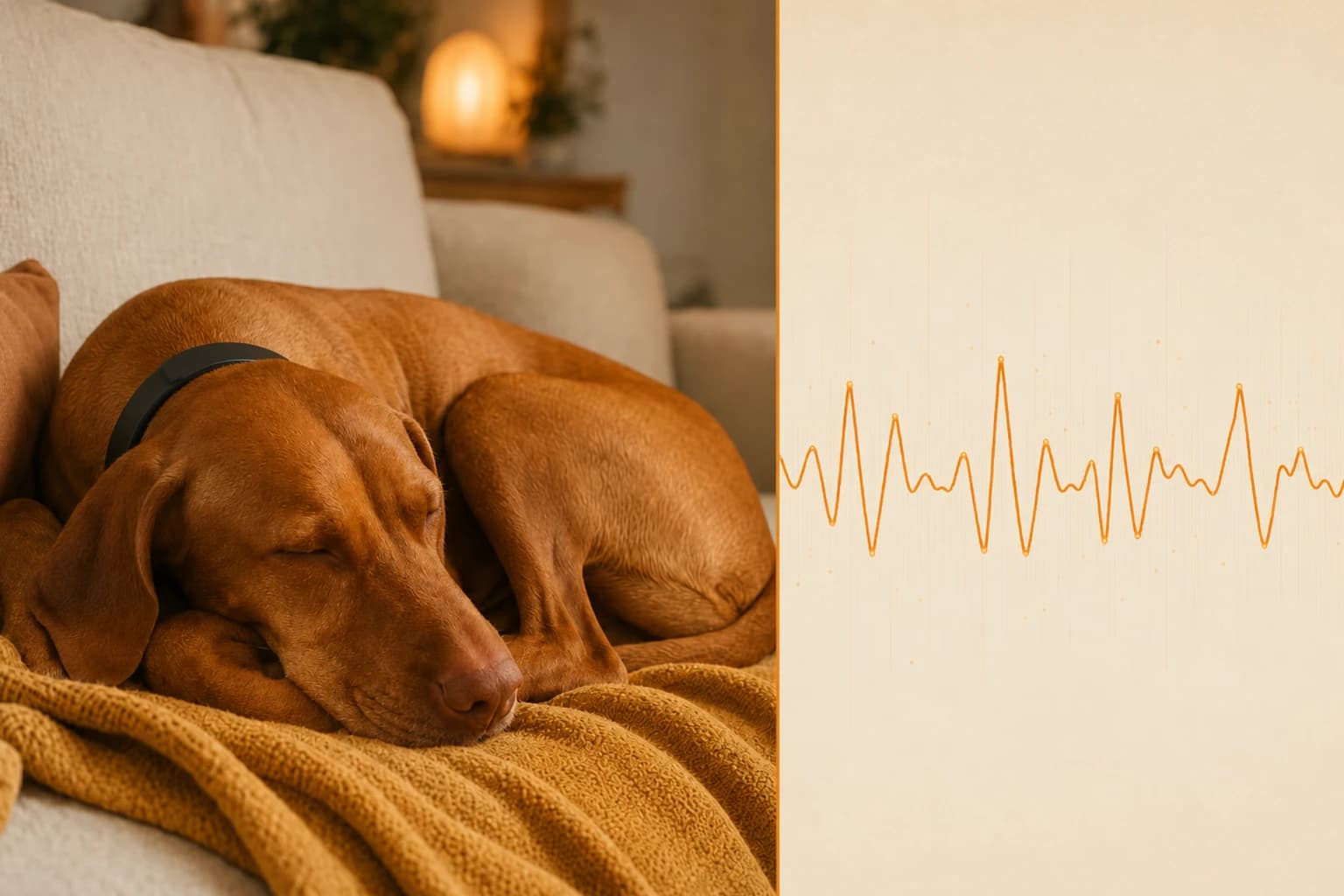
PawPulse's radar-based sensor passively tracks heart rate, respiratory rate, heart rate variability (HRV), activity levels, and sleep patterns every day your pet wears the collar. Prism Insights AI builds a personal baseline for your individual dog or cat over the first few weeks. From there, it surfaces sustained deviations for you to share with your vet.
Not a single reading that might mean something. A sustained trend that probably does.
What This Looks Like in Practice
Month 3: Your dog's baseline is established. Everything is normal. You get confirmation that "he's fine" actually means he's fine.
Month 5: Resting heart rate during sleep trends up 8% over two weeks. Activity dips slightly. Sleep increases by 45 minutes per day. Individually, each shift is invisible. Together, Prism Insights surfaces the pattern and sends you an alert.
Month 5, day 3: You share the trend with your vet. Instead of starting from scratch, your vet sees exactly when the change began, how it progressed, and which metrics moved together. They order targeted bloodwork. Catches early-stage kidney changes that wouldn't have shown symptoms for another 3-4 months.
Month 5, day 5: Treatment starts early. Cost: moderate. Prognosis: excellent.
The alternative scenario - without monitoring - plays out at month 8 or 9, when your dog finally shows behavioral changes, you bring them in with "he's been a bit off lately," and the vet starts the diagnostic process from zero. Same condition. Later catch. Higher cost. Narrower treatment window.
The Vet Visit Multiplier
Continuous monitoring doesn't replace vet visits. It makes every vet visit dramatically more productive.
| What Changes | Without Monitoring | With Monitoring |
|---|
| What you bring | "He seems fine" or "he's been off" | 90 days of vitals, sleep, activity |
| What the vet sees | A 15-minute snapshot (stress-elevated) | Weeks of home resting baselines |
| How they diagnose | Broad screening to rule things out | Targeted testing based on data trends |
| How early they catch it | When symptoms appear | When data shifts |
| Follow-up quality | "I think he's improving" | "His HR returned to baseline on day 12" |
The data doesn't just help find problems. It helps confirm that treatment is working, that recovery is on track, and that "he's doing better" isn't wishful thinking.
The Vet Dashboard puts your pet's full timeline in front of your veterinarian in a format designed for clinical workflows. Your vet can review trends, check anomaly flags, and compare current metrics against your pet's personal baseline, all before the stethoscope comes out.
What You Can Do Starting Now
Even without a smart collar, you can improve your visibility between annual visits:
Weigh your pet monthly. A kitchen scale for cats, a bathroom scale for dogs (weigh yourself, then weigh yourself holding the dog, subtract). Weight change is one of the earliest detectable shifts in many conditions, and most owners don't catch it until the vet says "he's gained 4 pounds since last year."
Take a monthly photo from the same angle. Subtle body condition changes (muscle loss, abdominal distension, coat quality decline) are easier to spot in side-by-side photos than in daily observation.
Keep a simple log. Energy level (1-5 scale), appetite (1-5), and any unusual behavior, noted once a week. It takes 30 seconds and gives your vet something concrete at the next visit.
The jump from manual logging to continuous monitoring is where PawPulse lives. It automates the data collection, builds the baseline, and surfaces the shifts, so you don't have to be the one counting breaths at 3 AM.

Cats: The 1-in-3 Stat That Should Worry You
If the 1-in-5 stat for dogs is concerning, the cat numbers are worse. IDEXX's data showed that 1 in 3 apparently healthy cats had abnormal findings on wellness screening. Cats visit the vet less frequently than dogs (the AVMA reports that only about 57% of cat-only households visited a vet in the past year), which means the gap between screenings is even wider.
Feline kidney disease, hyperthyroidism, diabetes, and cardiac conditions all develop gradually and present late. PawPulse's collar tracks the same vital sign patterns in cats that it tracks in dogs, giving cat owners continuous visibility that was previously impossible without repeated clinic visits that stress the cat (and the owner's wallet).
Frequently Asked Questions
How many "healthy" dogs actually have hidden health issues?
An IDEXX study of over 220,000 pets found that up to 1 in 5 apparently healthy dogs had abnormal findings during routine wellness screening. For young adult dogs aged 1-4, 1 in 7 had abnormalities. For mature adults aged 4-8, the rate was approximately 1 in 5. These are dogs whose owners reported no concerns at the time of testing.
Why can't annual vet visits catch everything?
An annual exam is a 15-20 minute snapshot of your pet's health at a single moment. Conditions like early kidney disease, hypothyroidism, and cardiac changes develop gradually over weeks or months between visits. By the time symptoms are visible, the condition has typically progressed past its earliest, most treatable stage. Twice-yearly exams help, but continuous data fills the gap more completely.
What is subclinical disease in pets?
Subclinical disease is a condition that exists and is progressing but hasn't yet produced visible symptoms. Your pet appears healthy to you and may even appear normal on a physical exam, but bloodwork, vital sign trends, or imaging would reveal early changes. Most conditions have a subclinical phase that, if caught, allows for earlier and less expensive intervention.
How does continuous monitoring fill the gap between vet visits?
PawPulse's radar-based sensor tracks heart rate, respiratory rate, HRV, activity, and sleep daily. Prism Insights AI builds a personal baseline for your pet and surfaces sustained deviations over days or weeks. This gives you and your vet visibility into the 364 days between annual appointments, turning gradual shifts into actionable data to share with your veterinarian.
Should I bring my dog to the vet more than once a year?
Many veterinary organizations now recommend twice-yearly exams for senior pets (typically age 7+), and some recommend biannual visits for all adult pets. More frequent visits combined with continuous home monitoring provides the most complete picture. At minimum, any sustained change surfaced by monitoring data warrants a vet conversation regardless of when the last appointment was.
Is continuous monitoring useful for cats too?
Especially for cats. IDEXX data showed 1 in 3 apparently healthy cats had abnormal wellness findings, and cat owners visit the vet less frequently than dog owners. Cats are also more effective at masking symptoms. Continuous monitoring surfaces vital sign trends passively, without requiring stressful clinic visits, giving cat owners and their veterinarians data that would otherwise be completely invisible.
Learn more about PawPulse Lucero and the PawPulse Vet Dashboard, built to give your vet weeks of objective data so the annual checkup is informed instead of guesswork.
Related reading: 5 things your dog's sleep reveals about their health and what your vet wishes you would bring to every appointment.
-- The PawPulse Team