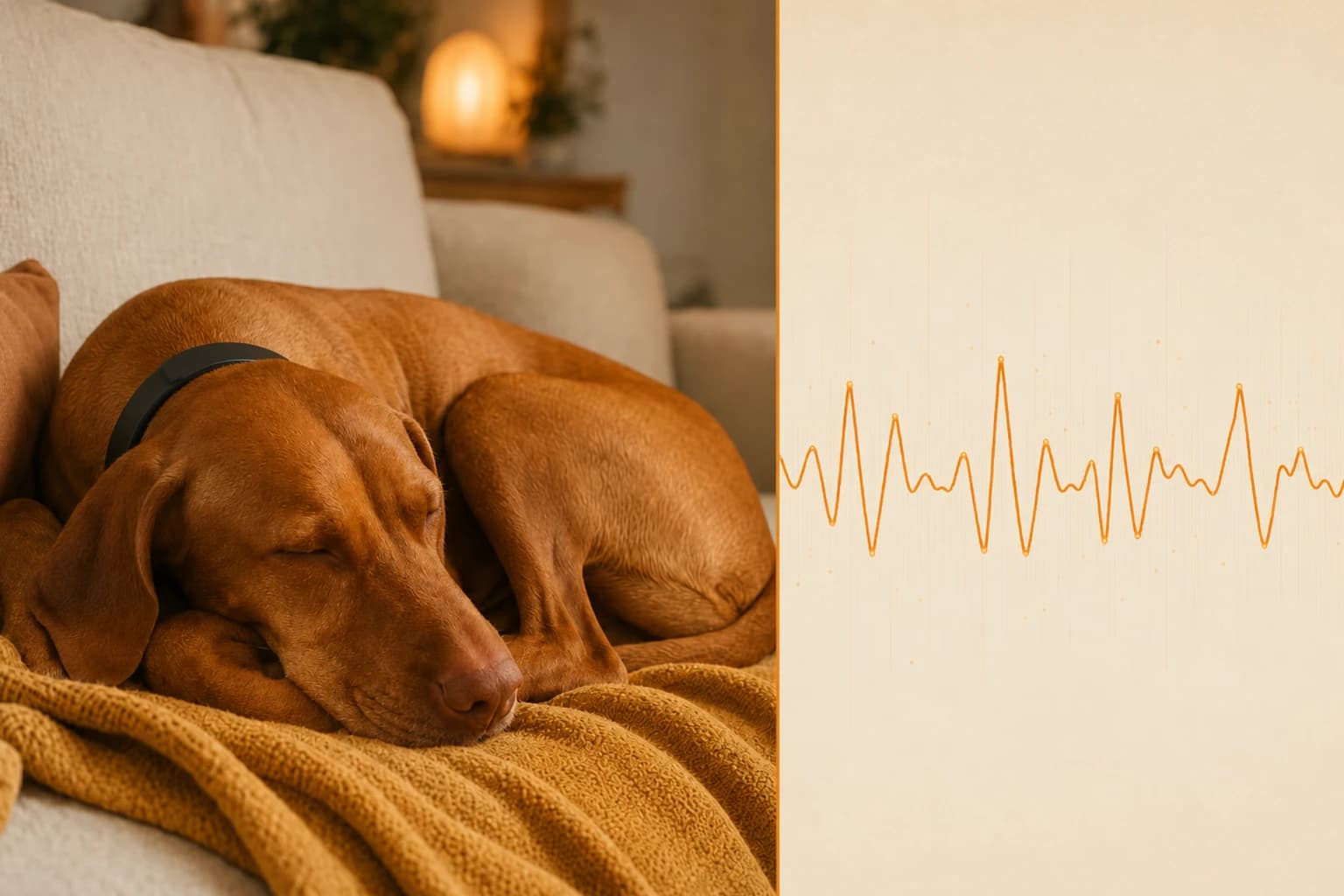
Key takeaway: Adult dogs sleep 12-14 hours per day, and changes in sleep duration, timing, position, or restlessness may correlate with pain, stress, anxiety, cognitive decline, or cardiorespiratory changes. Tracking your pet's sleep pattern over weeks gives you and your veterinarian objective data that a single clinic visit can't capture.
Your Dog's Favorite Hobby Is Also a Health Report
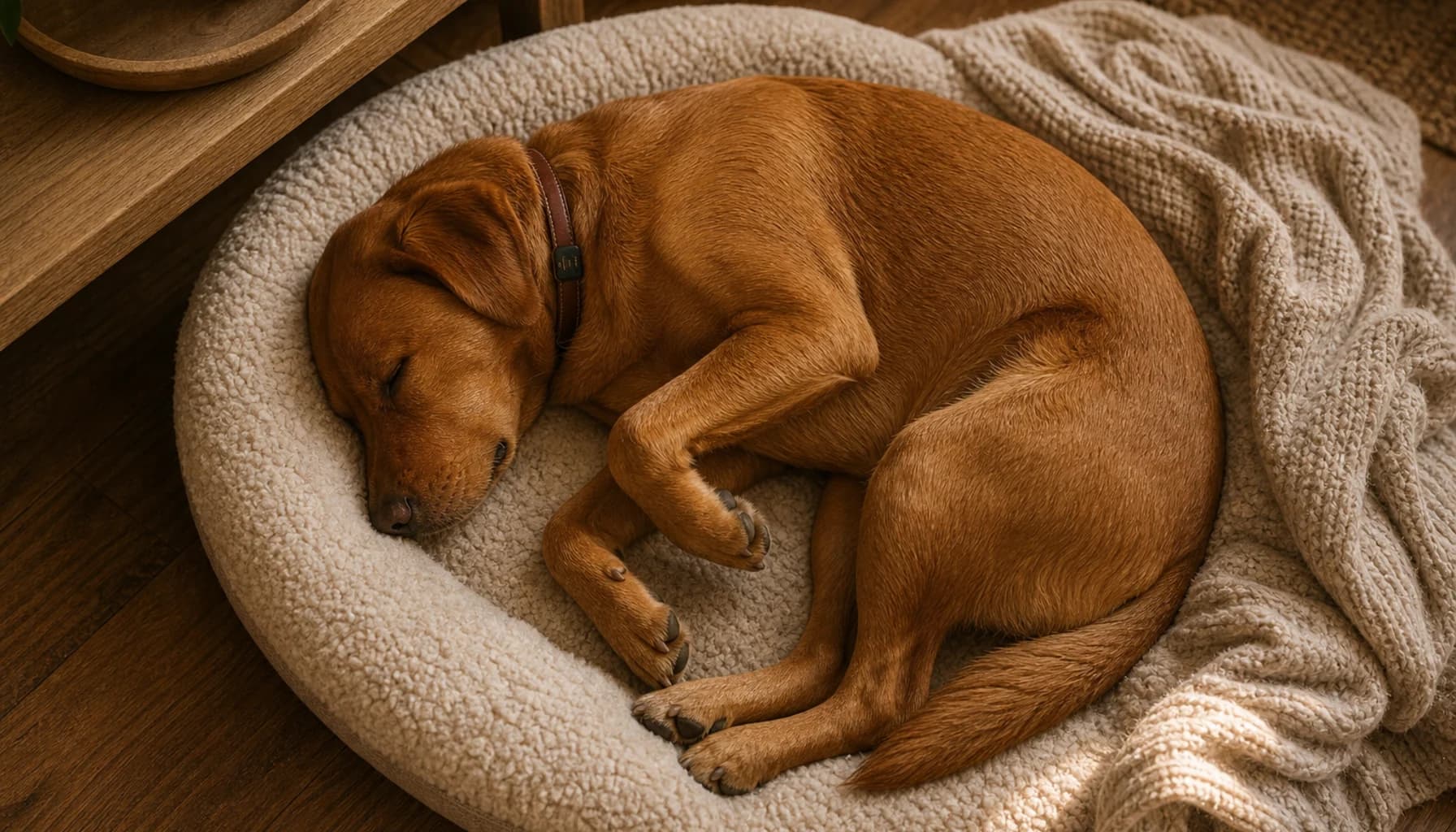
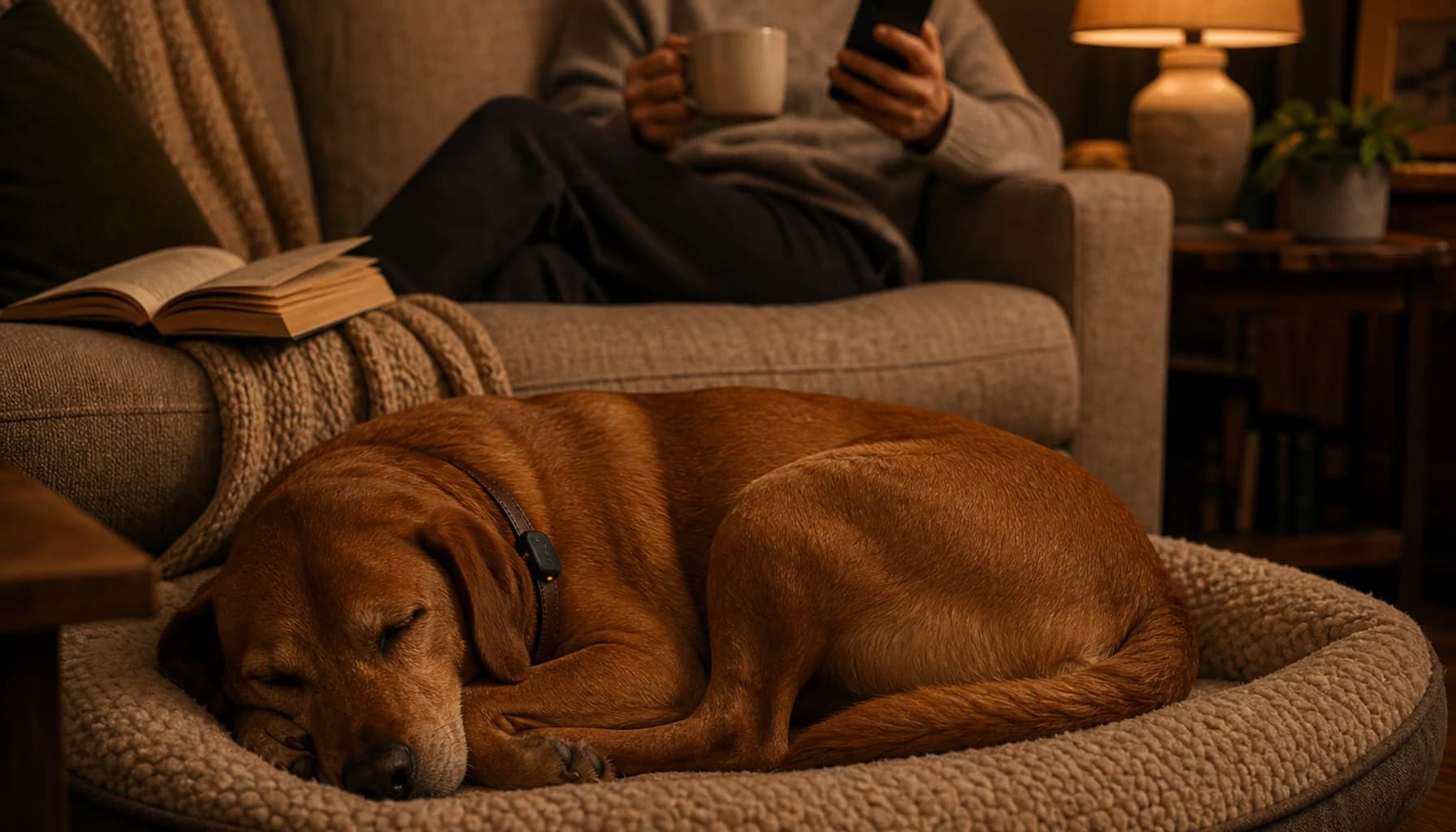
Your dog sleeps roughly half its life. That's not laziness - that's biology. Adult dogs average 12-14 hours of sleep per day, puppies can hit 18-20, and senior dogs often drift higher as they age.
Most owners notice when their dog is awake and acting strange. Almost nobody notices when their dog's sleep changes, because you're usually asleep too (or at work, or doing literally anything other than watching your dog nap). But here's the thing: sleep is one of the most sensitive indicators your pet has. It shifts before behavior does, before appetite changes, and often weeks before anything looks "wrong" to the naked eye.
Think of it as your dog's overnight status report. They just can't email it to you.
1. Pain Changes How (and How Much) Your Dog Sleeps
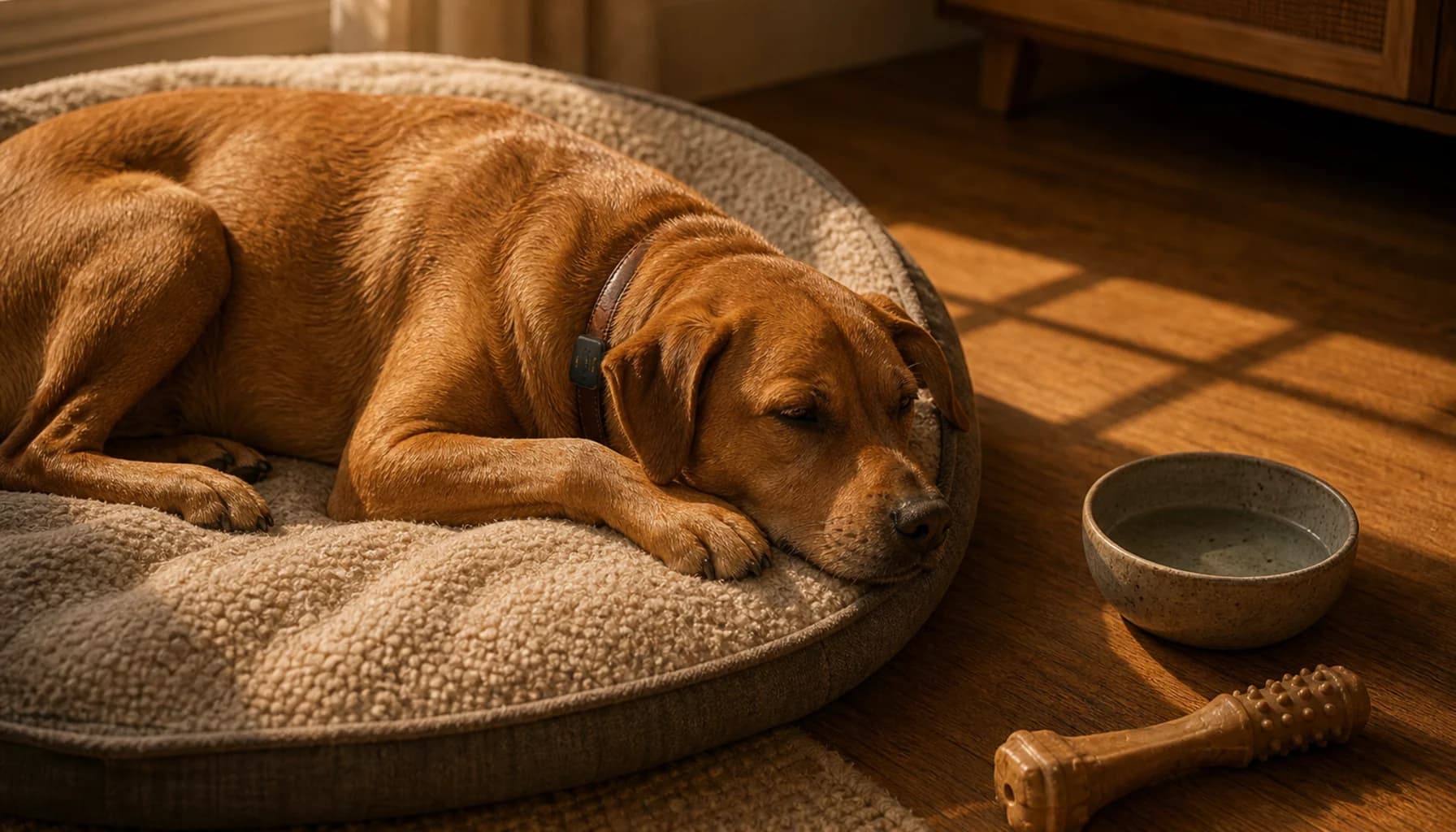
A dog in pain doesn't always limp or whimper. Sometimes the first sign is that they start sleeping more, because rest is the body's default response to discomfort. Other times, they sleep less - circling the bed, unable to find a position that doesn't hurt, getting up and lying back down repeatedly.
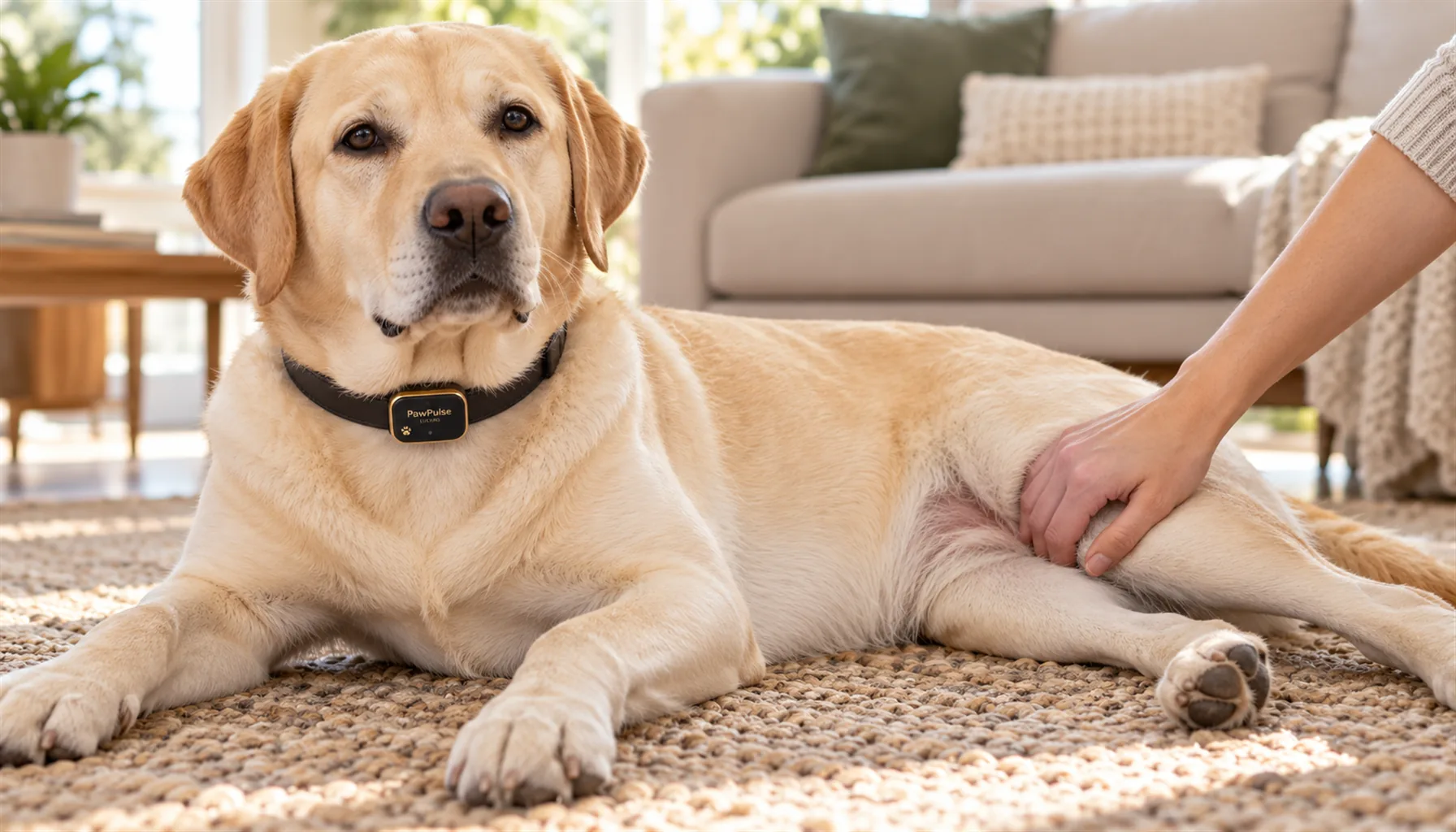
Arthritis is the classic example. A dog with early joint pain might sleep an extra hour per day because movement is becoming uncomfortable. Or they might shift from sleeping on their side (which requires extending the legs) to sleeping curled up (which protects sore joints). These position changes happen gradually, over weeks, and you'll never spot them by glancing at your dog before bed.
Research published in PLoS ONE on sleep as a welfare indicator found that both too much and too little sleep correlate with negative welfare outcomes in dogs, following a pattern similar to what's observed in humans. The sweet spot matters, and deviations in either direction are worth paying attention to.
What to share with your vet: "Her average sleep went from 13 hours to 15.5 hours over the past three weeks, and she's repositioning 4x more often during the night."
2. Stress and Anxiety Show Up at Bedtime
You know the feeling: you're exhausted, but your brain won't shut off. Dogs experience the same thing. An anxious dog may take longer to settle, sleep in shorter bursts, wake more frequently, and spend less time in deep REM sleep (the phase where you see those adorable twitchy paws).
A study published in Scientific Reports (Nature) on the relationship between daytime behavior and sleep in dogs found that stress and environmental disruptions significantly alter sleep architecture. Dogs experiencing stress showed fragmented sleep patterns with reduced deep sleep phases, while calmer dogs showed longer, more consolidated rest periods.
Separation anxiety, noise sensitivity, and changes in household routine (new baby, new pet, moved furniture, construction next door) all show up in sleep data before they show up in chewed shoes. For anxiety-related sleep disruption specifically, Pulse Rhythm's Heartbeat Mode may help your dog settle faster by delivering a calming haptic pattern when restlessness is detected.
What to share with your vet: "His sleep has been fragmented for 10 days - shorter bouts, more waking - and it started around the time we brought home the new puppy."
3. Cognitive Decline Rewires the Sleep Clock
This one is mostly for senior dog and cat owners, and it's important.
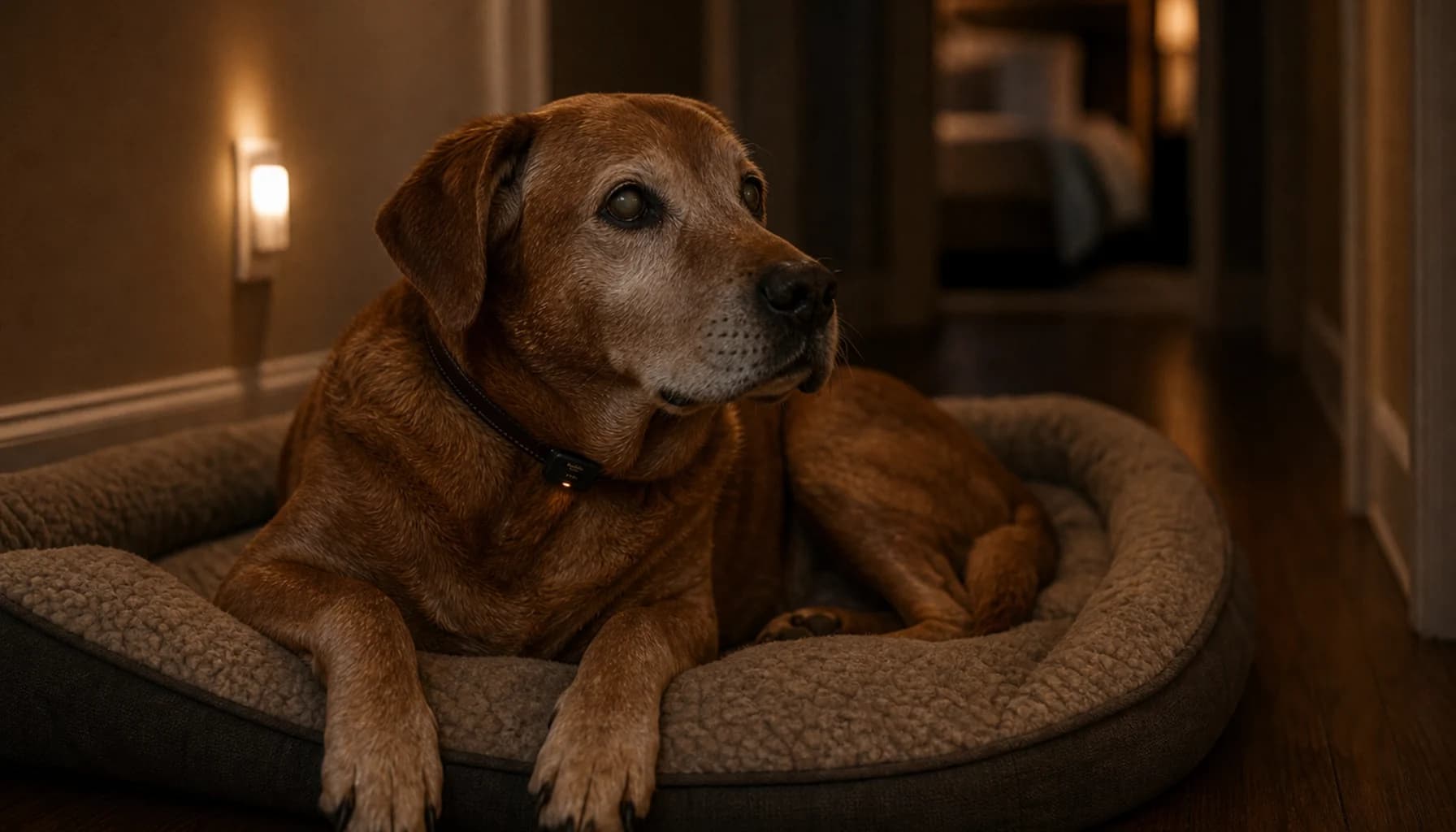
Canine cognitive dysfunction syndrome (CCDS) - essentially the dog equivalent of Alzheimer's - affects an estimated 28% of dogs aged 11-12 and over 60% of dogs over 15. One of the earliest and most consistent symptoms is sleep-wake cycle disruption: sleeping more during the day, pacing or vocalizing at night, getting "stuck" in corners, and losing the rhythm that used to govern their schedule.
A polysomnographic study published in Frontiers in Veterinary Science found that dogs with higher dementia scores spent less time in both NREM and REM sleep, and showed shallower sleep patterns overall. The researchers noted that sleep changes correlated with cognitive performance, suggesting that tracking sleep could give early visibility into cognitive decline.
The tricky part: these changes happen gradually. Your 12-year-old Lab starts pacing at 3 AM once a week, then twice, then every night. Spot it at once a week instead of every night, and you walk into the vet with a real story, not a hunch.
What to share with your vet: "She's been waking and pacing between 2-4 AM about 3 nights per week for the past month. Daytime naps have increased from 2 to 4 hours."
4. Heart and Breathing Changes Hide in Sleep Data
Here's something most owners don't think about: sleep is the only time your pet's heart and respiratory rates reflect a true resting baseline. During the day, excitement, exercise, heat, and even the sight of a squirrel can spike vitals. During deep sleep, those variables disappear.
That's why a gradually rising resting heart rate during sleep is one of the most meaningful trends in pet health monitoring. Your dog's awake heart rate might bounce between 80-120 BPM all day and look totally normal. But if their sleeping heart rate has crept from 65 to 78 over three weeks, that's a trend your vet wants to know about.
Same goes for respiratory rate. An extra 2-3 breaths per minute while your dog sleeps might correlate with early cardiorespiratory changes. You'd never count your dog's breaths at 3 AM. But a sensor that's always on? That's a different story.
What to share with your vet: "His resting respiratory rate during sleep has averaged 22/min for the past two weeks. His baseline for the previous three months was 16/min."
5. Recovery and Fitness Show Up in Sleep Quality
Not everything sleep reveals is scary. Sleep quality is also one of the best indicators of overall fitness, recovery from exercise, and general wellbeing.
A dog that had a big hike on Saturday should show deeper, longer sleep on Saturday night. If they're sleeping the same or worse after heavy exercise, that could point to discomfort, overexertion, or inadequate recovery. Conversely, a dog whose sleep quality has been steadily improving after a medication change or dietary adjustment - that's real data confirming the treatment is heading in the right direction.
This is the kind of trend that turns a follow-up vet visit from "I think he seems better?" into "His sleep quality has improved 18% since we started the joint supplement three weeks ago."
What to share with your vet: "Since we started the new medication, his average nightly sleep has gone from 10.5 to 13 hours, with fewer position changes and longer uninterrupted rest periods."
How PawPulse Tracks Sleep (Without You Losing Any)
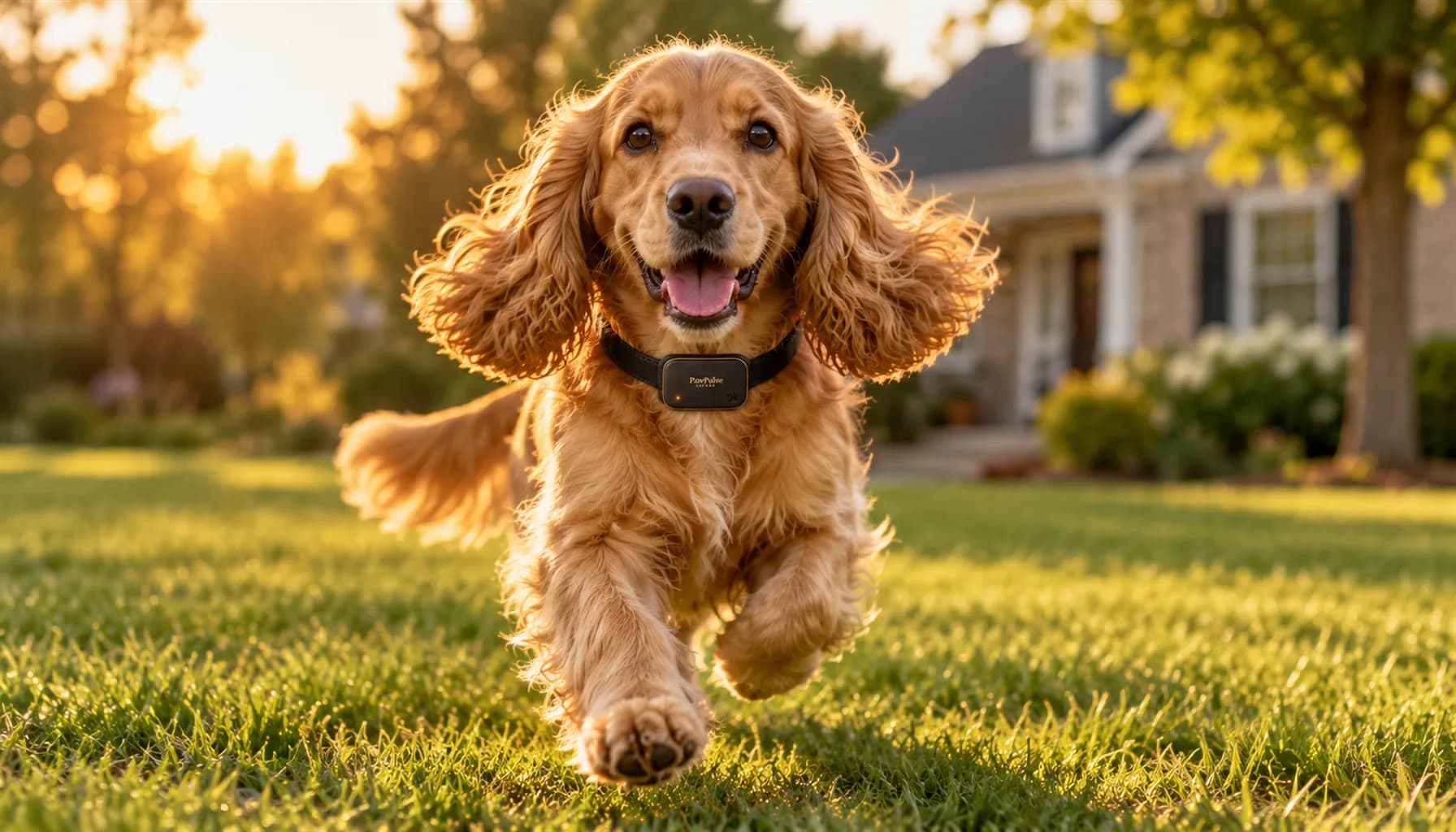
PawPulse's advanced radar sensor continuously tracks your dog's or cat's sleep without any input from you. Because the radar works on every coat and senses chest wall micro-movements, it can tell when your pet is lying still, how settled their breathing is, and when they wake up and resettle during the night.
Prism Insights AI builds a sleep baseline unique to your individual pet, not a breed average. When sleep duration, timing, fragmentation, or restlessness shifts from that personal baseline over several days, it gives you a heads-up, plus a sleep history your vet will actually want to see.
The collar doesn't interpret the data as a diagnosis. It gives you and your vet the pattern. Your vet does the rest.
The Sleep Cheat Sheet
| Sleep Change | What It May Correlate With | When to Talk to Your Vet |
|---|
| Sleeping significantly more | Pain, illness, hypothyroidism, depression | Sustained increase over 1-2 weeks |
| Sleeping significantly less | Anxiety, cognitive decline, discomfort | More than a few days |
| Frequent repositioning | Joint pain, arthritis, skin irritation | Nightly pattern lasting 1+ week |
| Nighttime pacing or waking | Cognitive dysfunction, anxiety, pain | More than 2-3 times per week |
| Sleep-wake reversal (day/night flip) | Cognitive decline, vision/hearing loss | Any sustained pattern in senior pets |
| Restlessness before settling | Anxiety, environmental stressor, pain | If it's new and lasting |
| Faster breathing during sleep | Possible cardiorespiratory changes | Sustained rise above baseline |
Cats Sleep 16 Hours a Day. Imagine What's Hiding in There.
Everything above applies to cats - arguably more so. Cats are championship-level symptom hiders, and because they sleep 14-16 hours a day, changes in their sleep architecture can reveal shifts that daytime observation would never surface.
A cat that starts sleeping in unusual locations (top of the fridge, inside closets, under beds) may be seeking isolation because of discomfort. A cat whose sleep becomes more fragmented may be experiencing early kidney disease or hyperthyroidism. PawPulse's radar tracks these patterns on cats of all breeds without requiring a tight collar fit, giving you the same overnight health data that makes such a difference at the vet.
Frequently Asked Questions
How much should a healthy adult dog sleep per day?
Most adult dogs sleep 12-14 hours per day, split between overnight rest and daytime naps. Puppies may sleep 18-20 hours, and senior dogs often sleep more as they age. The exact amount varies by breed, size, and activity level. What matters most is your individual dog's baseline, not a generic number.
Why is my dog suddenly sleeping more than usual?
Increased sleep may correlate with pain, illness, hypothyroidism, infection, or simply higher-than-usual physical exertion. If the increase is sustained over more than a week without an obvious cause (like a big hike the day before), it's worth bringing the data to your vet. PawPulse tracks sleep duration automatically so you have objective numbers rather than a guess.
Can sleep changes indicate cognitive decline in senior dogs?
Yes. Research published in Frontiers in Veterinary Science found that senior dogs with higher cognitive dysfunction scores spent less time in deep sleep phases. Sleep-wake cycle reversal (sleeping during the day, pacing at night) is one of the most commonly reported early signs of canine cognitive dysfunction syndrome. Tracking sleep over time can help surface these patterns early.
How does PawPulse track my dog's sleep?
PawPulse uses a proprietary radar sensor that tracks chest wall micro-movements regardless of coat type. It identifies when your pet is lying still, distinguishes light from deep sleep based on respiratory rhythm, and records waking and resettling events overnight. Prism Insights AI builds a personal sleep baseline and surfaces deviations when they persist over multiple days.
Do cats' sleep patterns reveal health information too?
Yes. Cats sleep 14-16 hours per day, and changes in sleep duration, location, or fragmentation may correlate with conditions like kidney disease, hyperthyroidism, pain, or anxiety. Because cats are more effective at hiding symptoms than dogs, sleep data can be especially valuable for surfacing subtle changes to share with your vet.
What sleep changes should prompt a vet visit?
Any sustained change lasting more than a week is worth mentioning to your vet: sleeping significantly more or less, frequent nighttime waking, difficulty settling, sleep-wake reversal, or a new pattern of restlessness. Bring specific data if you have it - "her sleep increased from 13 to 16 hours over two weeks" is far more useful than "she seems tired."
Learn more about PawPulse Lucero, the smart dog collar that keeps an eye on sleep, night after night, on every coat, so the patterns that usually stay hidden finally show up.
Related reading: why your dog's activity data can mislead you, what HRV reveals that a vet visit cannot, and why annual checkups are not enough.
-- The PawPulse Team