Key takeaway: Do microchips have GPS? No. A dog microchip holds an ID number that a scanner reads, and Humane World for Animals states plainly that it cannot track your dog. It only works if someone scans it and the registry reaches you: in a 2009 Ohio State study, 35.4% of unreachable owners of microchipped shelter animals had a wrong or disconnected phone number.
Three Things That Get Called "Tracking"
Ask ten dog owners how they would find a lost dog and you will hear three answers: "she's chipped", "he has an AirTag on his collar" and "we have a GPS collar". All three are useful. They are also completely different technologies that fail in completely different ways.
We are the team behind PawPulse, a smart dog collar designed for contactless heart rate and breathing monitoring and live location. We spend a lot of time on how location actually reaches an owner's phone, and the most common misunderstanding we hear is that these three things overlap. They mostly do not. This guide explains what each one really does, so you can decide what your dog needs whether or not you ever buy anything from us.
If your dog is missing right now, stop reading this and go to our first 24 hours checklist for a lost dog.
Do Microchips Have GPS?
No. This is the single most searched question on the topic, and the answer is short.
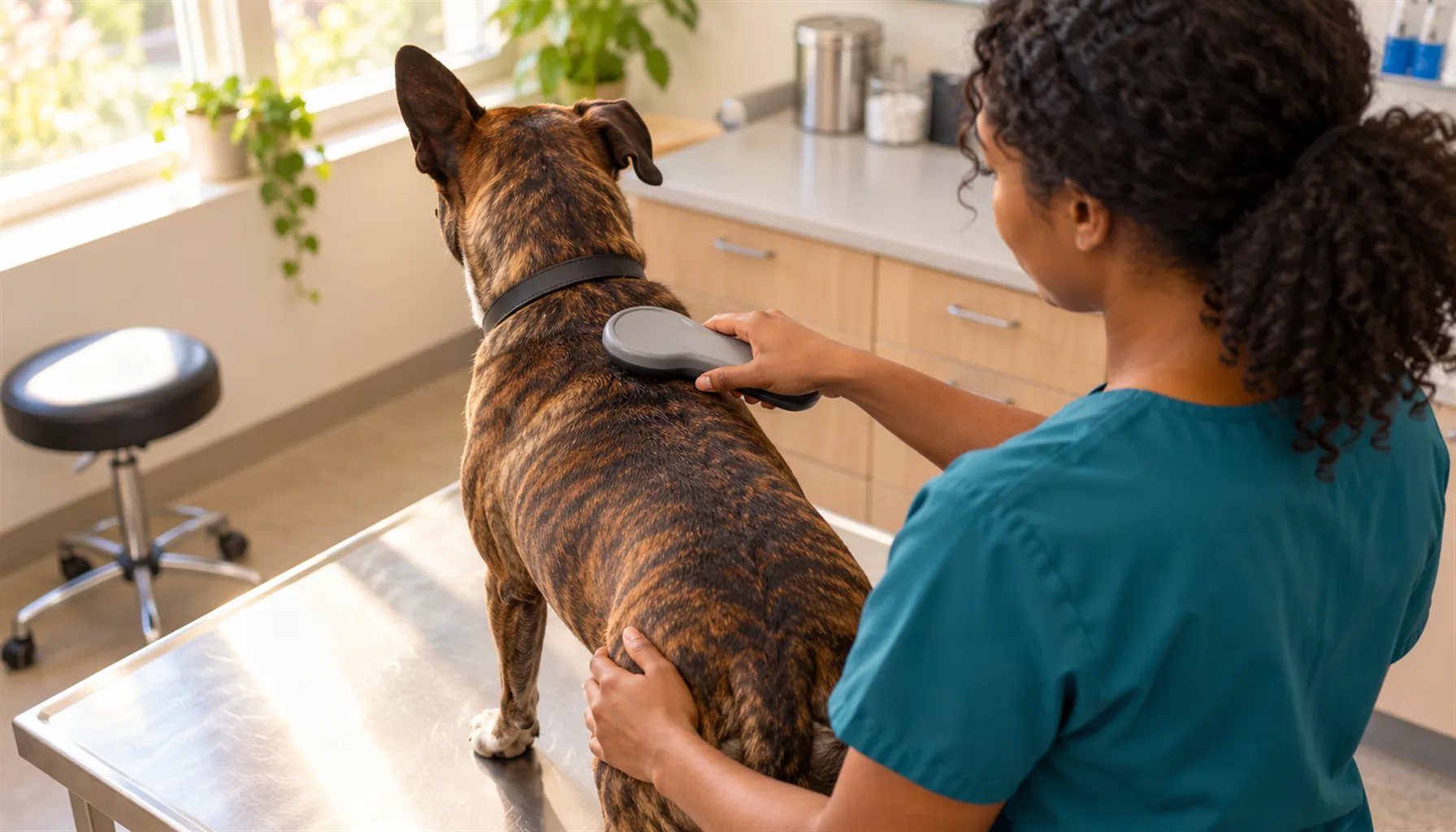
According to Humane World for Animals (microchip guidance, checked 2026), a microchip "isn't the same as a GPS device, and it can't be used to track your pet's whereabouts." Each chip contains an identification number and the phone number of the registry for that brand of chip. A handheld scanner reads the chip and shows that number. Someone then has to look the number up and call you.
So a microchip answers one question: "whose dog is this?" It answers it only after your dog has been found, taken somewhere with a scanner, and scanned. It never tells you where your dog is.
That is not a weakness to fix. It is the design. A microchip cannot fall off, cannot be removed by a stranger without a vet, and needs nothing from you except a correct entry in a database. That last part is where most chips fail.
Why a Microchip Only Works If It Is Registered
The best evidence comes from a study in the Journal of the American Veterinary Medical Association (Lord et al., Ohio State University, 2009) that followed 7,704 microchipped animals entering 53 US shelters. For stray dogs where the shelter reported the outcome, owners were found for 74.1%.
The failures are the useful part. For 876 animals whose owners could not be found, the main reasons were:
- an incorrect or disconnected phone number (35.4%)
- the owner did not return calls or letters (24.3%)
- the chip was registered to another group (17.2%)
And of the 1,943 chips that shelters checked against a registry, only 58.1% were registered in the database at all. The authors concluded that the high return rate supported microchipping, but that "issues related to registration undermined its overall potential."
In plain words: the chip in your dog is probably fine. The phone number attached to it might not be.
Do Vets Scan Microchips?
Shelters and many veterinary clinics scan found animals, and you can ask your own vet to scan your dog at a routine visit to confirm the chip still reads. Scanning is not perfect, though.
A second Ohio State study in the Journal of the American Veterinary Medical Association (Lord et al., 2008) scanned 3,949 microchipped shelter animals at six shelters with three or four commercial scanners each. None of the scanners detected every chip of any brand. The universal scanners found at least 94.8% of chips at the two common higher frequencies, but one universal scanner found only 66.4% to 75.0% of 125 kHz chips. The authors advised proper scanning technique and scanning more than once. Humane World for Animals makes the same point: if staff do not use the scanner properly, they may miss a chip.
How Does an AirTag Work on a Dog Collar?
An AirTag is a small Bluetooth item tracker, and the way it gets found is the key to what it can do for a dog. Security researchers at TU Darmstadt reverse-engineered the system and published the results in Proceedings on Privacy Enhancing Technologies (Heinrich et al., 2021). In their description, a missing tag is not located by itself. Nearby online Apple devices detect its Bluetooth signal and report an approximate location back to the owner through the internet, and the paper found the design protects the privacy of the people whose phones do the finding.
That design has real strengths. The tag is small, there is no cellular plan, and in towns and cities there are plenty of passing phones. It also means a tag's location updates depend on someone's device passing close enough to hear it. On a busy street that can happen often. On a farm road, a forest trail or an empty field at night, it may not happen at all until your dog comes back near people.
These tags were built to keep track of belongings, not animals. Nothing in the design follows a moving dog in real time, a tag can fall out of a holder, and a dog that bolts is often already out of range of the people who could have found it.
So, can you put an AirTag on a dog collar? Physically, yes, with a holder, and many people do. Just understand that you are using an item tracker built around nearby phones, not a dog tracker built around live location.
Microchip vs GPS Collar vs AirTag: Side by Side
| Microchip | Bluetooth item tag (for example, an AirTag) | Cellular GPS collar |
|---|
| What it does | Proves who the dog belongs to | Reports where the tag was last heard | Reports where the dog is now |
| How location works | No location at all | Nearby phones hear the tag over Bluetooth and report it | The collar computes its position from GPS satellites and sends it over a cellular network |
| What it depends on | A scanner, and a registry with your current phone number | Compatible phones passing close by | Cellular coverage where the dog is |
| Weak spots | Unregistered or out-of-date details; scanners can miss chips | Few phones nearby in rural areas; designed for items | No signal in dead zones; the collar must stay on and stay charged |
| Can it come off? | No | Yes, with the collar | Yes, it is the collar |
| Best at | Getting a found dog home | Finding a dog in a busy area | Knowing where your dog is while it is still moving |
Read across the bottom row and the pattern is clear. These are layers, not alternatives. A microchip covers the moment after someone finds your dog. A tag or collar covers the time before anyone does.
What a GPS Collar Can and Cannot Do
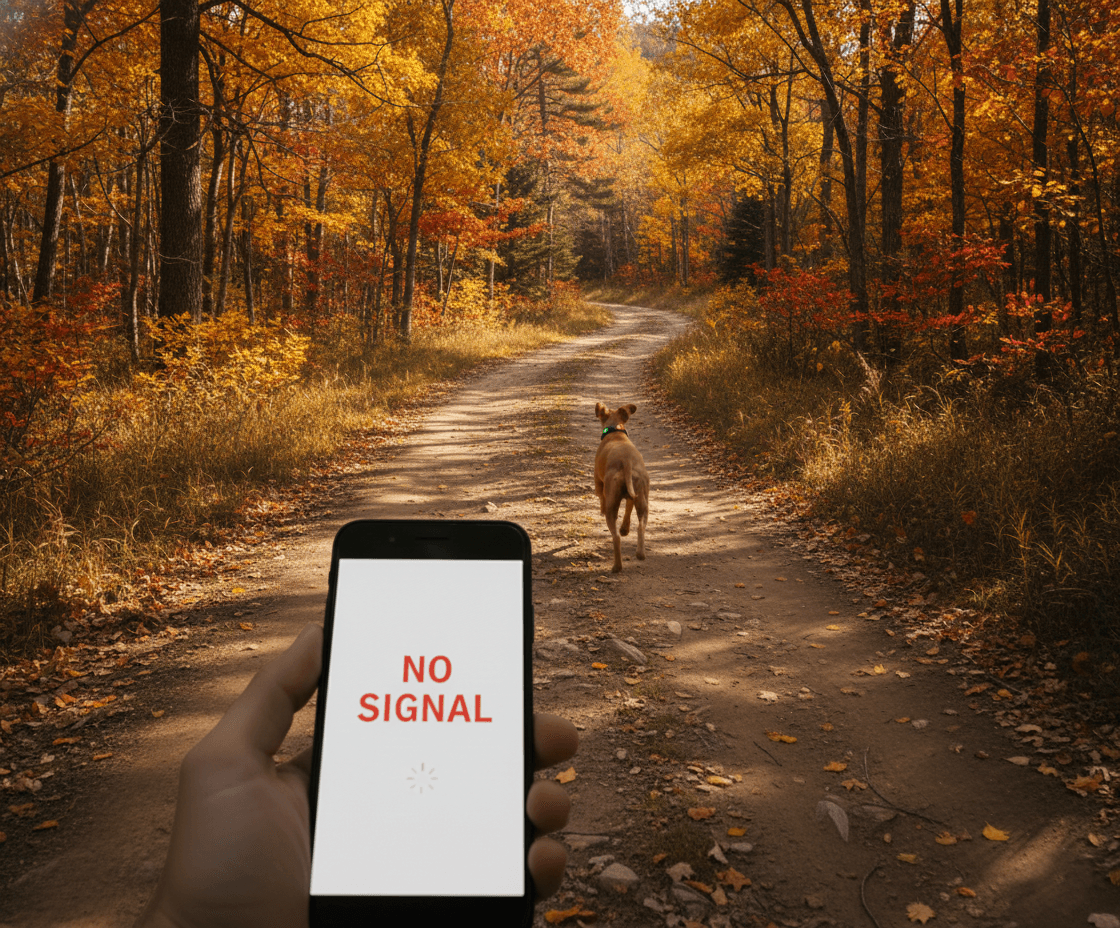
A GPS receiver can work out its position almost anywhere with a view of the sky. The hard part is getting that position to your phone. Most GPS collars send it over the cellular network, which is why they work beautifully in town and can go quiet in the hills. We covered that gap in detail in the dead zone problem.
A GPS collar also cannot prove ownership once it is off. Collars slip, snag and get removed. That is the strongest argument for keeping a microchip and a tag with your phone number even if your dog wears the best location collar in the world.
The 2012 ASPCA survey by Weiss, Slater and Lord is a useful reminder of how dogs actually come home. Of 1,015 US households asked about pets lost in the previous five years, 14% had lost a dog, and 93% of those dogs were recovered. According to the ASPCA's release on that survey (2012), 49% were found by searching the neighborhood, 15% came home because they wore an ID tag or had a microchip, and 6% were found at shelters. Identification worked. Searching close to home worked better. Live location helps you search in the right place.

Is My Dog's Microchip Registered? A Five-Minute Check
This is the most valuable thing you can do after reading this post, and it costs nothing.
- Find the chip number. It is on adoption paperwork or vet records. If you cannot find it, ask your vet to scan your dog.
- Find the registry. If you do not know which company holds the number, the AAHA universal pet microchip lookup at petmicrochiplookup.org can show which registries have it.
- Check every detail. Phone numbers, email and address. A number you stopped using two moves ago is the 35.4% problem.
- Add a second contact, such as a family member, if the registry allows it.
- Set a yearly reminder, and update the registry the same day you change your phone number or move.
When to Call Your Vet or Shelter
- Call your vet if you do not know your dog's chip number, if you are not sure your dog was ever chipped, or if you want the chip scanned to confirm it still reads.
- Call your registry and local shelters the moment your dog is missing, and give them the chip number. Our lost dog statistics post covers the wider picture.
- Call your vet the same day after any lost dog comes home, so injuries you cannot see get checked.
This post is owner education, not veterinary advice, and your vet and shelter know your local rules best.
Where PawPulse Lucero Fits
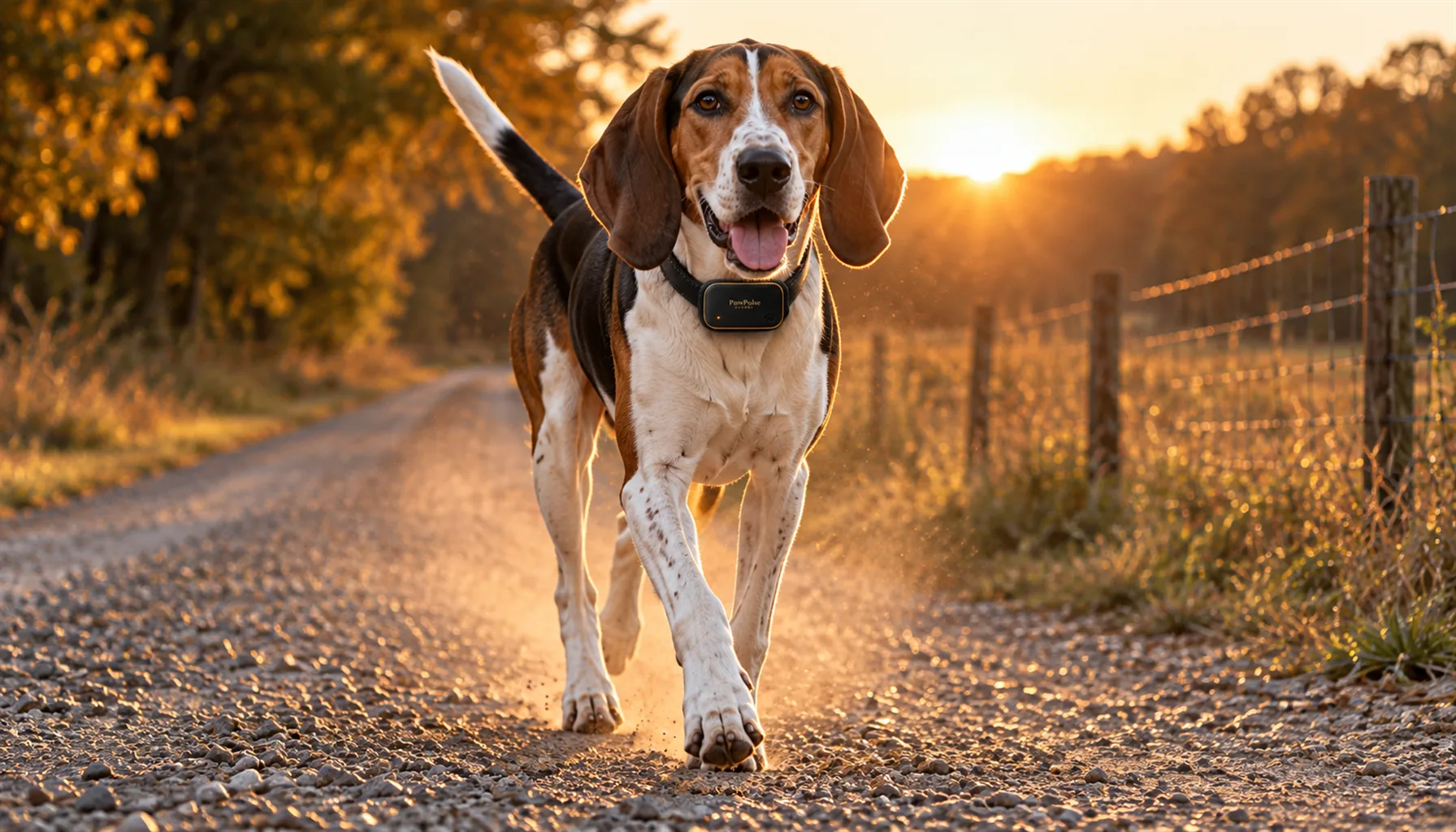
We built location into PawPulse Lucero because an open gate is the fear every owner shares. Lucero is designed to send live location over a cellular connection, with Safe Zones that alert you when your dog leaves one. It also has a satellite-ready backup designed to keep location updates moving when cellular drops out. Satellite availability depends on carrier support and certification.
None of that replaces a microchip or an ID tag. A collar can come off and coverage varies, so location is one more layer, not a guarantee. PawPulse Lucero is also designed to measure heart rate and breathing through fur without touching the skin (Kinetic sensing), giving you trends and context to share with your vet.
Frequently Asked Questions
Do microchips have GPS?
No. A dog microchip stores an identification number that a scanner reads, and Humane World for Animals states that it cannot be used to track a pet's whereabouts. It helps only after your dog is found and scanned, and only if the registry has your current phone number. Location needs a separate tag or collar.
Can you put an AirTag on a dog collar?
Physically, yes, using a holder. An AirTag is a Bluetooth item tracker found through nearby Apple devices, so it works best where many people are around and may not update in rural areas. It was built for belongings, not for tracking a moving dog. Keep a microchip and an ID tag as well.
GPS collar vs AirTag: which is better for a dog?
They work differently. A cellular GPS collar computes its own position and sends it over the cell network, so it can report a moving dog wherever there is coverage. A Bluetooth tag reports where nearby phones last heard it. In busy areas a tag can help; away from people, a GPS collar is usually more useful.
Is my dog's microchip registered?
Check, because many are not. In a 2009 Ohio State study, only 58.1% of chips that shelters looked up were registered. Find the chip number in your records or ask your vet to scan it, look it up with AAHA's universal lookup tool, then confirm your phone, email and address with the registry.
Do vets scan microchips?
Shelters and many vet clinics scan found animals, and you can ask your vet to scan your dog at a checkup. Scanning is not foolproof: a 2008 Ohio State study found no scanner detected every chip, so the authors recommended careful technique and scanning more than once.
Do I still need a microchip if my dog wears a GPS collar?
Yes. A collar can slip off, snag or be removed, and once it is gone it cannot prove who your dog belongs to. A registered microchip stays with your dog for life. Use both, plus an ID tag with your phone number, because each one covers a failure the others cannot.
Learn more about PawPulse Lucero, the smart dog collar designed for live location, Safe Zones and a satellite-ready backup, plus contactless heart rate and breathing monitoring designed to give you trends to share with your vet. Reservation holders get their Lucero first. We will confirm your delivery month when the Kickstarter is announced.
-- The PawPulse Team