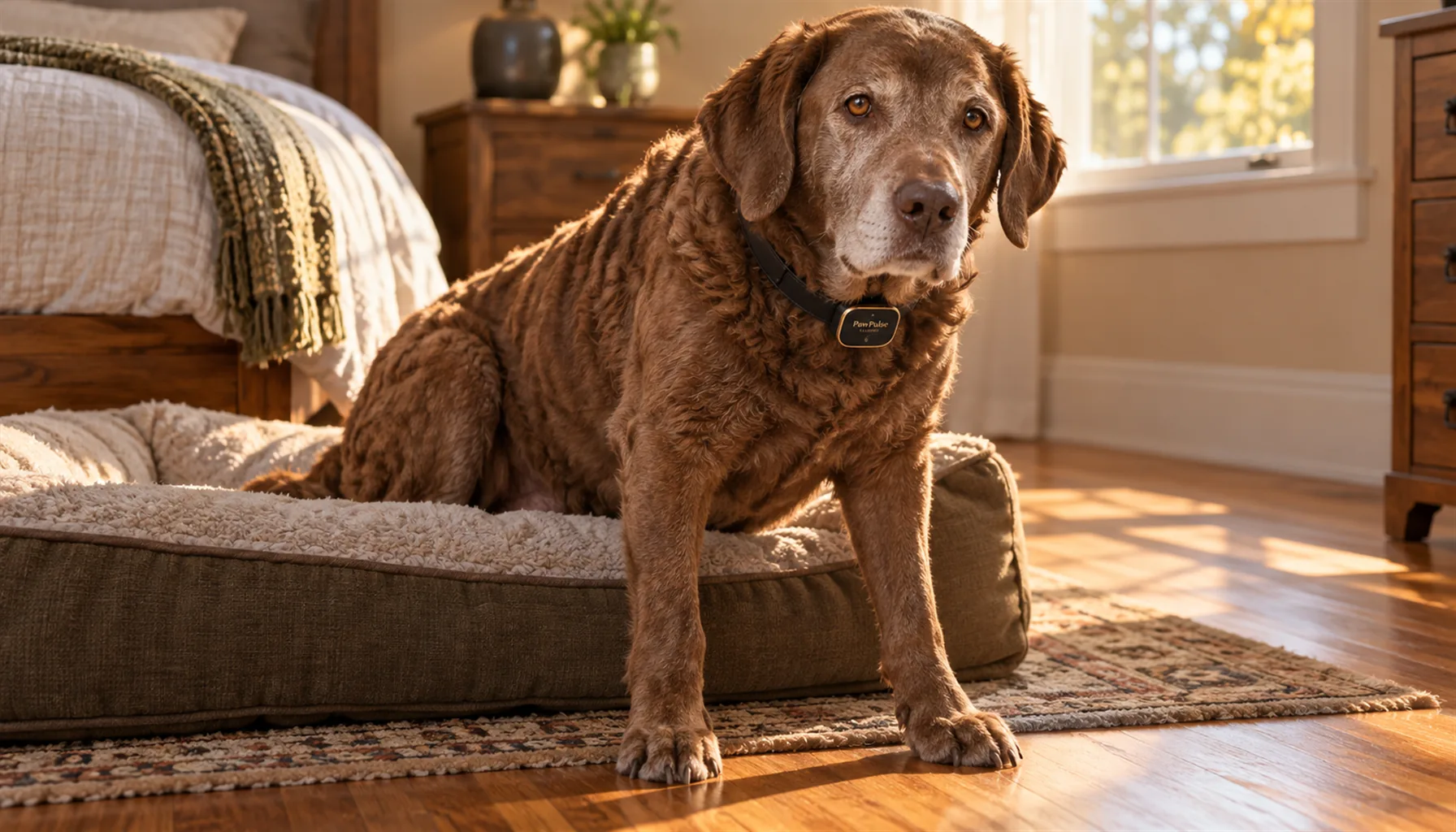
Key takeaway: The early signs of arthritis in dogs are easy to mistake for ordinary aging: slowness to rise after rest, trouble with stairs, and less jumping or play. The Merck Veterinary Manual (updated 2025) says up to 40% of dogs aged 8 months to 4 years have osteoarthritis, yet signs are usually not identified until dogs are 5 to 13. A cold-weather effect is shown in people, not yet in dogs.
Arthritis Starts Earlier Than Most Owners Think
Most of us picture arthritis as an old-dog problem. The numbers say otherwise. The Merck Veterinary Manual (Epstein, updated 2025) states that "up to 40% of dogs aged 8 months-4 years have OA," while clinical signs are "generally not identified until dogs are 5-13 years old." That gap is years of a dog quietly adjusting how it moves.
Osteoarthritis (OA) is the most common joint disease diagnosed in veterinary medicine, according to the Royal Veterinary College study described below. Merck lists breed predisposition, developmental joint problems and excess weight among the risk factors.
We are the team behind PawPulse, a smart dog collar with contactless heart rate and breathing monitoring. Slow changes in how a dog moves and rests are exactly the kind of thing that is hard to see day to day, which is why we wrote this guide. It is owner education, not veterinary advice, and every dog is different.
What Are the Early Signs of Arthritis in Dogs?
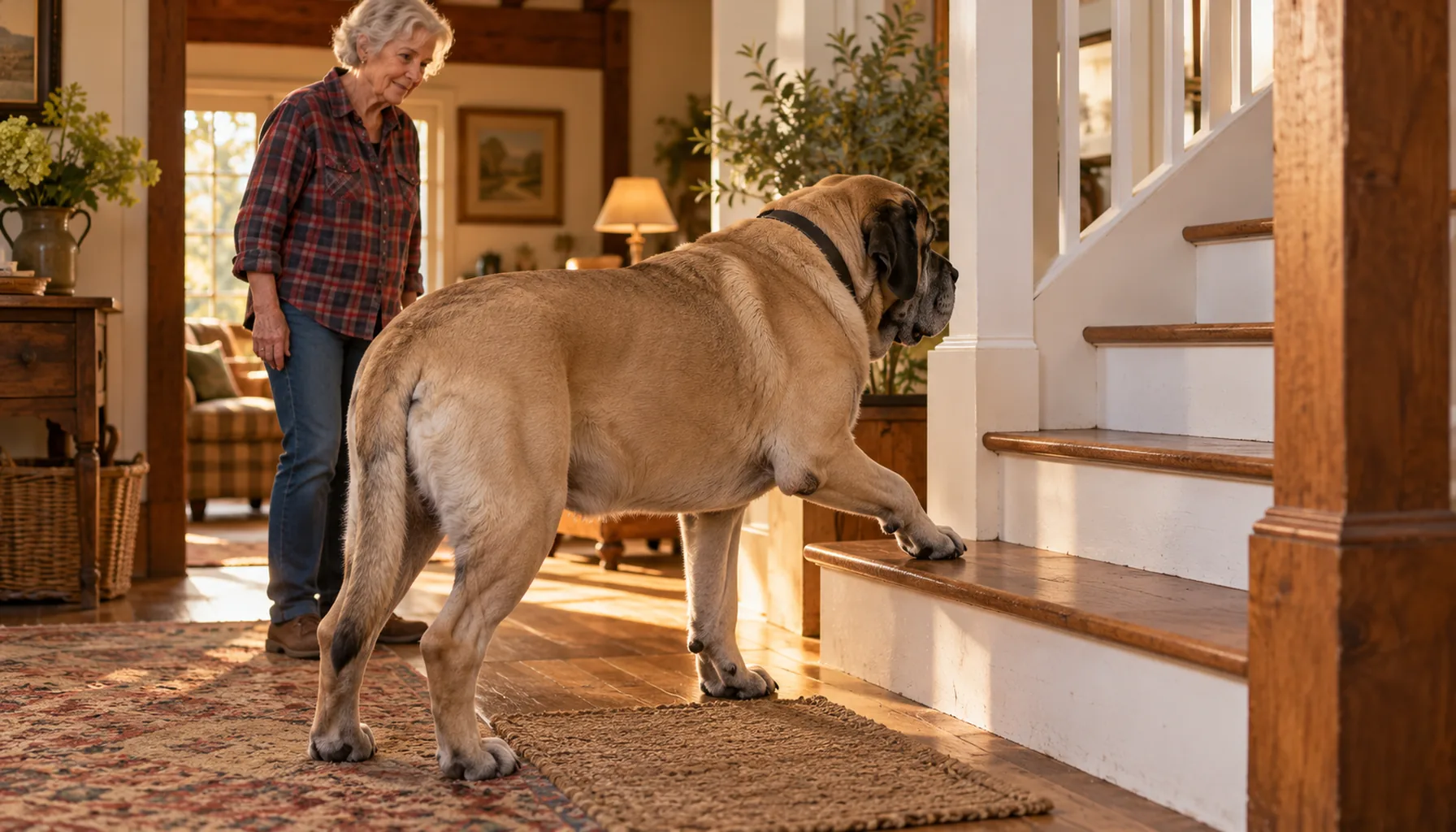
Merck names the signs owners are most likely to notice: "slowness to rise, especially after extended rest," "difficulty going up or down stairs," and "limited jumping or playing." It also warns that lameness "may be less apparent than expected," even in advanced disease affecting both sides. A dog with two sore hips may not limp at all; it just moves less.
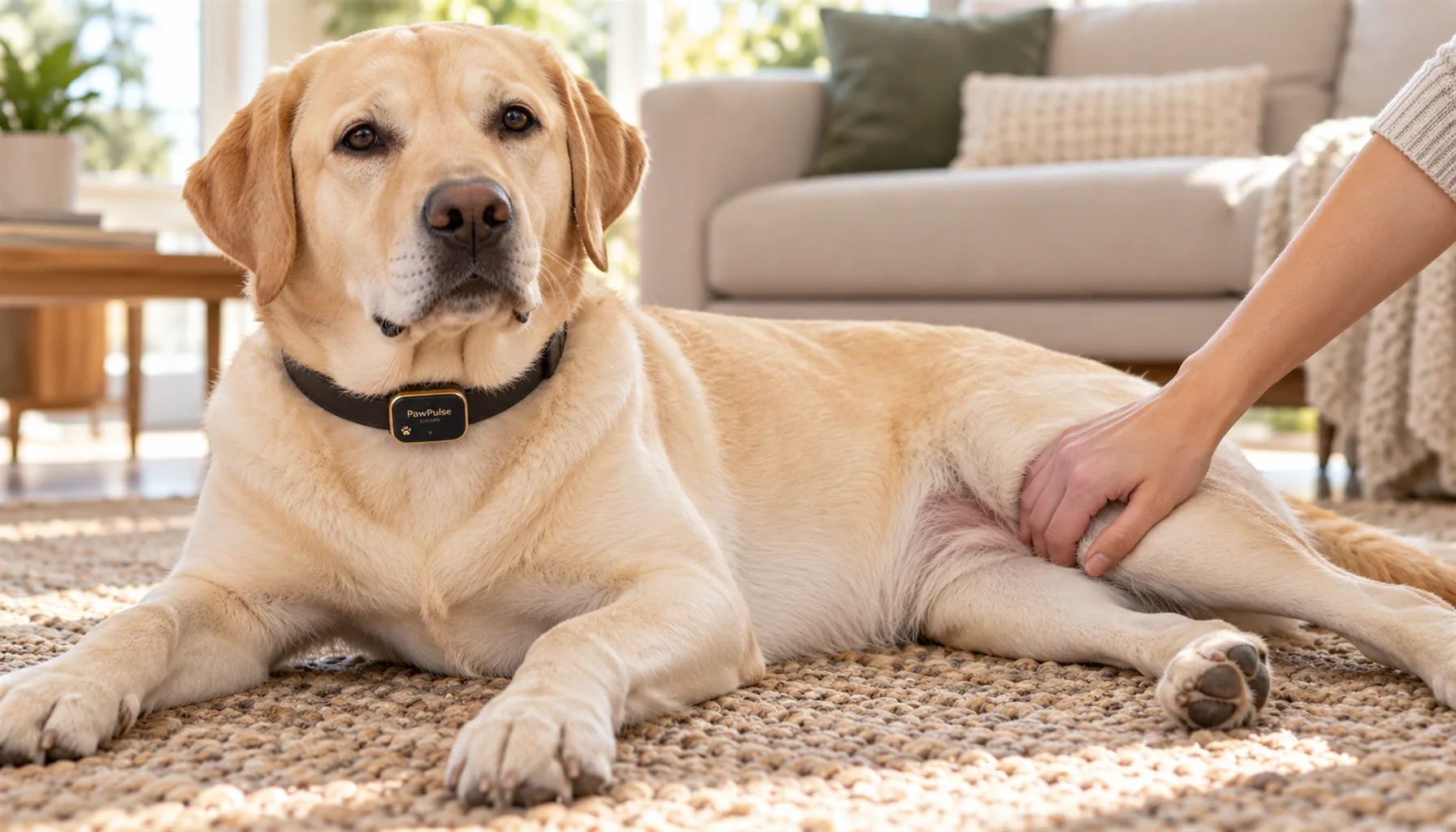
The Cornell Riney Canine Health Center (2025) lists broader pain signs that often travel with joint pain: difficulty getting up from a resting position or climbing stairs, stiffness or limping, whimpering or groaning, licking or chewing at one area, altered sleeping patterns and reluctance to exercise.
Early Arthritis Checklist for Owners
Use this as a watch list, not a diagnosis. One item on a single day means little. Several items, or one that keeps returning, is worth a vet visit.
| What to watch | What it might look like at home | Described by |
|---|
| Stiff after rest | Slow, careful first steps after a nap or in the morning, then loosening up | Merck 2025; LOAD questionnaire items |
| Stairs | Pausing at the bottom, taking steps one at a time, avoiding them | Merck 2025 |
| Jumping | Hesitating before the sofa, bed or car, or needing a second try | Merck 2025 |
| Less play | Shorter fetch sessions, lagging on walks, lying down sooner | Merck 2025; Cornell 2025 |
| Getting up and stairs | Difficulty getting up from rest or climbing stairs | Cornell 2025 |
| Sounds | Whimpering, yelping or groaning when moving | Cornell 2025 |
| Licking | Licking or chewing at one joint | Cornell 2025 |
| Night restlessness | Getting up and resettling, trouble getting comfortable | Cornell 2025; NC State 2015 |
| Gait | Uneven stride, shifting weight, an altered gait you notice on video | VetCompass 2018 |
Filming a short walk on the same stretch of path each month is one of the simplest ways to see change you would otherwise miss.
What Age Do Dogs Get Arthritis?
Two kinds of numbers get quoted, and they measure different things.
How common it is in young dogs. Merck's "up to 40%" figure applies to dogs aged 8 months to 4 years, years before signs are usually noticed.
What gets recorded in day-to-day practice. A large UK study using VetCompass records, Anderson and colleagues at the Royal Veterinary College (Scientific Reports, 2018), examined 455,557 dogs under primary veterinary care and estimated an annual period prevalence of diagnosed appendicular osteoarthritis of 2.5 percent. Risk factors included breed (for example Labradors and Golden Retrievers), higher body weight, being neutered, being insured, and being older than eight years. The authors estimated OA affects about 11.4 percent of an affected dog's lifespan.
The gap between those two figures is the point. A lot of arthritis is present long before it is written into a record, which is why early, owner-noticed signs matter. Larger, heavier and older dogs carry more risk, but young dogs are not exempt.
Does Dog Arthritis Get Worse in Cold Weather?
Short answer: it is plausible, it is supported in people, and we could not find a study that shows it in dogs.
In people, the evidence leans yes. A 2023 systematic review and meta-analysis in Annals of Medicine by Wang and colleagues (2023) pooled 14 observational studies of human osteoarthritis. Thirteen of the 14 reported that weather was associated with OA pain. In the small pooled analysis of temperature (3 studies), lower temperature went with more pain, a moderate association. Higher barometric pressure and humidity were also linked to more pain. These were human patients, and the authors call for better studies.
In dogs, vets ask the question. The Liverpool Osteoarthritis in Dogs (LOAD) owner questionnaire, validated in 222 dogs with OA by Walton and colleagues at the University of Liverpool (PLoS One, 2013), includes a group of items on how weather affects a dog's lameness and ability to exercise. (Two authors' salaries were funded by Pfizer Animal Health during data collection, as the paper discloses.) That tells you clinicians treat weather as something worth asking owners about. It does not measure whether cold makes dog arthritis worse.
What we could not verify. We searched the veterinary literature through Europe PMC for a study linking weather or temperature to arthritis pain or lameness in dogs and did not find one. So the honest position is: if your dog seems stiffer on cold, damp mornings, write it down, because your observation is real data for your vet. Just do not treat "cold makes dog arthritis worse" as a proven fact.
Cold days also change routines. Shorter walks, more time lying still and slippery ground can all change how a stiff dog moves, which makes it hard to separate weather from habit.
Why Is My Dog Stiff in the Morning or Limping After Rest?
Stiffness that eases after the first few minutes of moving is one of the classic patterns Merck describes: slowness to rise "especially after extended rest." The LOAD questionnaire asks owners separately about stiffness after rest and stiffness after exercise followed by rest, because both are common in dogs with OA.
Other conditions can look similar, including soft-tissue injuries and problems that are not in the joints at all. Only an exam can sort that out. A limp that comes with sudden or severe pain is not something to watch and wait on.
Can Arthritis Disturb a Dog's Sleep?
It can, and it can be subtle. In a 2015 North Carolina State University study published in PeerJ, Knazovicky and colleagues (2015) followed client-owned dogs with OA joint pain. When the dogs received pain relief prescribed in the study, owners reported better nighttime sleep quality on a sleep questionnaire, even though collar-mounted accelerometers showed no significant change in nighttime movement. Part of that study was funded by Boehringer Ingelheim, as the paper discloses.
The takeaway for owners: a dog can sleep worse without obviously moving more. Restlessness, trouble getting comfortable and changes in where a dog chooses to lie are worth noting. Our post on whether your dog is in pain or anxious has a simple log you can use for night episodes too.
How to Help a Dog With Arthritis
Start with your vet. The Merck Veterinary Manual singles out one thing owners control: weight. For an overweight dog, Merck calls weight optimization "imperative."
Beyond that, keep it simple and ask your vet before you change anything:
- Book an exam and bring your notes and videos. Ask whether X-rays or a referral make sense.
- Ask about weight and a target body condition for your dog.
- Ask what kind and amount of exercise fits your dog, and let your vet set the plan.
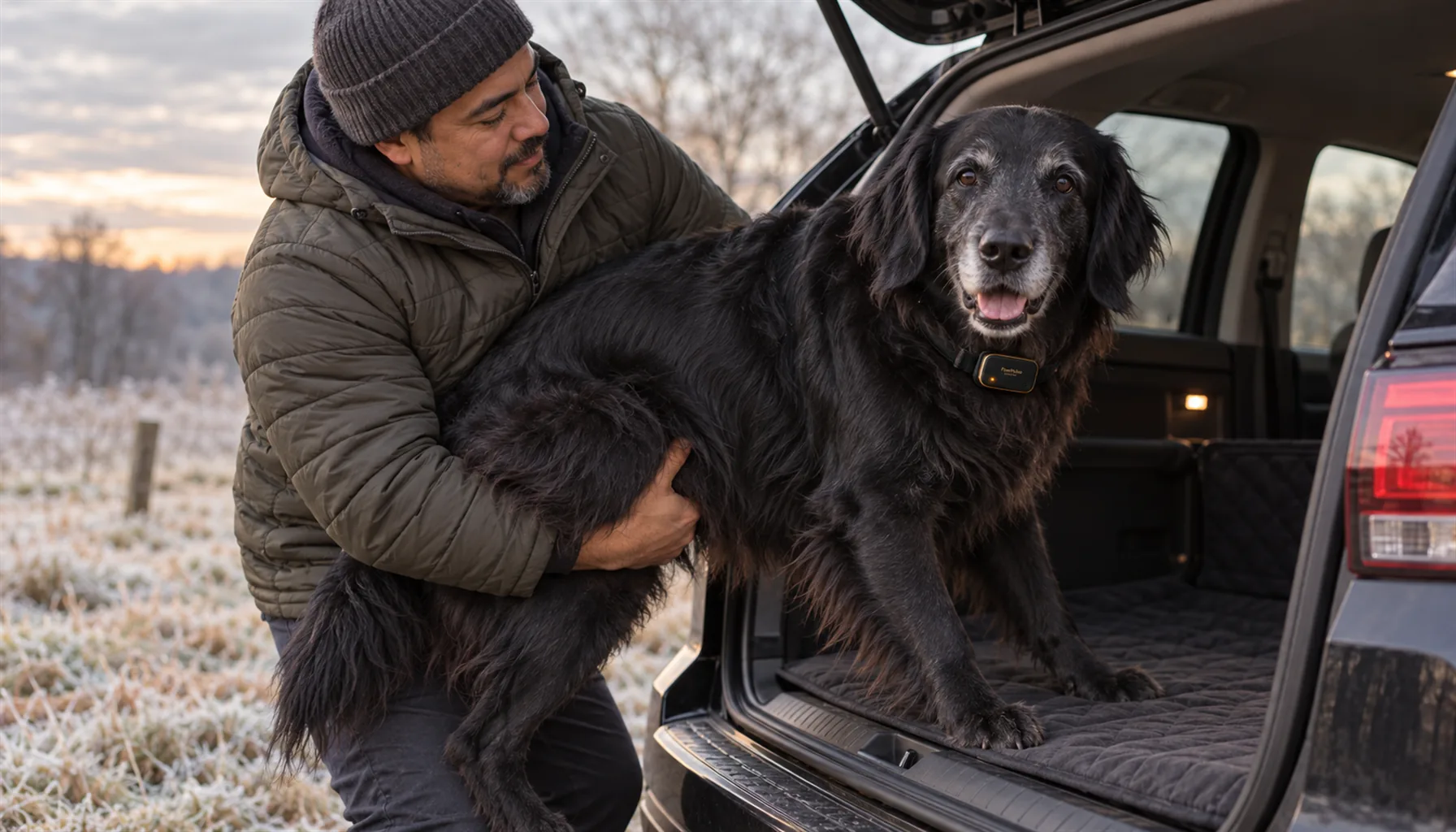
- Make the home easier while you wait: rugs on slippery floors, a ramp or step for the car or sofa, and a bed that is easy to get in and out of. These are comfort and safety steps, not treatments.
- Do not give pain medicine or supplements on your own. Over-the-counter human medicines were the top category of calls to ASPCA Animal Poison Control (2025), at 16.9% of cases, so a medicine that is safe for you may not be safe for your dog. Any medicine or supplement belongs in a conversation with your vet.
Where PawPulse Lucero Fits
Arthritis changes are slow, and slow change is hard to see when you live with a dog every day. PawPulse Lucero is designed to measure heart rate and breathing through fur without touching the skin (Kinetic sensing), and its motion sensors are designed to track activity and rest. The value is the trend against your own dog's normal: shorter active periods or more restless nights over weeks.
PawPulse Lucero does not detect arthritis and cannot tell you why a pattern changed. It gives you a longer view to bring to your vet next to your own notes, the same way we described for older dogs in the case for monitoring senior dogs.

When to Call Your Vet
These thresholds are deliberately conservative. Your vet's advice for your dog comes first.
Get emergency care now for collapse, labored breathing, pale or bluish gums or a long seizure, the kind of signs VCA Animal Hospitals (2024) lists as emergencies, and call your vet right away about sudden, severe pain.
Book a visit soon if pain signs come on gradually, or if your dog shows any of the early signs above more than once, at any age. Cornell advises scheduling a veterinary visit when you suspect pain.
Raise it at the next checkup if you notice slow changes over months, such as shorter walks, more time lying down, or stiffness on cold mornings. Bring your log and a short video.
Frequently Asked Questions
What are the first signs of arthritis in dogs?
The Merck Veterinary Manual lists slowness to rise, especially after long rest, difficulty with stairs, and limited jumping or playing. Many dogs do not limp at first. They move less, lag on walks or groan when lying down. Several of these signs together, or one that keeps returning, are worth a vet visit.
Does dog arthritis get worse in cold weather?
It may, but that is not proven in dogs. A 2023 meta-analysis of 14 human studies found lower temperature was moderately associated with more osteoarthritis pain in people. We did not find a study testing weather and arthritis in dogs. If your dog seems stiffer on cold mornings, note it for your vet.
What age do dogs get arthritis?
Earlier than most people expect. Merck says up to 40% of dogs aged 8 months to 4 years have osteoarthritis, though signs are usually noticed between 5 and 13. A large UK study found being older than eight years, heavier body weight and certain breeds raised the odds of a recorded diagnosis.
Why is my dog stiff in the morning?
Stiffness after long rest that eases once your dog starts moving is a classic osteoarthritis pattern described by the Merck Veterinary Manual. Other problems can look similar, so it needs a vet exam to confirm. Note how long the stiffness lasts and whether it is worse on some days, then share that with your vet.
Why is my dog limping after rest?
A limp after rest that fades with movement can point to joint pain such as arthritis, but soft-tissue injuries and other conditions can cause it too. Book a vet visit if it keeps happening. Sudden or severe pain, or a limb your dog will not put weight on, is a reason to call your vet right away.
How can I help a dog with arthritis?
Start with a vet exam and a plan built for your dog. Ask about a healthy weight, which Merck calls imperative for overweight dogs, and about the right kind of exercise. Rugs, ramps and an easy bed can make home safer. Never give pain medicine or supplements without your vet.
Learn more about PawPulse Lucero, the smart dog collar designed to measure heart rate and breathing through fur without touching the skin, with activity and rest trends you can share with your vet.
-- The PawPulse Team