Key takeaway: The biggest holiday hazards for dogs are food: chocolate, xylitol, grapes and raisins, onion-heavy stuffing, raw yeast dough and fatty scraps. In its Top 10 Toxins of 2025, ASPCA Poison Control ranked food and drink second (16.4% of more than 376,000 exposures) and chocolate fourth (13.6%). If your dog eats something risky, call your vet or a pet poison line first.
Why the Holidays Are a Busy Season for Dogs
Think about what changes in a house between late November and New Year's Day. More food on low tables. Bags and coats on the floor. Guests who do not know the rules. A tree full of shiny things. Doors opening every few minutes.
None of that is a reason to skip the celebrations. It is a reason to plan for six weeks instead of one meal.
We are the team behind PawPulse, a smart dog collar with contactless heart rate and breathing monitoring. This guide is owner education, not veterinary advice. It covers what the evidence says is risky, what to do first if your dog gets into something, and a simple week-by-week plan. Every dog is different in size, health and appetite, so your vet is always the right person to call about your dog.
Is Holiday Chocolate Really a Bigger Risk?
Yes, and there is good data on it. A University of Liverpool team led by Noble searched the electronic health records of 229 UK veterinary practices from 2012 to 2017 through the SAVSNET surveillance network. Their study in Veterinary Record (Noble et al., 2017) found that the odds of a vet visit for chocolate exposure were about 4.7 times higher at Christmas and about 2 times higher at Easter than at other times of year. Valentine's Day and Halloween showed no significant rise. The authors put it down to simply having more chocolate in the house.
That fits the US picture. The ASPCA's Top 10 Toxins of 2025 (published March 2026) lists chocolate as the fourth most common exposure its poison control center handled, at 13.6%, with dogs the most common patients.
Chocolate contains theobromine and caffeine. The amount and type of chocolate, and your dog's size, all matter, which is why the first step is a phone call rather than a guess. Keep the wrapper so you can tell the vet exactly what was eaten.
Thanksgiving Foods Dogs Can't Eat
The ASPCA report says the largest part of its food and drink category is grapes, raisins, xylitol gum, onions and garlic. Several of those turn up on a Thanksgiving table.
Can dogs eat turkey skin? It is not a good idea. The ASPCA holiday safety tips warn that "fatty, sweet and spicy foods as well as turkey or chicken bones can all be dangerous" to pets. Rich skin, drippings and gravy are exactly that kind of food.
Why fat gets so much attention: it is often linked to pancreatitis. A review led by veterinary researchers at Michigan State University, Cridge et al. in the Journal of Veterinary Internal Medicine (2022), lists getting into the trash, table scraps and unusual foods as suspected risk factors, while being honest that the evidence is only associational and a cause has not been proven. The practical message stays the same: skip the scraps, and keep the trash out of reach.
Is stuffing bad for dogs? Usually, yes. A veterinary toxicologist quoted by Pet Poison Helpline notes that most stuffing contains onions and garlic, and some recipes add raisins.
Grapes and raisins deserve special respect. In a University of Bern study of dogs treated for grape or raisin poisoning, Schweighauser et al. (Journal of Veterinary Internal Medicine, 2020), all 15 dogs arrived with severe acute kidney injury, 73% also had neurological signs, and only 8 survived. That is a small group of dogs sick enough to reach a referral hospital, not every dog that eats a grape, but it shows why vets treat any grape or raisin ingestion as a reason to call.
Raw yeast dough is easy to forget. Pet Poison Helpline explains that unbaked dough can keep rising in the stomach and produce gas, which can lead to bloat. Bread rising on the counter needs to be out of reach.
Xylitol is a sugar substitute found in some gum, candy and baked goods. Pet Poison Helpline warns that enough of it can cause life-threatening low blood sugar and acute liver failure. Check labels on anything sugar-free, and keep guests' bags off the floor.
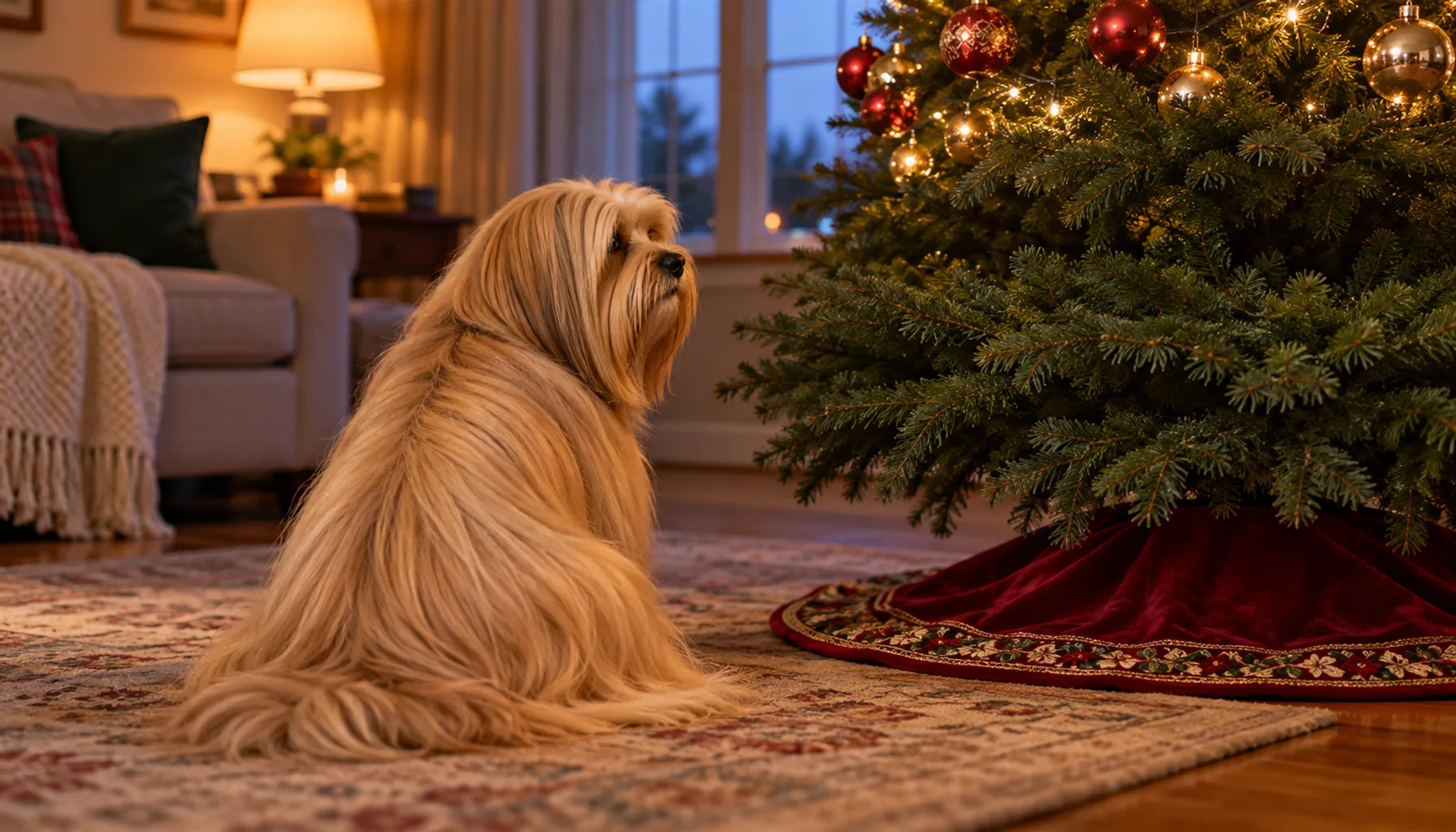
Christmas Dangers for Dogs: Trees, Tinsel and Plants
The ASPCA holiday page covers the decorating season in detail:
- Trees: secure the tree so it cannot tip, and cover the tree water or make it inaccessible.
- Tinsel: the ASPCA advises skipping it. Swallowed tinsel "can cause severe vomiting, obstructed digestive tract, dehydration and could even require surgery."
- Ornaments: broken glass ornaments can injure the mouth and digestive tract. Hang breakables high.
- Cords and candles: a chewed wire can deliver a dangerous shock, and candles should never be left unattended.
Are poinsettias poisonous to dogs? They can make a dog sick, but the ASPCA describes the effect as "mild to moderate gastrointestinal irritation." Mistletoe and holly are a bigger concern: the ASPCA says they can cause gastrointestinal upset and cardiovascular problems if eaten. Put all of them out of reach and call your vet if your dog chews one.
Guests, Open Doors and Medicine Bags
Visitors bring two hazards people rarely think about.
The first is medicine. Over-the-counter medicines and supplements topped the ASPCA's 2025 list at 16.9%, and the ASPCA's holiday advice is to ask houseguests to keep their medication in a closed cabinet, not in a bag or suitcase on the floor.
The second is the door. Every arrival and departure is a chance for a dog to slip out into a dark, busy street. Put your dog in a quiet room during arrivals, or keep it on a leash for the first rush. Check that ID tags and microchip details are current before the season starts. If the worst happens, our guide to what to do in the first 24 hours after a dog goes missing walks through it hour by hour.
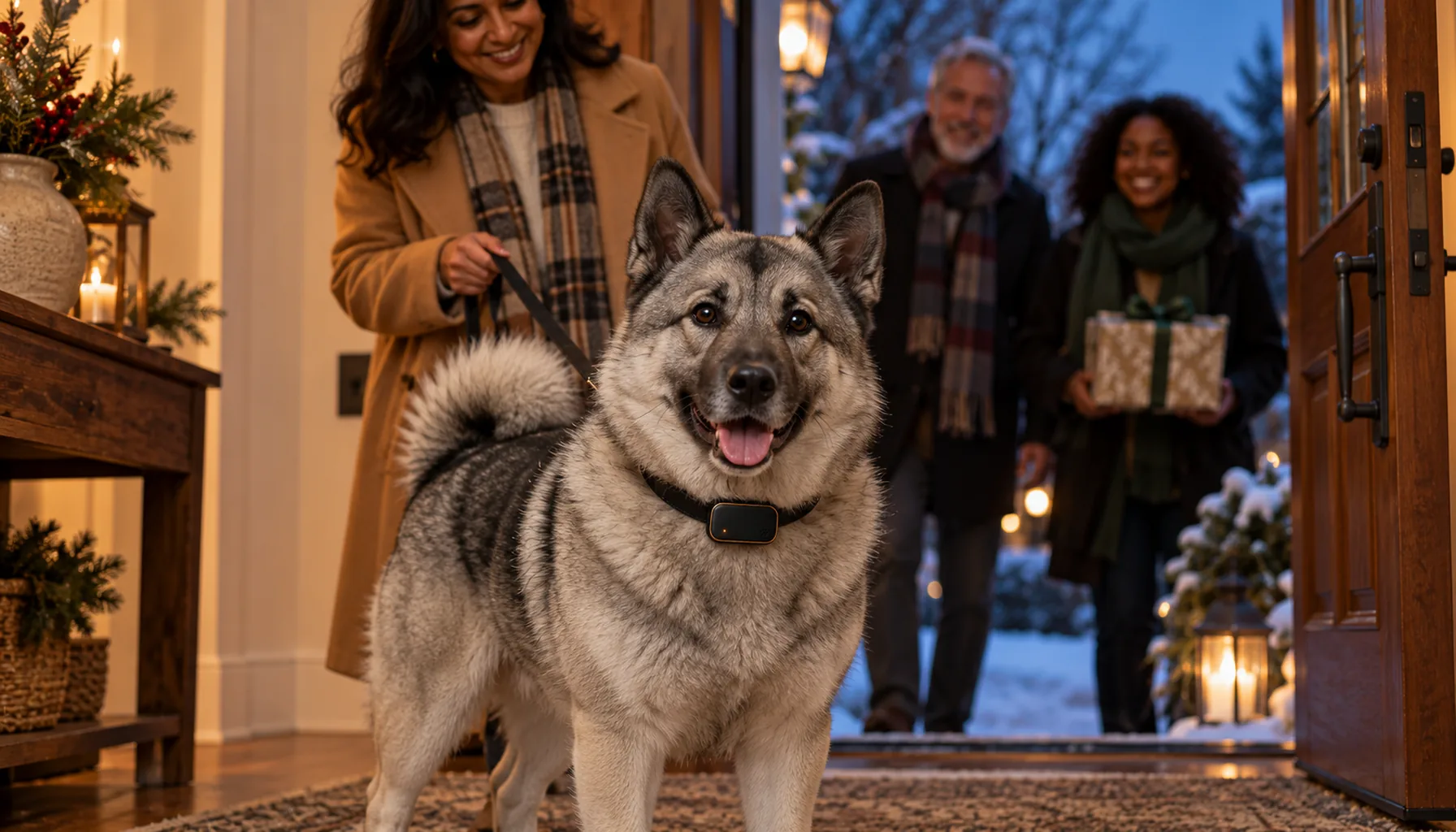
New Year's Eve: Noise, Drinks and a Quiet Room
The ASPCA notes that "loud music, fireworks, celebratory poppers or noisemakers can scare our furry companions," and recommends a safe space such as an interior room your dog can retreat to. It also advises never leaving drinks unattended where pets can reach them.
Set up the quiet room before the party starts, with water, a familiar bed and something to chew. Walk your dog before the noise begins, on a leash, even in your own yard.
Your Holiday Hazard Calendar, Thanksgiving to New Year
| When | Main hazards | What to do |
|---|
| Thanksgiving week | Turkey skin, bones, gravy, stuffing with onion, garlic or raisins, raw dough, overflowing trash | No table scraps. Lid on the trash. Dough rises out of reach. Ask guests not to feed the dog. |
| Early December, decorating | Tree tipping, tree water, tinsel, glass ornaments, cords, candles | Anchor the tree. Cover the water. Skip tinsel. Breakables high. Cords tucked away. |
| Holiday plants arrive | Mistletoe, holly, poinsettias | Keep all of them out of reach. Call your vet if any are chewed. |
| Parties and houseguests | Chocolate gifts, sugar-free gum and candy, guests' medicines, open doors | Gifts off the floor and away from the tree. Bags in a closed room. Dog in a quiet room or on a leash during arrivals. |
| Christmas Eve and Day | Chocolate (odds about 4.7 times higher, Noble et al., 2017), rich leftovers | Treats stored up high. Wrappers and leftovers straight into a closed bin. |
| New Year's Eve | Noisemakers, fireworks, unattended drinks, open doors | Quiet interior room. Leashed toilet breaks. Drinks kept off low tables. |
What to Do If Your Dog Eats Chocolate at Christmas (or Anything Else)
- Move your dog away from the source and collect what is left: the wrapper, the packaging, the leftover food.
- Estimate what was eaten, how much, and when. Know roughly what your dog weighs.
- Call your vet or a pet poison line right away, even if your dog seems fine. ASPCA Poison Control's 24-hour line is (888) 426-4435, and Pet Poison Helpline is another option.
- Do not make your dog vomit at home unless a veterinarian tells you to. Pet Poison Helpline discourages owners from inducing vomiting without consulting a veterinarian first. In the Liverpool chocolate study, the authors even called for more research into the risks of making dogs vomit, because it was often done after doses that were not toxic.
- Follow the advice you are given, and go in if you are told to.
When to Call Your Vet
Call now, before any signs appear, if your dog has eaten or may have eaten chocolate, anything containing xylitol, grapes or raisins (including in stuffing or baking), raw yeast dough, mistletoe or holly, tinsel or ornament pieces, or anyone's medication. Do not wait for signs before you call.
Go to an emergency vet now if your dog is retching without bringing anything up, has a swollen belly, collapses, has a seizure, or has trouble breathing. Pet Poison Helpline lists non-productive retching and a distended stomach among the signs of bloat.
Call the same day for vomiting or diarrhea after a rich meal, or if your dog seems unusually quiet, restless or uncomfortable after the festivities.
If you are not sure which group it falls into, call. That is what your vet and the poison lines are for. Our post on what your vet wishes you would bring to every appointment covers what to have ready when you do.
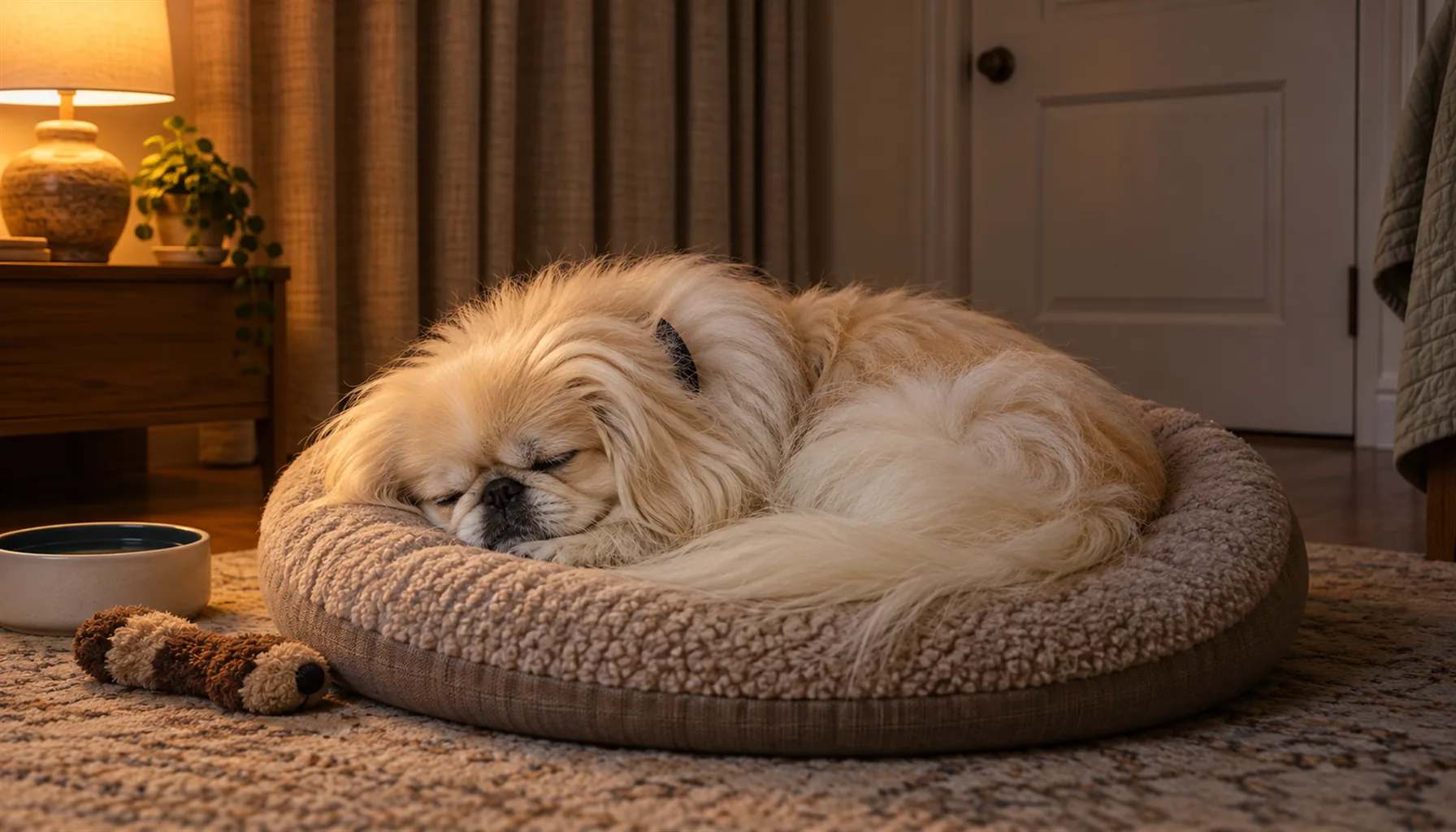
Where PawPulse Lucero Fits Over the Holidays
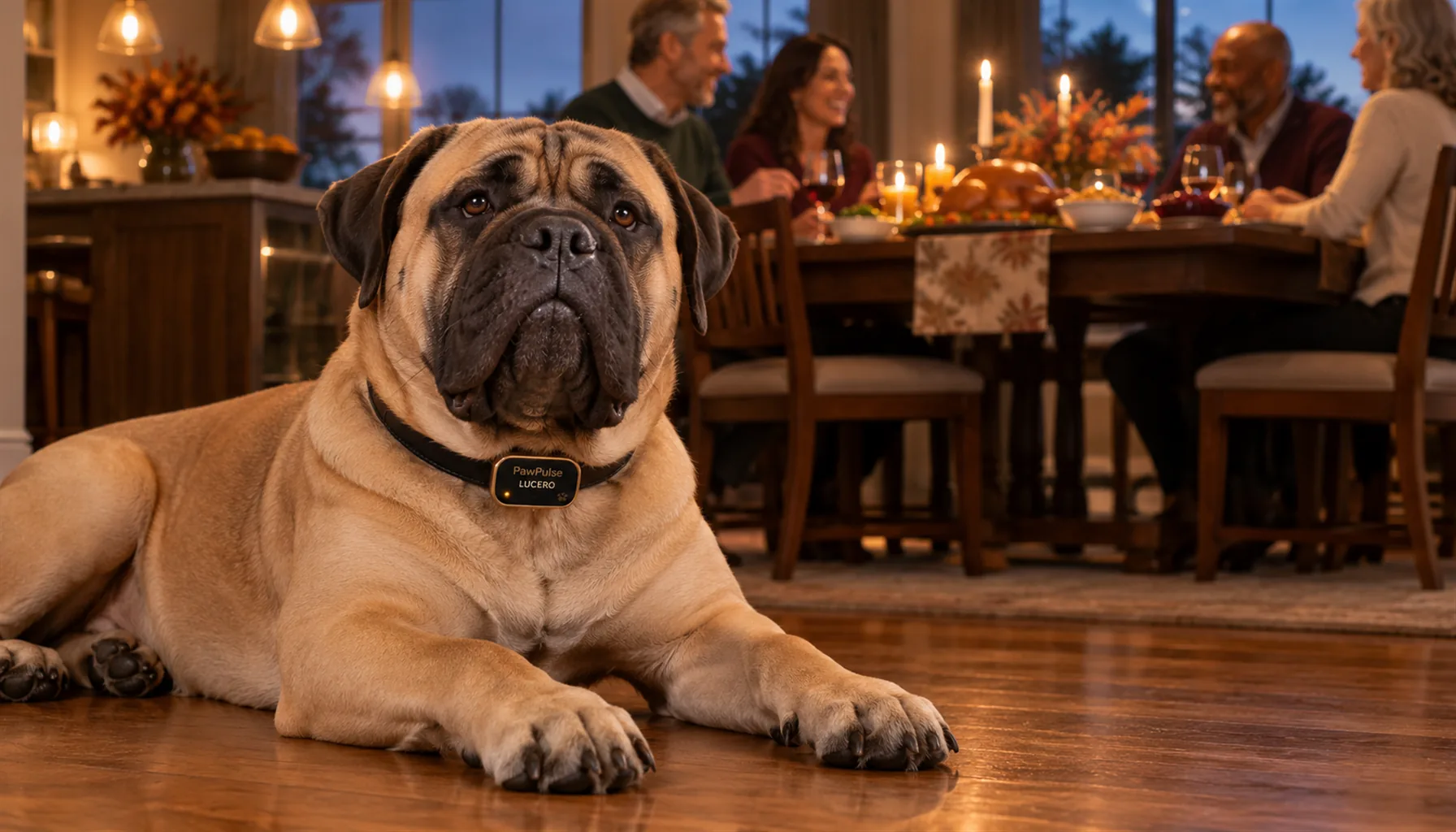
Be clear about what a collar can and cannot do here. PawPulse Lucero does not detect poisoning or anything your dog has eaten. If your dog gets into something, the phone call above is the step that matters.
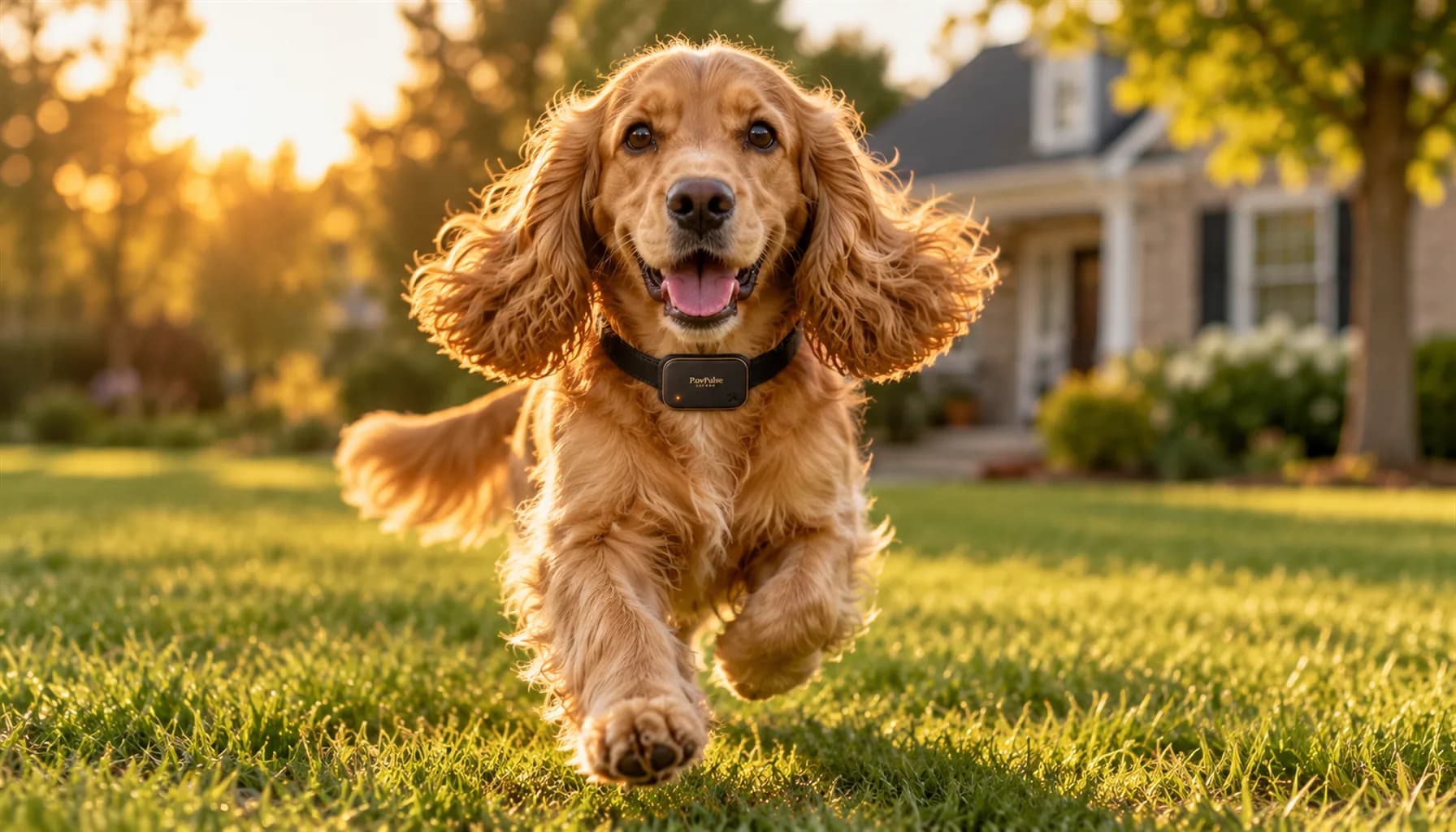
Where it can help is the open door. PawPulse Lucero is designed to send live location over a cellular connection and to alert you when your dog leaves a Safe Zone. It also has a satellite-ready backup designed to keep location updates moving when cellular drops out. Satellite availability depends on carrier support and certification. A current ID tag and registered microchip still come first.
Lucero is also designed to measure heart rate and breathing through fur without touching the skin (Kinetic sensing). After a big day, a resting trend that looks different from your dog's usual is a note worth mentioning to your vet, alongside what you saw yourself. For loud nights, the collar's Pulse Rhythm feature is designed to play gentle haptic patterns, started manually from the app. It is a comfort feature, not a treatment, and it works best alongside a quiet room.
Traveling to family this year? Our holiday road trip guide for dogs covers restraints and rest stops.
Frequently Asked Questions
Can dogs eat turkey skin?
It is best not to share it. The ASPCA warns that fatty, sweet and spicy foods, along with turkey or chicken bones, can be dangerous to pets. Rich skin and gravy are high in fat, and veterinary researchers list table scraps as a suspected risk factor for pancreatitis. Ask your vet which treats suit your dog.
Is stuffing bad for dogs?
Usually, yes. Most stuffing recipes contain onions and garlic, and some include raisins, according to a veterinary toxicologist at Pet Poison Helpline. Onions, garlic, grapes and raisins make up much of the food category in ASPCA Poison Control's 2025 report. If your dog eats stuffing, call your vet or a pet poison line.
Are poinsettias poisonous to dogs?
They can make dogs sick, but usually not severely. The ASPCA describes poinsettias as causing mild to moderate gastrointestinal irritation. Mistletoe and holly are more concerning, since the ASPCA says they can cause gastrointestinal upset and cardiovascular problems. Keep all holiday plants out of reach, and call your vet if your dog chews any of them.
What should I do if my dog eats chocolate at Christmas?
Save the wrapper, estimate how much was eaten and when, and call your vet or ASPCA Poison Control at (888) 426-4435 right away, even if your dog seems fine. The type and amount of chocolate and your dog's size all matter. Do not make your dog vomit at home unless a veterinarian tells you to.
Is tinsel dangerous for dogs?
Yes. The ASPCA advises skipping tinsel entirely, because swallowed tinsel can cause severe vomiting, a blocked digestive tract and dehydration, and may need surgery. Broken glass ornaments can also injure the mouth and gut. Hang breakable decorations high and call your vet if your dog swallows any decoration.
Why are dogs more likely to eat chocolate at Christmas?
Because there is more of it around. A University of Liverpool study of records from 229 UK veterinary practices found the odds of a chocolate-related vet visit were about 4.7 times higher at Christmas and about twice as high at Easter. Store gifts and treats up high, not under the tree.
Learn more about PawPulse Lucero, the smart dog collar designed for live location, Safe Zone alerts and contactless heart rate and breathing trends you can share with your vet. Reservation holders get their Lucero first. We will confirm your delivery month when the Kickstarter is announced.
-- The PawPulse Team