Key takeaway: Does a dog calming collar work? The honest answer is that the evidence is thin. A 2010 JAVMA systematic review found only 1 of 7 dog pheromone studies gave sufficient evidence of an effect, and a 2024 review of pressure wraps found 4 usable studies out of 229, with weak, limited evidence. Some dogs may benefit, but no calming product replaces a plan built with your vet.
Why This Question Is Hard to Answer
Walk into any pet store in November and you will find a shelf of calming products: collars, sprays, diffusers, snug wraps, chews. Most promise a calmer dog. Very few point to a study.
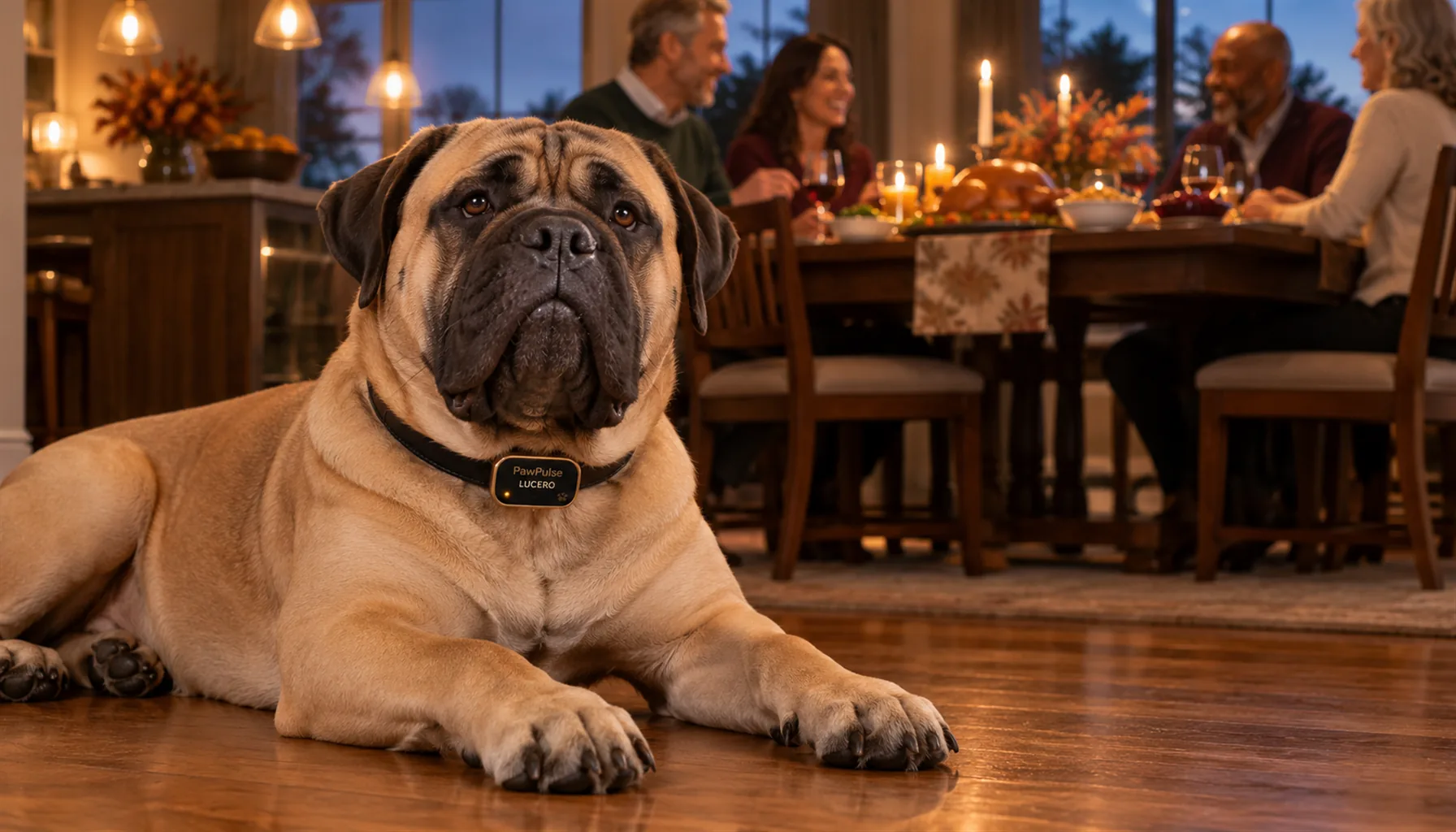
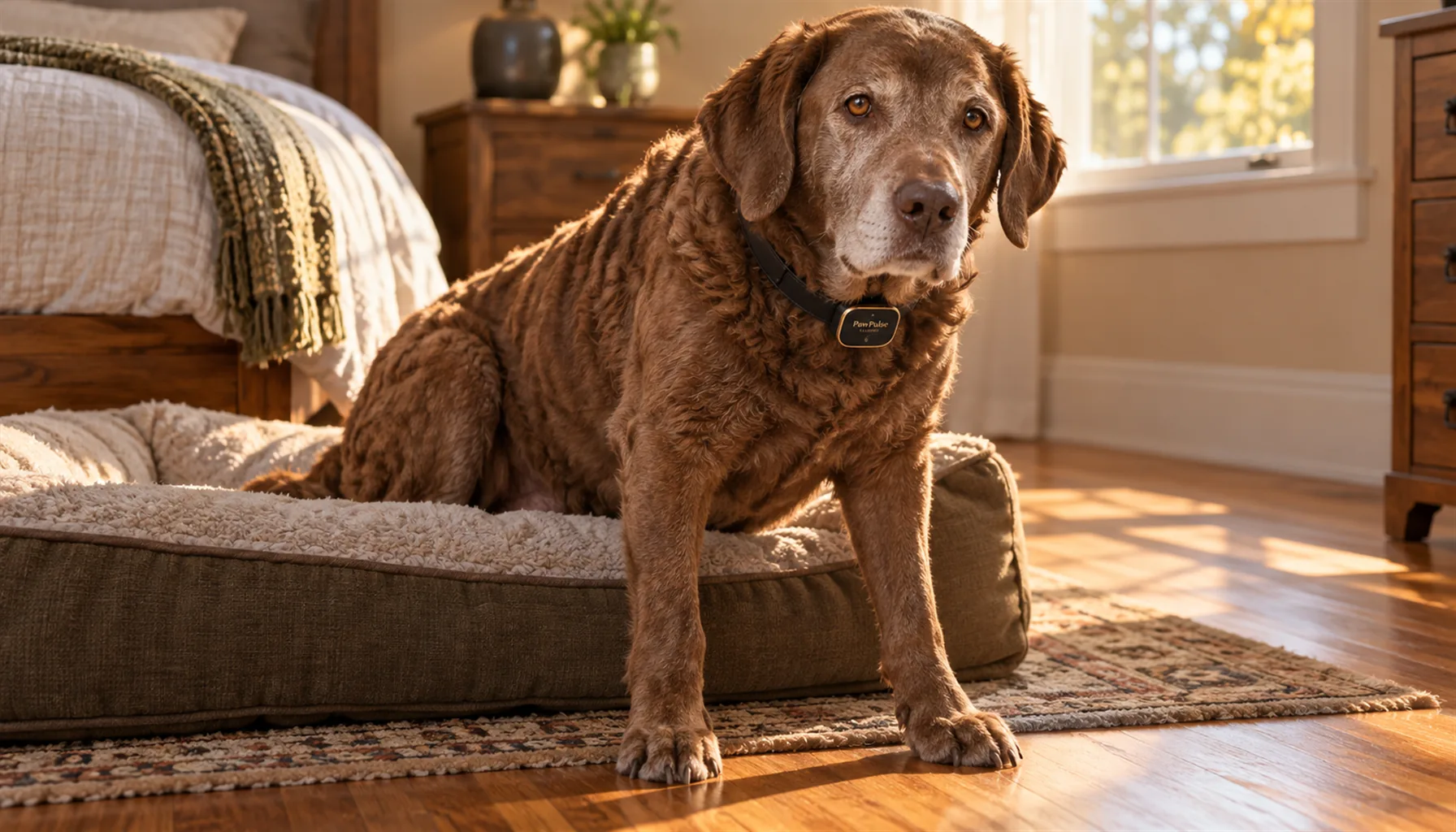
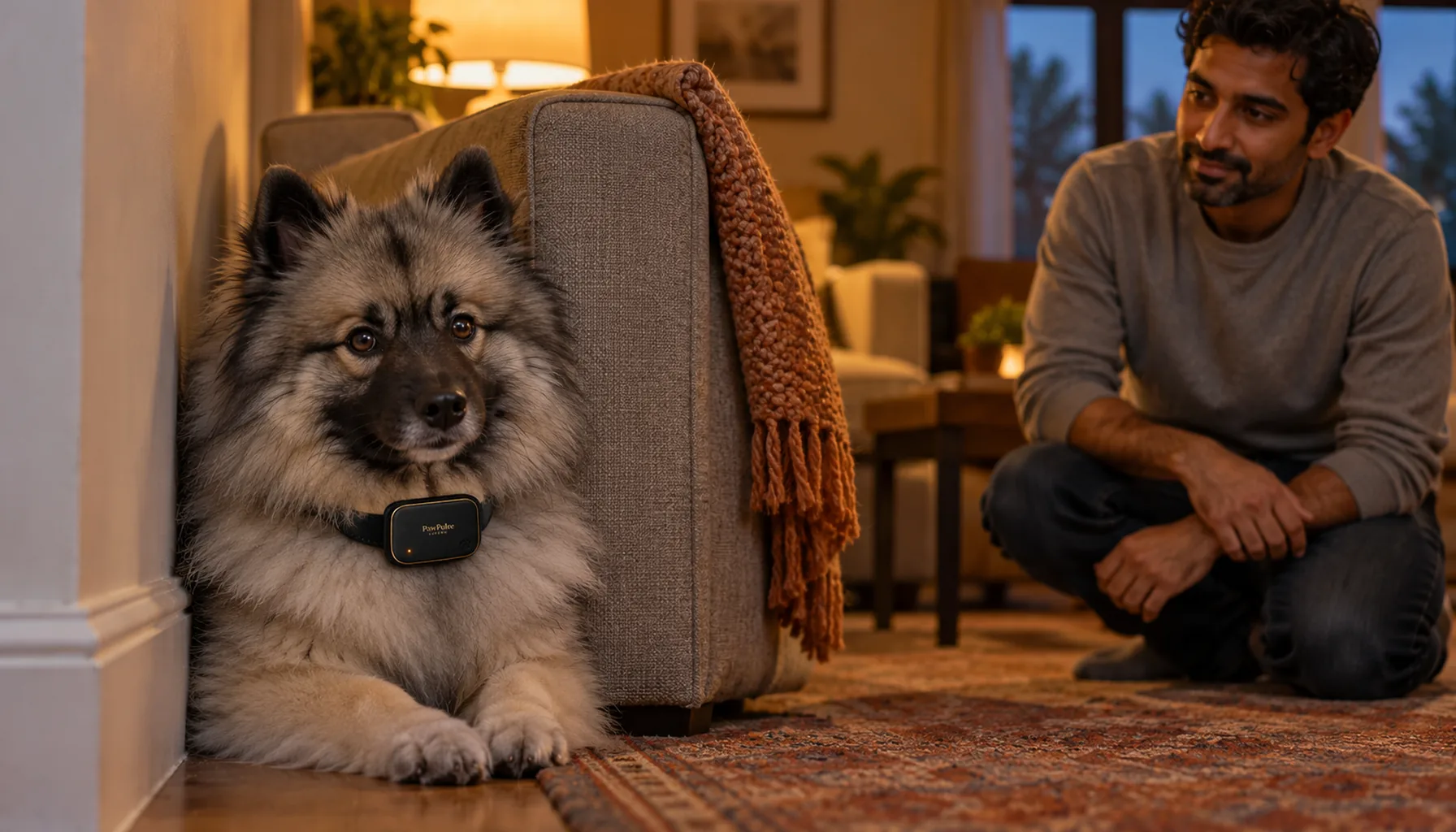
We have a stake here, and we want to say so up front. We are the team behind PawPulse, a smart dog collar with contactless heart rate and breathing monitoring, and PawPulse Lucero includes a haptic calming feature called Pulse Rhythm. So we read this research the way we would want a competitor to read it about us: skeptically, with the funding in view. This guide covers what independent and industry-funded studies show for pheromone collars and pressure wraps, what they do not show, and how to test any product fairly on your own dog. It is owner education, not veterinary advice.
What Is a Calming Collar, and How Is It Supposed to Work?
"Calming collar" covers several different ideas:
- Pheromone collars release a synthetic dog-appeasing pheromone, a scent compound meant to signal safety to dogs.
- Scented or herbal collars use plant oils or extracts. We did not find a peer-reviewed controlled study of these collars in dogs, so we have nothing to report on them.
- Haptic or vibration collars, including our own Pulse Rhythm, use gentle vibration patterns. More on that, and its evidence gap, below.
Pressure wraps and anxiety vests are a separate category: snug garments meant to apply steady, gentle pressure around the torso, on the same idea as swaddling or a weighted blanket.
Do Pheromone Collars Work for Dogs?
The best independent summary is still a systematic review in the Journal of the American Veterinary Medical Association by Frank, Beauchamp and Palestrini (JAVMA, 2010). They assessed prospective studies published from 1998 to 2008. Of 7 dog studies, only 1 gave sufficient evidence that dog-appeasing pheromone reduced fear or anxiety, during training. The other 6 gave insufficient evidence, including 2 on noise phobia and others on travel, the vet clinic, shelter dogs and newly adopted puppies.
Even that one positive result came from a single training setting, and none of the studies tested a collar on a dog at home during a real fireworks night. The fair reading is that a pheromone collar is a reasonable thing to discuss with your vet, but the independent evidence does not show that one will work for your dog.

How Do Dog Anxiety Vests and Wraps Work, and Do They?
The theory is gentle, constant pressure. The evidence is the weakest part of the story.
A 2024 systematic review from North Carolina State University's College of Veterinary Medicine, Mathis and colleagues (Animals, 2024), searched for studies of pressure wraps as an anxiety aid in dogs. Of 229 studies identified, only 4 met the inclusion criteria. Three were experiments using brief exposure to recorded fireworks or thunder, or brief separation from the owner; one followed dogs in thunderstorms at home using owner scores. Most reported minimal benefits on behavior or heart rate. The risk of bias was generally high, especially around blinding, and sample sizes were small.
The authors' conclusion is worth quoting: there is "weak and limited evidence to support the beneficial effect of pressure wraps." The same review found no adverse side effects reported in those studies, and it received no external funding.
So, Do Thundershirt-Style Wraps Work?
For some dogs they may help a little, and they appear low-risk in the studies reviewed. But the published evidence does not let anyone promise a result. If you try one, introduce it on calm days first so the wrap itself does not become a cue for a scary event, and judge it by your dog's behavior, not the box.
What the Evidence Shows, by Category
| Category | How it is meant to work | Best evidence we found | What that evidence does not show |
|---|
| Pheromone collar | Synthetic dog-appeasing pheromone signals safety | 2010 JAVMA review: 1 of 7 dog studies sufficient; 2015 placebo-controlled lab study positive (funded by the maker) | Results in real homes during fireworks or storms; independent replication |
| Pressure wrap or vest | Gentle, steady pressure on the torso | 2024 review: 4 of 229 studies usable; weak, limited evidence; no adverse effects reported | Reliable benefit for any given dog; long-term use |
| Scented or herbal collar | Plant oils or extracts | No peer-reviewed controlled dog study found in our search | Anything, yet |
| Haptic collar (including Pulse Rhythm) | Vibration patterns through the collar | No published trial data from PawPulse | Whether it helps; for which dogs |
| Behavior plan with your vet | Ruling out medical causes, behavior modification, a predictable routine, a safe space, and medication where your vet advises | Recommended by a veterinary behaviorist (Tufts 2023) | A quick fix; it takes time |
Where Pulse Rhythm Fits, Honestly
Pulse Rhythm is the haptic calming feature built into PawPulse Lucero. It plays gentle vibration patterns through the collar module,, and a session is designed to be started manually from the app.
Here is what we can and cannot say. PawPulse has not published trial data on Pulse Rhythm. We do not claim it reduces anxiety, and you should be skeptical of anyone, including us, who claims more than their evidence shows. It is a comfort feature, not a treatment, and it does not replace training, medication your vet prescribes, or your veterinarian. Dogs respond differently, and some may not like vibration at all.
What PawPulse Lucero adds that a wrap or pheromone collar cannot is a record. It is designed to measure heart rate and breathing through fur without touching the skin (Kinetic sensing), so you can look back at how restless a night was and when, as context to share with your vet while you try any calming approach, ours included. If you want the longer background on how we think about calming and separation, our post on separation anxiety in dogs covers it.
What Is the Best Calming Collar for Fireworks?
No study we found shows that any calming collar reliably helps dogs during real fireworks. The firework and thunder studies in the reviews above used brief recordings in experimental settings. For a dog that panics at fireworks, the products are a side dish. The main course is a plan:
- Talk to your vet early, well before the night. Tufts advises owners of storm-phobic dogs to consult their veterinarian about situational medication; your vet decides if that is right for your dog.
- Rule out pain. Tufts notes that pain, itching and illness can lower a dog's threshold for anxiety. Our guide on telling pain from anxiety explains what to log.
- Build a safe space your dog already likes. Tufts suggests a safe space with white noise or calming music for storm-afraid dogs.
- Secure doors, gates and ID before dark. A frightened dog may bolt.
- If you use a product, test it first on ordinary days, as below.
How to Test Any Calming Product Fairly
A product can look like it works because the storm ended, or because you were calmer. A simple, fair test helps:
- Write down a baseline for a week or two: how your dog behaves around the trigger without the product.
- Change one thing at a time. If you add a wrap, a pheromone collar and a new routine the same night, you will not know which helped.
- Introduce the product on calm days so it is not linked only to scary events.
- Log each episode with the trigger, how long the dog took to settle, and a short video.
- Watch for stress caused by the product itself, such as freezing, scratching at it or avoiding being dressed, and stop if you see it.
- Share the log with your vet and decide together whether to continue.
When to Call Your Vet
These thresholds are deliberately conservative. Your vet's advice comes first.
Go to a vet now if your dog is injured during a panic, or shows any of the signs VCA Animal Hospitals (2024) treats as emergencies, such as collapse, labored or difficult breathing, or pale or white gums.
Book a visit soon if anxious behavior is frequent. Writing for Tufts Cummings School of Veterinary Medicine (2023), veterinary behaviorist Dr. Stephanie Borns-Weil says dogs with frequent anxious behavior should see their veterinarian as soon as possible, and that medical causes should be ruled out first.
Plan ahead for known events like New Year's Eve or storm season. Ask your vet about a plan weeks before, not on the day. Never give your dog a medication or supplement for anxiety without your vet's guidance.
Frequently Asked Questions
Does a dog calming collar work?
The evidence is limited. A 2010 JAVMA review found only 1 of 7 dog pheromone studies gave sufficient evidence of an effect. A 2015 placebo-controlled lab study funded by the product maker found lower fear scores during a recorded thunderstorm. Some dogs may benefit, but no collar is proven to calm every dog.
How do dog anxiety vests work?
Anxiety vests and wraps apply gentle, steady pressure around the torso, on the same idea as swaddling. A 2024 North Carolina State review found only 4 usable studies out of 229 and called the evidence weak and limited. No adverse effects were reported, so they appear low-risk, but results vary.
Do Thundershirt-style wraps work?
Some dogs may settle a little better in a snug wrap, but published evidence is weak. The 2024 systematic review of pressure wraps found mostly minimal benefits on behavior or heart rate, with high risk of bias in the studies. Introduce a wrap on calm days first and judge it by your own dog's log.
Do pheromone collars work for dogs?
Possibly, for some dogs, but the independent evidence is thin. A 2010 JAVMA review found sufficient evidence in only 1 of 7 dog studies, and the other 6, including two on noise phobia, did not. Ask your vet whether one is worth trying for your dog.
What is the best calming collar for fireworks?
No study we found shows any calming collar reliably helps during real fireworks. Studies used brief recordings in experimental settings. Veterinary behaviorists point to a plan instead: talk to your vet weeks ahead, rule out pain, prepare a safe room, secure doors and ID, and test any product on calm days before the night.
Is Pulse Rhythm proven to calm dogs?
No. Pulse Rhythm is the haptic calming feature in PawPulse Lucero,. PawPulse has not published trial data on it. It is a comfort feature, not a treatment, and it does not replace training, prescribed medication or your veterinarian.
Learn more about PawPulse Lucero, the smart dog collar designed to measure heart rate and breathing through fur without touching the skin, with built-in Pulse Rhythm and trends you can share with your vet.
-- The PawPulse Team