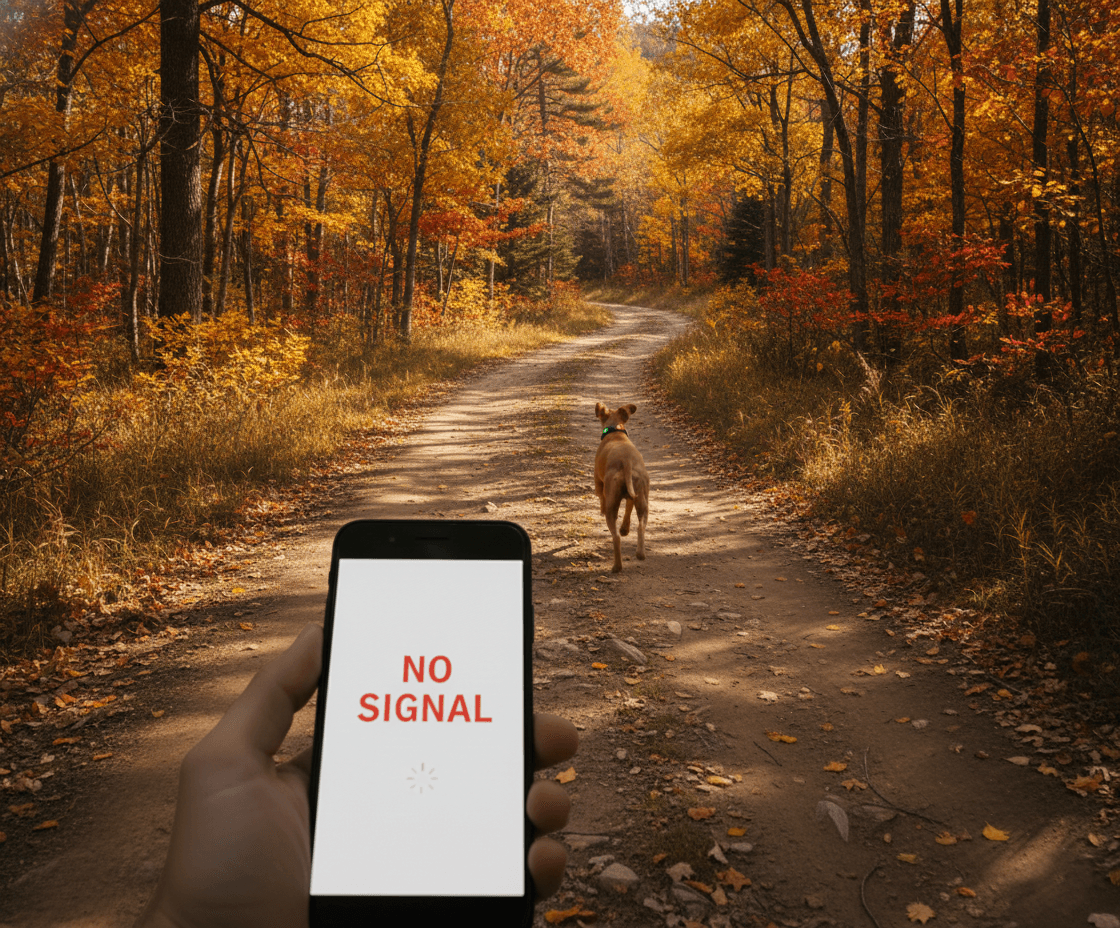
Key takeaway: Some lost dogs find their way home, but most are found by people searching nearby. In a 2012 national survey (Weiss et al.), 93% of lost dogs were recovered and 49% were found by searching the neighborhood. A 2021 analysis of Dallas shelter records found 70% of returned strays were found within a mile of home, though it cannot speak for dogs never returned.
The Short Answer, and Why It Is Short
People ask how far a lost dog travels because they want to know where to look. It is a fair question. The honest answer is that it has only been measured for dogs that made it back to their owners.
We are the team behind PawPulse, a smart dog collar designed for contactless heart rate and breathing monitoring and live location. When we went looking for the research behind the numbers that circulate online, we found good studies on how often dogs get lost, how they are found and how long it takes. We found one peer-reviewed analysis of how far returned strays were found from home, built on one city's shelter records, and no study that tracked how far lost dogs went on their own.
So this post does two things. It lays out what the studies do show, and it separates that from the confident numbers that do not trace back to any study we could find.
Can Lost Dogs Find Their Way Home?
Some can, and some do. Two studies put numbers on it.
The national survey by Weiss, Slater and Lord in Animals (2012), run by ASPCA researchers with an Ohio State veterinary researcher and funded by the ASPCA, asked 1,015 US households about pets lost in the previous five years. Among the 817 dog-owning households, 14% had lost a dog. Of the dogs recovered, the most common way they came back was owners searching the neighborhood (49%), followed by dogs returning on their own (20%) and an ID tag or microchip (15%). Only 6% were found by visiting or contacting animal control.
An earlier Ohio State study of 187 lost dogs in the Dayton area found a lower figure. As Ohio State University (2007) reported, 71% of the dogs were found and about 8% came home without help.
The two figures measure different things (the first is a share of recovered dogs, the second a share of all lost dogs) in different places and years. Read together, they say the same thing: a dog coming home by itself happens, but it is the exception, not the plan.
Is There a Study of How Far Lost Dogs Travel?
Partly. Neither of the studies above recorded distance, but one 2021 paper does, with limits. Kremer (Frontiers in Veterinary Science, 2021) is a single-author analysis of 2019 records from Dallas Animal Services, a municipal shelter. The author declared no conflicts of interest, and Maddie's Fund paid the publication fees. It compared where stray dogs were found with their owners' addresses. Of about 10,000 returned strays with a known owner address, 4,775 were found at the owner's own address. Among the other 5,228, 70% were found within 1 mile of home, and about 42% within roughly 400 feet, which the paper uses as an estimate of a city block.
Those numbers are useful and narrower than they look. They describe stray dogs that were picked up and matched to an owner in one city. They cannot tell us about dogs that were never matched or that went farther, and they measure the gap between a found location and a home address, not the route a dog took. Read them as a sign that many returned strays are found close to home, not as a radius that covers every lost dog. We searched Europe PMC in October 2026 and found no other study of this kind for owned dogs; if you know of one, we would like to read it.
Similar percentages circulate online without a source. This is the first one we could trace to a published paper, and you should still ask where any distance figure came from.
What the evidence does support is the pattern of recovery: nearly half of recovered dogs in the national survey were found by people searching close to home.
How Do Dogs Navigate When They Are Out of Sight?
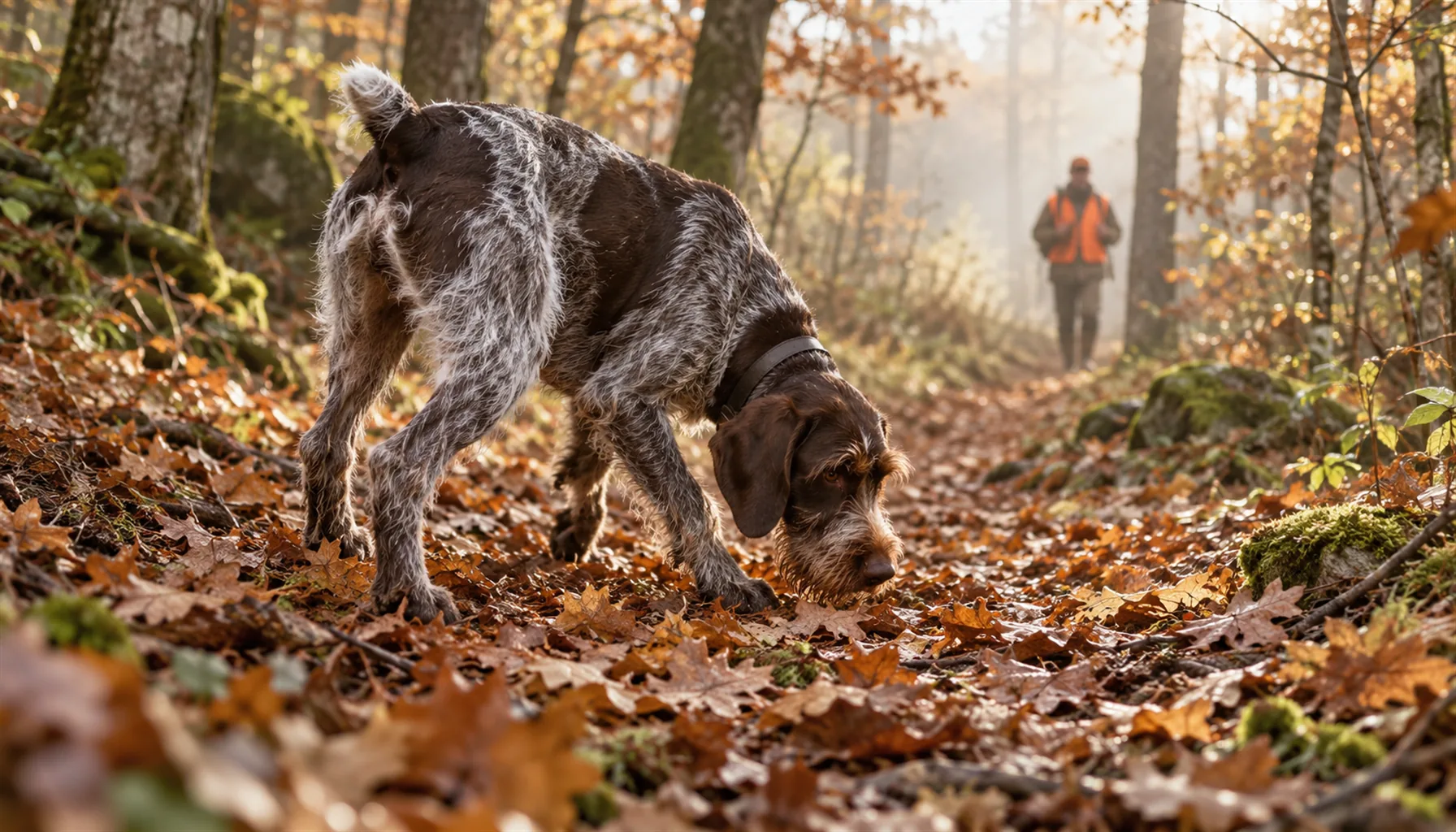
The best evidence comes from dogs that were not lost at all. In a Czech University of Life Sciences study, Benediktova et al. in eLife (2020), researchers fitted 27 hunting dogs from ten breeds with GPS collars and cameras and let them range freely in forests across 622 excursions.
On the way back to their owners, the dogs used two main strategies. In 399 returns they retraced their outbound route ("tracking"). In 223 they took a new route ("scouting"), which often began with a short run of about 20 meters along the north-south axis that the authors link to magnetic orientation. A small number of excursions (2.4%) ended without the dog returning and were left out of the analysis.
It is a careful study, and its limits are just as useful. These were experienced hunting dogs, in familiar working conditions, heading back to an owner who was waiting nearby. A frightened pet that bolted from fireworks onto city streets is in a very different situation. The study shows that dogs can be good navigators, not how far a lost dog will go.

How Long Does It Take for a Lost Dog to Come Home?
Often days, not hours. In the Ohio State follow-up published in the Journal of the American Veterinary Medical Association (Lord et al., 2007), 132 of the 187 dogs were recovered, with a median time of 2 days and a range from half a day to 21 days.
The same study pointed to what helped. Owners who called an animal agency had a higher likelihood of recovering their dog (hazard ratio 2.1), and so did owners who visited an agency (1.8) or posted neighborhood signs. Dogs wearing a license tag also had a higher likelihood of recovery (1.6), and owners who believed their dog had been stolen a lower one (0.3). This was a telephone survey of owners of 187 dogs lost in one Ohio county, and the published abstract reports the ratios without confidence intervals. A hazard ratio compares how fast dogs were recovered over time; it does not mean the chance doubled.
A companion study looked from the other side. In Lord et al. (JAVMA, 2007), researchers interviewed 156 people in Dayton who had found a lost pet. Nearly all of the pets reunited with owners (58 of 59) were dogs, with a median of 2 days to reunion. Only 8% of finders initially took the pet to an animal agency, most often because they feared it would be euthanized. In other words, your dog may be safe in a stranger's house, waiting for your sign.
What Do Lost Dogs Do at Night?
We did not find a study that tracked lost dogs overnight, so we will not invent behavior. The practical advice is to search again at quiet times, at dusk and dawn, when there is less noise, you can hear more, and a nervous dog may move. Our hour-by-hour guide to what to do in the first 24 hours after your dog goes missing covers night searching safely.
Lost Dog Myths vs What Studies Show
| Common belief | What the studies show | Source |
|---|
| "Lost dogs usually find their way home." | Some do: about 8% of lost dogs in one Ohio county came home on their own, and dogs coming home alone was the primary way 20% of recovered dogs returned in a national survey. Most were found by people. | Lord et al., 2007; Weiss et al., 2012 |
| "A lost dog can be miles away, so search far first." | In one city's shelter records, 70% of returned strays were found within 1 mile of home and about 42% within roughly 400 feet. That covers only dogs returned to an owner. Searching the neighborhood was the top recovery method (49%). | Kremer, 2021; Weiss et al., 2012 |
| "If a dog is not back in a day, it is gone." | Median time to recovery was 2 days, with some dogs found after 21 days. | Lord et al., 2007 (JAVMA) |
| "Someone who finds my dog will take it to the shelter." | Only 8% of finders first surrendered the pet to an animal agency. Post signs and check found-pet posts as well as shelters. | Lord et al., 2007 (finders study) |
| "Calling shelters is a waste of time." | Owners who called an animal agency recovered their dogs faster (hazard ratio 2.1, a survey of 187 lost dogs in one Ohio county). | Lord et al., 2007 (JAVMA) |
| "Dogs only find their way back by a single trick." | Hunting dogs fitted with GPS mostly retraced their outbound route (399 returns), but also took new routes (223 returns). | Benediktova et al., 2020 (eLife) |
| "An ID tag will not make a difference." | ID tag or microchip was how 15% of recovered dogs came home; license tags raised the chance of recovery. | Weiss et al., 2012; Lord et al., 2007 |
What This Means for Your Search
Put the studies together and a plan falls out of them:
- Search close, and start now. The neighborhood is where most recovered dogs were found.
- Call and visit animal agencies, even if you expect your dog to turn up. In the Ohio survey it was associated with faster recovery (hazard ratio 2.1).
- Make your dog findable by the people who find it. Signs, local online groups, an ID tag and a microchip with your current phone number.
- Keep going past day one. A median of 2 days means many dogs come home on day three or later.
The ASPCA's summary of its 2012 survey draws the same lesson about identification: it says the findings highlight the importance of ID tags and other forms of identification. For more context on the numbers, see our post on lost dog statistics.
When to Call Your Vet After a Lost Dog Comes Home
A dog that has been out overnight can have injuries or have eaten something you cannot see. These lines are conservative; your vet's advice for your dog comes first.
Call your vet the same day if your dog has any wound, limp or tender spot, may have been hit by a car even if it looks fine, vomits, has diarrhea, will not eat or drink, or seems unusually tired or confused.
Go to an emergency vet now if your dog has trouble breathing, pale gums, collapses or cannot stand, is bleeding heavily, or has a seizure.
Then tell every shelter, registry and group you contacted that your dog is home.
Where PawPulse Lucero Fits
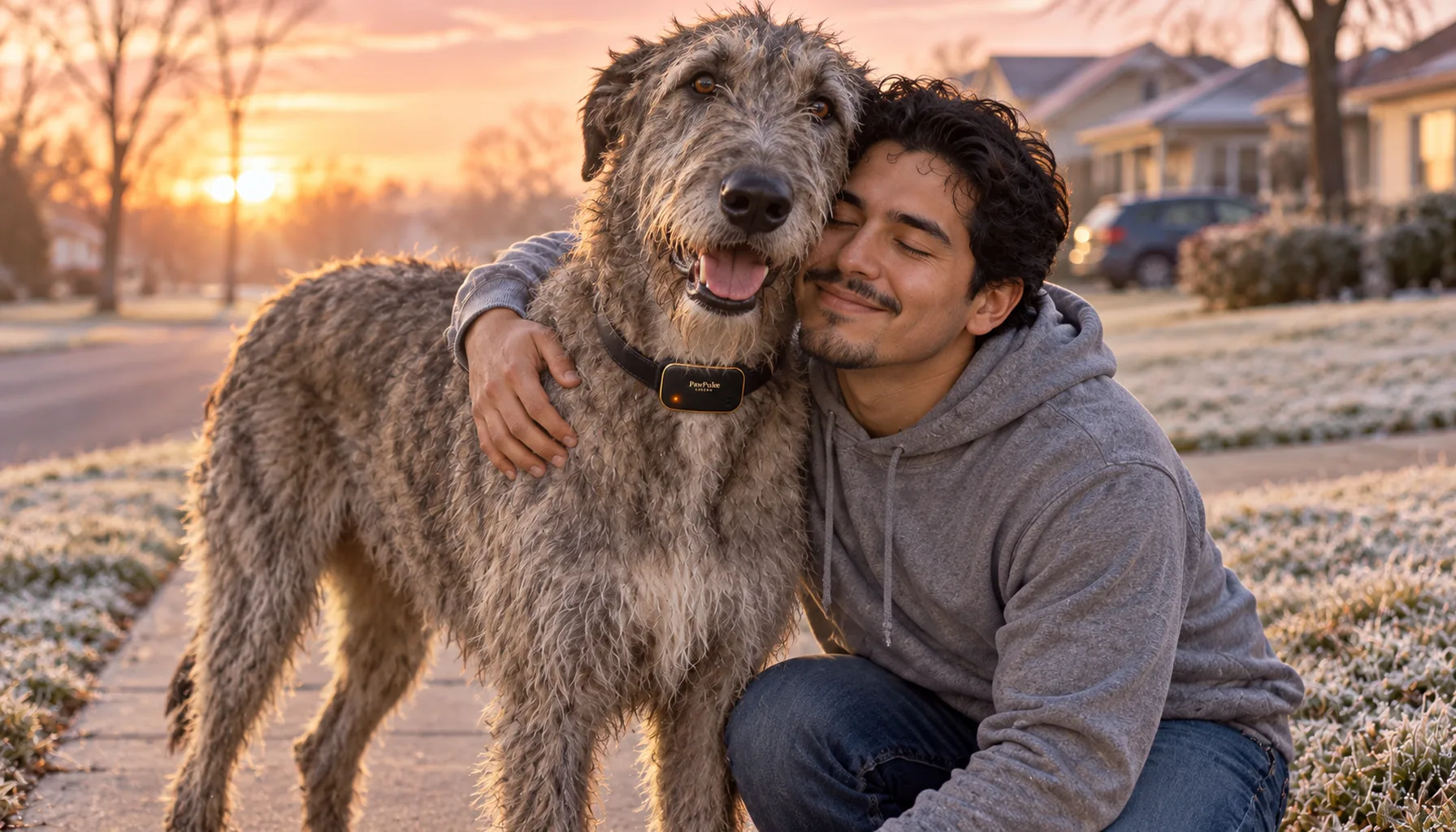
The studies above describe a search radius because, for most dogs, nobody knows where they are. That is the gap we built location into PawPulse Lucero to close.
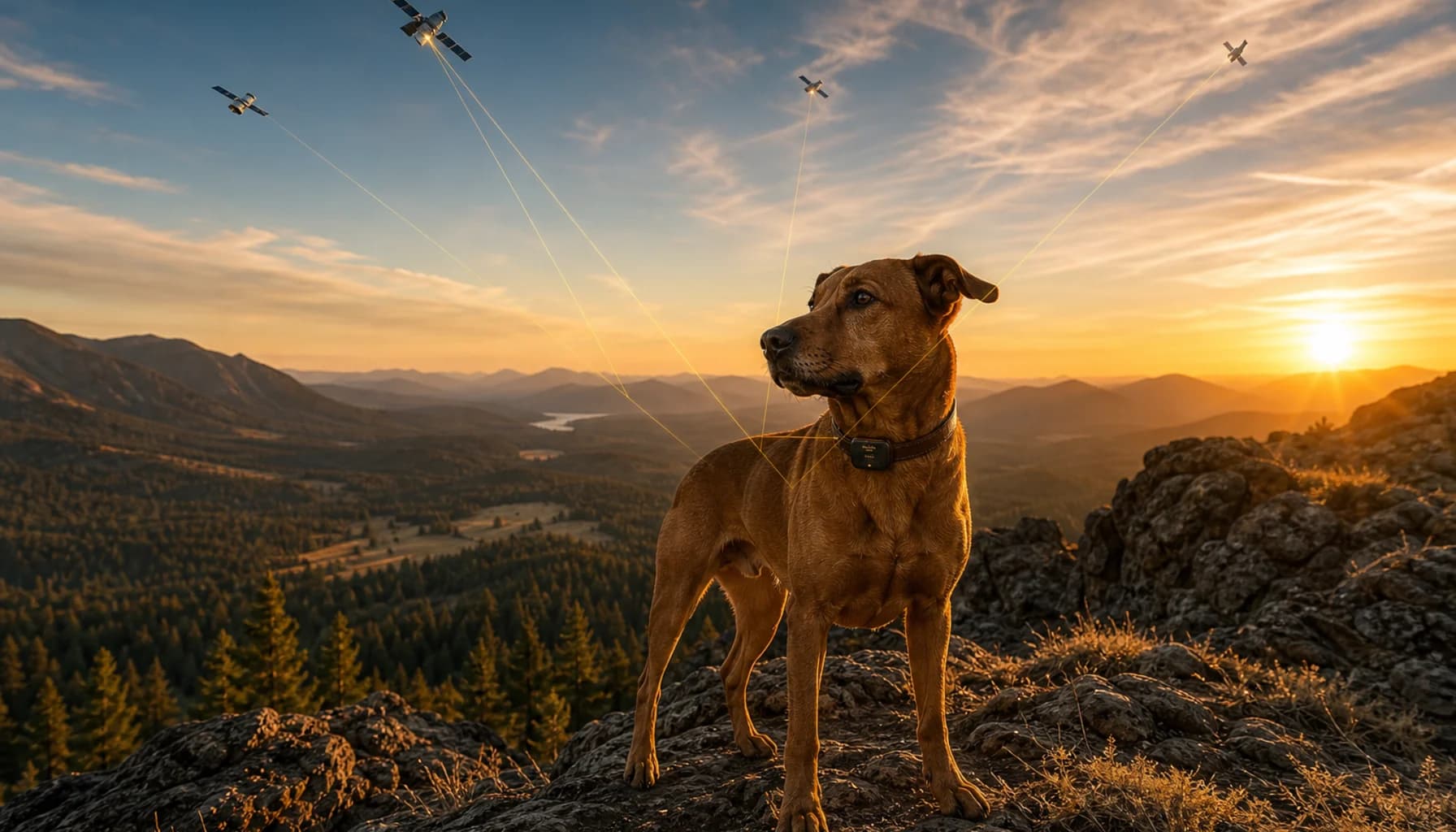
PawPulse Lucero is designed to send live location over a cellular connection and to alert you when your dog leaves a Safe Zone. It also has a satellite-ready backup designed to keep location updates moving when cellular drops out. Satellite availability depends on carrier support and certification. Coverage varies and a collar can come off, so location is one more layer, not a guarantee, and it never replaces an ID tag and a registered microchip. Why cellular-only collars struggle in remote areas is explained in the dead zone problem, and the connectivity design is on our technology page.
Lucero is also designed to measure heart rate and breathing through fur without touching the skin (Kinetic sensing), giving trends and context to share with your vet, including after a stressful night away from home.
Frequently Asked Questions
Can lost dogs find their way home?
Some can. In a 2012 national survey, coming home on its own was how 20% of recovered dogs returned, and an Ohio State study found about 8% of lost dogs came home without help. Most recovered dogs, though, were found by people searching nearby, so start searching rather than waiting.
How far will a lost dog travel?
Many are found close to home. In a 2021 analysis of Dallas shelter records, 70% of returned strays were found within a mile of home and about 42% within roughly 400 feet. That only covers dogs that made it back to an owner, so it is a starting point, not a limit. Search close to home first.
How long does it take for a lost dog to come home?
In a 2007 JAVMA study of 187 lost dogs in Ohio, the median time to recovery was 2 days, ranging from half a day to 21 days. Owners who called or visited animal agencies and posted neighborhood signs did better. Keep searching, calling and posting for days, not hours.
Do lost dogs come back on their own?
Sometimes. An Ohio State study found about 8% of lost dogs returned without help, and a national ASPCA-run survey found returning on its own was the second most common way recovered dogs came home, after neighborhood searches. Leave one person at home and a familiar-smelling item outside in case your dog does.
What do lost dogs do at night?
We found no study that tracked lost dogs overnight. The practical advice is to search again at dusk and dawn, when it is quieter, because you can hear more and a nervous dog may move. Use a flashlight to spot eye shine, stay visible, avoid busy roads and never search woods alone in the dark.
Do people who find lost dogs take them to shelters?
Often not at first. In a 2007 Ohio study of people who found lost pets, only 8% initially took the animal to an animal agency, most often because they feared it would be euthanized. That is why posting signs and checking local found-pet posts matters as much as calling shelters.
Learn more about PawPulse Lucero, the smart dog collar designed for live location, Safe Zone alerts and a satellite-ready backup, plus contactless heart rate and breathing trends to share with your vet. Reservation holders get their Lucero first. We will confirm your delivery month when the Kickstarter is announced.
-- The PawPulse Team