Key takeaway: You often cannot tell if a dog is in pain or anxious from one sign, because the signs overlap. In a 2018 University of Lincoln study of noise-sensitive dogs, shaking and hiding were the most common signs whether or not the dog had musculoskeletal pain. The tell is context and change over time: log when, where and what came before, film it, and let your vet rule out pain first.
Why Pain and Anxiety Look So Alike
Your dog is trembling in the hallway, panting, and will not settle. Is something hurting, or is something scaring them?
It is one of the most common questions owners ask, and the honest answer is that the body language overlaps almost completely. The same panting, pacing, hiding and trembling show up on veterinary lists of pain signs and on lists of anxiety signs. We looked hard for an authoritative side-by-side guide that separates the two by sign alone, and we did not find one. What the veterinary sources do agree on is the method: look at context, look at what has changed, and check for pain before treating a dog as "just anxious."
We are the team behind PawPulse, a smart dog collar with contactless heart rate and breathing monitoring. We spend a lot of time thinking about what a behavior change does and does not tell you. This guide is owner education, not veterinary advice, and every dog is different.
What Do Veterinary Sources List as Signs of Pain?
The Cornell Richard P. Riney Canine Health Center (updated 2025) groups pain signs by mobility, activity, behavior and daily habits. Its list includes an arched back or low head, stiffness or limping, trouble getting up or using stairs, pacing or an inability to settle, hiding or avoiding interaction, reacting badly to touch, licking or chewing one spot, uncharacteristic growling or snapping, "excessive panting even at rest," reduced appetite, and sleeping more or being unable to get comfortable.
Notice how many of those are not about a limp at all. Pain often shows up as behavior.
What Do Veterinary Sources List as Signs of Anxiety?
Writing for Tufts Cummings School of Veterinary Medicine (2023), board-certified veterinary behaviorist Dr. Stephanie Borns-Weil describes an anxious dog this way: it "may pant, pace, tremble, drool, withdraw from its owner, or hide," or may seem irritable and bark or growl. She adds a low or tucked tail, pinned-back ears, and yawning or lip-licking when the dog is not tired.
Put the two lists side by side and the problem is obvious. Panting, pacing, hiding, withdrawal, growling and licking appear on both.
Shared Signs and the Context Worth Logging
This table is not a test. Every sign in it can come from pain, fear, both, or something else. The right-hand column lists the context questions that help your vet tell them apart.
| Sign you see | Listed as a pain sign (Cornell 2025) | Listed as an anxiety sign (Tufts 2023) | Context worth logging |
|---|
| Panting when not hot or exercised | Yes, "even at rest" | Yes | Room temperature, last exercise, time of day, how long it lasted |
| Pacing, cannot settle | Yes | Yes | Did it start after a noise, a visitor, a meal, or out of nowhere? |
| Hiding or withdrawing | Yes | Yes | Where the dog hides, and whether it comes out once a trigger ends |
| Trembling or shaking | Not on Cornell's list | Yes | Was the dog cold, wet, startled, or touched in one spot? |
| Growling or snapping | Yes, if uncharacteristic | Yes | What part of the body was being handled, and by whom |
| Licking | One body spot | Lip-licking, yawning | Which spot, or whether it happens only in certain situations |
| Low head, tucked tail, ears back | Posture changes | Yes | Whether the posture holds all day or only around a trigger |
| Sleep changes | Sleeping more or restless | Not on this list | Night restlessness, getting up and lying down repeatedly |
Two more things matter more than any single row: whether the behavior is new for this dog, and whether it fades when an obvious trigger ends.

Can Pain Make a Dog Anxious?
Yes, and this is the most useful thing to know. Tufts puts it plainly: "Pain, itching, illness, discomfort can all lower a dog's threshold for anxiety and should be ruled out."
The research points the same way. In a 2020 review in Animals, Mills and 18 co-authors, led from the University of Lincoln (2020) looked back at 100 recent referred dog behavior cases from their own caseloads and gave a conservative estimate that around a third involved some form of painful condition, with some caseloads approaching 80 percent. The authors argue that pain-related behavior problems are under-reported and that clinicians should "err on the side of caution" when pain is possible.
A smaller study shows how this can look at home. Lopes Fagundes and colleagues at the University of Lincoln (Frontiers in Veterinary Science, 2018) compared the records of 10 noise-sensitive dogs with musculoskeletal pain and 10 without. Shaking or trembling and hiding were the most common signs in both groups, so those signs did not separate them. What differed: in the dogs with pain, the noise sensitivity started on average nearly four years later in life, and it spread more widely to related places. Those dogs responded well once the pain was identified. It is a 20-dog study, so treat it as a clue, not a rule. The clue is a familiar one: a fear that appears late in life deserves a physical check.
Is My Dog Stressed or Sick? Start With What Changed
A dog that has hidden from thunder since puppyhood and still does is telling you something different from a calm eight-year-old who starts hiding every evening. The second dog has a new behavior with no new trigger. That pattern is exactly where vets want to look for pain.
Some quick questions to ask yourself:
- Is this new, or has my dog always done it?
- Does it happen only around a trigger (storm, car, guests, being alone), or at random times?
- Does it stop when the trigger stops?
- Is it worse after rest, after exercise, or when the dog is touched in one area?
- Has anything else changed, such as appetite, sleep, stairs, or jumping into the car?
If you cannot point to a trigger, or the change is new, treat pain as the first suspect until your vet says otherwise. Our post on why dogs hide pain and how to notice sooner goes deeper on the subtle end of this.

What to Log Before You Call the Vet
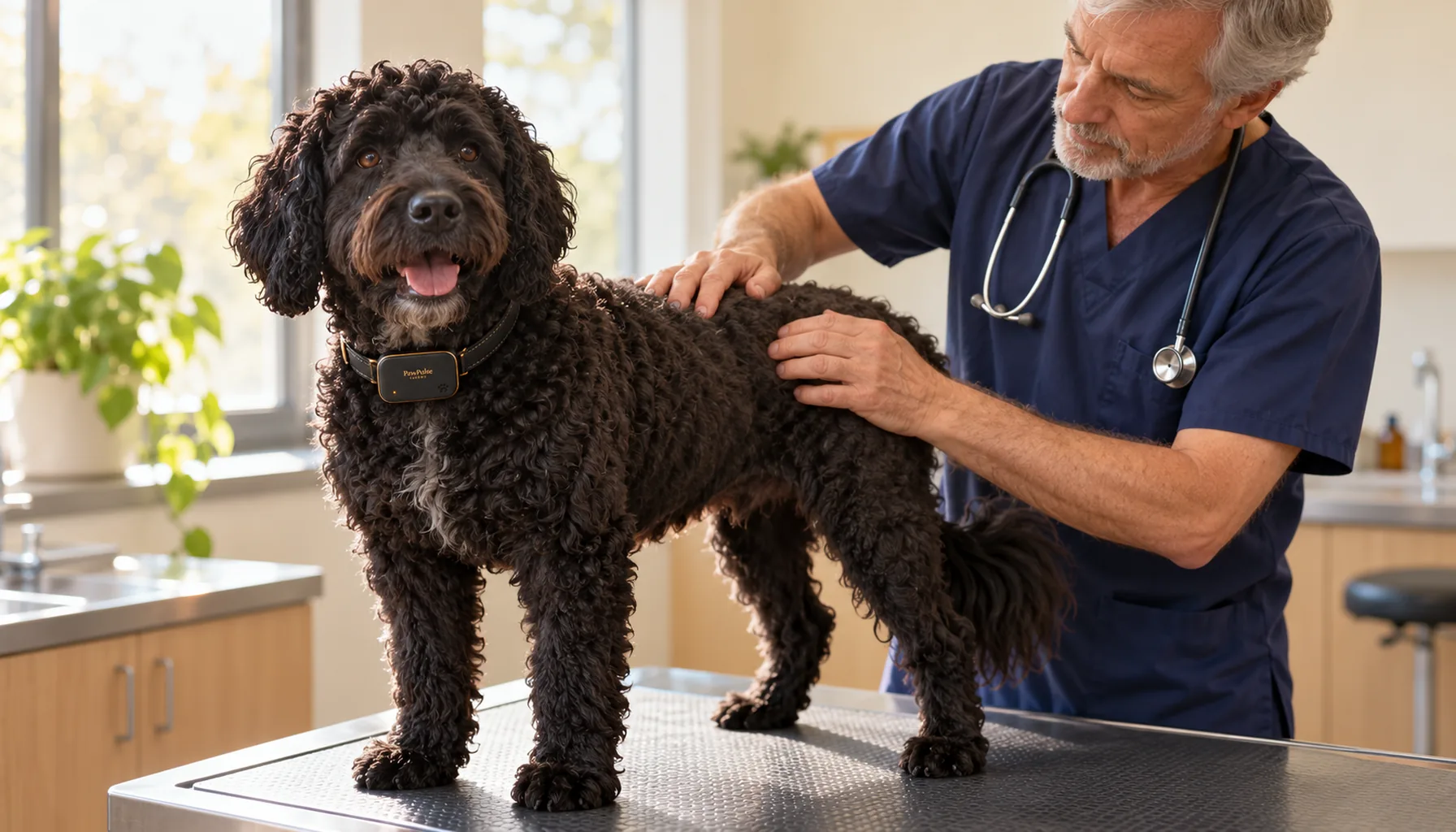
Cornell's advice is practical: before the appointment, record the behavior with photos, videos or notes, because the stress of a clinic can mask pain behaviors. A dog that paces at home may stand perfectly still on the exam table. Your log is what your vet sees instead.
A simple behavior log, one line per episode:
- Date and start time. Night episodes matter; note them even if you are half asleep.
- Where it happened and what the dog was doing just before (resting, eating, playing, getting up).
- Possible trigger: noise, visitor, being left alone, car, being touched, none you can see.
- What you saw: panting, trembling, pacing, hiding, licking a spot, growling, posture.
- How long it lasted and what ended it.
- Anything else that day: appetite, stairs, walk length, stiffness after rest, toilet changes.
- A short video, 30 to 60 seconds, filmed calmly from a distance. Do not provoke the behavior to film it.
Two weeks of this is far more useful than "he seems off." Our guide to what your vet wishes you would bring to every appointment covers how to make a log easy to read in a short visit.
What Not to Do at Home
Do not give your dog any pain medication or calming product on a guess. Over-the-counter human medicines were the top category of calls to ASPCA Animal Poison Control (2025), at 16.9% of cases, so a medicine that is safe for you may not be safe for your dog. Do not punish growling or snapping either; it may be the only way a sore dog has of saying "not there."
Comfort is fine. A quiet room, a familiar bed, and a calm voice cost nothing and do no harm while you arrange a visit.
Where PawPulse Lucero Fits
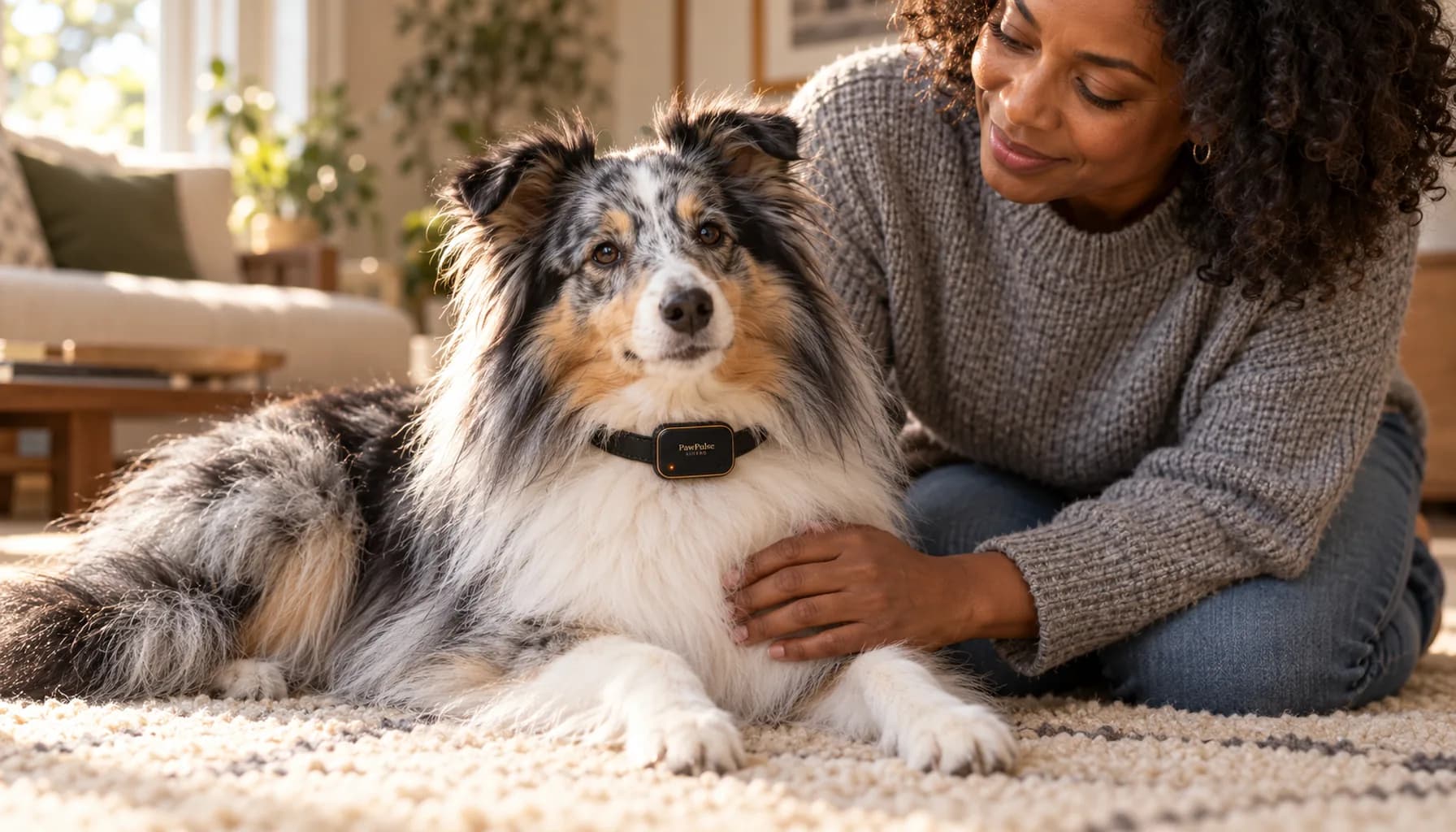
A log written by hand captures what you notice, usually when you are home and awake. PawPulse Lucero is designed to measure heart rate and breathing through fur without touching the skin (Kinetic sensing), along with activity and rest. The useful part is the trend: whether resting breathing, sleep and activity have shifted over days compared with your own dog's normal, and when restless stretches happen. Our post on how stress affects your dog's body explains why those signals move with both stress and discomfort.
PawPulse Lucero cannot tell you whether your dog is in pain or anxious. Neither can any collar. What it can add is timing and context to share with your vet, next to your notes and videos. It does not replace your observations, an exam, or your veterinarian.
When to Call Your Vet
These thresholds come from the sources above and are deliberately conservative. Your vet's advice for your dog comes first.
Go to a vet now for any of the signs VCA Animal Hospitals (2024) treats as emergencies, including collapse, difficulty or labored breathing, pale or white gums, a swollen abdomen or repeated unproductive retching, or a seizure lasting more than five minutes. Call your vet right away about sudden or severe pain as well.
Book a visit soon if anxious behavior is frequent, which Tufts says warrants seeing your veterinarian as soon as possible, or if any sign on the pain list is new, keeps coming back, or appears with no trigger you can identify.
Bring it up at the next visit if you notice slow changes over weeks, such as more time lying down, hesitating at stairs, or restless nights. Bring the log and videos.
Frequently Asked Questions
Is my dog trembling from pain or fear?
Trembling alone cannot tell you. Tufts lists trembling as an anxiety sign. In a 2018 University of Lincoln study, shaking was common in noise-sensitive dogs with and without pain. Log the trigger, the timing and whether it stops, then ask your vet to check for pain.
Why is my dog panting and shaking?
Panting and shaking together can come from fear, pain, heat, exercise or illness. Cornell lists panting at rest as a pain sign, and Tufts lists both as anxiety signs. If there is no obvious trigger, it is new, or it lasts, call your vet. Labored breathing, collapse or pale gums need emergency care.
Is my dog stressed or sick?
Start with what changed. A long-standing fear of a known trigger points one way; a new behavior with no trigger points toward a physical cause. Veterinary behaviorists at Tufts say pain and illness lower a dog's threshold for anxiety and should be ruled out first, so a vet exam is the right first step.
My dog is hiding. Is it pain?
It can be. Cornell lists hiding and avoiding interaction as pain signs, and Tufts lists hiding as an anxiety sign. Hiding that fades when a storm or visitor leaves suggests fear. Hiding that is new, happens at random, or comes with stiffness or appetite changes deserves a vet check.
Can pain cause anxiety in dogs?
Yes. A 2020 review by veterinary behaviorists estimated that around a third of referred dog behavior cases involved a painful condition. A 2018 University of Lincoln study found noise sensitivity started years later in dogs with musculoskeletal pain. Ruling out pain is a standard first step before treating a dog as anxious.
What should I record for my vet?
Note the date, time, place, what happened just before, what you saw, how long it lasted and what ended it. Add appetite, sleep and mobility changes, and a calm 30 to 60 second video. Cornell recommends this because clinic stress can hide pain behaviors during the exam.
Learn more about PawPulse Lucero, the smart dog collar designed to measure heart rate and breathing through fur without touching the skin, so you have resting trends and context to share with your vet alongside your own notes.
-- The PawPulse Team