Key takeaway: A dog vital signs chart starts with four checks at rest: heart rate, breathing rate, temperature and gums. The Merck Veterinary Manual lists 70 to 120 beats per minute, 18 to 34 breaths per minute and 101 to 102.5 F, and UC Davis (2025) lists pink, moist gums that refill in under 2 seconds. Sources differ at the edges, and every dog has its own normal.
Why Learn Your Dog's Vital Signs Before You Need Them?
Vital signs are the handful of numbers and observations a veterinary team checks first when a dog comes through the door: how fast the heart beats, how fast the dog breathes, body temperature, and the color of the gums. They take a few minutes to check, and they tell a vet a lot about how the body is coping right now.
You can learn most of them at home. The catch is timing. If the first time you look at your dog's gums is the night something feels wrong, you have nothing to compare against. Check on a calm day, write the numbers down, and you have a reference that belongs to your dog instead of a stranger's chart.
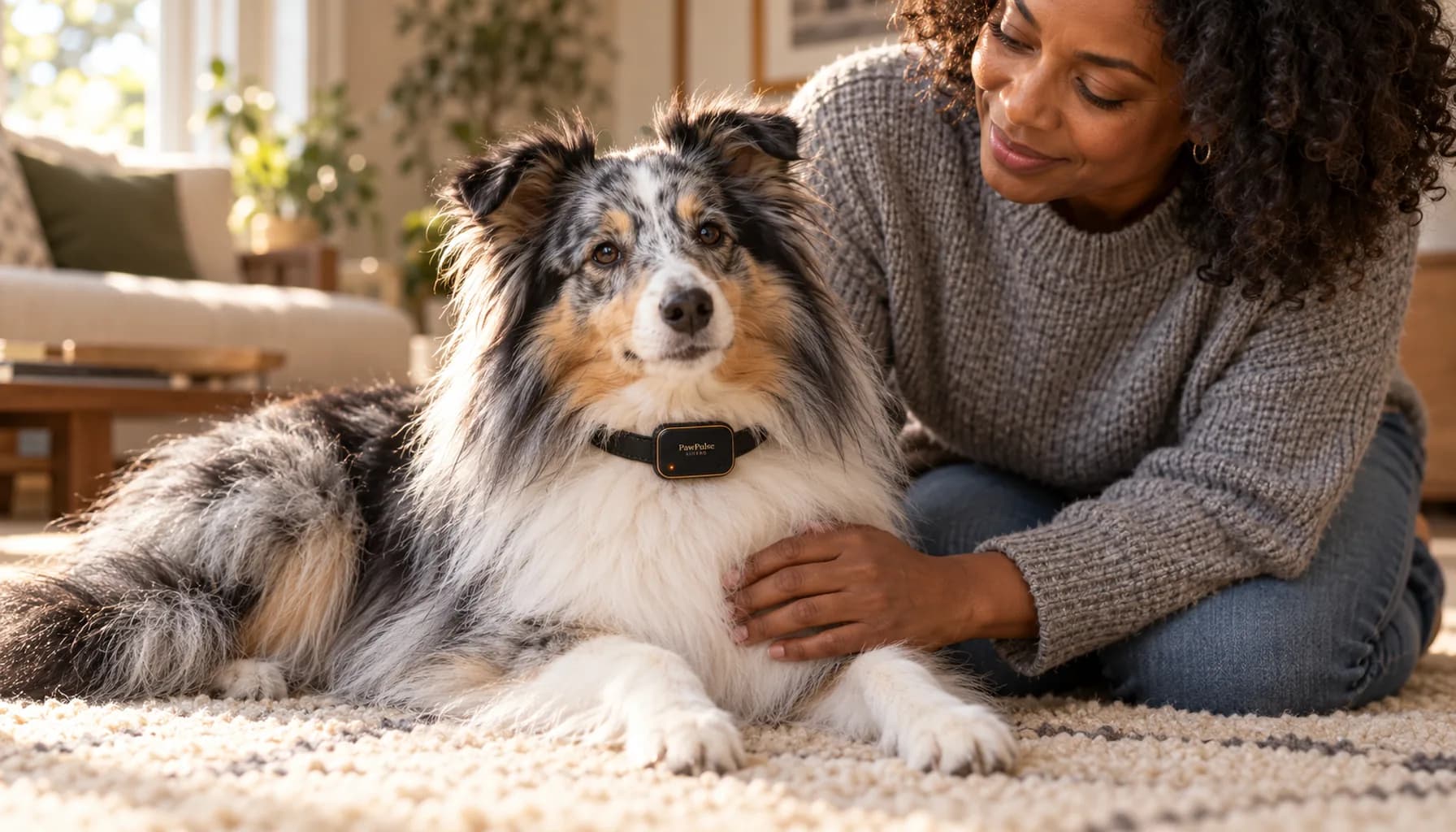
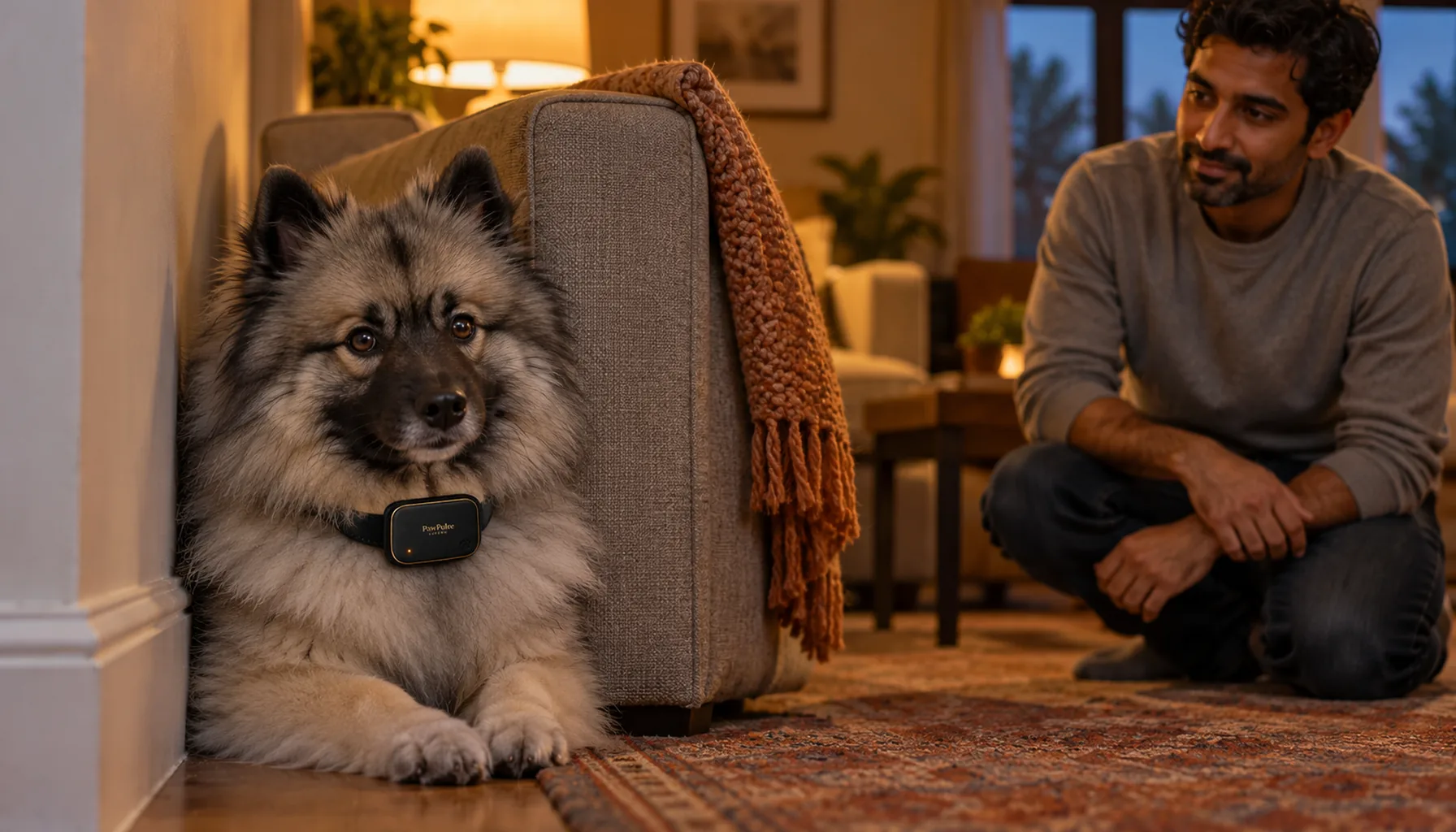
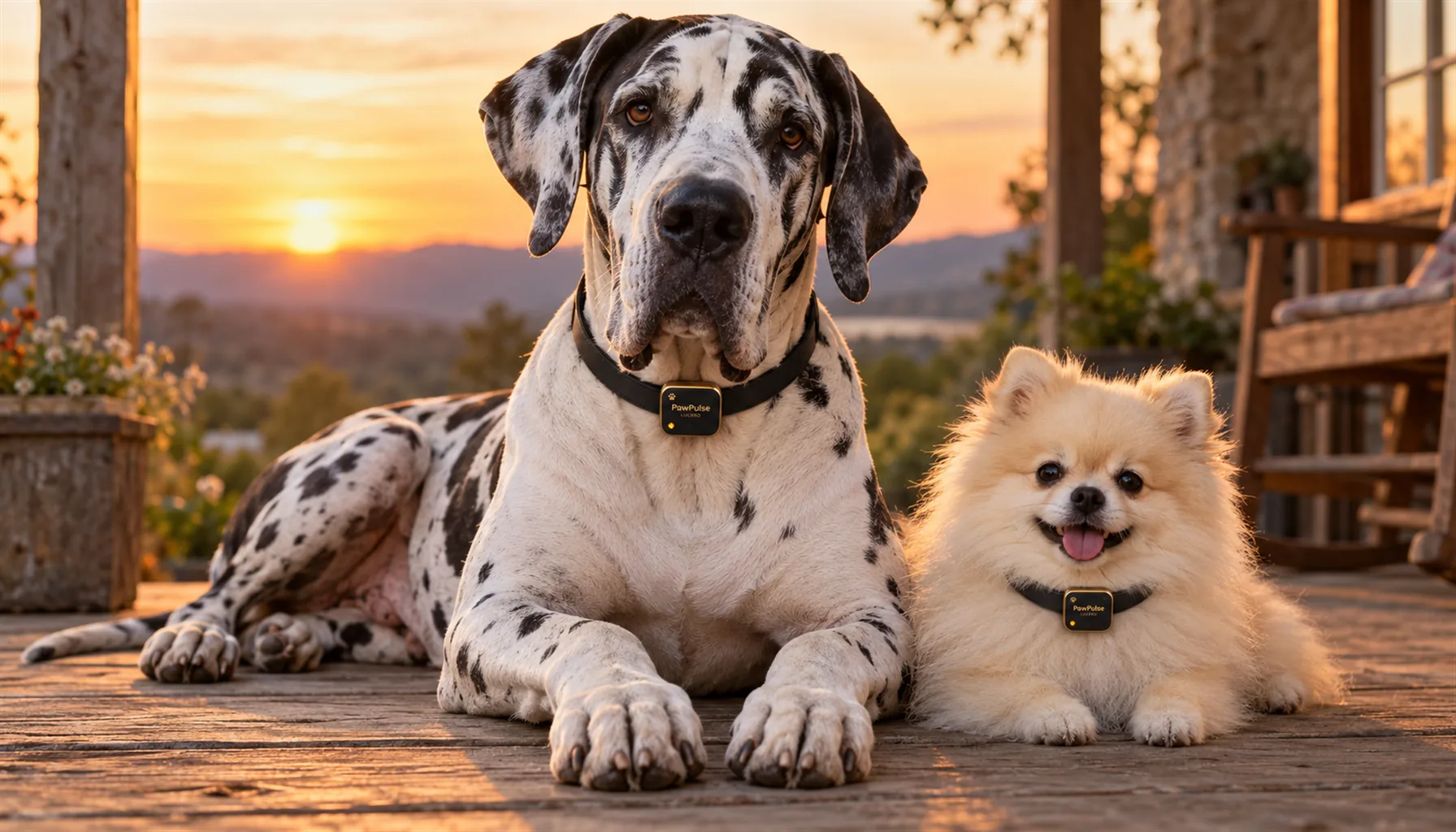
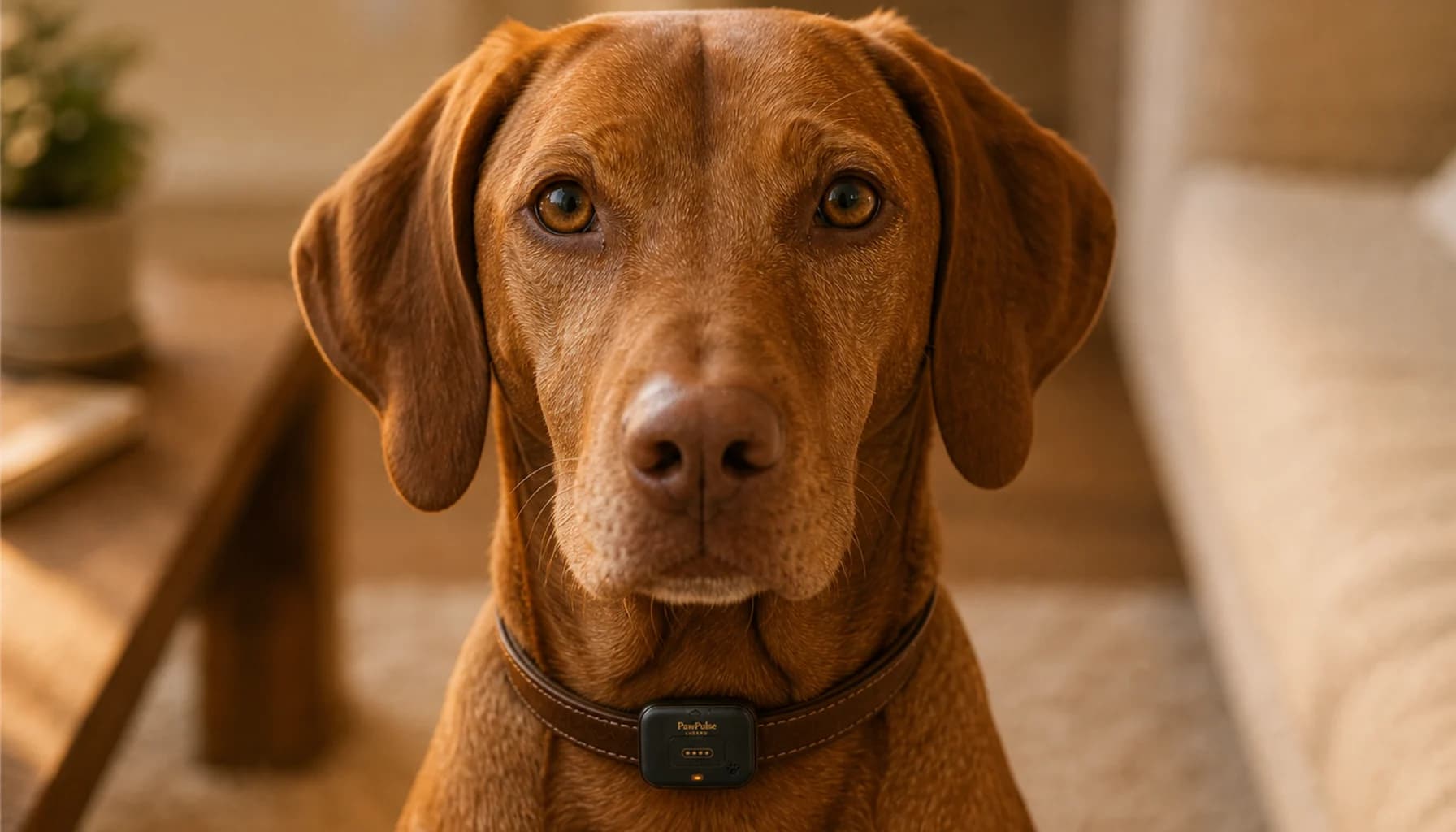
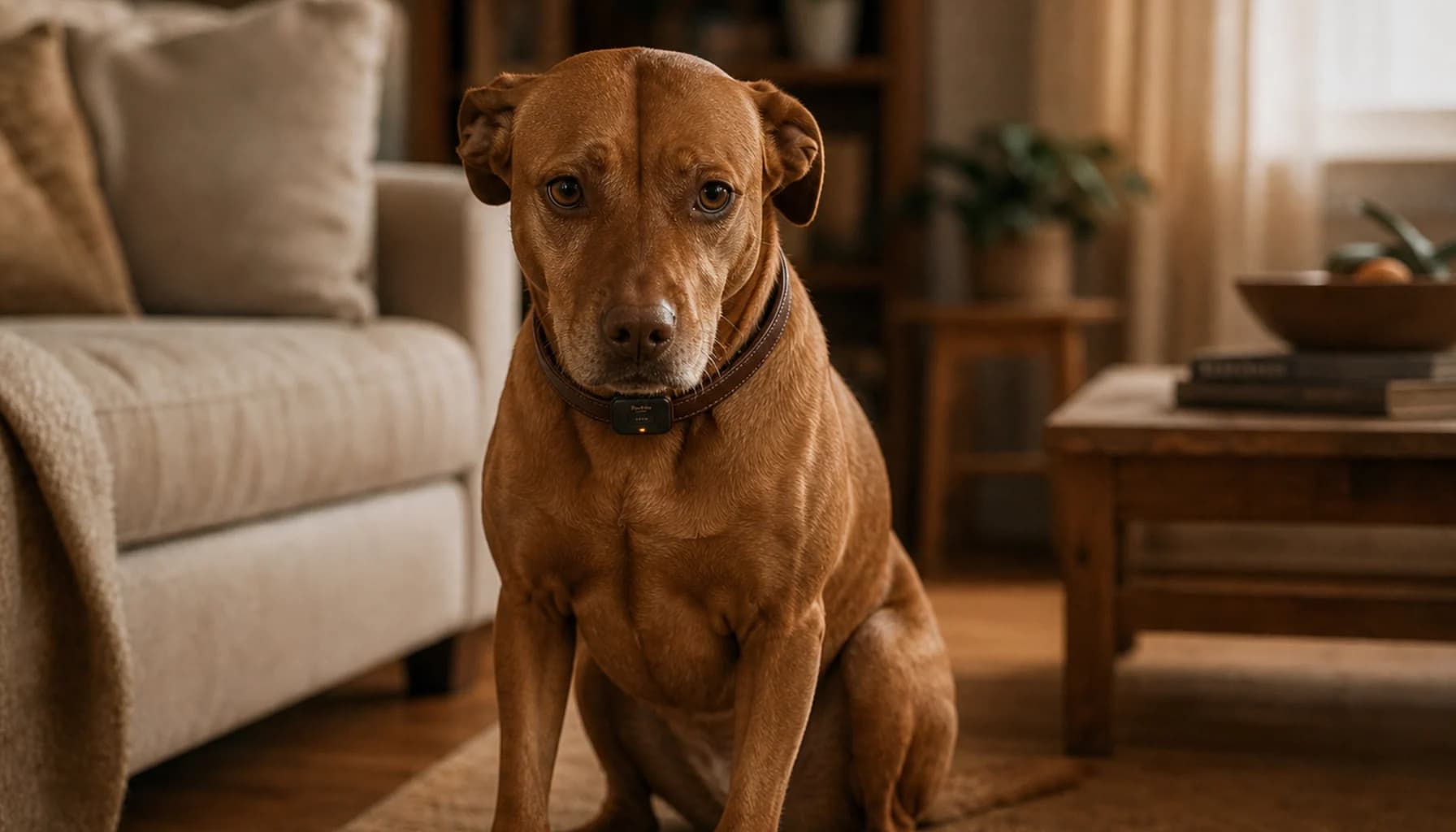
We are the team behind PawPulse, a smart dog collar with contactless heart rate and breathing monitoring. Building it meant reading a lot of reference tables, and noticing how often they disagree. This guide puts the main sources side by side, explains why their numbers differ, and ends with plain guidance on when to call your vet. It is owner education, not veterinary advice, and ranges vary by dog.
Dog Vital Signs Chart: Normal Ranges at Rest
These are published reference ranges for healthy adult dogs, with the source for each. Use them as a starting point for a conversation with your vet, not as a pass or fail line.
| Vital sign | Published normal range | Source | How to check at home | Does PawPulse Lucero measure it? |
|---|
| Heart rate, adult at rest | 70 to 120 beats/min | Merck Veterinary Manual | Femoral pulse or chest, full 60 seconds | Designed to, as a trend |
| Heart rate by size | small dogs 100 to 160; medium dogs 60 to 100; puppies 120 to 160 | UC Davis CVET (2025) | Same as above | Designed to, as a trend |
| Breathing rate, awake at rest | 18 to 34 breaths/min (Merck); 10 to 30 (UC Davis) | Merck; UC Davis CVET | Count chest rises for 60 seconds | Designed to, as a trend |
| Breathing rate, asleep | 15 to 30 normal; consistently above 30 is abnormal | VCA Animal Hospitals | Count during calm sleep | Designed to, as a trend |
| Body temperature | 101 to 102.5 F (Merck); 100.0 to 102.8 F (UC Davis) | Merck; UC Davis CVET | Rectal thermometer, as your vet shows you | No |
| Gum color | pink and moist | UC Davis CVET | Lift the upper lip in good light | No |
| Capillary refill time | under 2 seconds (UC Davis); 1 to 2 seconds normal (Merck) | UC Davis CVET; Merck triage table | Press the gum, release, count | No |
The two main references are the Merck Veterinary Manual table of normal physiological values for dogs (current in 2026), which lists 70 to 120 beats per minute, 18 to 34 breaths per minute at rest and an average temperature of 101 to 102.5 F, and the UC Davis California Veterinary Emergency Team vital signs chart (updated August 2025), which lists a breathing rate of 10 to 30, heart rates split by size, pink and moist gums, a capillary refill time under 2 seconds and a temperature of 100.0 to 102.8 F.
Why Do the Sources Disagree?
Because a reference range is a description of a group, and each group was measured differently.
Awake versus asleep. The Merck breathing range describes an awake dog at rest. Sleep slows breathing a lot. In a study published in Research in Veterinary Science (Rishniw et al., 2012), owners of 114 apparently healthy adult dogs counted sleeping breaths at home. The average was 13 breaths per minute, no dog averaged above 23, and the same dogs averaged 19 breaths per minute when resting awake. A UC Davis low end of 10 and a Merck low end of 18 can both be right; they describe different moments.
Different dogs, different methods. Temperature shows the same pattern. A 2026 study in the American Journal of Veterinary Research (Rostami et al., Mississippi State University) measured rectal temperature in 78 apparently healthy shelter dogs and found a reference interval of 37.5 to 39.7 C, about 99.5 to 103.5 F. That is wider than the Merck average range, partly because it covers 95 percent of a real population rather than a typical middle. The authors say their interval does not replace established veterinary guidelines.
Size and age. The UC Davis chart gives small dogs a faster heart rate than medium dogs and gives puppies a separate range. Merck uses one adult range but notes that small dogs have faster heart rates than larger dogs. We looked at how much size really matters in our guide to normal heart rate for dogs by size and age, and the honest answer is less than most charts suggest.
The practical lesson: a single number slightly outside one table is rarely meaningful on its own. A number that is clearly outside every table, or clearly different from your own dog's usual, is.
What Is a Normal Heart Rate for a Dog at Rest?
Merck lists 70 to 120 beats per minute for a dog at rest. Calm, relaxed dogs often sit lower, and dogs on an exam table often sit higher, because excitement and stress push the number up for a while.
Count when your dog has been lying quietly for several minutes. Two fingers on the inside of the upper back leg, where the femoral artery runs, or a flat palm on the left side of the chest just behind the elbow, both work. Count a full 60 seconds, because many healthy dogs have a heartbeat that speeds up as they breathe in and slows as they breathe out. Our step-by-step guide to how to check a dog's pulse at home covers the technique and the usual mistakes.
What Is a Normal Breathing Rate for a Dog?
Watch the side of the chest and count one rise plus one fall as one breath. An awake dog resting quietly usually falls within the Merck range of 18 to 34. A sleeping dog breathes more slowly.
VCA Animal Hospitals' home breathing rate guide (updated 2025), written with a veterinary cardiologist, calls 15 to 30 breaths per minute normal at rest or asleep, says lower rates can be normal in a dog that is otherwise acting normally, and says rates consistently above 30 are increased and considered abnormal. Of all the vital signs, the sleeping breathing rate is the one owners can most easily track at home. We wrote a full guide on how to count your dog's sleeping respiratory rate, with a 7-day log.

What Is a Dog's Normal Temperature?
Merck gives an average of 101 to 102.5 F, and the UC Davis chart gives 100.0 to 102.8 F. Both are higher than a typical human temperature, which surprises many owners: a dog that feels warm to your hand is not necessarily running a fever.
Temperature is the one vital sign you cannot estimate by touch or by looking. It takes a thermometer, and the reference ranges above are for rectal readings. If you have never done it, ask your vet or a veterinary nurse to show you at your next visit, so you learn a safe, calm technique on a day when nothing is wrong.
We want to be plain about this one: PawPulse Lucero does not measure body temperature. It is designed to measure heart rate and breathing. For temperature, use a thermometer and your vet.
What Color Should Dog Gums Be?
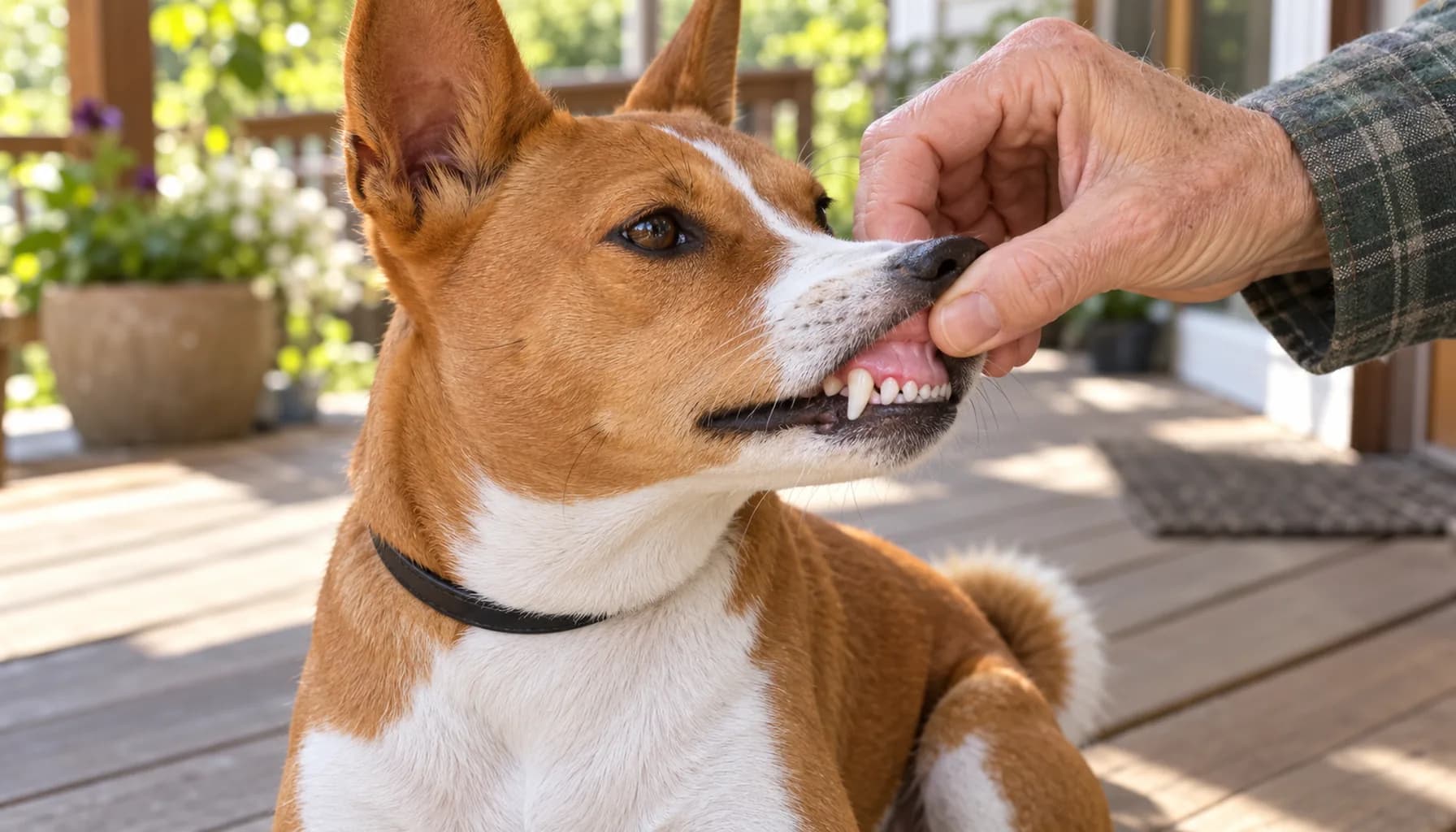
Healthy gums are pink and moist, according to the UC Davis chart. Check in daylight or under a white light, by gently lifting the upper lip at the side of the mouth.
The Merck Veterinary Manual triage table, written for veterinary teams, lists what other colors can point to:
- Pink: normal.
- Pale or white: can point to anemia or shock.
- Bluish or muddy: can point to a serious shortage of oxygen or advanced shock.
- Yellow: can point to liver disease or the breakdown of red blood cells.
Some dogs have naturally dark or patchy gums. If yours does, ask your vet where in the mouth to look instead, and learn what normal looks like for your dog before you need it.
How Do You Check a Dog's Capillary Refill Time?
Capillary refill time is how long it takes color to return to the gum after you press it pale. It is a rough check of how well blood is reaching the small vessels.
- Lift the upper lip and find a pink patch of gum.
- Press it gently with a fingertip for a second or two, until the spot turns pale.
- Let go and count how long the pink takes to come back.
UC Davis lists under 2 seconds as normal, and the Merck triage table lists 1 to 2 seconds as normal, with longer than 2 seconds pointing to poor circulation. Practice on a calm day so you know how it looks on your dog.
A Five-Minute Vital Signs Routine at Home
Pick a quiet moment when your dog has been resting for at least ten minutes, then:
- Breathing first. Count breaths for 60 seconds without touching your dog.
- Heart rate. Count the femoral pulse or chest beat for a full 60 seconds.
- Gums. Lift the lip and note the color and whether the gum feels moist.
- Capillary refill. Press, release, count.
- Temperature, only if your vet has shown you how, or has asked you to.
- Write it down with the date, the time and what your dog was doing beforehand.
Repeat on a few calm days. Your dog's own numbers, written down, are worth more to your vet than any chart, including ours.
When Should You Call Your Vet About Your Dog's Vital Signs?
These thresholds come from the sources above and are deliberately conservative. If your vet gives you different numbers for your dog, follow theirs. When in doubt, call.
Go to a vet now, or an emergency clinic if yours is closed, if your dog:
- is struggling to breathe, or collapses or faints
- has pale, white, bluish or grey gums
- has a fast resting breathing rate together with labored breathing, restlessness, coughing, weakness or a depressed attitude, which VCA describes as a possible emergency
- has gums that stay pale for more than 2 seconds after you press them, alongside weakness or other signs of being unwell
Call your vet soon if:
- calm sleeping or resting breathing counts are consistently above 30 on repeat checks, which VCA considers abnormal
- calm resting heart rate counts at home are repeatedly well above your dog's own usual numbers, or above the range your vet gives for your dog's size and age (the chart shows small dogs can run higher than larger dogs)
- a rectal temperature is clearly outside the ranges in the chart
- the gums look yellow
- any vital sign is clearly different from your dog's own usual numbers, even inside the published ranges
Where PawPulse Lucero Fits
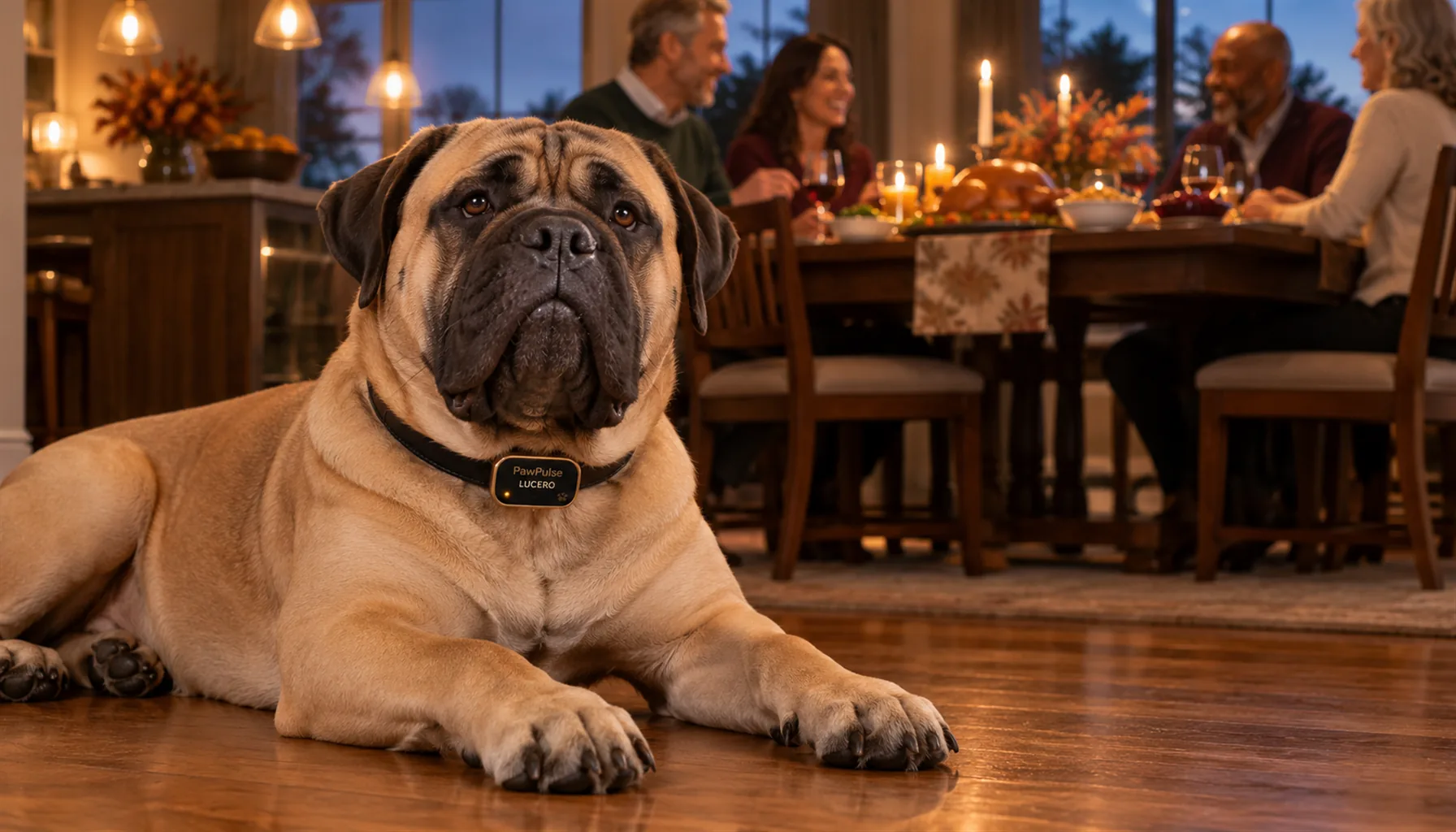
A hand check is a snapshot, taken when you remember and when your dog will hold still. That gap is part of why we built PawPulse Lucero. It is designed to measure heart rate and breathing through fur without touching the skin (Kinetic sensing), so resting trends build up over days and weeks without anyone holding a leg.
It is just as important to say what it does not do. PawPulse Lucero does not measure body temperature, gum color or capillary refill time, and it is not a medical device. It gives you trends and context to share with your vet. It does not replace your own checks, and it does not replace your vet.
Frequently Asked Questions
What are the normal vital signs for a dog at rest?
The Merck Veterinary Manual lists a heart rate of 70 to 120 beats per minute, a resting breathing rate of 18 to 34 breaths per minute and an average temperature of 101 to 102.5 F. UC Davis adds pink, moist gums and a capillary refill time under 2 seconds. Ranges vary by dog and by source.
What is a normal temperature for a dog?
Merck lists an average of 101 to 102.5 F, and the UC Davis emergency team lists 100.0 to 102.8 F for rectal readings. A 2026 study of 78 healthy shelter dogs found a wider range, about 99.5 to 103.5 F. Ask your vet to show you how to take a temperature safely before you need to.
What is a normal breathing rate for a dog?
An awake dog resting quietly usually breathes 18 to 34 times a minute, per Merck. Sleeping dogs breathe more slowly: healthy adults averaged 13 breaths per minute in a 2012 study. VCA calls 15 to 30 normal at rest or asleep and rates consistently above 30 abnormal.
What color should a dog's gums be?
Healthy gums are pink and moist. A Merck triage table links pale or white gums with anemia or shock, bluish or muddy gums with a serious lack of oxygen, and yellow gums with liver or red blood cell problems. If your dog has naturally dark gums, ask your vet where to check instead.
What is a normal capillary refill time in dogs?
Press a pink area of gum until it turns pale, let go, and count how long the color takes to return. UC Davis lists under 2 seconds as normal, and the Merck triage table lists 1 to 2 seconds. Slow refill together with weakness or pale gums needs a vet right away.
Can a smart collar check all of my dog's vital signs?
No. PawPulse Lucero is designed to measure heart rate and breathing through fur, as trends you can share with your vet. It does not measure body temperature, gum color or capillary refill time, and it is not a medical device. Keep a thermometer, learn the hand checks, and keep your vet in the loop.
Learn more about PawPulse Lucero and the Kinetic sensing technology behind it, designed to measure heart rate and breathing through fur without touching the skin, so you have trends and context to share with your vet.
-- The PawPulse Team