Key takeaway: Accelerometer-based activity trackers measure movement, not health. A dog can hit its daily step goal while its resting heart rate climbs, its HRV declines, and its sleep fragments, all early indicators that something may be changing. Activity data without vital sign context is a fitness report pretending to be a health report.
10,000 Steps and a Heart Problem Nobody Noticed
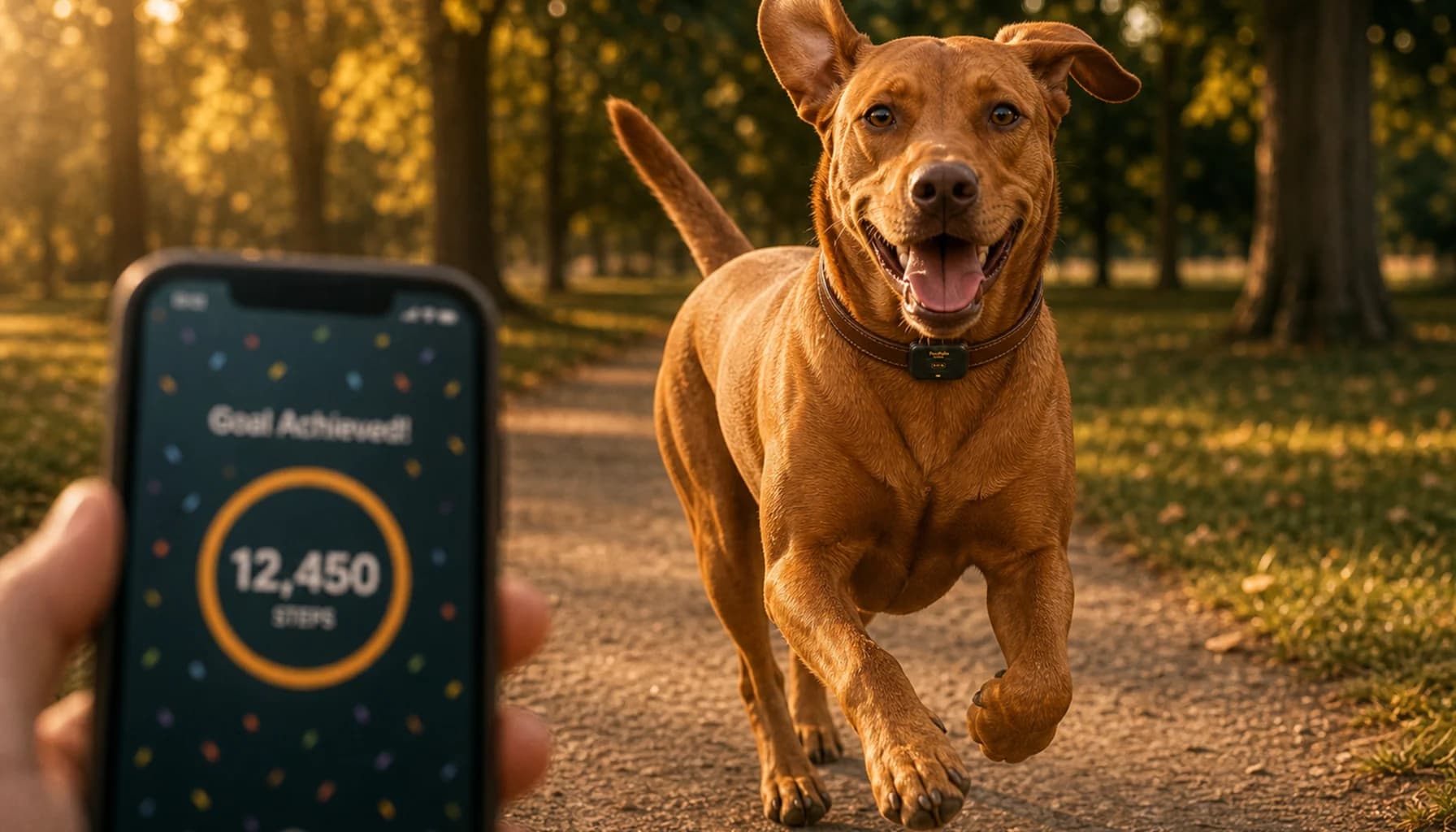
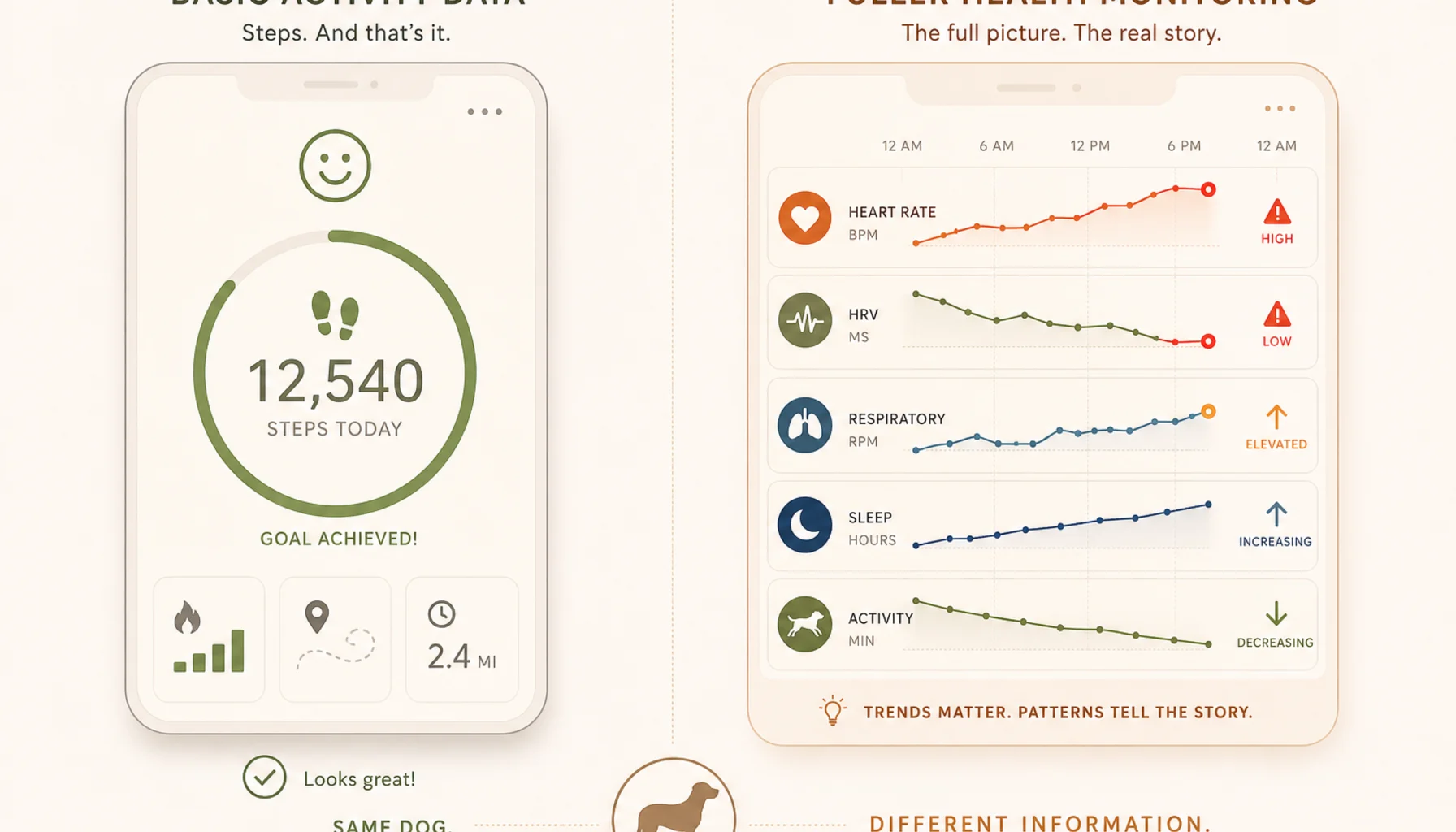
Your dog hit 12,000 steps yesterday. The activity tracker says "Great day!" with a little confetti animation. You feel good. Your dog seems fine.
But here's what the tracker didn't tell you: your dog's resting heart rate during sleep has been creeping up for two weeks. Their heart rate variability has dropped 18% from baseline. They're sleeping 90 minutes more per day but the sleep is fragmented (more wake-resettles, less deep rest). And their respiratory rate at rest is up 3 breaths per minute from where it sat last month.
None of that showed up in the step count. None of it triggered an alert. The confetti still popped.
This is the fundamental problem with activity-only pet trackers. They measure movement. Movement is not health. And the gap between those two things is where problems hide.
What Accelerometers Actually Measure (and What They Can't)
An accelerometer is a tiny chip that detects changes in motion along one, two, or three axes. Shake it, and it registers acceleration. Tilt it, and it registers orientation change. That's it. Every "activity point," "BarkPoint," calorie estimate, and daily score on your pet's activity tracker is derived from variations of this single input: did the device move, how much, and how fast.
A study published in the American Journal of Veterinary Research (AVMA) found that commercially available wearable activity monitors in dogs only showed very strong correlation with actual movement during longer monitoring durations. Short-term readings, the ones that generate your daily score, were less reliable, and accuracy varied with the type of activity being performed.
A separate peer-reviewed study published in PMC evaluating a popular consumer dog activity tracker found that while the device correlated well with step counts during off-leash exploration, correlations dropped significantly during leash walking, one of the most common activities dog owners actually do with their pets.
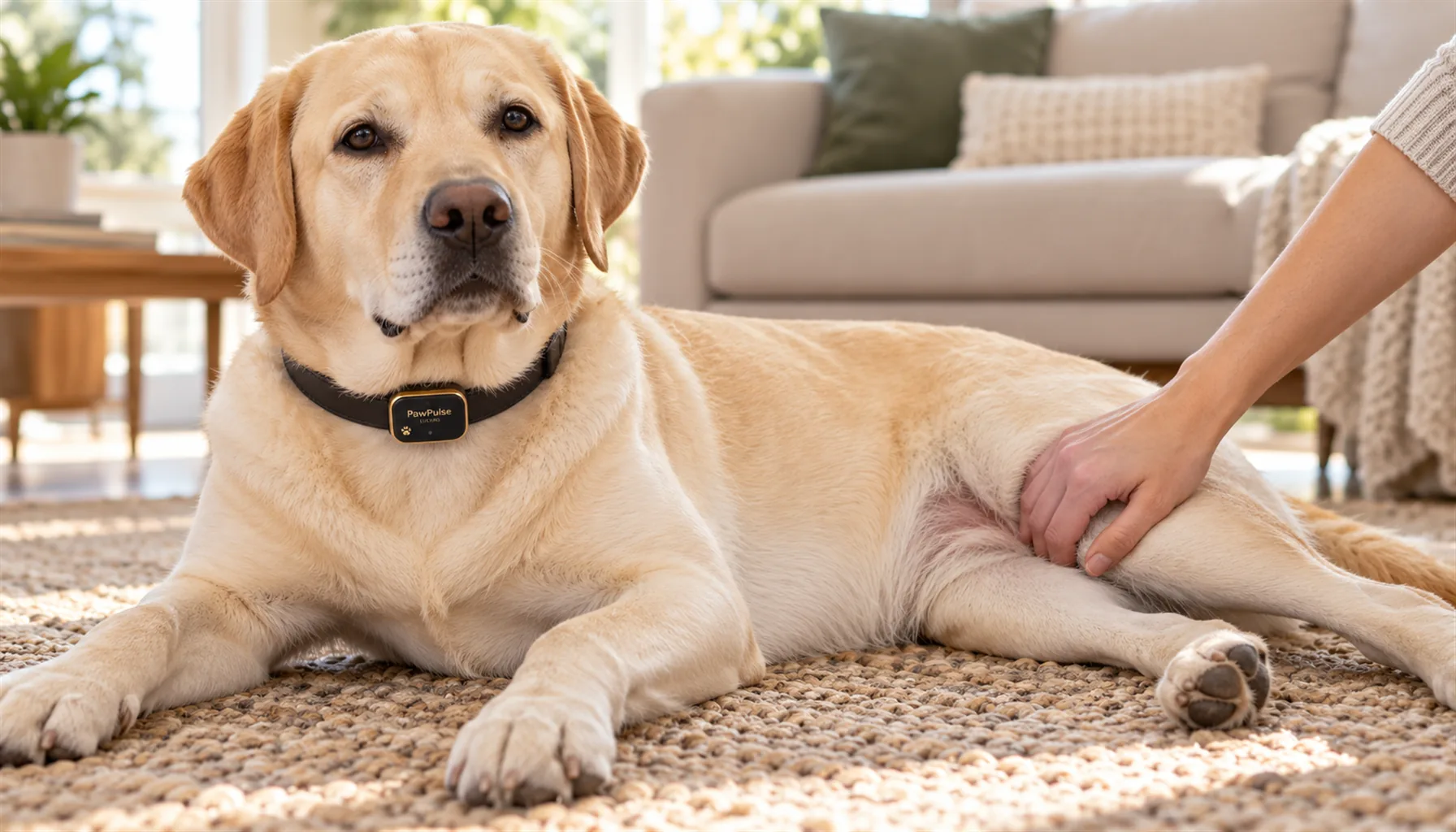
As researchers at Tufts University noted, most consumer pet activity devices have not been validated by published clinical trials, and there's always more work needed to ensure trackers work across different dog types and shapes. The devices measure movement. Whether that movement data meaningfully reflects health is a separate, largely unanswered question. A dog with early arthritis may hit the same step count as always because they're compensating by shifting gait and redistributing weight, until the joint degradation makes compensation impossible. A dog with early cardiac changes may maintain activity levels for weeks before the cardiovascular strain produces visible fatigue. The activity tracker shows "normal." The body says otherwise.
The Five Things Activity Trackers Miss
1. Resting Heart Rate Trends
Your dog's resting heart rate during sleep is one of the most meaningful health indicators available. A gradual increase over days or weeks may correlate with pain, infection, cardiac stress, or systemic inflammation. An accelerometer can't measure heart rate. It measures movement. A dog lying perfectly still with an elevated heart rate looks identical to a dog lying perfectly still with a normal one.
2. Heart Rate Variability (HRV)
As we covered in our deep dive on HRV, the variation between heartbeats reflects autonomic nervous system health. Declining HRV may correlate with chronic stress, pain, and disease. It's invisible to an accelerometer because it has nothing to do with movement.
3. Respiratory Rate
A resting respiratory rate that gradually increases, even by just 2-3 breaths per minute, may correlate with early cardiorespiratory changes. You can't count your dog's breaths at 3 AM. An accelerometer can't count them at all.
4. Sleep Quality (Not Just Duration)
Some activity trackers estimate sleep duration by detecting periods of low movement. But "not moving" isn't the same as "sleeping well." A dog that lies motionless but wakes, repositions, and resettles 12 times per night isn't getting quality rest. An accelerometer sees stillness. It doesn't see the difference between deep restorative sleep and fragmented, pain-disrupted lying-still.
5. Multi-Metric Correlation
The most meaningful health insights come from multiple metrics moving together. Heart rate rising while activity drops and sleep increases. That's a pattern worth sharing with your vet. An activity tracker sees one dimension. It can tell you your dog moved less today. It can't tell you why, or whether the three other metrics that contextualize that drop are also shifting.
Activity Data vs Health Data: What Your Vet Wants to See
Here's a practical comparison. You walk into your vet's office with concerns about your dog. What's more useful?
| What You Bring | What the Vet Can Do With It |
|---|
| "He got 11,000 steps yesterday" | Almost nothing. No physiological context. |
| "His activity dropped 20% this week" | Mild concern. Could be weather, boredom, or something real. Needs more data. |
| "His activity dropped 20%, resting HR is up 12% from baseline, HRV declined 15%, and sleep increased by 90 min/day, all starting 8 days ago" | Targeted evaluation. Clear onset date. Correlated multi-metric shift. Vet can focus on specific systems. |
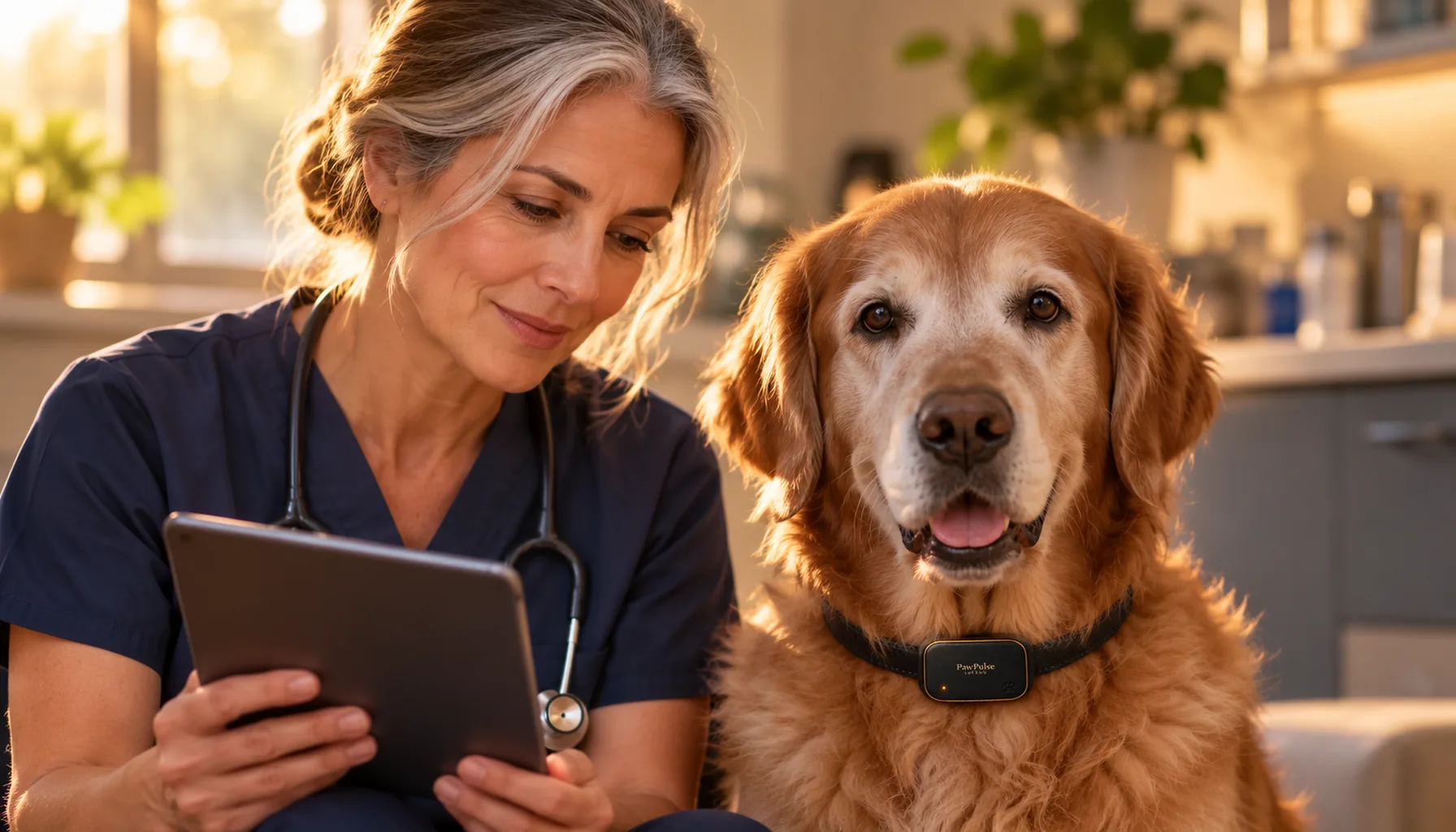
The third row is what PawPulse's Vet Dashboard provides. Not a step count and a confetti animation. A multi-metric health timeline that gives your veterinarian the context to act on, not guess from.
Why the Pet Tech Industry Defaults to Accelerometers
This isn't a mystery. Accelerometers are cheap (under $1 per unit), tiny, low-power, well-documented, and available from dozens of suppliers. Every pet GPS tracker on the market already has one inside for motion detection and orientation. Adding "activity tracking" to the feature list requires zero additional hardware. Just software that interprets the existing accelerometer data.
Calling it "health monitoring" is where the marketing gets ahead of the technology.
Activity tracking is useful. Knowing your dog moved more or less than usual is a datapoint, and sudden changes in activity level can be a helpful signal. But positioning accelerometer data as a health report gives owners false confidence that they're monitoring their pet's wellbeing when they're really just counting shakes.
What Sensor Fusion Actually Means
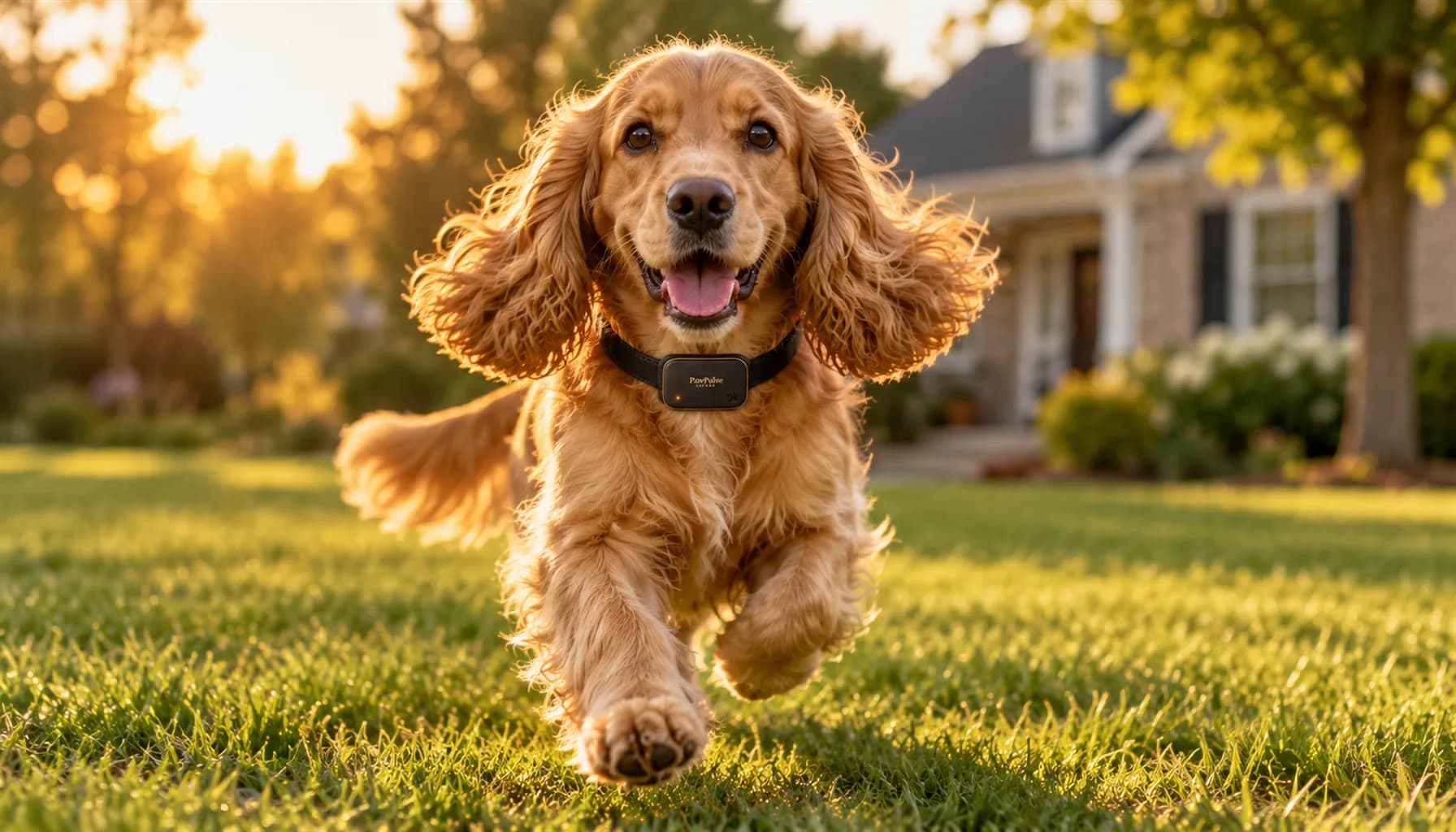
PawPulse doesn't ignore activity data. It contextualizes it. The Lucero collar's radar-based sensor measures heart rate, respiratory rate, and HRV continuously. The onboard accelerometer and IMU track activity, position, and motion patterns. Prism Insights AI combines all of these inputs into a unified health picture for your individual pet.
This is sensor fusion: multiple data streams interpreted together rather than in isolation. Activity data alone is a headline without an article. Combined with vital signs, sleep quality, and baseline comparison, it becomes actionable health information worth sharing with your veterinarian.
A practical example: Your dog's activity drops 15% over a week. An activity-only tracker flags it and suggests "encourage more play." PawPulse's sensor fusion sees the activity drop and checks the other metrics: resting heart rate is stable, HRV is stable, sleep is unchanged. Conclusion: your dog is probably just having a lazy week. No alert.
Now imagine the same 15% activity drop, but resting heart rate is up 10%, HRV is down 12%, and sleep has fragmented. Same activity change. Completely different health picture. Prism Insights surfaces the correlated shift and suggests sharing the data with your vet.
The activity data didn't change between those two scenarios. The context did. And context is everything.
Cats Don't Do Steps (But They Still Have Health Data)
Activity tracking is even less useful for cats. Most cats don't go for walks, don't fetch, and don't generate predictable movement patterns that an accelerometer can interpret meaningfully. A cat that sleeps 16 hours and walks 200 steps is behaving normally. A cat that sleeps 18 hours and walks 150 steps might be in pain. The activity data looks nearly identical.
PawPulse's radar-based monitoring tracks the metrics that actually matter for cats (heart rate, HRV, respiratory rate, and sleep quality) regardless of how little your cat moves on any given day. For a species that treats movement as optional, vital signs are the only reliable health window.

What to Look for in a Real Health Monitor
If you're evaluating smart collars, here's a quick filter:
| Feature | Activity Tracker | Health Monitor |
|---|
| Measures heart rate | No | Yes |
| Measures respiratory rate | No | Yes |
| Measures HRV | No | Yes |
| Tracks sleep quality (not just duration) | No | Yes |
| Builds a personal baseline | No (uses breed averages or none) | Yes (individual adaptive baseline) |
| Surfaces correlated multi-metric shifts | No | Yes |
| Useful for vet visits | Minimal | Significant |
| Works for cats | Barely | Yes |
Frequently Asked Questions
Are dog activity trackers accurate?
Accelerometer-based activity trackers can measure gross movement reasonably well during off-leash activity, but published research shows accuracy drops during leash walking and varies with monitoring duration. More importantly, activity accuracy doesn't translate to health accuracy. Step counts and activity scores can't measure heart rate, respiratory rate, HRV, or sleep quality, which are the metrics most correlated with early health changes.
What's the difference between an activity tracker and a health monitor for dogs?
An activity tracker uses an accelerometer to count movement and estimate steps, calories, and activity levels. A health monitor uses additional sensors (like PawPulse's radar) to measure vital signs including heart rate, respiratory rate, and HRV. Health monitors build personal baselines and surface multi-metric trends: the data your vet needs to evaluate your pet's physiological state, not just how far they walked.
Can my dog be active but still have a health problem developing?
Yes. Dogs compensate for pain and illness remarkably well. A dog with early arthritis may maintain activity levels by shifting gait. A dog with cardiac changes may show normal step counts for weeks before cardiovascular strain produces visible fatigue. Activity data alone doesn't surface these changes. Vital sign trends do.
What is sensor fusion in a pet wearable?
Sensor fusion combines data from multiple sensors (radar, accelerometer, IMU) and interprets them together rather than in isolation. A 15% drop in activity means one thing when heart rate and sleep are normal, and something entirely different when heart rate is rising and sleep is fragmenting. Sensor fusion provides context that single-sensor devices can't.
Does PawPulse track activity too?
Yes. The Lucero collar includes an accelerometer and IMU alongside the radar sensor. Activity data is one input into the broader health picture. It's contextualized by vital signs, sleep quality, and baseline comparison through Prism Insights AI, rather than presented in isolation as a standalone health metric.
Why don't activity trackers work well for cats?
Cats are naturally sedentary, sleeping 14-16 hours per day with minimal predictable movement patterns. An accelerometer-based tracker has too little movement data to work with, and small variations in step count don't correlate meaningfully with health changes in cats. Vital sign monitoring (heart rate, HRV, respiratory rate, sleep quality) provides reliable health data regardless of how little a cat moves.
Learn more about PawPulse Lucero, the smart dog collar that combines radar-based vital sign sensing with activity context so you see the full health picture, not just step counts.
Related reading: how AI learns your dog's normal so it can spot abnormal and why annual checkups are not enough.
-- The PawPulse Team