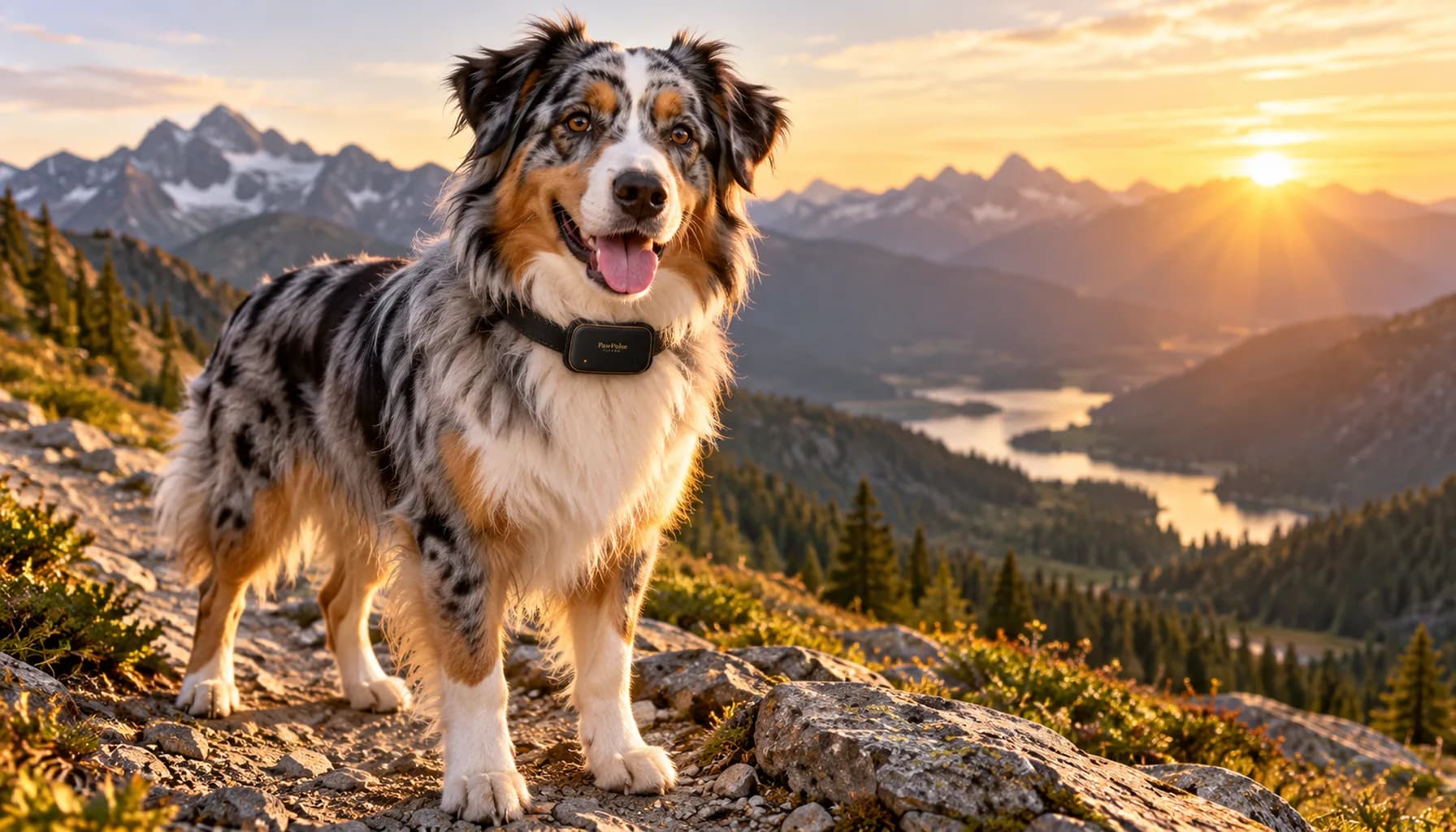
Key takeaway: There is no single temperature that is too cold for every dog. A Tufts veterinarian put it plainly in 2018: there is no cut-off, so watch your dog. Small dogs, thin coats, puppies, seniors and dogs with health problems get cold faster, and Tufts (2022) suggests a coat for dogs without thick fur below 15 F.
Why Is There No Single "Too Cold" Number?
Every winter the same question goes around: what temperature is too cold for a dog? The honest answer from veterinary schools is that it depends on the dog.
In a Tufts Now Q&A (2018), veterinarian Jonathan Babyak of the Cummings School of Veterinary Medicine wrote that "there's really no cut-off temperature for it being too chilly to take your dog outside." Some dogs happily spend long stretches in snow. Others shiver and pull for home after a few minutes.
We think about this a lot at PawPulse, where we build a smart dog collar with contactless heart rate and breathing monitoring. Two dogs on the same walk, in the same weather, can have completely different days. So this guide does not hand you a magic number. It gives you a sourced starting guide by size, coat, age and health, the signs that mean "head home now", and plain thresholds for when to call your vet. This is owner education, not veterinary advice, and every dog is different.
Which Dogs Get Cold Fastest?
The Cornell Riney Canine Health Center winter safety guide lists the dogs that have the hardest time staying warm:
- Small dogs. Cornell says small dogs have a harder time staying warm than larger breeds.
- Thin or short coats. Thin-coated breeds tolerate cold less well than thick, double-coated breeds.
- Puppies. Cornell notes puppies cannot properly regulate their body temperature and have very little body fat.
- Seniors, underweight dogs and dogs with medical conditions, which may have difficulty staying warm.
- Dogs that are not used to cold, such as dogs from warmer climates or any dog hit by a sudden cold snap.
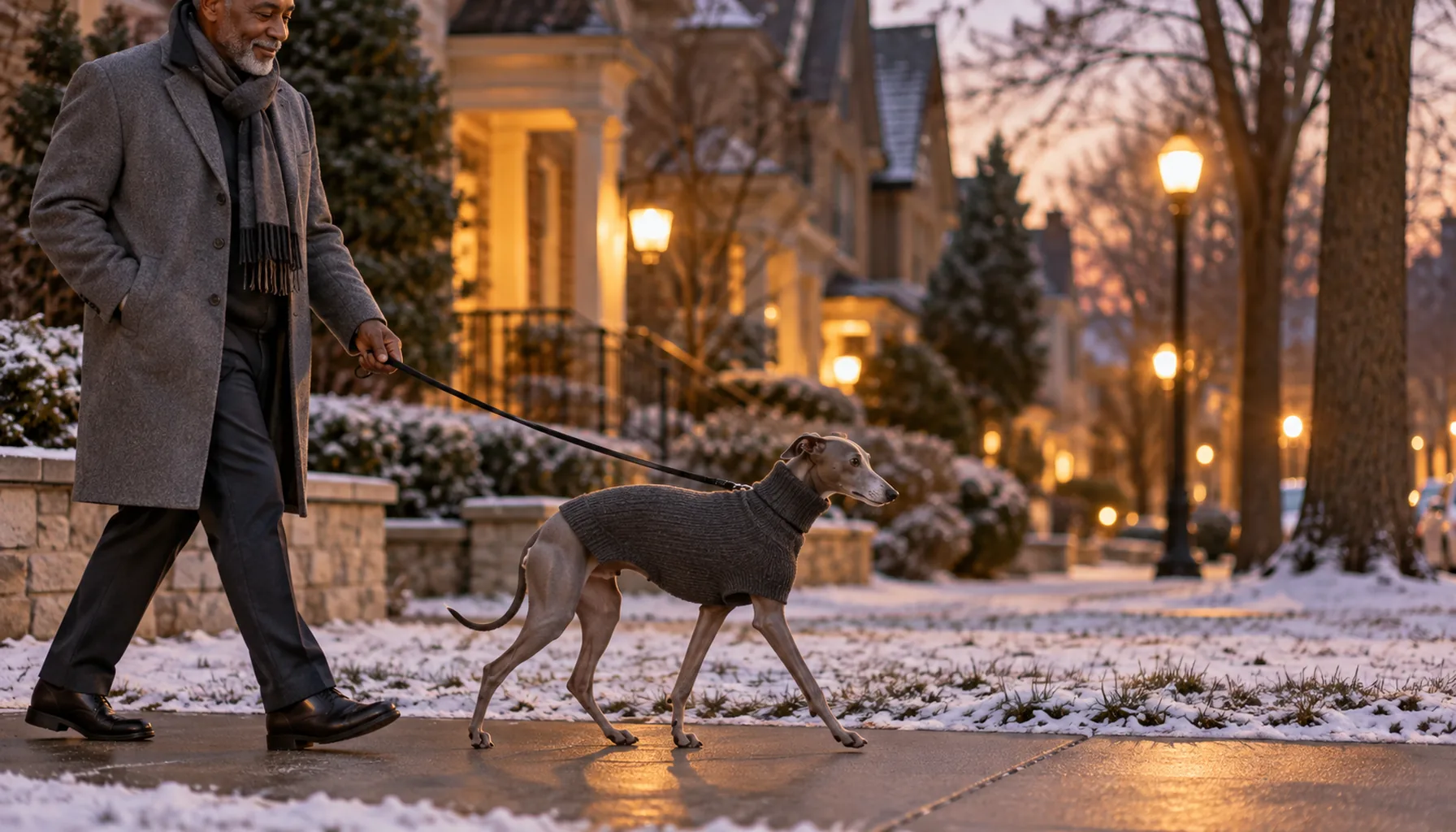
Tufts adds one more practical point. In a Cummings School of Veterinary Medicine article (2022), emergency and critical care specialist Dr. Elizabeth Rozanski notes that acclimating to the cold can take a while for dogs, and that a pet without thick fur should wear a coat when temperatures drop below 15 F.
Does a coat actually change anything for the dog? A small study suggests it can. Researchers at Massey University in New Zealand put eight working-breed dogs through a crossover trial, with and without an overnight coat, and tracked them with accelerometers (Wang et al., Animals, 2026). The dogs spent more time sleeping when they wore a coat, 48.1 percent versus 40.0 percent, with the effect clearest in cooler evening hours. The study was funded by the university's own canine nutrition center, the coats were donated by a coat maker, and it was a small group in mild spring weather (a daily mean of about 12 C), so treat it as a hint, not a rule.
How Cold Is Too Cold for Dogs? A Starting Guide by Size and Coat
This chart is built only from the sources cited in this post. It is a starting guide, not a threshold. Wind, wet fur, how long you are out and how your dog is acting all matter more than the number on your phone.
| Your dog | How it handles cold (source) | Starting approach in freezing weather |
|---|
| Large dog, thick double coat, healthy adult, used to cold | Most cold-tolerant group (Cornell) | Normal walks are often fine; still watch for the warning signs below |
| Large or medium dog, short or thin coat | Tolerates cold less well (Cornell) | Coat below 15 F (Tufts, 2022); shorter outings |
| Small dog, any coat | Harder time staying warm (Cornell) | Coat below 15 F if no thick fur (Tufts, 2022); short, frequent walks |
| Puppy | Cannot fully regulate body temperature, little body fat (Cornell) | Very short trips outside; supervise closely |
| Senior, underweight or chronically ill dog | May have difficulty staying warm (Cornell) | Short walks; ask your vet what is safe for your dog |
| Dog with heart disease or diabetes | Higher frostbite risk from reduced blood flow to paws, ears and tail (VCA, 2024) | Limit exposure; check extremities after every walk |
| Any dog that is wet | Wet or damp dogs are more vulnerable to frostbite (VCA, 2024) | Dry off quickly; avoid long stops in wind |
| Dog new to cold or a sudden cold snap | Not yet acclimated (Cornell; Tufts, 2022) | Build up time outdoors gradually |
Cornell also offers a simple rule of thumb for days when you are unsure: if it is too cold for you, it is likely too cold for your dog.
Is 20 Degrees Too Cold to Walk a Dog?
None of the veterinary sources we checked set 20 F as a limit. At that temperature, many healthy adult dogs with thick coats can take a walk. For a small dog, a thin-coated dog, a puppy or a senior, a short walk in a coat is a more cautious choice, and Tufts' 15 F coat guidance is a sensible line for dogs without thick fur. Wind and wet snow make any temperature feel colder.
The real answer is your dog's behavior on that walk. Which brings us to the signs.
What Are the Signs a Dog Is Too Cold?
Cornell lists these as signs your dog is uncomfortable in the cold:
- shivering
- tail tucking or a hunched posture
- lifting paws off the ground
- whining or barking
- reluctance to keep walking
- suddenly anxious behavior
Tufts adds that ice between the toes can show up as prancing in place, shifting weight from foot to foot, and biting at the cold bits between the toes.
Any of these means it is time to head inside, warm up and dry off. Do not push a reluctant dog to finish the loop.
Can Dogs Get Hypothermia?
Yes. Cornell warns that prolonged exposure to cold can lead to life-threatening hypothermia, and Tufts calls hypothermia a veterinary emergency, which is why it advises never leaving a dog alone outside in cold or wet weather.
Cold is not the only cause. A veterinary review of hypothermia by Brodeur, Wright and Cortes (Journal of Veterinary Emergency and Critical Care, 2017) notes that low body temperature can come from environmental exposure, but also from illness, medications, anesthesia or trauma. The same review says rewarming is the main treatment for accidental hypothermia, and that how intense that rewarming needs to be ranges from passive surface warming to advanced hospital methods. That is a vet's job, not a home project.
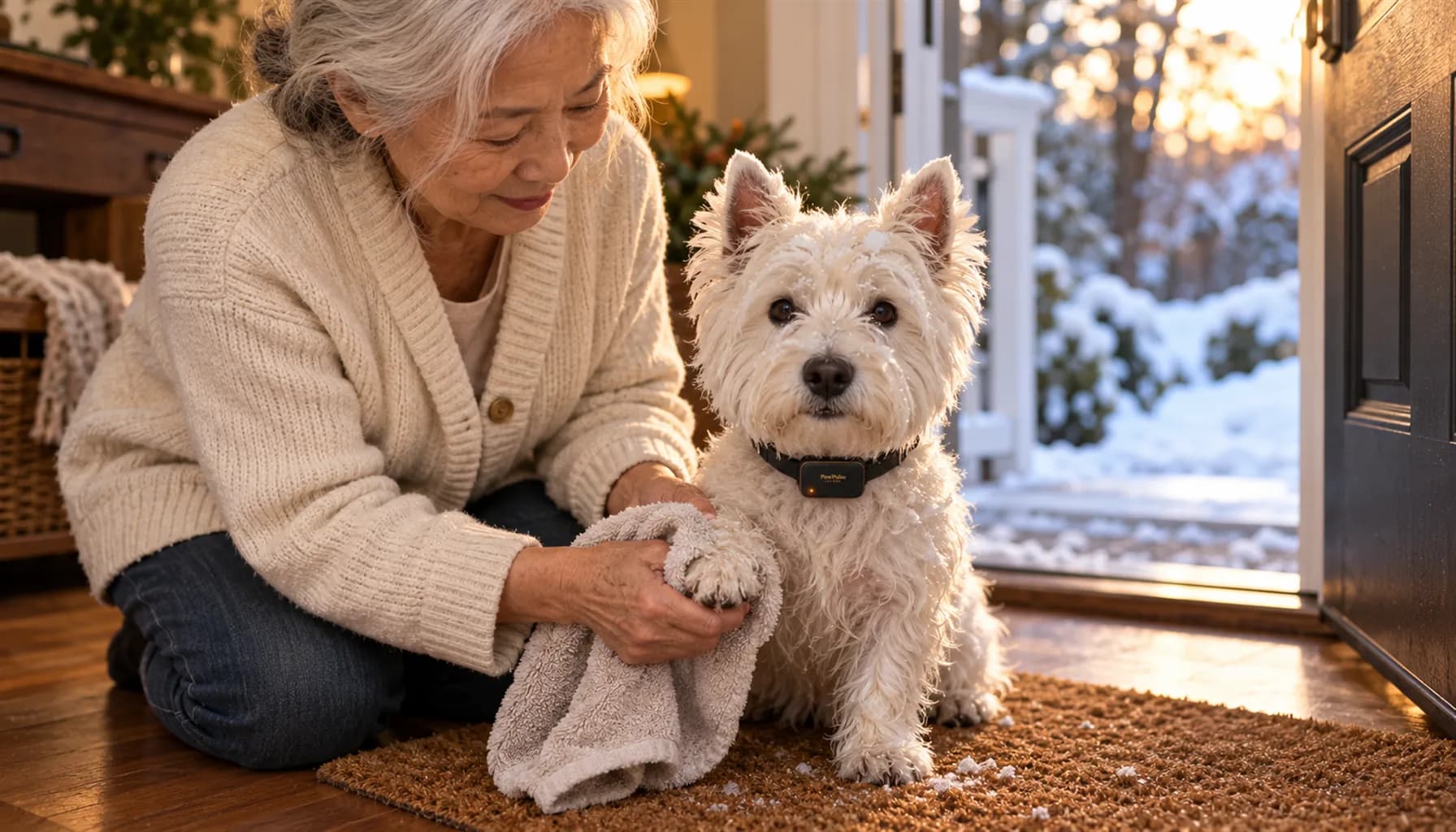
If your dog has been out in the cold and seems weak, unusually sleepy, confused or is struggling to walk, wrap them in a dry towel or blanket and get them to a vet.
What Are the Signs of Frostbite in Dogs?
Frostbite usually hits the parts of a dog with the least fur and the most exposure. VCA Animal Hospitals (updated 2024) says the paws, ears and tail are the most commonly affected tissues, and that wet or damp dogs are more vulnerable.
The tricky part is timing. VCA notes signs may take several days to appear, especially on small areas like the tail tip or ears, and Cornell agrees that it can take a few days to know how much damage there is. So a dog that seemed fine on Saturday night can show a problem on Monday.
If you suspect frostbite, VCA advises:
- Move your dog somewhere warm and dry.
- If your dog is also hypothermic, deal with that first, warming slowly with dry towels or blankets.
- Do not rub or massage the area.
- Do not use direct dry heat such as a heating pad or hair dryer.
- Do not give pain medication unless your vet tells you to.
- Seek veterinary care right away.
How Cold Is Too Cold for a Husky?
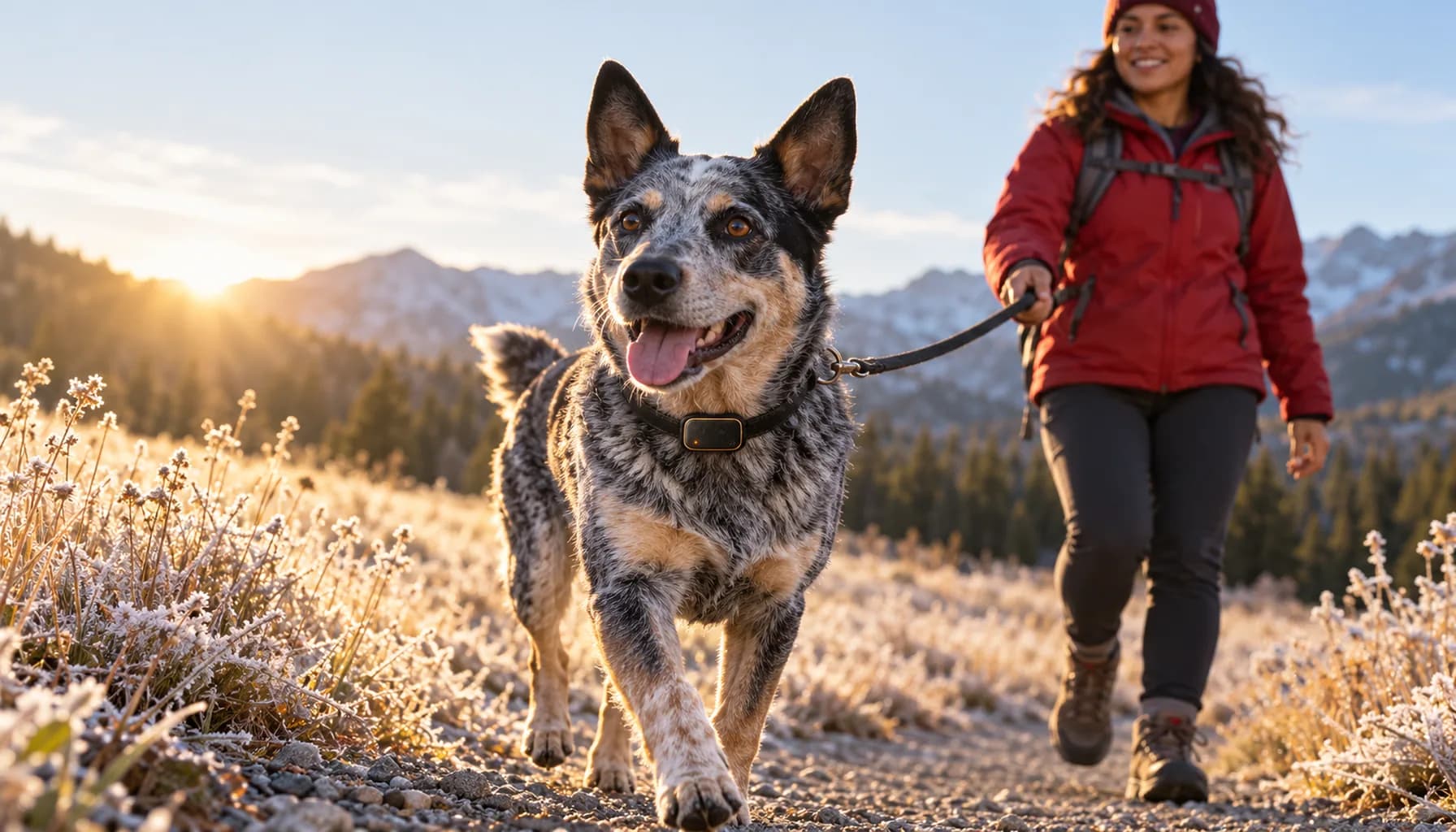
Thick double-coated breeds such as Huskies sit at the cold-tolerant end of Cornell's list. Even so, no source we found gives a breed-specific number, and a Husky that has spent the year indoors in a warm apartment is not acclimated the way a working sled dog is. Wet fur, a long stop in the wind, older age or an illness can change the picture for any breed. Watch the same signs.
When Should You Call Your Vet?
These thresholds come from the sources above and are deliberately conservative. If your vet gives you different advice for your dog, follow it.
Go to a vet now if your dog:
- has been exposed to cold and is weak, very sleepy, confused or unable to walk normally (Cornell and Tufts both treat hypothermia as an emergency)
- has skin on the ears, tail or paws that looks pale, discolored or painful after cold exposure (VCA advises immediate care for suspected frostbite)
Call your vet soon if:
- your dog keeps shivering or seems unusually cold even after warming up indoors
- you notice new sores, swelling or tenderness on the paws, ears or tail in the days after a cold outing, since frostbite can take days to show
- your dog is a senior, a puppy, or has heart disease or diabetes, and you are unsure how much cold they can handle
For more on caring for older dogs through changing seasons, see why senior dogs deserve continuous monitoring. If you also hike in winter, our post on hiking with dogs and the safety mistakes owners make covers planning for longer outings.
Where PawPulse Lucero Fits on Winter Walks
We want to be clear about one thing first: PawPulse Lucero does not measure temperature, your dog's or the air's. Use a thermometer and your vet for that.
What PawPulse Lucero is designed to do is measure heart rate and breathing through fur without touching the skin (Kinetic sensing), alongside activity and sleep. Over weeks, it builds your dog's own baseline. In winter, that baseline can help you notice when something looks different, for example resting breathing that stays higher than usual after cold walks, or a dog that has become less active since the weather turned. Those are trends and context to share with your vet, not answers. You can read how that resting number works in our guide to the sleeping respiratory rate in dogs.
Lucero is also designed to share live location over cellular, plus a satellite-ready backup. Satellite availability depends on carrier support and certification. None of it replaces watching your dog, cutting a walk short, or a coat on a thin-coated dog.
Frequently Asked Questions
How cold is too cold for dogs?
There is no single cut-off temperature for every dog, according to a Tufts veterinarian writing in 2018. Small dogs, thin coats, puppies, seniors and dogs with health problems get cold faster. Tufts suggests a coat below 15 F for dogs without thick fur. Watch for shivering, a tucked tail or lifted paws, and head inside.
Is 20 degrees too cold to walk a dog?
Not automatically. The veterinary sources we checked set no 20 F limit, and many healthy, thick-coated adult dogs walk comfortably at that temperature. Keep walks short for small, thin-coated, young or older dogs, use a coat, and turn back if your dog shivers, lifts its paws or slows down. Wind and wet snow make it colder.
What temperature can small dogs be outside?
Cornell says small dogs have a harder time staying warm than larger breeds, and Tufts recommends a coat below 15 F for dogs without thick fur. There is no safe number for unlimited time outside. Short, frequent trips work better than one long walk, and a small dog should never be left outside alone in the cold.
What are the signs of frostbite in dogs?
Frostbite most often affects the paws, ears and tail, according to VCA Animal Hospitals. Skin may look pale, discolored or painful, and signs can take several days to appear. Do not rub the area or use a heating pad or hair dryer. Warm your dog gently and call your veterinarian right away.
Can dogs get hypothermia?
Yes. Cornell warns that prolonged cold exposure can cause life-threatening hypothermia, and Tufts calls it a veterinary emergency. A 2017 veterinary review notes it can also follow illness, medications, anesthesia or trauma. If a cold dog is weak, very sleepy or confused, wrap them in a dry blanket and go to a vet.
How cold is too cold for a husky?
Thick double-coated breeds like Huskies handle cold better than most, according to Cornell, but no source we found gives a breed-specific limit. A Husky that lives mostly indoors is not acclimated like a working sled dog, and wet fur, wind, age or illness lower anyone's tolerance. Watch the same warning signs.
Learn more about PawPulse Lucero, the smart dog collar designed to measure heart rate and breathing through fur without touching the skin, and the Kinetic sensing technology behind its trends and context to share with your vet. Reservation holders get their Lucero first. We will confirm your delivery month when the Kickstarter is announced.
-- The PawPulse Team