Key takeaway: To travel with a dog in a car, secure it in the back seat with a restraint, carrier or crate designed for vehicles, never a walking harness or a loose leash. A 2026 AAA survey of Illinois dog owners found 31% let their dogs ride unrestrained, even though 88% said restraints matter. Plan a break every couple of hours and leash up before any door opens.
Why the Restraint Question Comes First
Holiday travel means long drives, full cars and tired drivers. The single biggest safety decision for your dog is made before you leave the driveway: where it rides and what holds it there.
We are the team behind PawPulse, a smart dog collar with contactless heart rate and breathing monitoring. When we looked at the evidence on dog car safety we found two things. The advice from safety groups is consistent and simple. The evidence on products is thinner than the packaging suggests.
This guide covers both, plus rest stops, car sickness and what to pack. It is owner education, not veterinary advice, and every dog handles travel differently.
Do Dogs Need Seatbelts?
In practical terms, yes. A dog needs something that keeps it in place in a sudden stop, the same reason people wear belts.
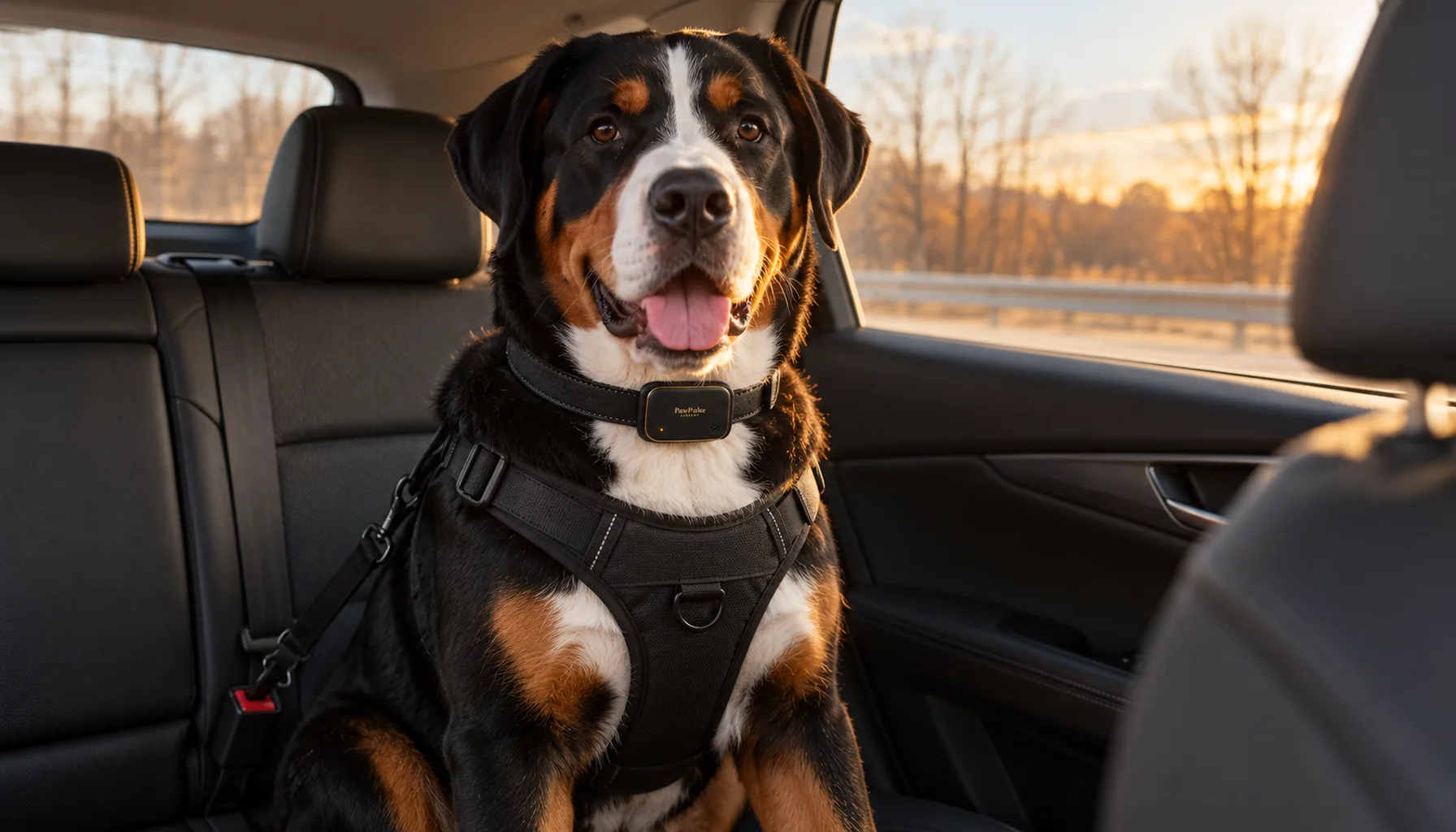
The AAA (August 2026) survey of 200 Illinois dog owners, which has a margin of error of plus or minus 6.9 points, warns that in a sudden stop or crash an unrestrained dog "can be thrown across the vehicle, seriously injured, or even ejected." AAA's advice is to secure dogs in "a properly sized restraint, carrier, or crate designed for vehicle use," and not in a regular walking harness or on a leash.
That last part matters. A walking harness is built to handle a dog pulling toward a squirrel, not the forces of a collision. A leash clipped to a seat can let a dog fall into the footwell or reach the driver.
Are Dog Car Harnesses Safe? What "Crash-Tested" Really Means
Here is the uncomfortable part. As Consumer Reports (2020) put it, unlike child car seats there are "no standards or industry tests" for pet restraints, and a "crash-tested" label is "usually based only on the manufacturer's claims."
The same report describes independent testing by the Center for Pet Safety, a nonprofit that crash-tested harnesses with dummy dogs of three sizes using a child-seat test procedure as its basis. Only a handful of products earned its certification.
What that means for you:
- Prefer independent testing over marketing. AAA's wording is to "choose independently crash-tested products when possible." Ask which organization ran the test and what standard it used.
- Fit matters as much as the product. A good harness that is loose, or attached to the wrong anchor point, will not behave as tested. Follow the maker's fitting and attachment instructions exactly.
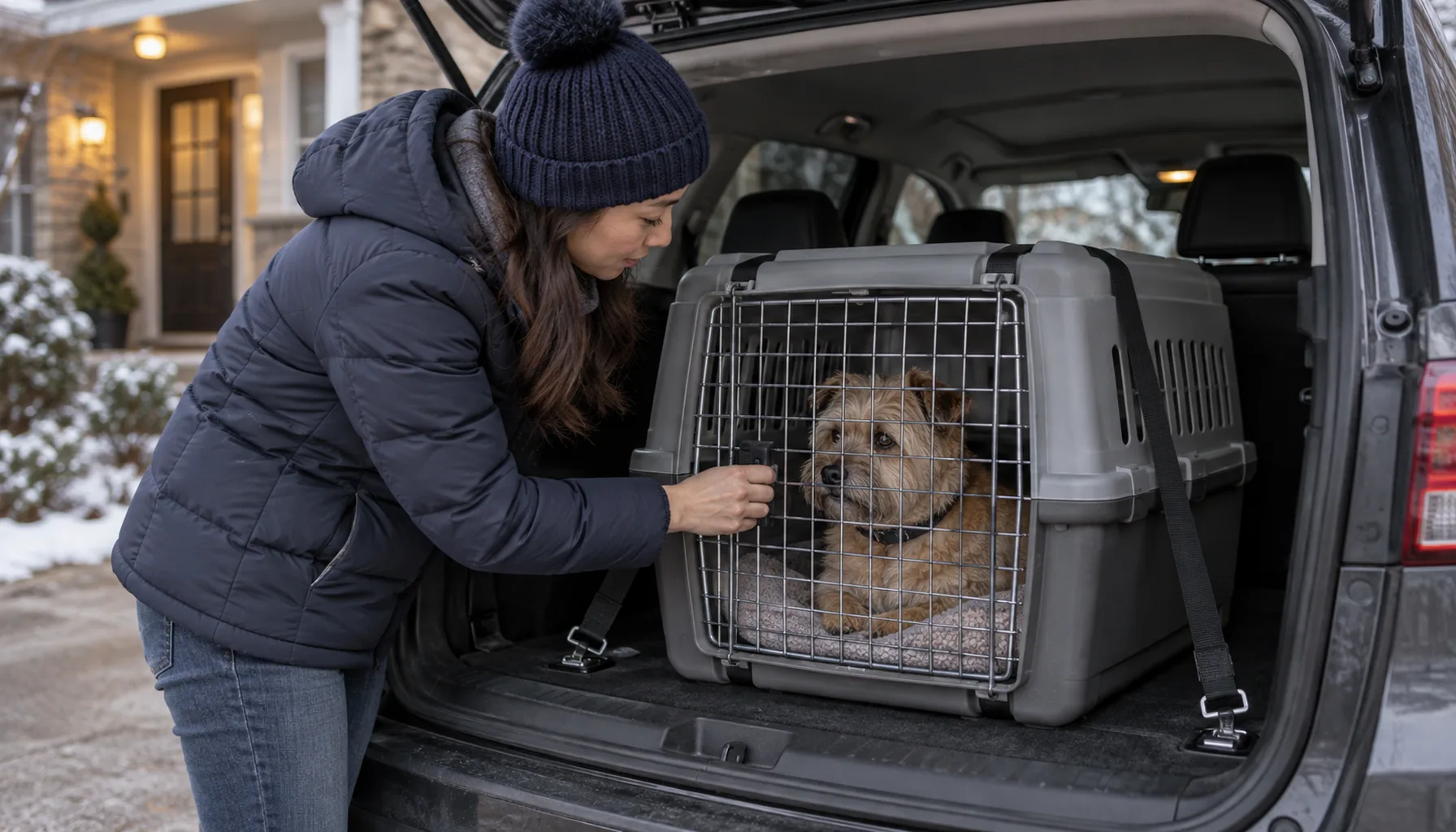
- A secured crate is another option. A crate designed for vehicles, strapped down so it cannot slide or tip, keeps a dog contained. An unsecured crate becomes a heavy object in a crash.
We do not recommend specific brands. Products change and we have not tested them.
Can Dogs Ride in the Front Seat?
The back seat is the safer place. AAA says the back seat "helps prevent pets from interfering with controls or visibility" and keeps them "away from front-seat airbags."
Distraction is the other reason, though the research is less clear-cut than you might expect. Two studies from the University of Alabama at Birmingham looked at drivers aged 70 and older:
- In a 2013 study of 2,000 licensed drivers published in Accident Analysis and Prevention (Blunck et al., 2013), crash rates were not higher overall for pet owners who drove with pets. But drivers who said they always drove with a pet in the vehicle had a crash rate about 1.9 times that of owners who did not drive with one.
- A three-year follow-up of the same population, Huisingh et al. in Accident Analysis and Prevention (2016), found a positive but not statistically significant link between frequently driving with pets and crashes, and no clear difference when the pet rode in front. The authors said more research is needed, especially on restraint use.
So the honest reading is this: the evidence on pets and crash risk is limited and comes from older drivers, but no study we found suggests that a loose dog in the front seat is a good idea. Back seat, restrained, is the consistent advice.
How Often Should You Stop on a Road Trip With a Dog?
Consumer Reports suggests stopping "every couple of hours" so your dog can drink and stretch, and AAA advises building breaks into longer trips. Some dogs need more: puppies, seniors and dogs prone to car sickness often do better with shorter legs.
Rest stops are where many travel problems start, because they combine a strange place, traffic, other dogs and an excited animal that has been sitting for hours.
Rest stop rules we follow:
- Leash before the door opens. Consumer Reports gives the same advice: clip the leash on before you open a door or the tailgate. A dog that bolts from a car at a highway rest area is in danger within seconds.
- Use a fixed-length leash and a well-fitted collar or harness for walking. Swap from the car restraint to the leash inside the car.
- Pick a quiet corner of the pet area, away from the parking lot and other dogs.
- Offer water every stop. Consumer Reports lists water as one of the reasons to stop at all.
- Never leave your dog alone in the car. AAA says never to leave a pet unattended in a parked vehicle. Consumer Reports measured a closed car climbing past 105 F within an hour on a 61 F day, so a mild day is not a safe day.
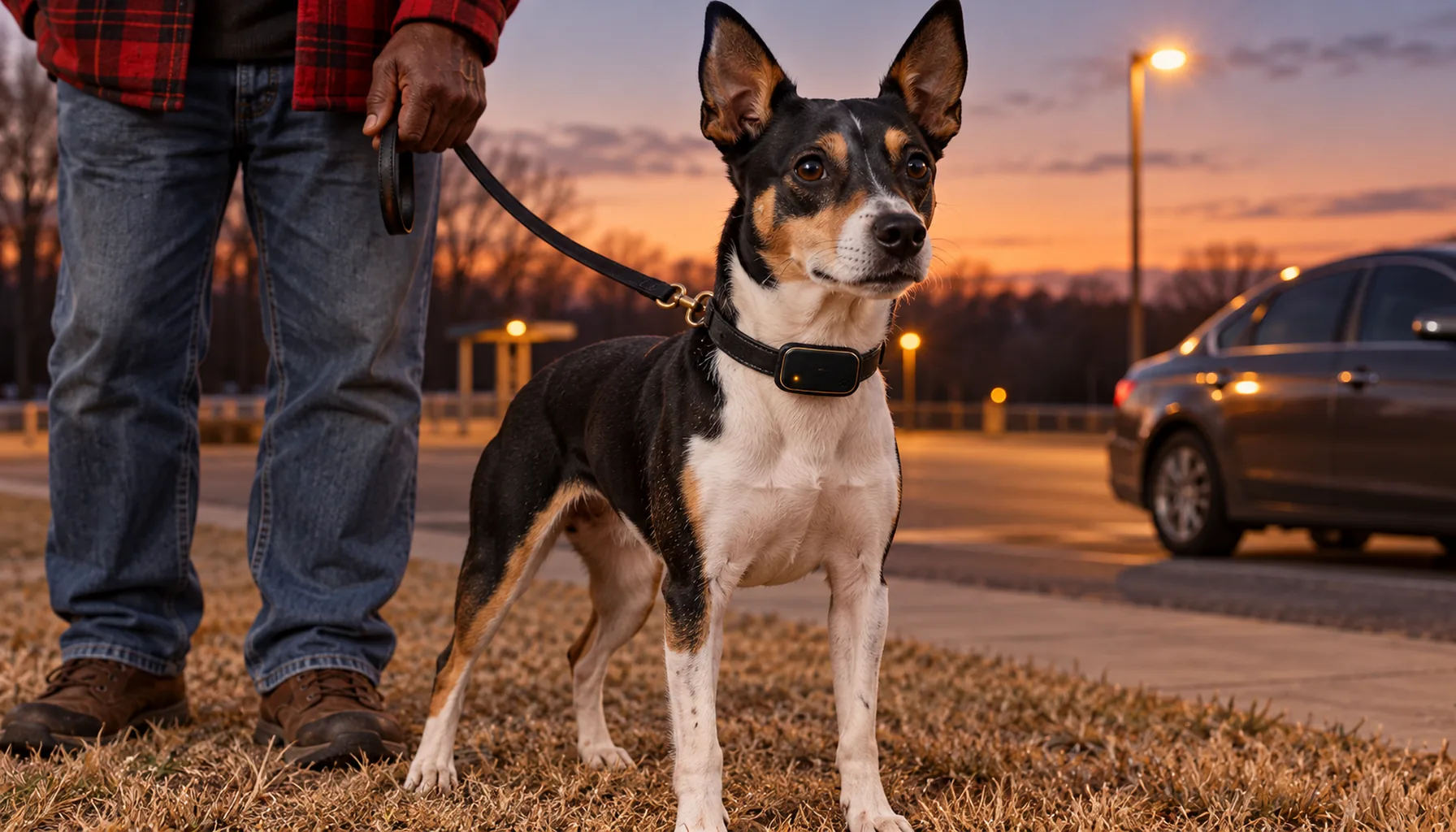
If your dog ever does slip away far from home, our guide to what to do in the first 24 hours after a dog goes missing works on the road too. Call the local shelter and animal control where it happened, not just at home.
Why Do Some Dogs Hate the Car?
Car problems are common. In a University of Pisa survey of 907 dog owners (Mariti et al., Veterinary Record, 2012), 23.8% of dogs showed or had shown problems during car travel, and dogs were more often excited than inhibited.
Two findings are useful for any owner:
- Dogs that got used to the car as puppies were far less likely to develop problems (6.3% versus 24.1%).
- Dogs that only rode in the car to go to the vet were more likely to react badly (46.4% versus 22.7%). If every car ride ends at the clinic, the car itself becomes the warning sign.
The same survey found that almost half the owners of dogs with travel problems never asked anyone for advice. Your vet is a good place to start.
Is It Car Sickness or Car Anxiety?
They can look alike and they often overlap. According to VCA Animal Hospitals (2023), motion sickness is more common in young dogs than adults, and many puppies outgrow it by about a year old as the balance system in the inner ear matures. VCA lists whining and pacing, drooling, lip licking, lethargy, vomiting and defecation as signs.
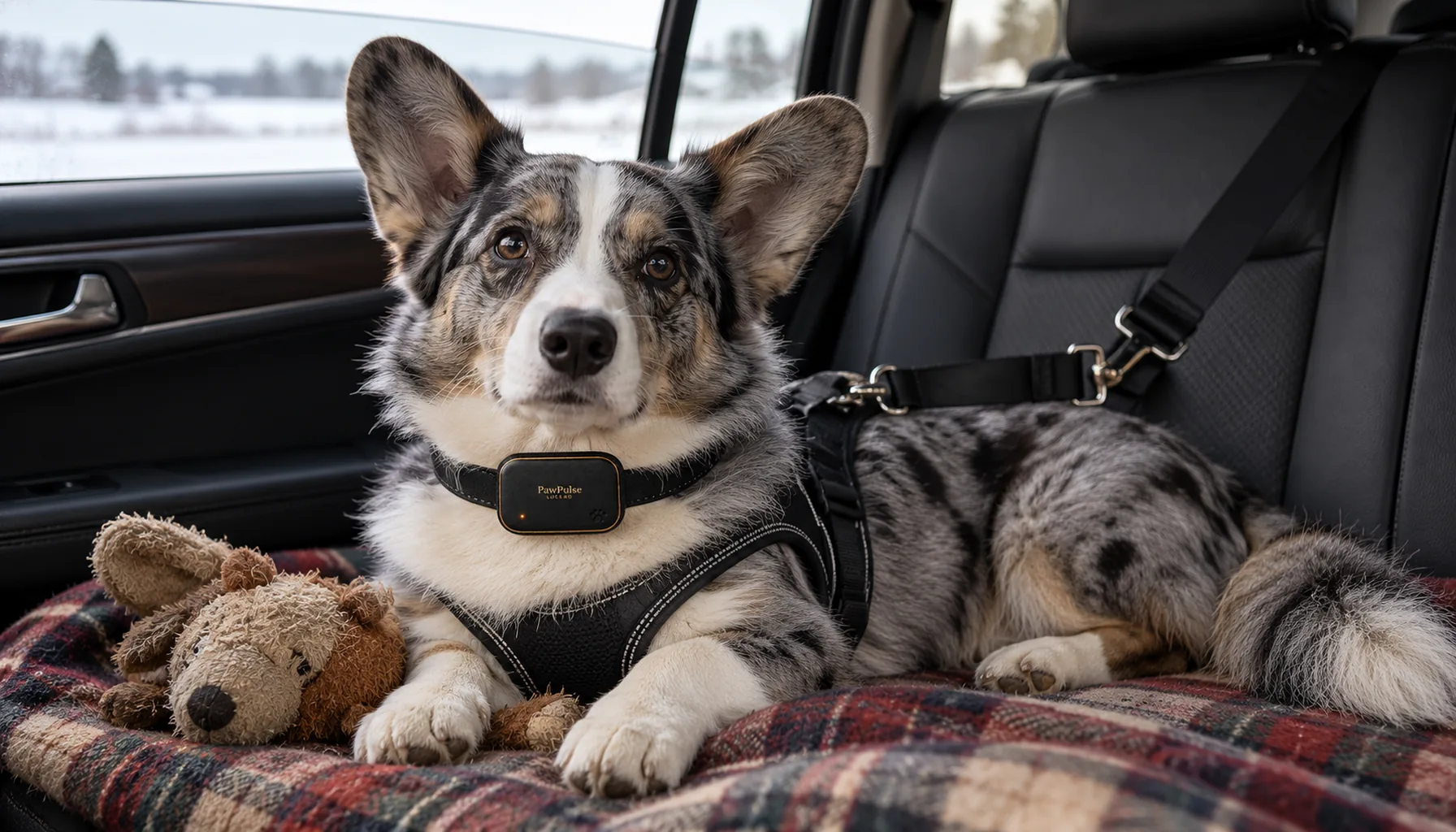
VCA's non-drug suggestions include practice trips that build slowly, starting with sitting in the parked car with the engine running, then a trip around the block, working up to 20 to 30 minutes over days or weeks. It also suggests keeping the car cool and quiet, bringing a familiar-smelling blanket, and, if it is not too stressful for the dog, holding back food for up to 8 hours before travel.
Never give your dog a human travel-sickness tablet or sedative on your own. VCA notes that some prescription options need to be started days to weeks before travel, so talk to your vet well before the holiday, not the night before.
Holiday Road Trip Checklist for Dogs
| When | What to do |
|---|
| 2 to 4 weeks before | Practice short drives. If your dog gets carsick or anxious, book a vet visit now. Check the restraint or crate fits. |
| A few days before | Confirm your phone number on the ID tag and with your microchip registry. Take a current photo of your dog. |
| Packing | Restraint or crate, walking leash, water and bowl, usual food, any medicines, cleanup bags, towel, familiar blanket, vet records. |
| In the car | Back seat, vehicle-rated restraint or secured crate. Car cool and quiet. Head inside the window. |
| Every couple of hours | Leash on before the door opens. Water, a short walk, a quiet corner. |
| Never | Leave your dog alone in a parked car, or give medicine your vet did not prescribe for this trip. |
| On arrival | Walk the boundary of the new place, check gates and doors, set up a quiet room with the familiar blanket. |
Consumer Reports also advises against letting a dog ride with its head out of the window. A restraint that keeps the dog seated in the back makes that easy to stick to.
When to Call Your Vet
These lines are deliberately conservative. If your vet gives you different advice for your dog, follow theirs.
Before the trip, call if your dog has vomited, drooled heavily or panicked in the car before. Car sickness and anxiety can both be helped, and some options take days to weeks to start working.
Get veterinary care the same day if your dog is in a crash or a hard stop and was thrown or struck, even if it seems fine. Injuries are not always visible right away.
Get emergency care now if your dog has trouble breathing, collapses, has pale gums, or seems overheated after time in a car. Do not wait to see if it settles.
Where PawPulse Lucero Fits on a Road Trip
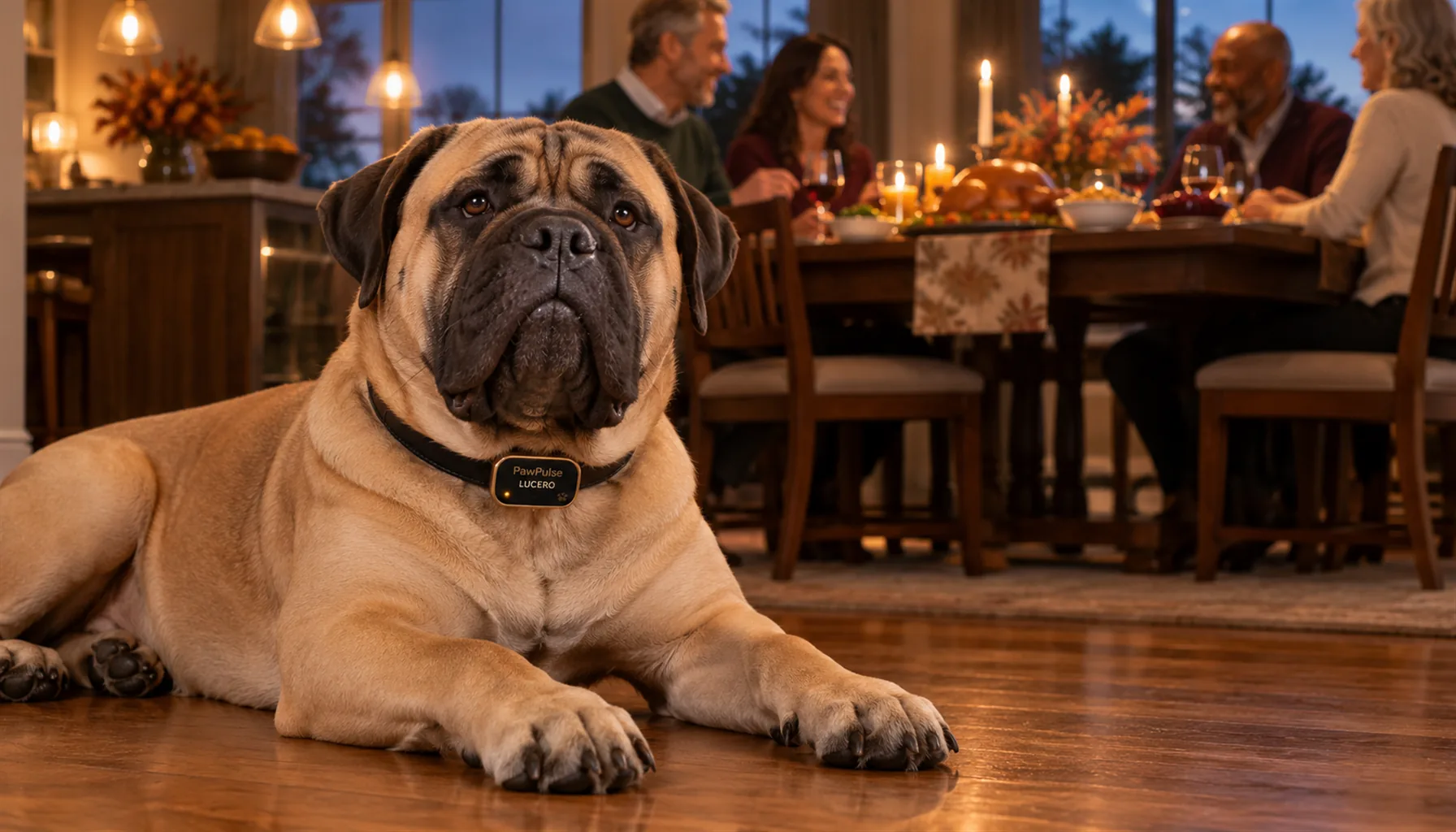
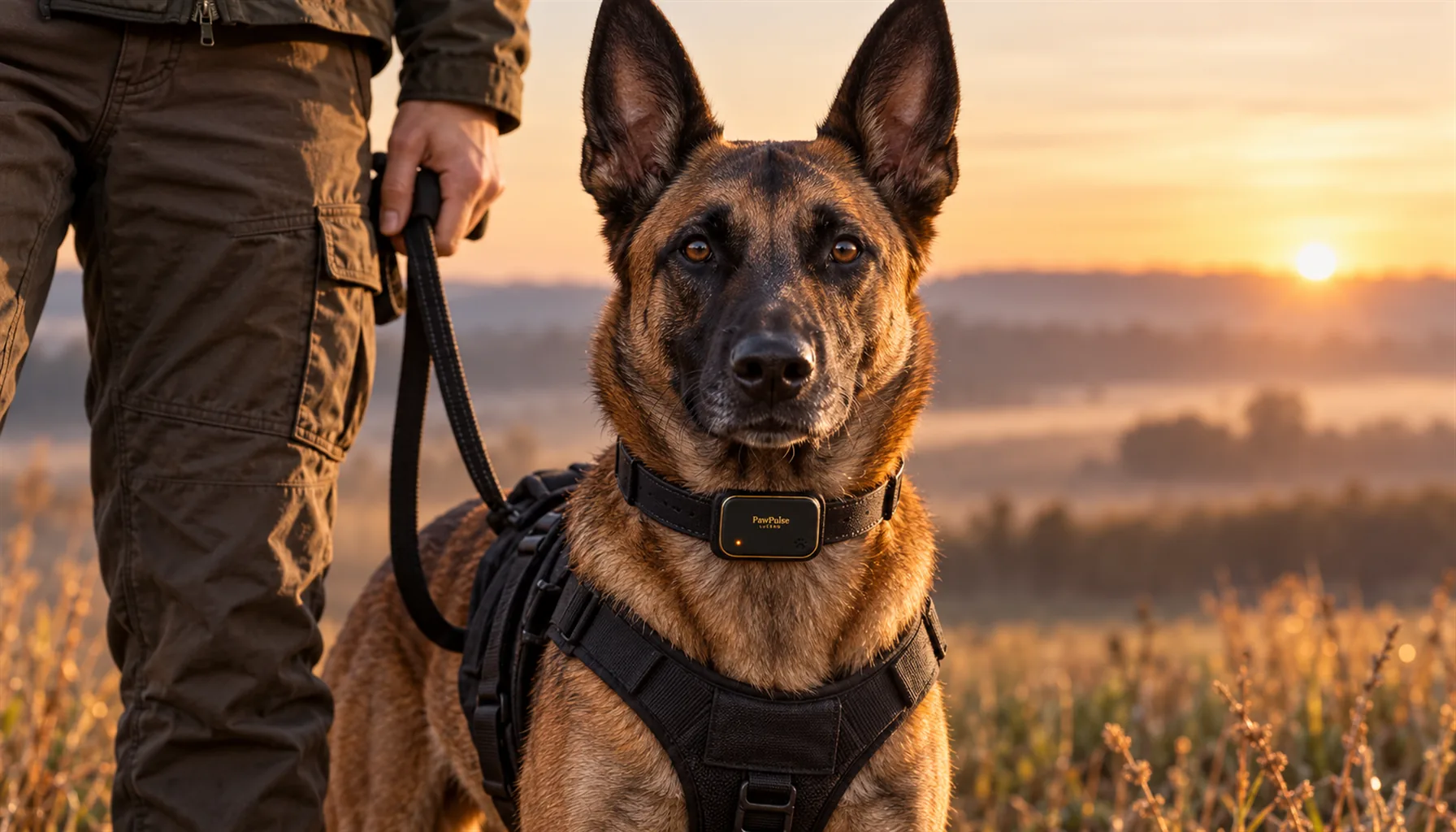
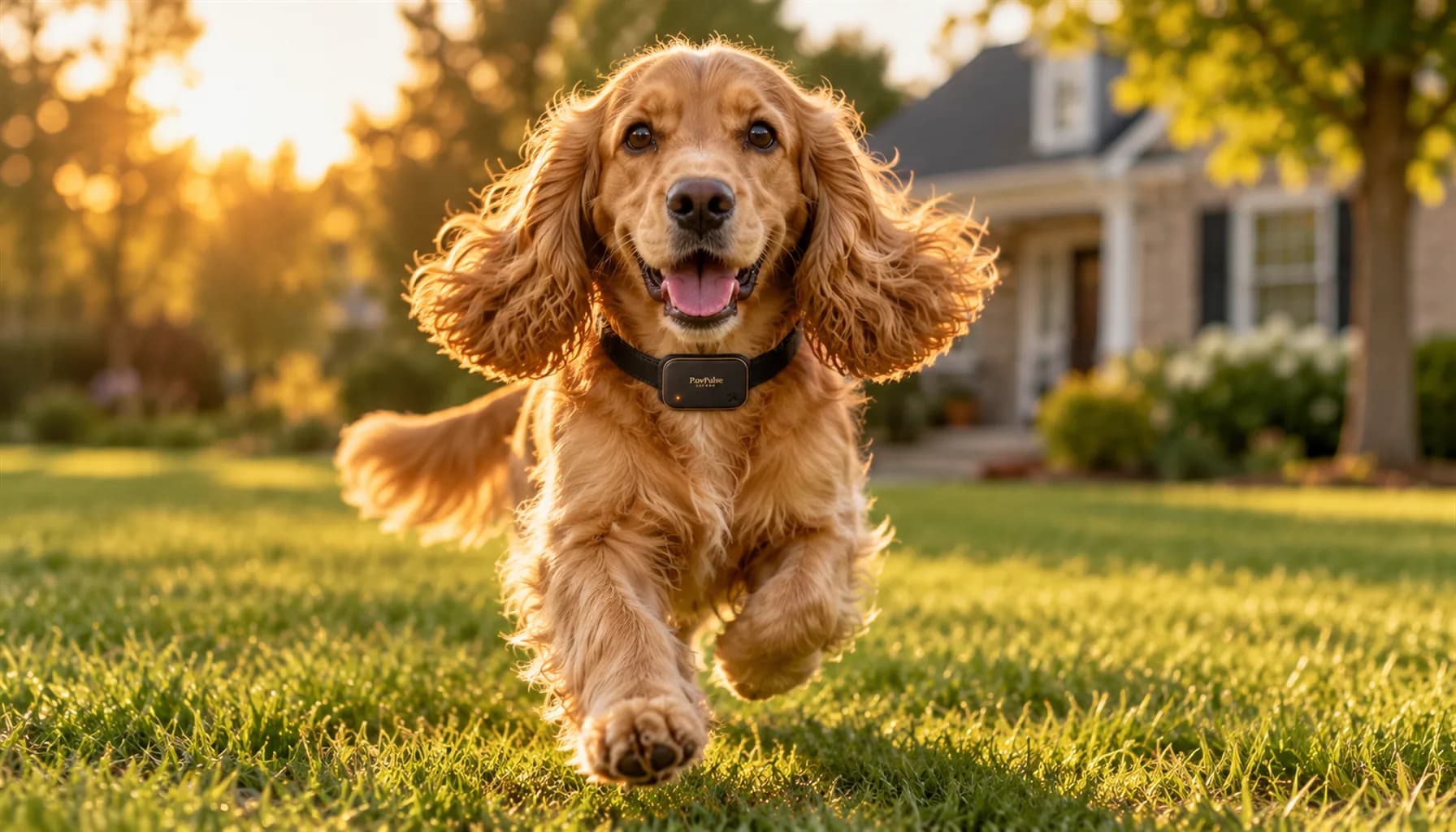
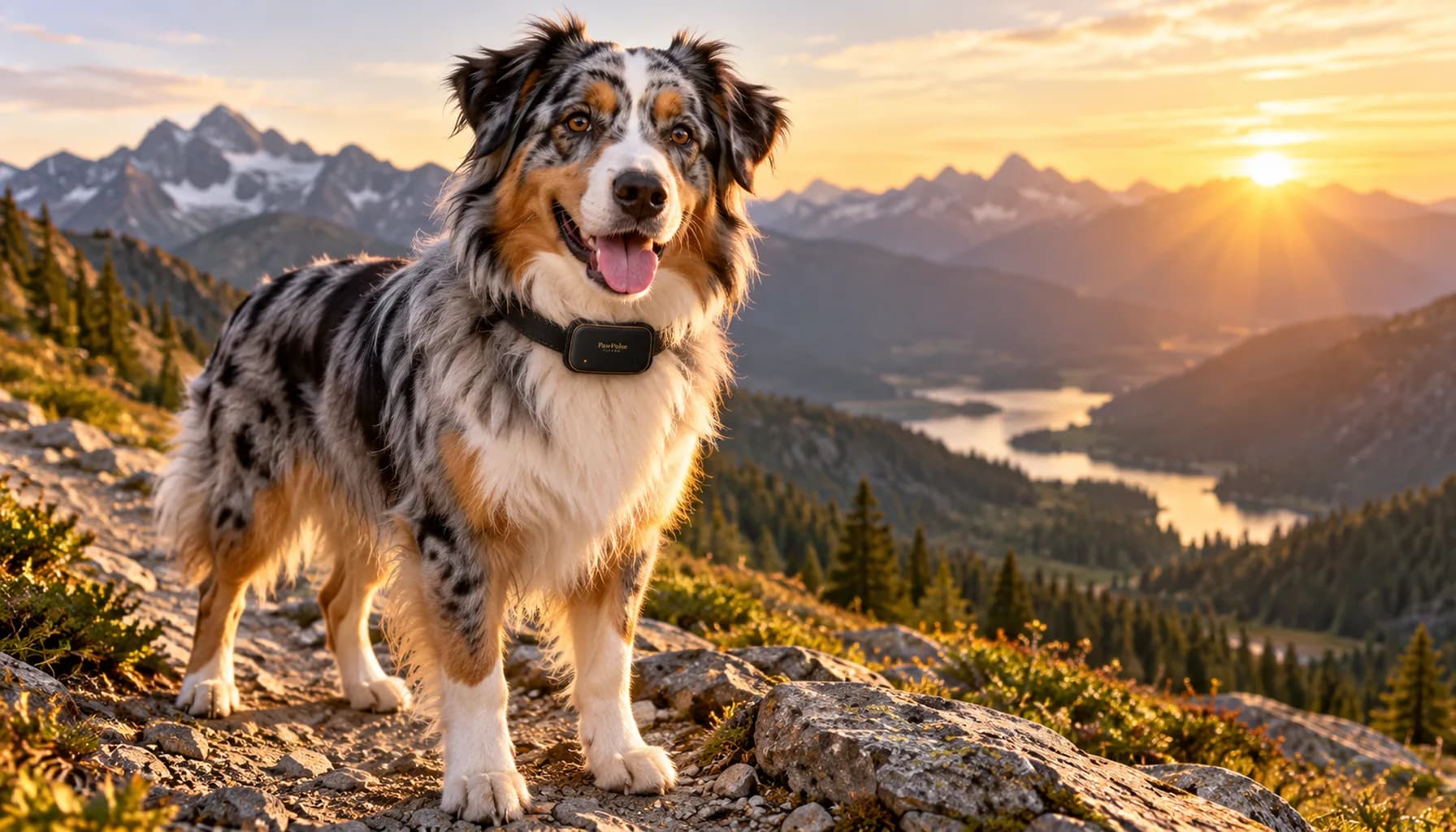
Unfamiliar rest stops and relatives' houses are where an open door matters most. PawPulse Lucero is designed to send live location over a cellular connection and to alert you when your dog leaves a Safe Zone. It also has a satellite-ready backup designed to keep location updates moving when cellular drops out. Satellite availability depends on carrier support and certification. None of that replaces a current ID tag, a registered microchip or a leash at the rest stop.
For long drives, the collar's Pulse Rhythm feature is designed to play a steady, gentle haptic pattern that is started manually from the app. It is a comfort feature, not a treatment, and it does not replace the slow car training above. Lucero is also designed to measure heart rate and breathing through fur without touching the skin (Kinetic sensing), so you can look back at how your dog rested on the first night somewhere new, as context for you and your vet.
If you are planning outdoor stops along the way, our post on hiking with dogs and what most owners get wrong covers trail safety in more depth.
Frequently Asked Questions
Are dog car harnesses safe?
A vehicle harness can help, but quality varies widely. Consumer Reports noted in 2020 that there are no industry standards for pet restraints and that "crash-tested" labels usually rest on the maker's own claims. AAA advises choosing independently crash-tested products when possible, fitting them exactly as instructed, and never using a walking harness as a car restraint.
Do dogs need seatbelts in the car?
They need a restraint that holds them in place in a sudden stop. AAA warns that an unrestrained dog can be thrown across the vehicle, injured or even ejected in a crash. Use a properly sized restraint, carrier or crate designed for vehicle use, in the back seat, rather than a loose leash clipped to the seat.
Can dogs ride in the front seat?
The back seat is safer. AAA says riding in the back keeps dogs from interfering with controls or visibility and away from front-seat airbags. Research on pets and crash risk is limited, but it gives no reason to put a loose dog in front. Restrained in the back is the consistent advice.
How often should I stop on a road trip with a dog?
Consumer Reports suggests stopping every couple of hours so your dog can drink, stretch and relieve itself. Puppies, senior dogs and dogs prone to car sickness may need more frequent breaks. At every stop, clip the leash on before opening the door, walk away from traffic, and offer water.
What helps a dog with car sickness?
VCA suggests gradual practice trips, a cool and quiet car, a familiar blanket, and holding back food for a few hours before travel if that is not stressful for your dog. Many puppies outgrow motion sickness by about a year old. Never give human travel medicine or sedatives without your vet, and ask well before the trip.
Is it safe to leave a dog in the car for a few minutes?
No. AAA advises never leaving a pet unattended in a parked vehicle. Consumer Reports found a closed car climbed past 105 F within an hour when it was only 61 F outside. A short errand can easily run long, so take your dog with you or leave it safely at home.
Learn more about PawPulse Lucero, the smart dog collar designed for live location, Safe Zone alerts and contactless heart rate and breathing trends you can share with your vet. Reservation holders get their Lucero first. We will confirm your delivery month when the Kickstarter is announced.
-- The PawPulse Team