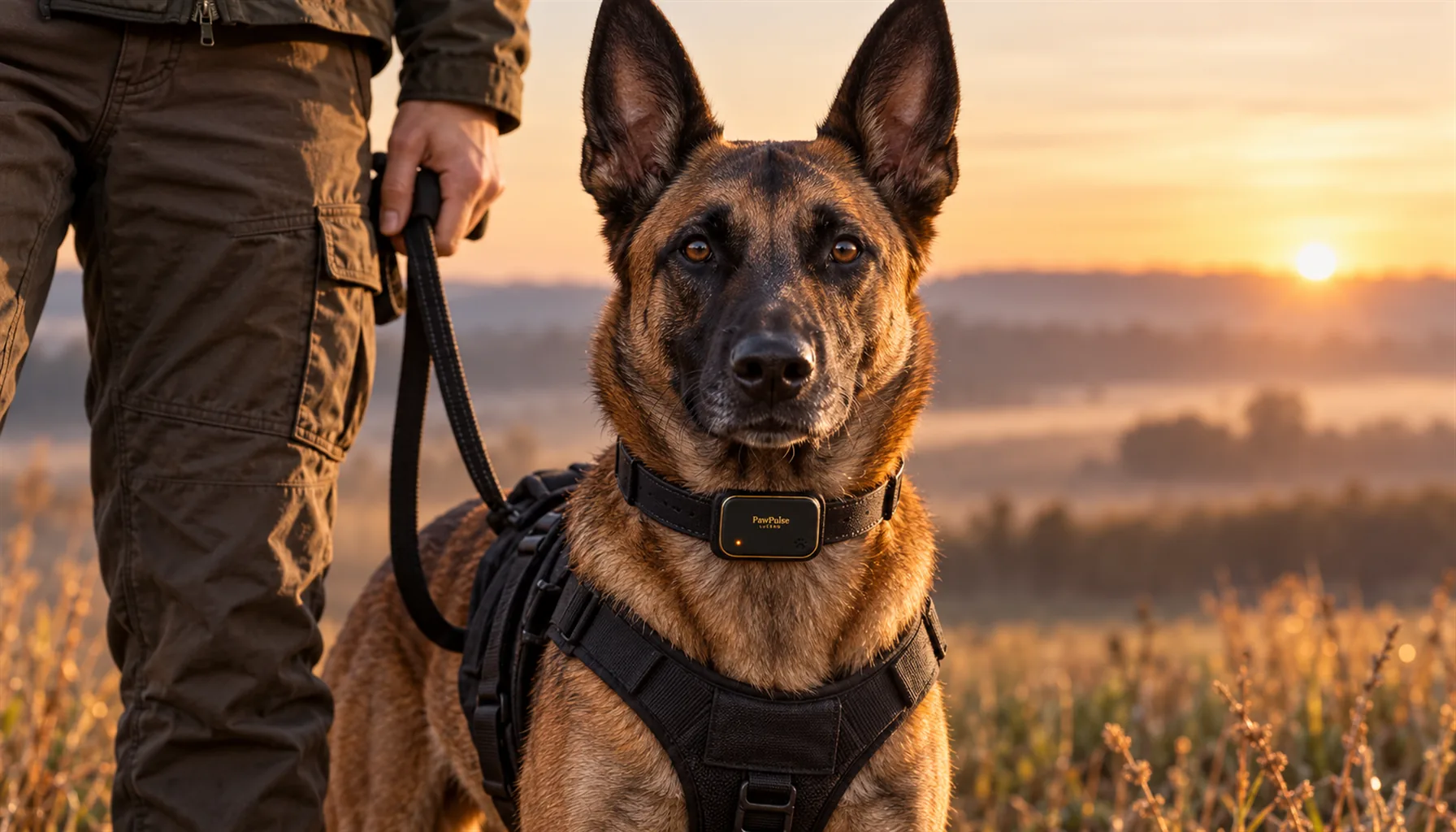
Key takeaway: Working dog health monitoring matters because ranch, hunting, service and search-and-rescue dogs work hard, far from help, and rarely quit on their own. A 2020 VetCompass study in Animals found exertion triggered 74.2% of heat-related illness cases in UK dogs. Continuous heart rate and breathing trends give handlers earlier context on strain and recovery.
These Dogs Don't Just Live With You. They Work With You.
There is a difference between a dog that walks to the park and back and a dog that covers a good chunk of a ranch before lunch. Between a pet that naps on the couch while you work and a guide dog that spends the day threading through crowds, doors and traffic. Between a dog that barks at squirrels and a livestock guardian that sleeps in the pasture and gets up to deal with coyotes at 3 AM.
Working dogs are athletes, colleagues and partners. They push harder, work in rougher conditions and often sit farther from a veterinary clinic than any companion pet. They are also, oddly, the dogs whose health gets watched least closely, because a tough dog is assumed to be fine until it very visibly is not.
PawPulse builds the Lucero smart dog collar, which measures heart rate and breathing without contact, and we spend a lot of time talking with people whose dogs have jobs. The pattern we hear is consistent: these handlers know their dogs extremely well, and they still wish they could see what is happening under the coat on a hot afternoon a mile away.
Why Is a Working Dog Harder to Monitor Than a Pet?
The short answer: more strain, more distance, less signal. The table below sums up how the job changes the picture.
| Factor | Typical Companion Dog | Typical Working Dog |
|---|
| Daily exertion | Walks and play sessions | Hours of running, herding, tracking or guiding |
| Environment | Mostly indoors, climate-controlled | Heat, cold, rain, brush, dust, crowds |
| Distance from handler | Same room or yard | Across pastures, timber or a search area |
| Cell coverage | Usually suburban coverage | Often rural dead zones |
| Recovery time | Long rests between outings | Short breaks between work sessions |
| Vet access | Nearby clinic | Can be a long drive in rural areas |
That last row is not just a feeling. According to the National Conference of State Legislatures (NCSL), USDA's National Institute of Food and Agriculture listed designated veterinary shortage areas in 46 states in 2025, with the shortage concentrated in rural and large animal practice. The dogs working hardest are often the ones farthest from a second opinion.
Is Overexertion Really the Biggest Risk?
For a lot of working dogs, yes, and the data on heat backs it up. Hall, Carter and O'Neill's 2020 study of 905,543 dogs under UK primary veterinary care, published in Animals (2020), found that exertion triggered 74.2% of heat-related illness events. Vehicle confinement, the scenario everyone warns about, was 5.2%. The authors also noted that breeds such as Border Collies, Springer Spaniels and Labradors are commonly used as working and assistance dogs.
The working world shows the same thing at higher stakes. A 2025 analysis in Frontiers in Veterinary Science (2025) reviewed 1,230 U.S. military working dogs discharged from service in fiscal years 2019 to 2021. Heat injury was one of five causes that together explained 83.5% of discharges, and dogs discharged for heat injury tended to leave earlier in their careers.
The awkward part: motivated dogs do not stop on their own. A bird dog on scent or a herding dog mid-gather will keep going well past the point a sensible human would call a break. That drive is what makes them good at the job, and it is also why the handler needs another source of information besides the dog's own enthusiasm.
What Does Each Kind of Working Dog Need?
The Ranch and Farm Dog
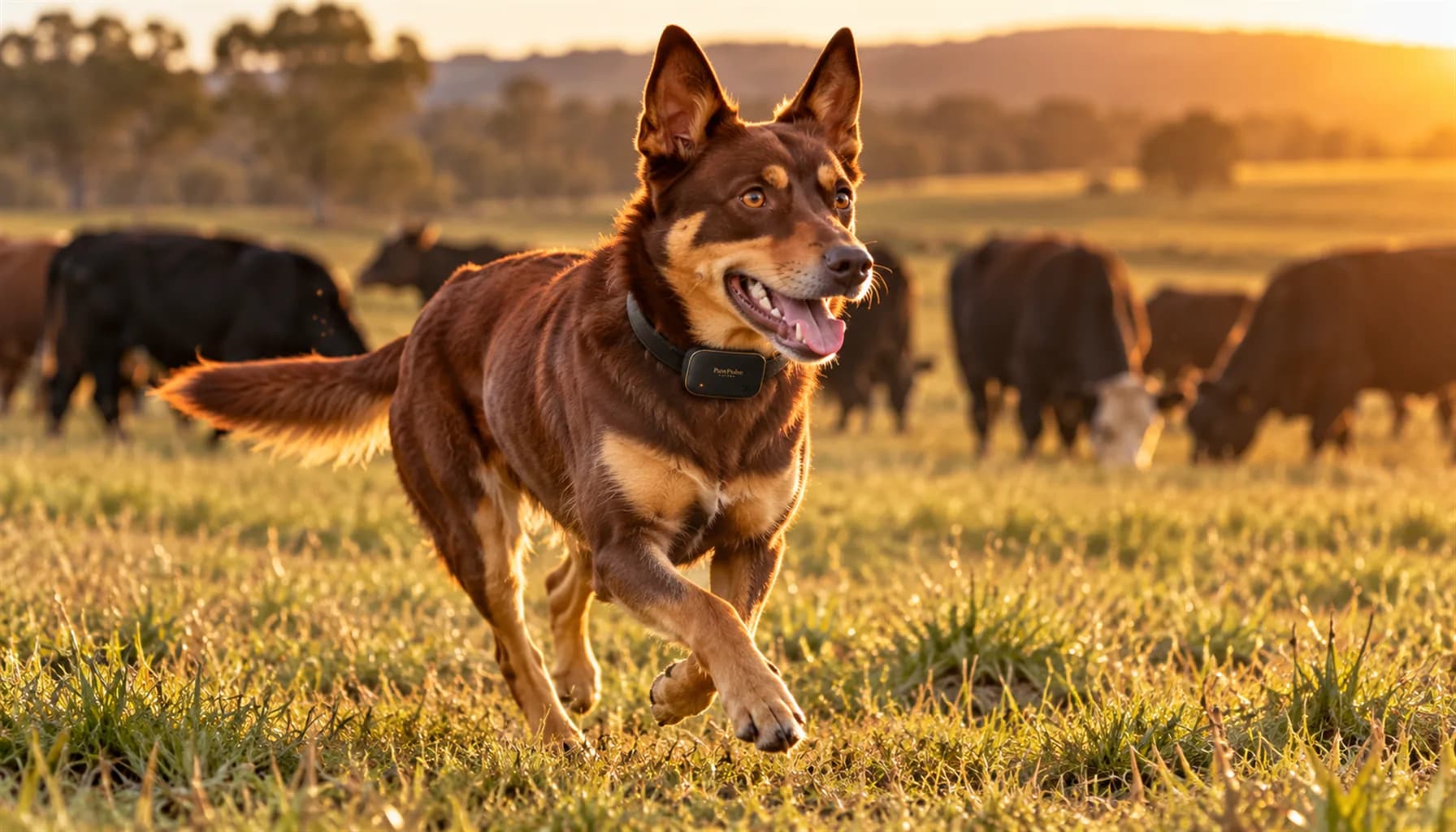
Livestock guardians (Great Pyrenees, Anatolian Shepherds, Maremmas) and herding breeds (Border Collies, Australian Shepherds, Cattle Dogs) cover property measured in hundreds of acres, in every kind of weather, often out of sight for hours.
What helps: location across the whole property, heart rate and breathing trends during hot afternoons, and a clear view of overnight recovery. PawPulse's connectivity and sensing stack pairs LTE with a satellite-ready backup for places where cell coverage runs out. Satellite availability depends on carrier support and certification.
The Hunting Dog
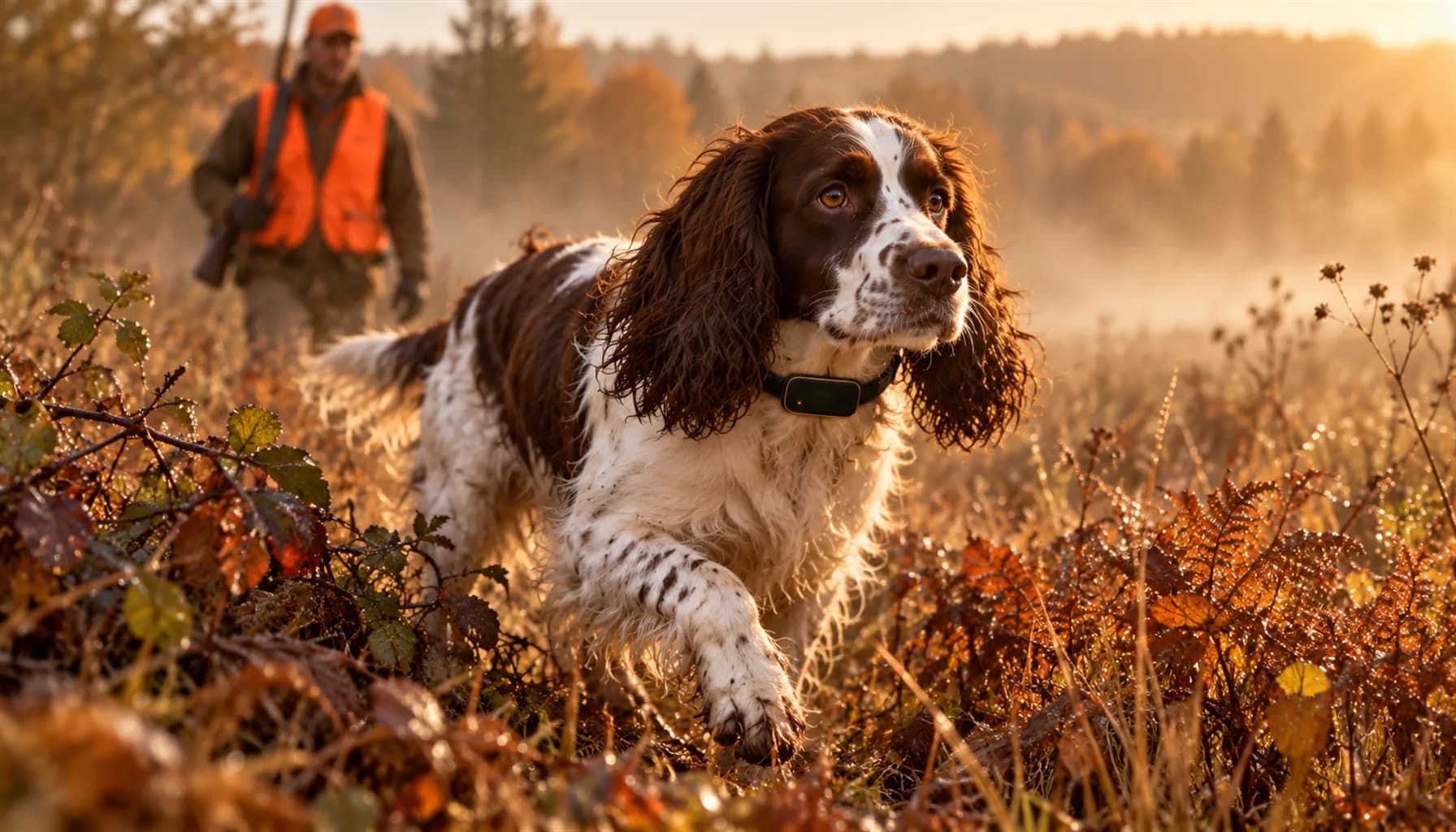
Pointers, hounds and retrievers range out of sight through timber, brush and water, frequently in terrain with no cell service. Hunting season also tends to stack long days back to back.
What helps: live location when the dog is beyond visual range, heart rate and breathing trends that show when effort is climbing, and a backup path for location data when the hunt drifts into a dead zone. If you also take your dog into the backcountry off-season, our post on hiking with dogs and the safety mistakes owners make covers the heat and pacing side in more detail.
The Service Dog
Guide dogs, mobility dogs and psychiatric or medical alert dogs work long days in busy public spaces. Their wellbeing is tied directly to their handler's independence, and a dog with emerging discomfort may keep working anyway.
What helps: trends in resting heart rate, breathing and sleep that give the handler and vet context on how the dog is coping, plus recovery data that shows whether rest days are actually restoring the baseline.
The Search-and-Rescue Dog
SAR dogs work in wilderness, rubble and disaster areas, where effort is intense and conditions are unpredictable. Handlers already manage work and rest cycles carefully, because these dogs will keep searching long after they should take a break.
What helps: heart rate and breathing trends to inform work and rest decisions, location data in remote terrain, and post-deployment recovery trends ahead of the next callout. Monitoring adds information to the handler's judgment. It does not replace it.
Why Do Typical Smart Collars Fall Short for Working Dogs?
Most smart collars are built around a suburban pet: steady cell coverage, short bursts of activity and a sensor that only has to work when the dog is lying still. Working dogs break each of those assumptions.
Connectivity cannot be optional. As we covered in why GPS collars fail off-grid, a cellular-only collar goes quiet exactly where many working dogs spend their day. A satellite-ready backup path is the minimum we would want for remote work.
The sensor has to see through the coat. Optical heart rate sensors depend on light reaching skin, which a thick working coat does not allow. The PawPulse Lucero uses Kinetic sensing, our millimeter-wave radar approach, which reads the small chest-wall movements of heartbeat and breathing and works on every coat.
Motion is the hard case. Any vitals sensor struggles when a dog is sprinting flat out. Our signal processing is designed to separate chest-wall movement from body movement, and in practice the minutes right after a hard run, when a dog stops to pant or wait for a command, are often where the most telling numbers come from. How fast heart rate and breathing settle after effort says a lot about how a dog is coping.
What Does a Monitored Work Day Look Like?
Here is how we expect a handler to use the data across one day:
- Before work: Check last night's resting heart rate, breathing and sleep against the dog's own baseline. A noticeably elevated overnight trend is a reason to look closer before a long day.
- During work: Watch location across the property or field, and watch heart rate and breathing trends during hot or demanding stretches. Boundary alerts can flag when a dog moves beyond the working area.
- After work: Look at the recovery curve. How quickly do heart rate and breathing return toward baseline after the last session?
- Across the season: Review weekly trends in workload, recovery and sleep. Slow drift is easy to miss day to day and obvious on a chart.
- At the vet: Instead of "he seems to be slowing down," bring weeks of workload, recovery and vital sign trends. The PawPulse Vet Dashboard is designed to give your veterinarian that longitudinal view.
A 2025 review of remote vital sensing in veterinary medicine in Animals (2025) noted that wearable sensors allow non-stop tracking of animals and highlighted the potential of continuous monitoring to flag problems earlier with less handling stress. For a dog whose work happens far from the clinic, that continuity is the whole point.

Frequently Asked Questions
What makes a professional-grade smart collar different from a typical consumer collar?
A professional-grade collar is built for the conditions working dogs actually face. That means sensing that works through any coat, readings that hold up around real activity, a backup connectivity path for areas without cell service, and trend data clear enough to share with a veterinarian. Most consumer collars assume a suburban pet with steady coverage.
Is overexertion a real risk for working dogs?
Yes. A 2020 VetCompass study of UK dogs found exertion triggered 74.2% of heat-related illness events, far more than hot cars. Hunting, herding and search dogs are especially prone to pushing through fatigue and heat. Heart rate and breathing trends give handlers extra information for work and rest decisions, alongside their own judgment.
How does satellite backup help working dogs?
Many working dogs spend their days on ranches, hunting grounds and remote land without reliable cell coverage, where cellular-only collars go offline. A satellite-ready backup is designed to keep location updates flowing when cellular drops out. Coverage can vary by region and carrier, so check what is supported where your dog works.
Can PawPulse monitor a dog with a thick working coat?
Yes. The PawPulse Lucero uses Kinetic sensing, a millimeter-wave radar approach that reads tiny chest-wall movements from heartbeat and breathing instead of shining light at the skin. Because it does not rely on light, dense double coats on breeds like Great Pyrenees or Border Collies do not block the reading.
Can a vet use working dog data to assess fitness for work?
Trend data gives a veterinarian useful context for that conversation. Weeks of workload, recovery and resting heart rate patterns show how a dog is handling its job between visits. The vet still examines the dog and makes the call, but starts from real numbers instead of a handler's best recollection of the season.
Does PawPulse work for service dogs?
PawPulse is designed for any dog, including service dogs. Resting heart rate, breathing, sleep and recovery trends give the handler and veterinarian context on how a service dog is coping with long working days. It provides insights and trends, not medical answers, and it works alongside regular veterinary care rather than replacing it.
Learn more about PawPulse Lucero, the smart dog collar with contactless heart rate and breathing monitoring and a satellite-ready backup, built to give handlers clearer insight into how their working dogs are coping, shift after shift.
-- The PawPulse Team