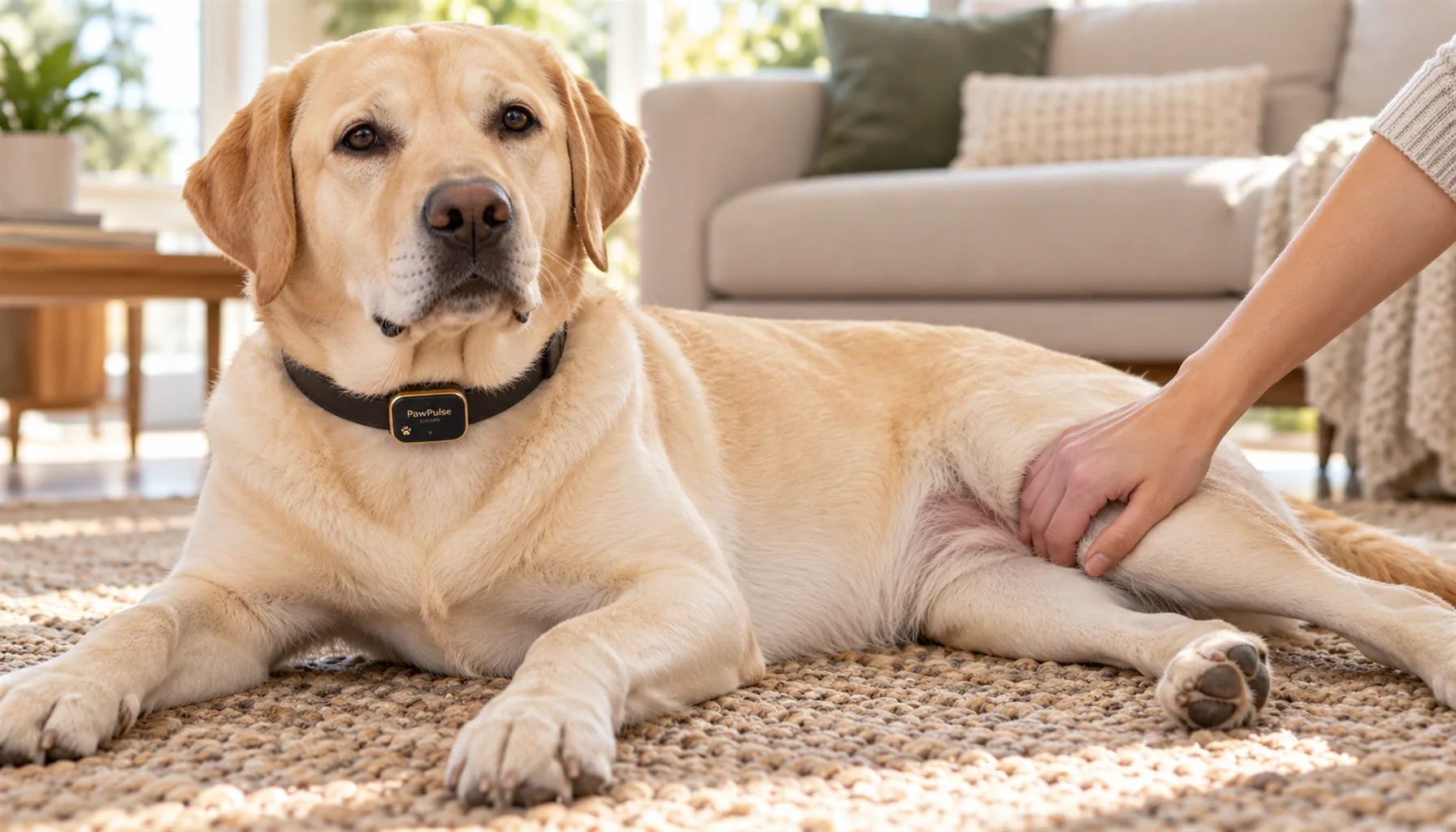
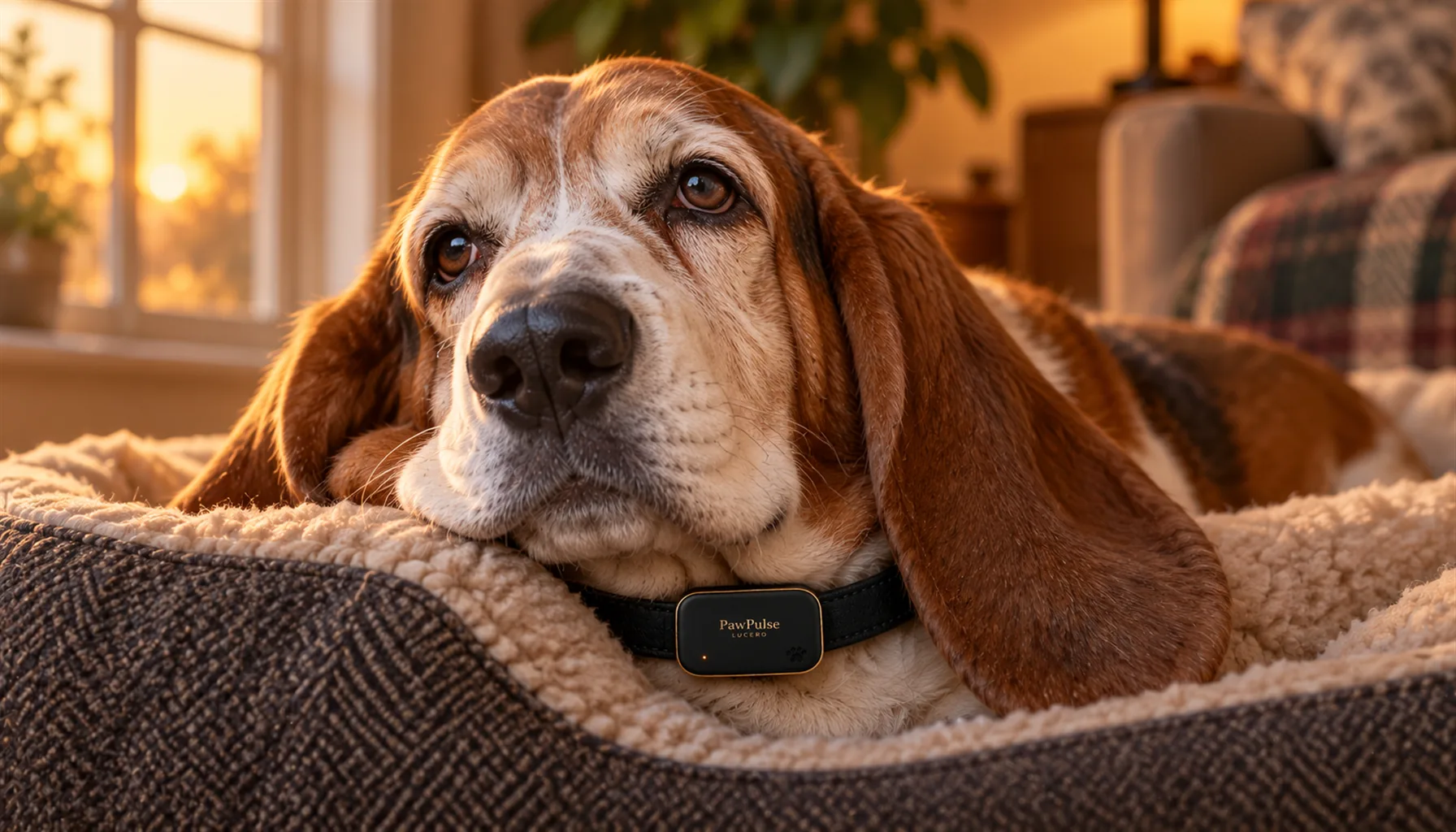
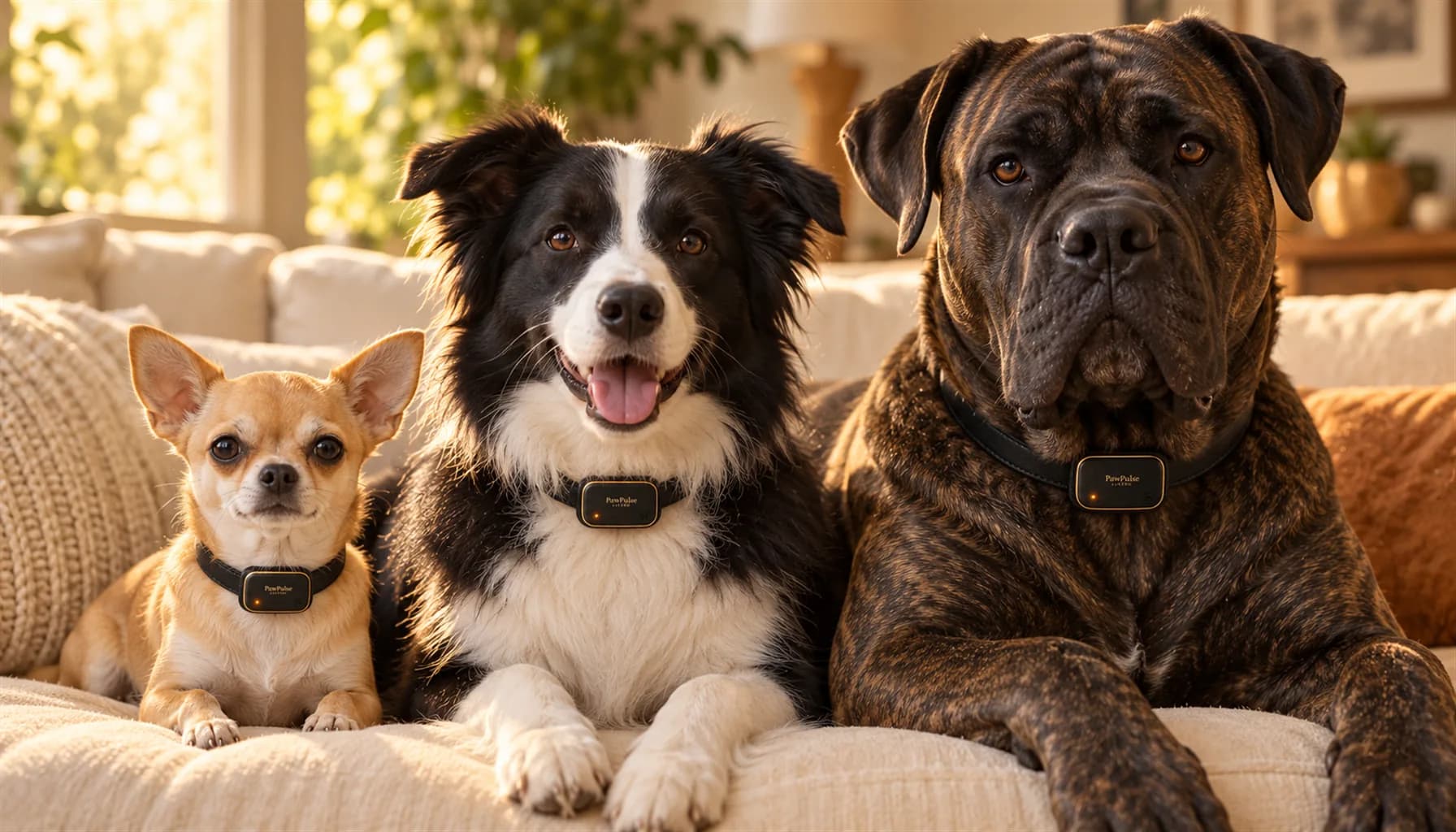
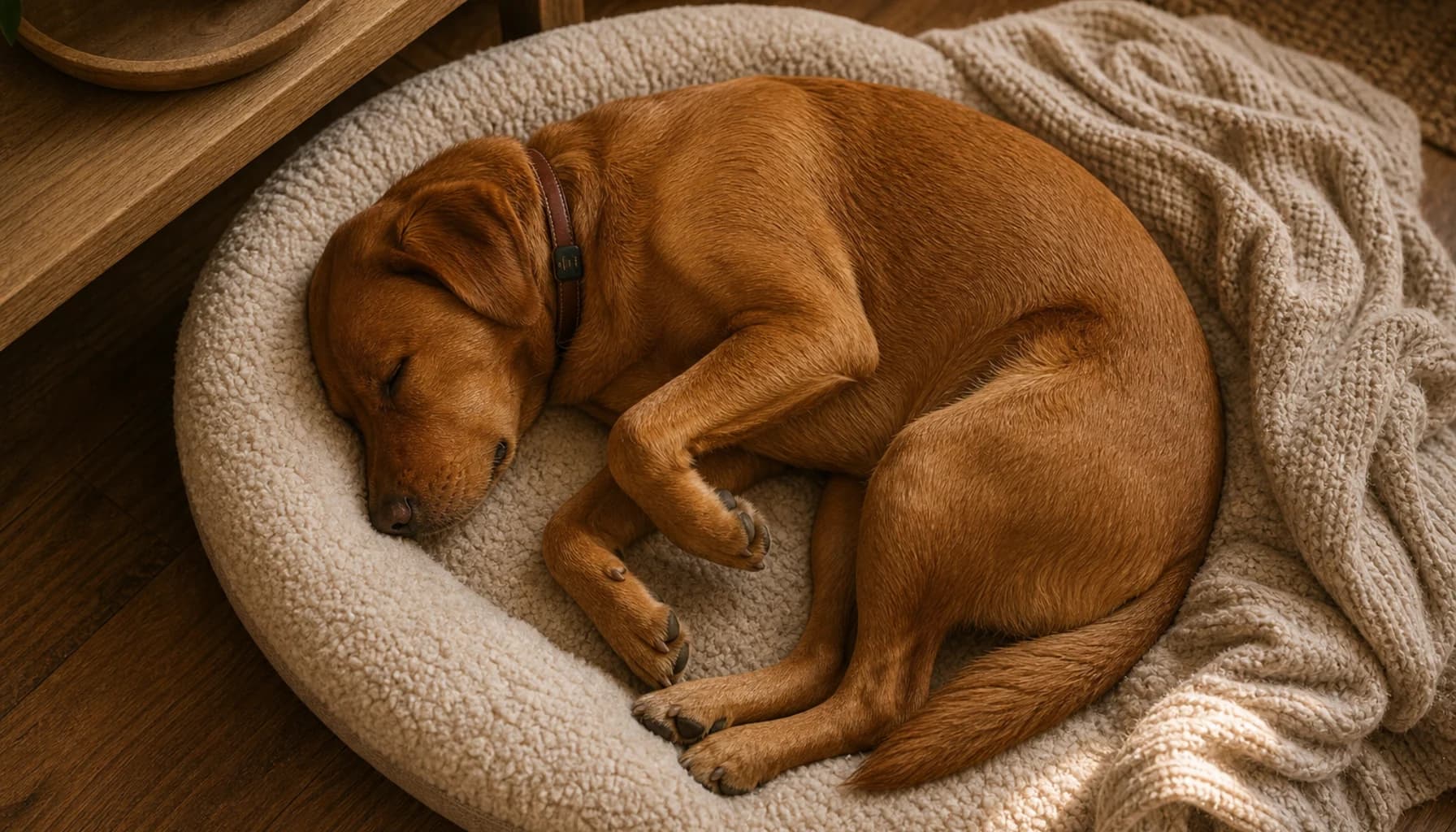
Key takeaway: A dog breathing fast while sleeping is usually dreaming, still cooling down, or simply warm. The number that matters is the sleeping breathing rate counted over a full minute. In a 2012 study of 114 healthy adult dogs, the average was 13 breaths per minute, and VCA Animal Hospitals considers rates consistently above 30 at rest abnormal.
The Short Answer: Watch the Pattern, Not the Moment
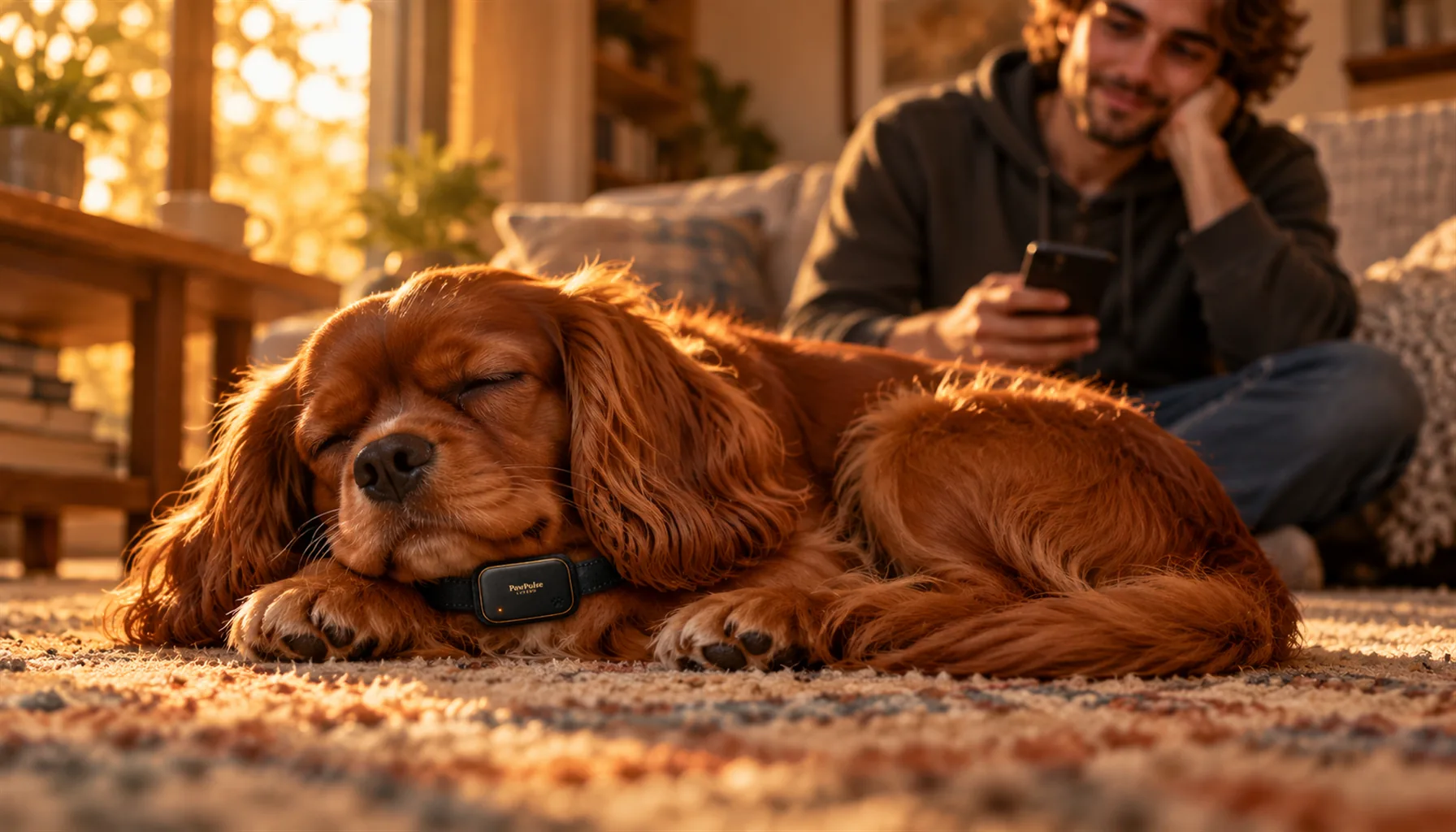
Your dog is asleep on the couch and the chest is going like a sewing machine. Legs twitching, little muffled woofs, ribs moving fast. It is hard not to worry.
Most of the time, what you are seeing is normal. Dogs dream, dogs run warm after a walk, and a spot by the heater makes everyone breathe harder. A burst of fast breathing that settles within a minute or two is rarely a problem. What deserves attention is a dog that breathes fast in deep, quiet sleep night after night, or one that is working to breathe.
We are a team of engineers and dog owners, and we built PawPulse, a smart dog collar with contactless heart rate and breathing monitoring, after more than a few nights staring at a sleeping dog's ribs and wondering. This is the guide we wish we had then. It is owner education, not veterinary advice, and your vet's guidance always comes first.
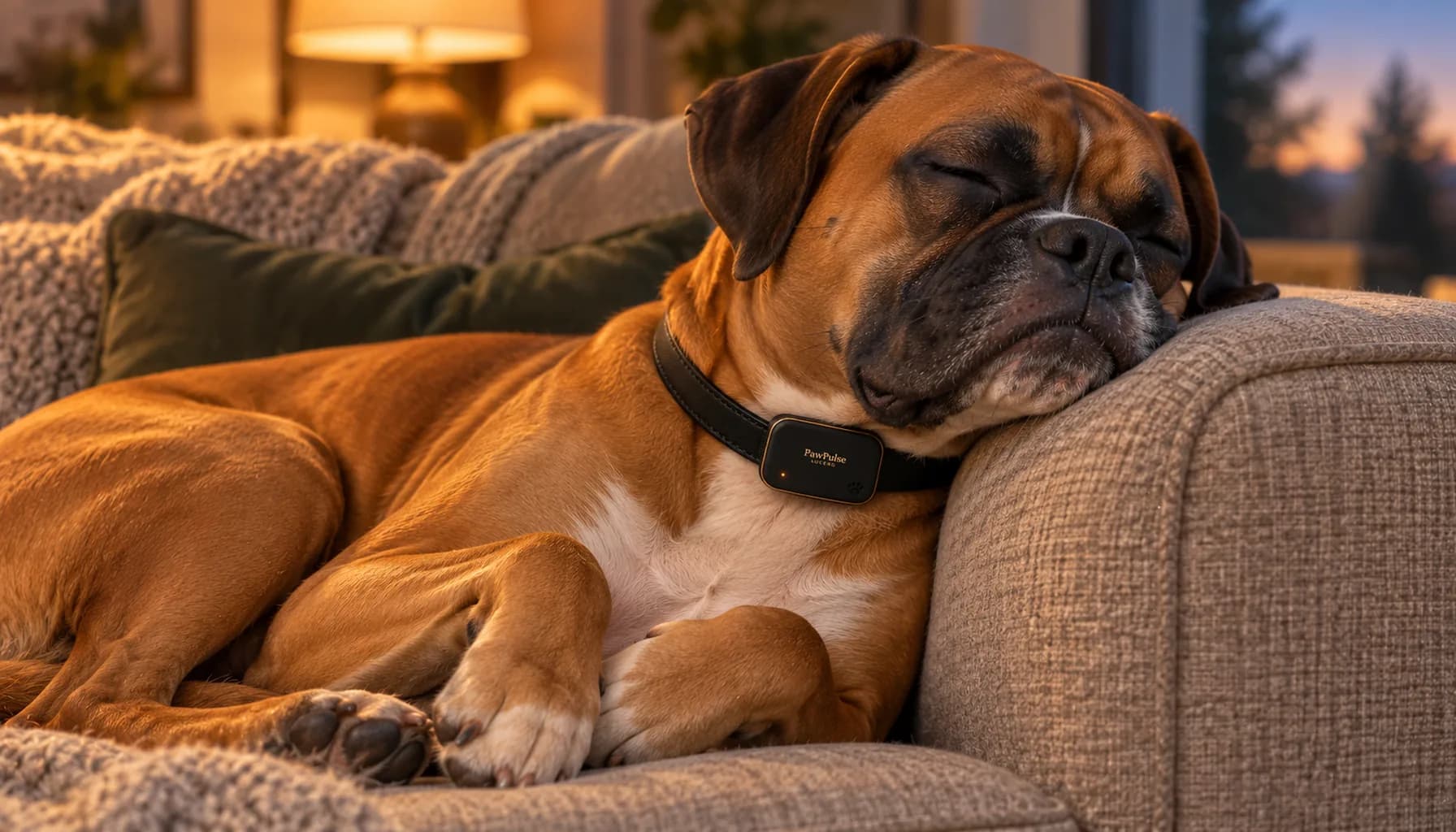
What Is a Normal Breathing Rate for a Sleeping Dog?
The best data comes from a study owners helped run themselves. In Research in Veterinary Science (Rishniw et al., 2012), owners of 114 apparently healthy adult dogs counted one-minute sleeping breathing rates at home, 12 to 14 times each over one week to two months. The average across dogs was 13 breaths per minute. No dog averaged more than 23, and only three dogs ever had a single count above 30. Age, body weight and location made no meaningful difference.
The client handout from VCA Animal Hospitals (updated 2025) puts the normal range for a pet resting calmly or sleeping at 15 to 30 breaths per minute, and says rates consistently above 30 are increased and considered abnormal. VCA also notes that your vet may set a different threshold for your individual dog.
You may see other numbers elsewhere, and that is not a contradiction. The Merck Veterinary Manual reference table lists 18 to 34 breaths per minute for dogs at rest, and Cornell gives 12 to 30. Those figures describe awake, resting dogs. Sleep is slower: in the same 2012 study, a subgroup of dogs averaged 19 breaths per minute when resting awake and 15 when asleep. That is exactly why vets ask for the sleeping count. It is the calmest, most repeatable number you can get at home.
Ranges vary by dog. The useful question is "is this normal for my dog?"
How to Count Your Dog's Sleeping Breaths
This takes about a minute and needs nothing but a phone.
- Wait for real sleep. Pick a time when your dog has been asleep and still for a while, not right after a walk, a meal or a play session.
- Watch the chest or belly. One breath is one full rise and fall. Count only the rises.
- Time it. Count for 30 seconds and double it, as VCA suggests, or count a full 60 seconds for a steadier number.
- Skip the dreams. If your dog is twitching, paddling or vocalizing, wait until that settles and count again.
- Write it down. Date, time, count, and anything unusual (warm room, big walk, new medication).
- Repeat. A few counts over several days give you a baseline. One count gives you a snapshot.
That log is the single most useful thing you can bring to a vet visit about breathing. We wrote more about what to bring and why in what your vet wishes you would bring to every appointment.
Common Reasons a Dog Breathes Fast While Sleeping
Dreaming. Dogs cycle through deep sleep and REM sleep, the stage linked to dreaming. A 1976 study in the Journal of Applied Physiology (Phillipson et al.) that tracked breathing in three sleeping dogs found that REM sleep was marked by rapid, shallow and considerably more irregular breathing than non-REM sleep. VCA Animal Hospitals (2024) says dogs may breathe rapidly, whine and move their legs during REM sleep, and that muscles may twitch. If the fast breathing comes with twitching and stops when the dream ends, it is very likely a dream.
Recent exercise. Breathing stays elevated for a while after activity, and a dog that falls asleep soon after a walk may still be catching up. The Merck Veterinary Manual's owner section lists rapid breathing as not always a sign of disease, for example in healthy animals after exercise. Count again an hour later.
A warm room. Dogs shed heat mainly by panting and breathing faster. A sunny window, a heated floor or a pile of blankets can raise the rate. Move the dog somewhere cooler and recount.
Puppies. Puppies sleep a lot, dream a lot, and often look like they are breathing fast. The 2012 study covered adult dogs only, so its numbers do not tell you what is normal for a young puppy. Ask your vet what range to expect at your puppy's age.
Flat-faced breeds. Bulldogs, Pugs and similar breeds often breathe noisily in sleep. Noise is not the same as a fast rate, but mention it to your vet.
When Fast Breathing Is Worth a Vet Call
This is the part to keep simple and conservative. The thresholds below come from VCA and the Cornell Riney Canine Health Center. They are general owner guidance, not a substitute for your vet's instructions for your dog.
| What you see | What it likely means | What to do |
|---|
| Fast, irregular breathing with twitching or paddling that settles within a minute or two | Dreaming | Nothing. Recount later if you are unsure. |
| Faster breathing soon after a walk or in a warm spot, settling within the hour | Cooling down or recovering | Move somewhere cooler, recount after an hour of quiet sleep. |
| Sleeping rate consistently above 30 breaths per minute over several counts, with no effort or distress | Increased and considered abnormal by VCA | Call your vet as soon as possible and share your log. |
| A rising trend over days, even if still under 30, or a rate above the number your vet gave you | A change from this dog's normal | Call your vet and share your log. |
| Open-mouth breathing at rest, belly pushing hard with each breath, head and neck stretched out | Signs of respiratory distress (Cornell) | Go to the nearest emergency vet now. |
| Bluish gums or tongue, wheezing or whistling, weakness or collapse | Signs of respiratory distress (Cornell) | Go to the nearest emergency vet now. |
On the emergency rows, the guidance from Cornell University College of Veterinary Medicine (updated 2025) is direct: take the dog to the nearest emergency animal hospital quickly and calmly, call ahead if you can, keep the car cool, and if you are unsure whether your dog is in distress, seek help anyway. VCA adds that if a high rate comes with other signs, it may be an emergency, which can mean an after-hours emergency center.
Do not wait overnight to see whether labored breathing passes.
Why Vets Care So Much About This One Number
Sleeping breathing rate is one of the few measurements an owner can collect that is cheap, simple and genuinely informative, which is why veterinary cardiologists often ask for it.
A second study from the same group, in The Veterinary Journal (Porciello et al., 2016), looked at 51 dogs whose congestive heart failure was well controlled with medication. Their median sleeping rate was 20 breaths per minute, eight dogs were at 25 or above, and only one was at 30 or above. The point for owners is not that a certain number means a certain disease. It is that a dog's sleeping rate tends to be stable when things are stable, so a sustained change is worth reporting.
That is also why a single fast night means little. A pattern over several days tells a much more useful story.
Where Continuous Breathing Data Fits
Counting by hand works, and it costs nothing. The catch is that it depends on you catching the dog in quiet sleep and remembering to write it down. Most of us manage a few counts, then life gets busy.
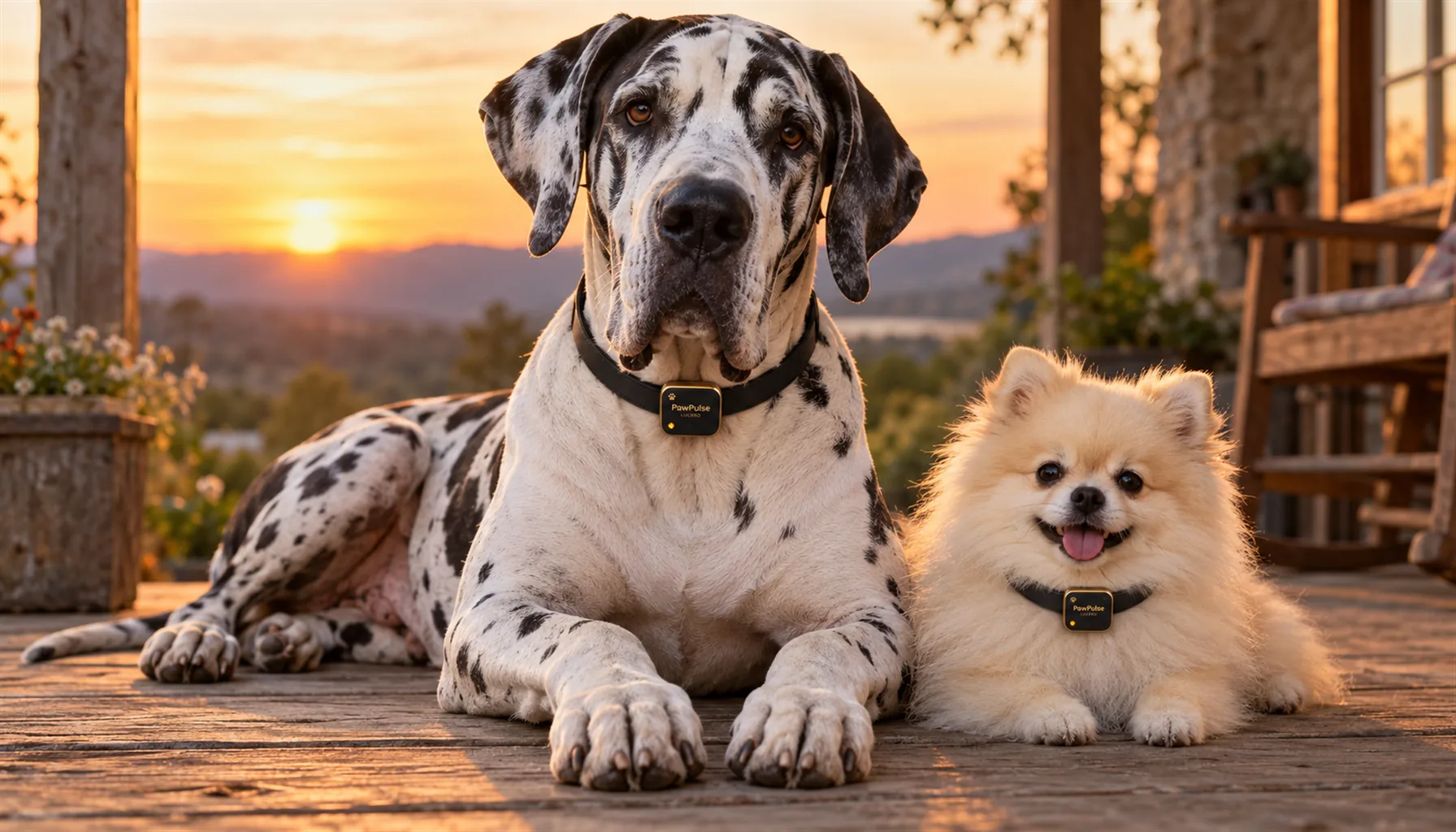
That gap is a big part of why we built PawPulse Lucero. Using Kinetic sensing, it is designed to measure heart rate and breathing through fur without touching the skin, including while your dog sleeps. Instead of three stopwatch counts, you get a trend, and the app shows how tonight compares with your dog's own recent nights. We explain how that personal baseline works in how AI learns your dog's normal, and how sleep itself changes with health in 5 things your dog's sleep pattern reveals.
To be clear: PawPulse Lucero is not a medical device. It does not replace counting when your vet asks you to, and it does not replace your vet. It gives you trends and context to share. If anything in the table above applies, call your vet first and look at the app later.
For the counting method and a printable log, see how to count a dog's sleeping respiratory rate. For heart rate, see normal dog heart rate by size and age.
Frequently Asked Questions
Is it normal for a dog to breathe fast while dreaming?
Yes. During REM sleep, the stage linked to dreaming, many dogs breathe rapidly, shallowly and irregularly and may twitch, paddle or make small noises. A 1976 study of sleeping dogs measured that breathing pattern. If the fast breathing stops when the twitching stops, it is very likely a dream. Count again once your dog is in quiet sleep.
How fast is too fast for a sleeping dog?
VCA Animal Hospitals considers a resting or sleeping rate consistently above 30 breaths per minute to be increased and abnormal, and a 2012 study found healthy adult dogs averaged 13. Your vet may give your dog a different number. If several counts in quiet sleep are above 30, or above your vet's number, call your vet.
Why does my puppy breathe so fast when asleep?
Puppies sleep and dream a great deal, so fast, irregular breathing with twitching is common. The best-known sleeping rate research studied adult dogs only, so its averages do not apply directly to young puppies. Ask your vet what range is normal at your puppy's age, and seek care right away for open-mouth breathing, effort, or bluish gums.
When is fast breathing an emergency?
Go to an emergency vet now if your dog breathes with an open mouth at rest, pushes hard with the belly, stretches the head and neck out, has bluish gums or tongue, wheezes or whistles, or is weak or collapsing. Cornell's canine health center lists these as signs of respiratory distress and advises seeking help even when unsure.
Can a warm room make my dog breathe faster at night?
Yes. Dogs cool themselves mainly by panting and breathing faster, so a heated floor, a sunny spot or heavy blankets can raise the rate. Move your dog somewhere cooler, let it settle into quiet sleep, and count again. If the rate stays high in a cool room, note it and call your vet.
Does fast breathing without panting mean something is wrong?
Not necessarily. A dog dreaming or recently active can breathe fast with its mouth closed. What matters is whether it settles, whether your dog looks comfortable, and whether quiet-sleep counts stay under 30. Fast breathing at rest that persists over several days, or comes with effort, is worth a call to your vet.
If you would like breathing trends without the stopwatch, learn more about PawPulse Lucero, the smart dog collar designed to measure heart rate and breathing through fur without touching the skin, giving you trends and context to share with your vet. Reservation holders get their Lucero first. We will confirm your delivery month when the Kickstarter is announced.
-- The PawPulse Team