
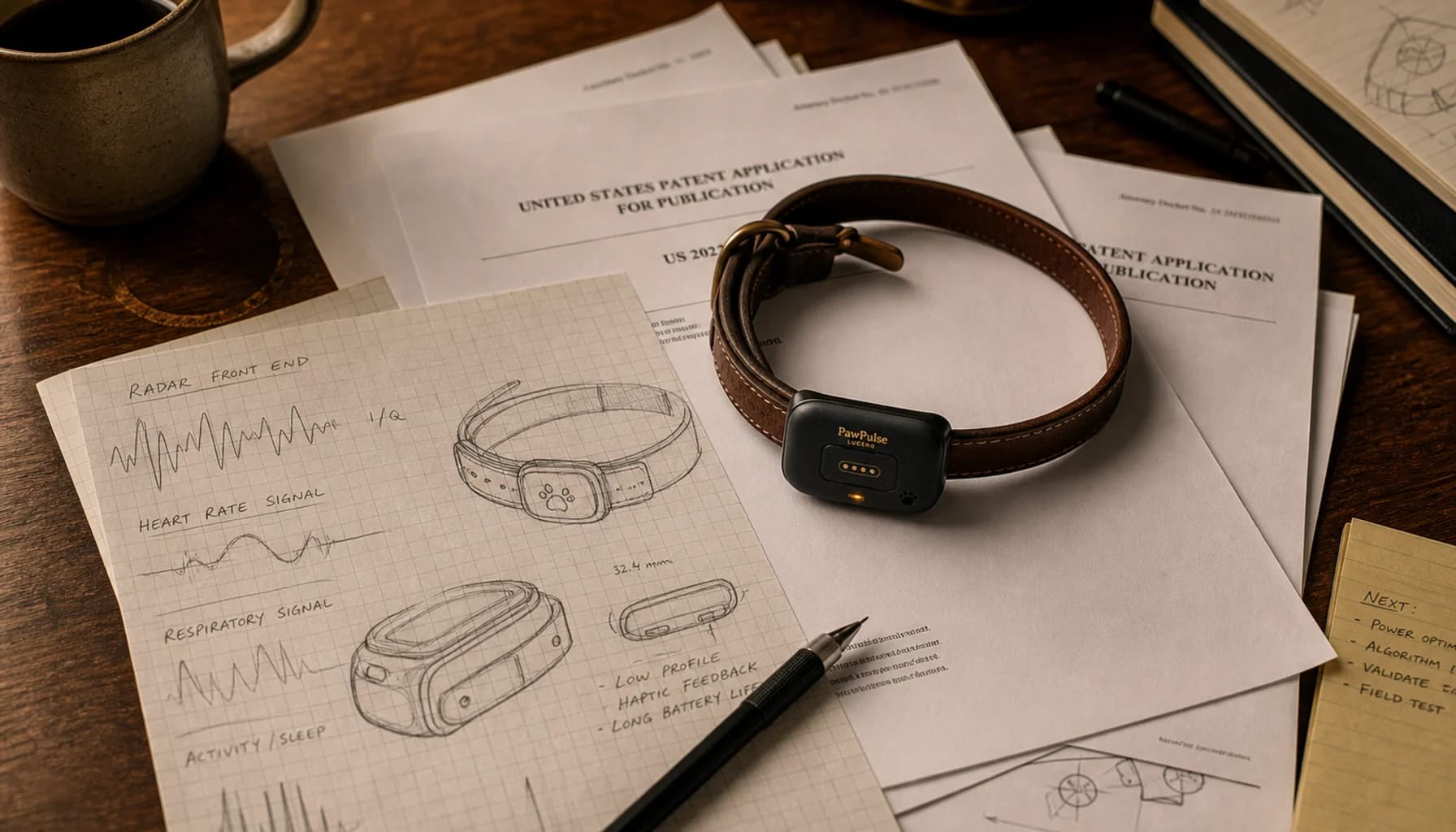
Key takeaway: PawPulse has filed 25+ patent applications covering the core technologies behind its platform: contactless radar sensing, haptic calming, hybrid cellular-satellite connectivity, and AI-driven adaptive health baselines. For a category where most products are built on commodity components and undifferentiated software, a deep patent portfolio signals that the underlying technology is genuinely novel - not repackaged.
We Didn't Build a Product. We Built a Platform. Then We Protected It.
There's a version of PawPulse that could have shipped faster, cost less to develop, and required zero patent filings. It would have used an off-the-shelf PPG sensor, a cellular-only GPS module, a buzzer for "calming vibration," and a generic activity tracking algorithm. It would have been one of dozens of smart collars that look different on the outside and are identical on the inside.
We didn't build that version.
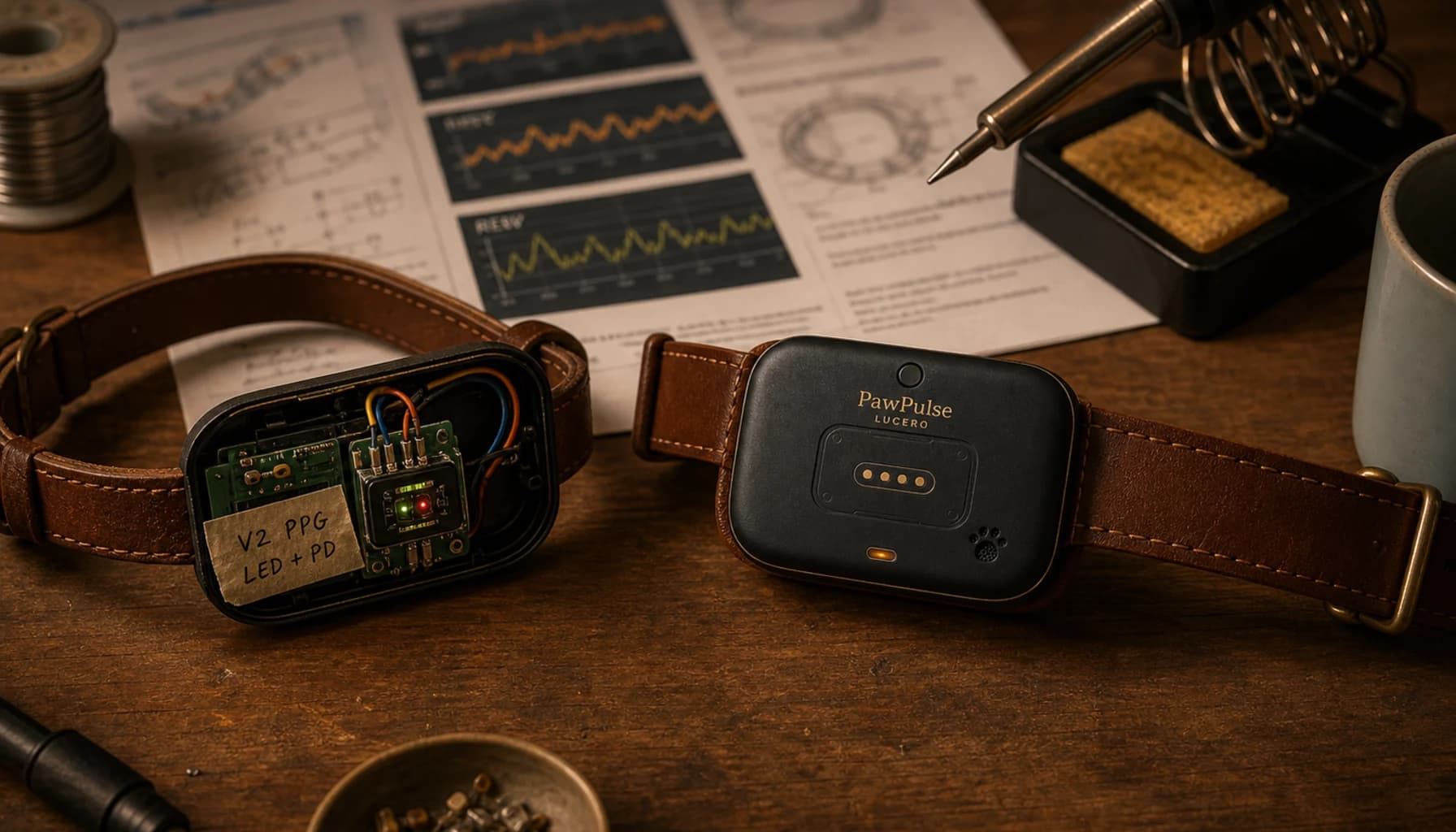
Instead, we spent years developing technology that didn't exist yet: a radar sensor that works on every coat, a haptic calming system built on classical conditioning science, a connectivity architecture that fails over to satellites automatically, and an AI engine that learns what "normal" means for each individual pet. Each of these required solving problems that off-the-shelf components couldn't touch.
And every time we solved one, we filed a patent on it. Twenty-five times and counting.
What the Patents Actually Cover
We're not going to publish our patent claims in a blog post (our attorneys would have opinions about that). But we can share the technology domains where we've filed, because understanding what's protected explains what makes PawPulse fundamentally different from anything else on the market.
Contactless Radar Vital Sign Sensing
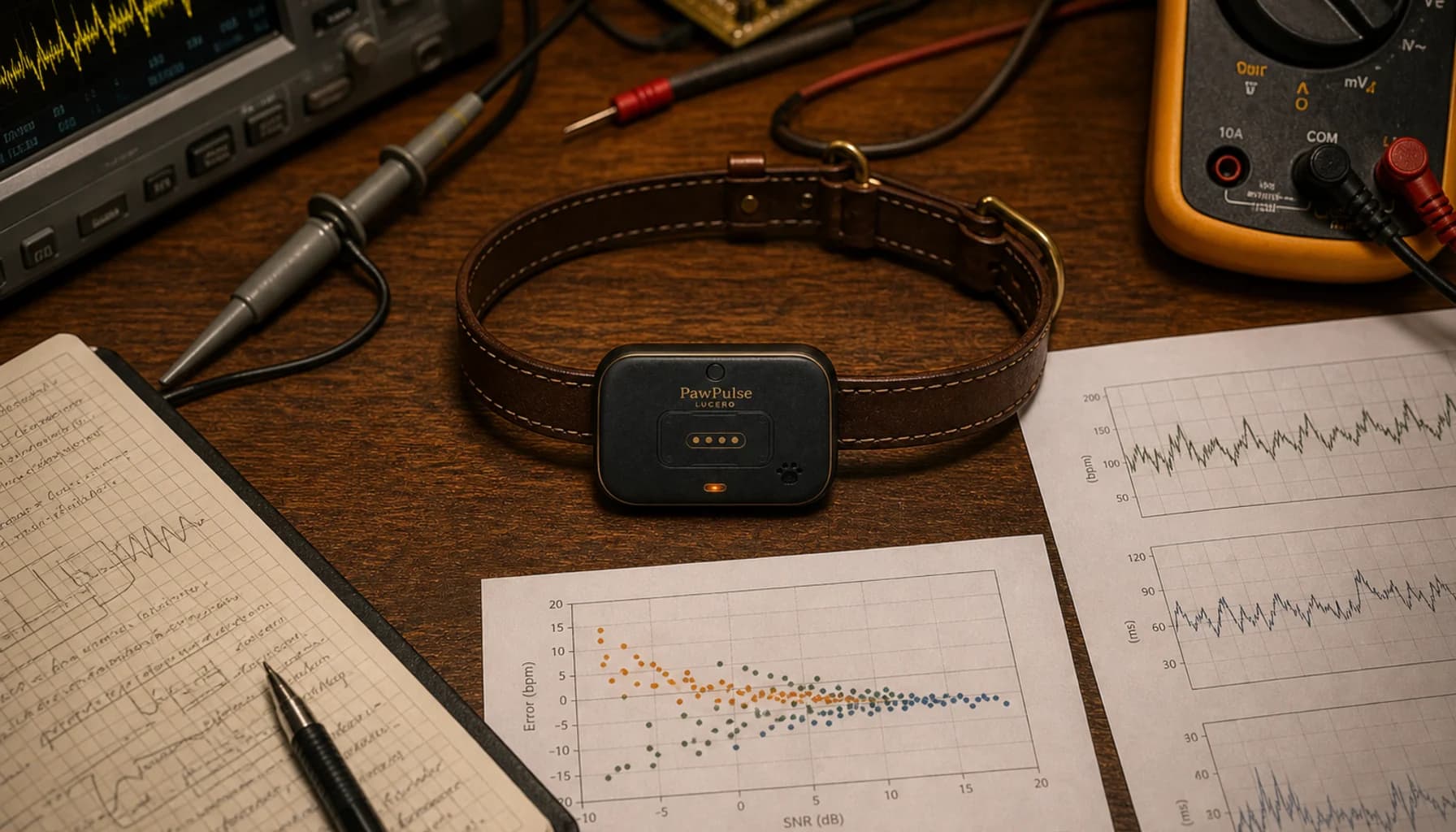
The core sensing architecture. How a millimeter-wave radar module, packaged in a collar form factor, extracts heart rate, respiratory rate, and heart rate variability from chest wall micro-movements on coats of any type and density. This includes the signal processing methods that isolate cardiac displacement from motion artifacts, the power management approaches that make radar viable in a battery-powered wearable, and the antenna design that achieves the necessary sensitivity within the physical constraints of a collar.
This is the technology we spent months developing: radar-based vital sign sensing. Nobody else in pet wearables has solved it in a collar form factor. The patents ensure it stays that way.
Haptic Calming (Pulse Rhythm)
The complete Pulse Rhythm system: the specific vibration patterns (Heartbeat Mode, Calming Purr, Grounding), the classical conditioning protocol that builds a learned calming response over 14 days, the auto-activation logic that triggers calming based on real-time biometric changes, and the Smart Sequences that chain multiple calming modes for escalating anxiety.
This isn't a buzzer that vibrates. It's a closed-loop system where the collar notices your dog getting worked up and the haptic system answers with a conditioned calming pattern - automatically, while the owner is away. The integration of sensing and intervention in a single wearable device is what the patents protect.
Hybrid Cellular-Satellite Connectivity
The architecture that enables automatic, seamless failover between cellular and LEO satellite networks within a pet collar. This covers the modem management logic, the power optimization for satellite transmission windows, the data prioritization that determines what gets sent over satellite's limited bandwidth (GPS fix + vitals + alerts), and the geofence alerting that works across both connectivity modes without user intervention.
As we covered in our post on NTN satellite connectivity, the standard makes the radio possible. Our patents cover how we use it in a pet wearable specifically.
AI-Driven Adaptive Health Baselines (Prism Insights)
The machine learning system that builds a personal health baseline for each individual pet and surfaces sustained deviations from that baseline to owners and veterinarians. This includes the multi-metric correlation analysis (how the AI weighs heart rate changes against activity, sleep, HRV, and respiratory patterns simultaneously), the contextual awareness that distinguishes time-of-day variation from genuine anomalies, and the alert generation logic that filters noise from signal.
Generic anomaly detection isn't new. Anomaly detection that accounts for the enormous physiological variation between a Chihuahua and a Great Dane, adapts to seasonal changes, evolves as the pet ages, and presents the output in a format veterinarians can act on - that's the innovation.
Why We File Aggressively (and Transparently)
It's Not About Lawsuits
Let's be direct: we don't file patents to sue people. We file patents because we've invested years and significant capital into solving problems that nobody else in this industry has solved, and we want to protect that investment.
The pet tech market is full of commodity products built on identical reference designs. GPS tracker A looks like GPS tracker B because they use the same module from the same vendor with the same firmware. There's nothing to patent because there's nothing novel.
When a company does invest in genuinely new technology, patents are what prevent a well-funded competitor from simply copying the solution, skipping the R&D, and undercutting on price. As a comprehensive analysis on Built In noted, a strong patent portfolio serves as a barrier to entry for competitors while demonstrating to investors that the startup's innovations are defensible.
It's a Signal to Partners and Investors
According to PatentPC, patents are often a prerequisite for attracting venture funding because they provide tangible evidence that a startup's technology is novel and protectable. In 2022 alone, venture capitalists invested approximately $238 billion into U.S. startups across nearly 16,000 deals - and having a robust patent portfolio frequently differentiates fundable startups from unfundable ones.
For PawPulse, 25+ filed patents across four distinct technology domains tells potential partners, investors, and veterinary collaborators: this isn't a white-label product with a new logo. The technology underneath is original, defensible, and years ahead of what commodity competitors can replicate.

It's About the Category, Not Just the Company
We believe the pet wearable category is at an inflection point. The first generation of smart collars was about GPS tracking. The next generation is about health - real health monitoring that veterinarians trust, that works on all breeds, and that provides continuous data between annual exams.
Building that future requires serious R&D investment. Radar sensing, AI baselines, haptic calming, satellite connectivity - none of these came from a data sheet. They came from engineering work that took months or years, failed repeatedly, and eventually produced something new.
If the companies doing that work can't protect it, the economic incentive to invest in genuine innovation disappears. We'd rather compete on technology than on marketing budgets, and patents are what make that possible.