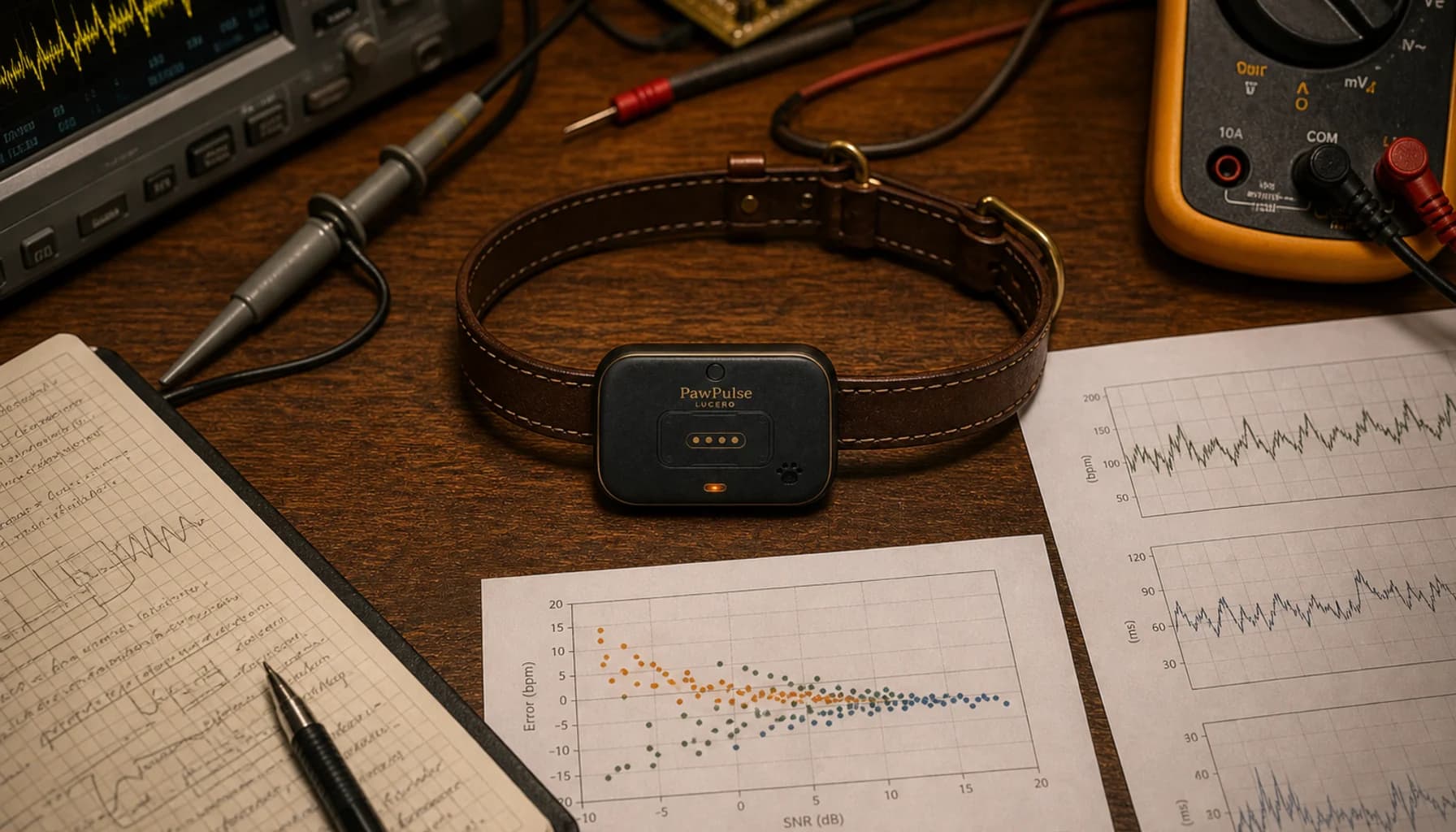
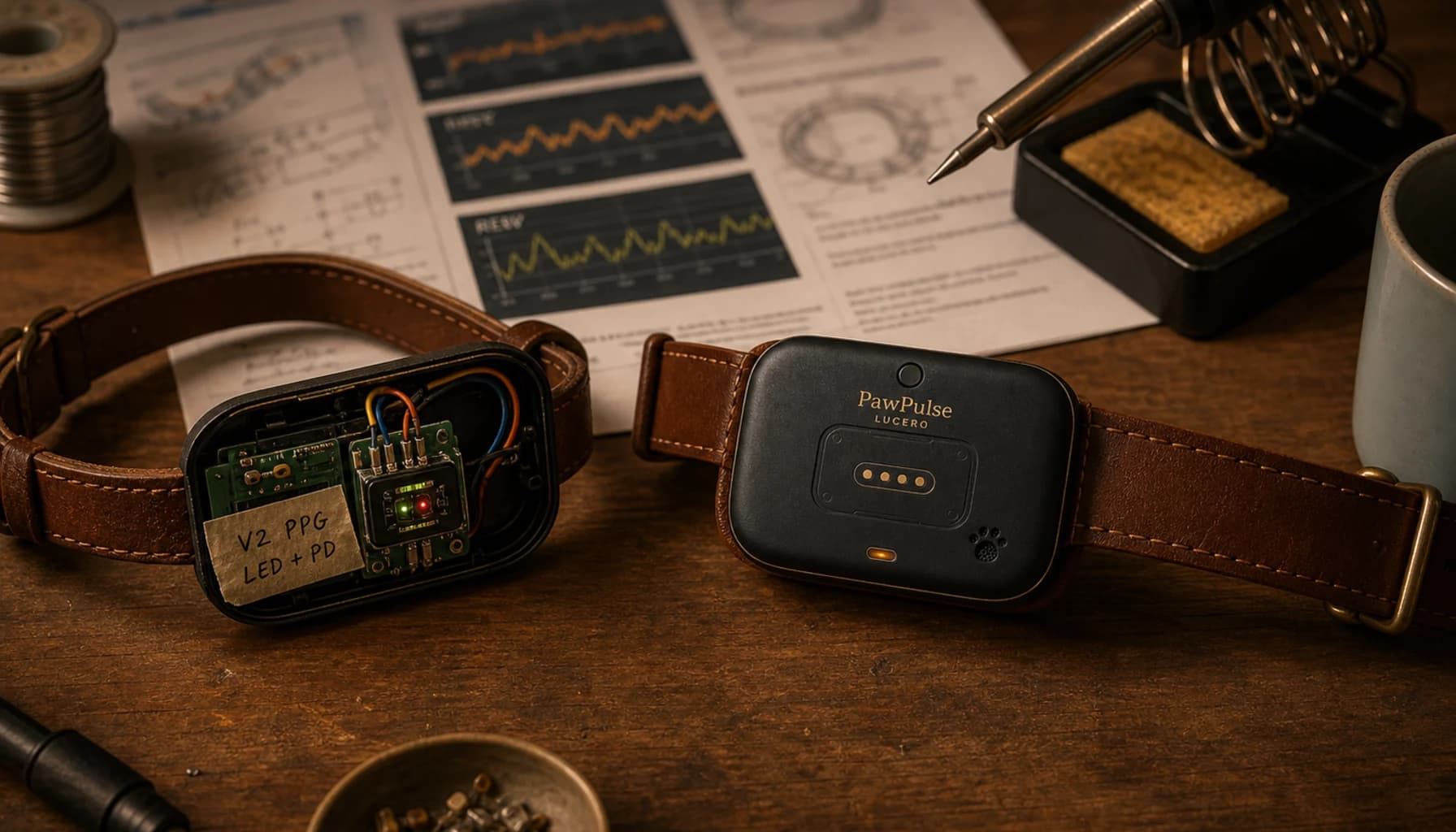
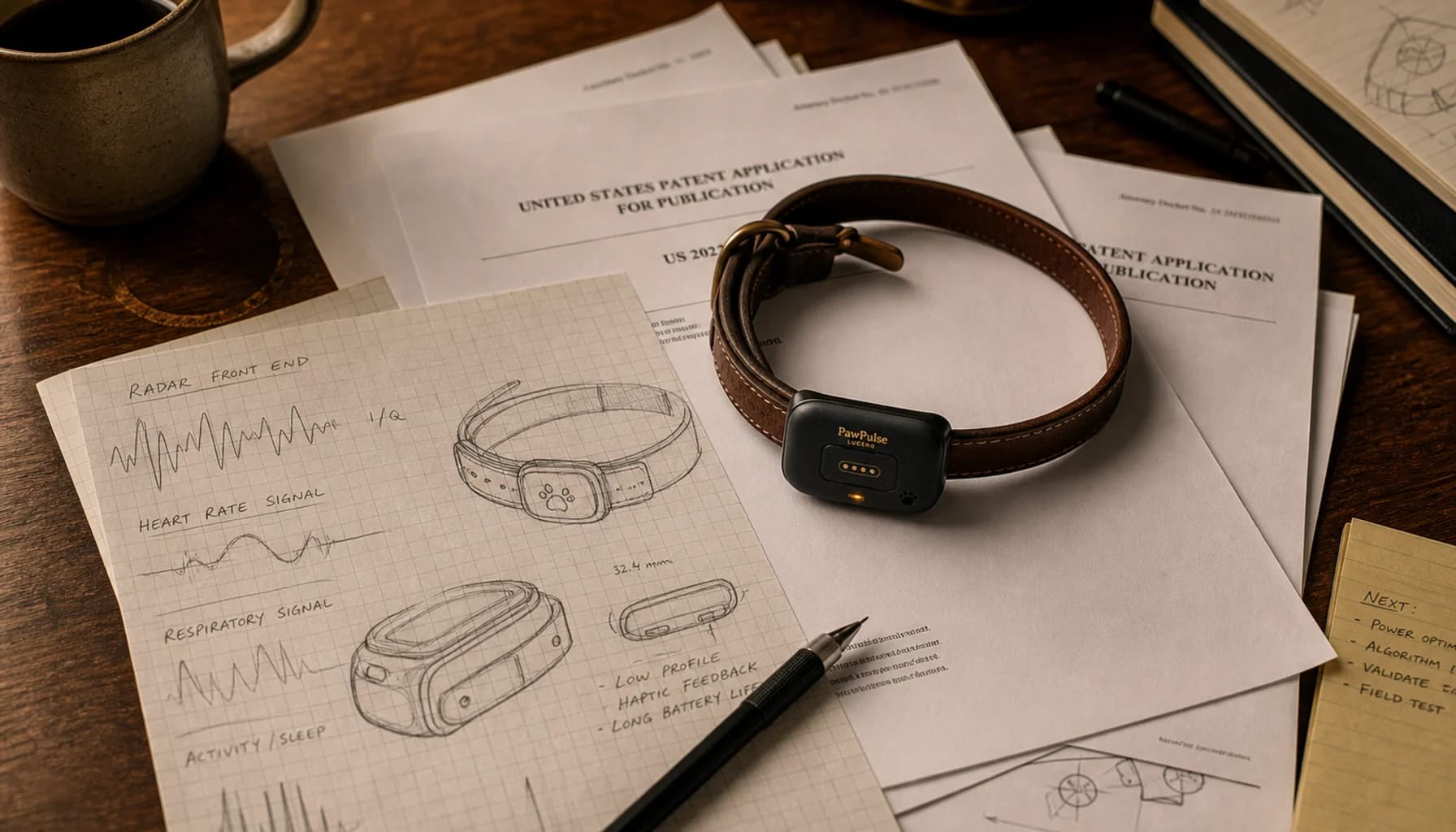
Key takeaway: Most pet wearable companies claim "health monitoring" without publishing accuracy data, leaving owners and veterinarians to take the claims on faith. PawPulse is committed to publishing sensor accuracy benchmarks and contributing to peer-reviewed validation research, because trust in the data is the foundation everything else sits on.
"Heart Rate Monitoring" Is Easy to Claim. Accuracy Data Is Hard to Show.
Visit any smart collar product page and you'll find the feature listed: heart rate monitoring. Activity tracking. Sleep analysis. Health insights. The checkboxes are checked, the marketing copy is polished, and the feature comparison chart puts a satisfying green checkmark in every row.
What you almost never find: how accurate is this sensor? On which breeds? In what conditions? Compared to what reference standard? At what consistency rate?
This isn't a niche concern. If a health monitoring collar says your dog's heart rate is 85 BPM but the actual rate is 110, that's not useful data. It's noise that looks like data, which is arguably worse than no data at all because it creates false confidence.
The pet wearable industry has a transparency problem. And we think it's one of the biggest barriers to veterinary adoption, owner trust, and the category reaching its potential.
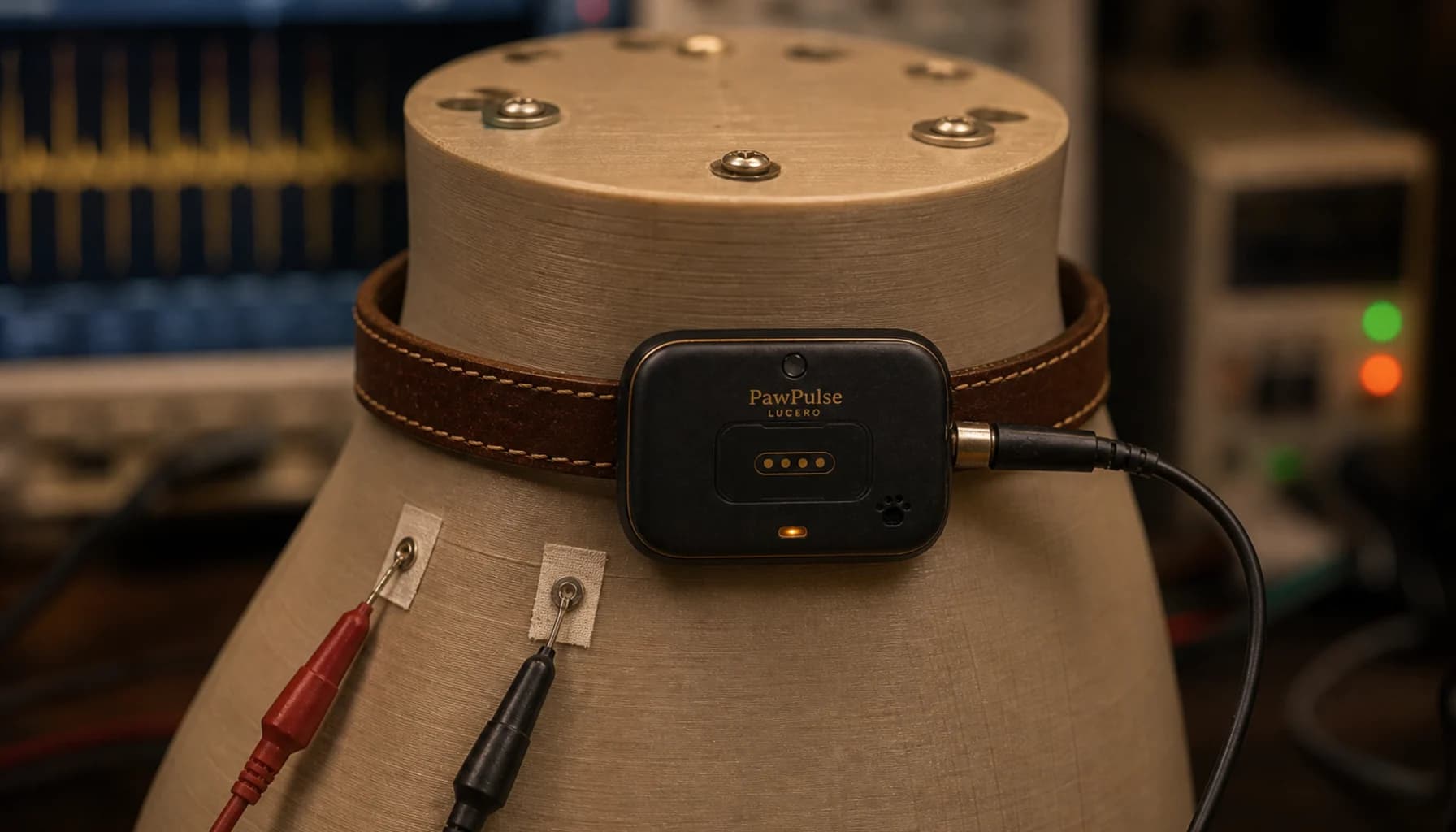
Why Most Companies Don't Share Accuracy Data
The reasons range from understandable to cynical.
Some haven't validated formally. Startups move fast. Getting a product to market often takes priority over conducting controlled accuracy studies. The sensor "works" in internal testing, but controlled validation against professional-grade reference equipment (ECG, clinical respiratory monitors) is expensive, time-consuming, and can produce results that require going back to the drawing board.
Some can't afford the results. A published study by PMC on FitBark validation found that the device correlated well with step counts during off-leash activity but showed low correlation during leash walking. That's an honest and useful finding, but it also limits marketing claims. Some companies would rather not have the data than have data that constrains what they can say.
Some are using sensors that don't work reliably. As we've explained in our deep dive on radar sensing that works on every coat, PPG optical sensors fail on the majority of furred breeds. Publishing accuracy data for a PPG-based collar would reveal the fundamental limitation, so the data stays unpublished.
The Result: Nobody Knows What to Trust
Without published accuracy data, pet owners can't make informed comparisons. Veterinarians can't evaluate whether the data is clinically useful. And the entire category gets treated with the same skepticism, regardless of whether a particular product has genuinely solved the sensing challenge or not.
What Transparency Actually Looks Like
We believe sensor accuracy transparency in pet wearables should include, at minimum:
| Metric | What Should Be Published |
|---|
| Heart rate accuracy | Mean absolute error (MAE) vs clinical reference (ECG) across breed types |
| Respiratory rate accuracy | MAE vs clinical reference across activity states |
| HRV accuracy | Correlation coefficient vs Holter monitor reference |
| Coat-type performance | Accuracy broken down by short, medium, long, and double-coated breeds |
| Activity state performance | Accuracy during rest, walking, running, and post-exercise |
| Environmental conditions | Performance in varied temperature, humidity, and lighting |
| Cat-specific validation | All metrics tested separately on feline subjects |
| Dropout rate | Percentage of measurement windows where no reading was obtained |
This is the standard we're holding ourselves to. As PawPulse moves toward market, we plan to publish accuracy benchmarks across these dimensions, including the breeds where performance is strongest and any conditions where it's weaker.
Honest data builds trust. Cherry-picked data builds marketing decks that collapse under scrutiny.
Why This Matters for Veterinary Adoption
As we covered in our post on what your vet wishes you would bring to every appointment, one of the primary barriers to vet adoption is data quality skepticism. Veterinarians have seen consumer wearable data and found it unreliable. Publishing accuracy benchmarks is the single most important step toward earning veterinary trust.
A study from the American Journal of Veterinary Research (AVMA) found that commercially available wearable monitors in dogs showed strong correlation only during longer monitoring durations, and accuracy varied with activity type. This kind of published, peer-reviewed data is exactly what the category needs more of.
Veterinarians don't need perfection. They need to know the boundaries. A collar that publishes specific accuracy numbers for different breeds, coat types, and activity states gives a vet enough information to know when to trust the data and when to verify with in-clinic measurement. A collar that says "heart rate monitoring" and provides nothing else gives the vet nothing to work with.

The Radar Advantage in Accuracy
PawPulse's choice to use millimeter-wave radar instead of PPG optical sensors was driven specifically by accuracy requirements. As a review published in Animals (MDPI) on remote vital sensing in veterinary medicine documented, traditional PPG sensors face significant challenges with fur interference, motion artifacts, and contact pressure variability.
Radar sidesteps these issues by measuring chest wall micro-displacement rather than light absorption. It works reliably across fur, fabric, and surface contaminants that would otherwise block optical light, which eliminates the primary failure modes that degrade PPG accuracy on furred animals.
This doesn't mean radar is perfect in all conditions. Every sensor technology has limitations, and we intend to publish those alongside the strengths. What radar provides is a fundamentally more reliable sensing principle for furred animals, which gives us a stronger foundation for the accuracy benchmarks we plan to share.
Our Commitment
Here's what we're committing to publicly:
We will publish sensor accuracy data before asking veterinarians to rely on it. This means controlled validation against clinical reference standards, across multiple breeds, coat types, and activity states.
We will share both strengths and limitations. If radar accuracy drops in a specific condition (extreme motion, certain positioning, edge cases), we'll document and publish that alongside the conditions where accuracy is highest.
We will contribute to peer-reviewed research. Internal benchmarks matter, but independent validation in published journals is the gold standard. We're committed to participating in studies that evaluate PawPulse's accuracy alongside established clinical instruments.
We will update our data as the product evolves. Sensor accuracy isn't static. Firmware updates, algorithm improvements, and hardware revisions change performance. We plan to maintain current, published accuracy data as the product matures.
What You Can Do as a Consumer
If you're evaluating any pet wearable, not just PawPulse, ask for the accuracy data. Specifically:
"What's your heart rate accuracy compared to a clinical reference?" If they can't answer with a number, that's an answer in itself.
"Does it work through fur on all breeds?" If the answer involves caveats, the sensor technology may not be appropriate for your pet.
"Where can I read your validation study?" If there isn't one, the accuracy claims are unverified.
"What's your data dropout rate?" A sensor that produces readings 60% of the time isn't a health monitor. It's a partially functional prototype.
These questions aren't adversarial. They're the same questions any veterinarian would ask before recommending a device to their patients. The companies that can answer them are the ones worth considering.
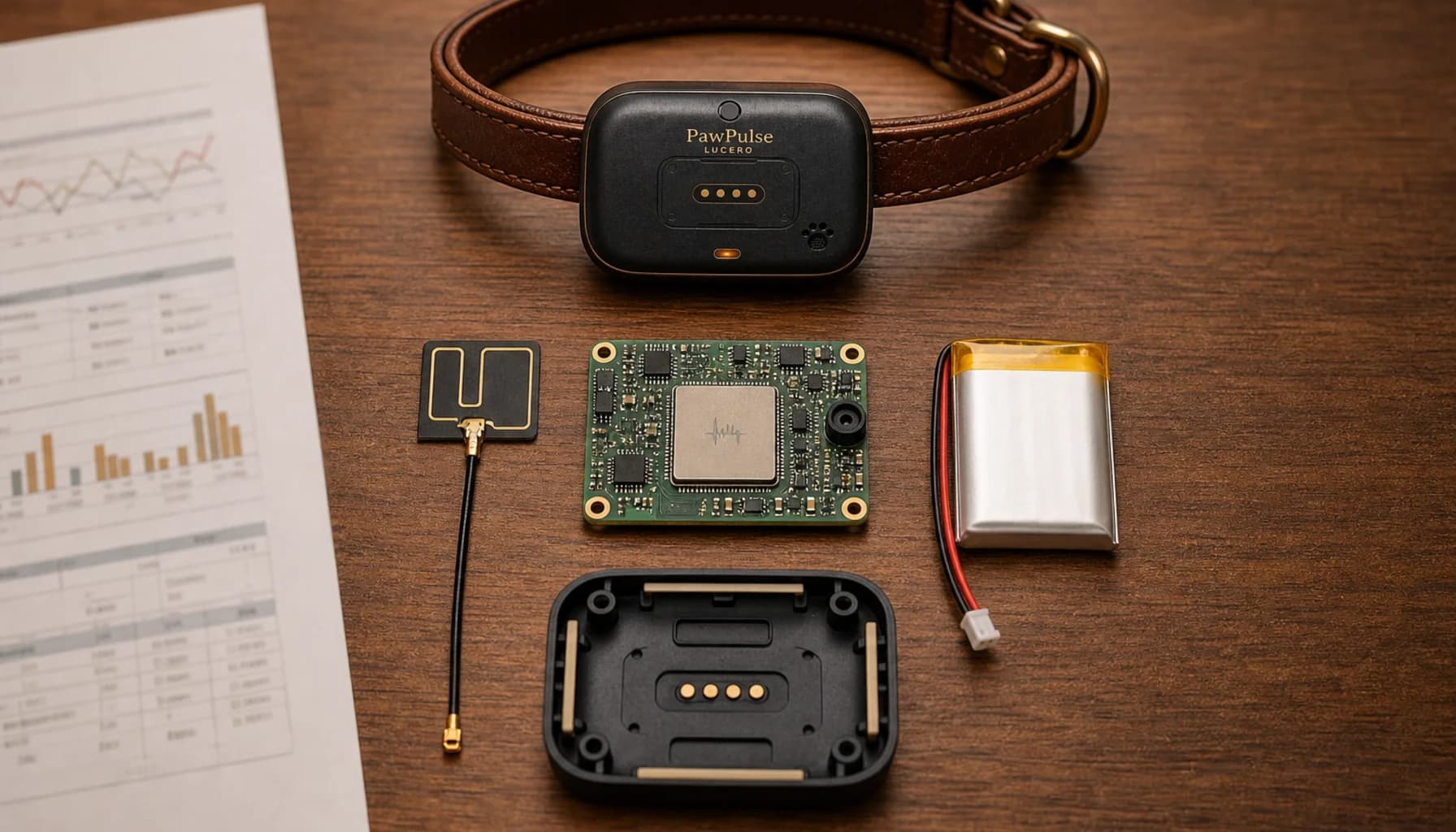
We designed PawPulse knowing that veterinarians, researchers, and discerning pet owners would scrutinize the data. The Lucero collar uses radar specifically because it provides the sensing reliability needed to survive that scrutiny across breeds, coat types, and real-world conditions.
We're not asking anyone to take our accuracy claims on faith. We're committed to showing the work.
Frequently Asked Questions
Do most pet wearable companies publish accuracy data?
No. The majority of consumer pet wearables list "heart rate monitoring" or "health tracking" as features without publishing sensor accuracy benchmarks, controlled validation results, or peer-reviewed studies. This makes it difficult for owners and veterinarians to evaluate the reliability of the data these devices produce.
Why does sensor accuracy matter for pet health monitoring?
Inaccurate data creates false confidence. If a collar reports a normal heart rate when the actual rate is elevated, the owner assumes everything is fine and the opportunity for early intervention is missed. Accurate data is the foundation for reliable baselines, meaningful trend detection, and vet-ready clinical reports.
What accuracy standards does PawPulse plan to meet?
We're committed to publishing accuracy benchmarks for heart rate, respiratory rate, and HRV compared against clinical reference standards (ECG, Holter monitors, clinical respiratory monitoring). Testing will span multiple breed types, coat densities, and activity states. We plan to contribute to peer-reviewed validation studies.
Why does PawPulse use radar instead of PPG?
PPG optical sensors fail on the majority of furred breeds because fur blocks the light signal. Published research documents low accuracy on medium and long-coated dogs and cats. Radar transmits electromagnetic waves that reach the skin regardless of coat density, providing a fundamentally more reliable sensing principle for companion animals.
Will PawPulse share data on sensor limitations?
Yes. We plan to publish both strengths and limitations of the radar sensor across different conditions. Honest documentation of where accuracy is highest and where it's more limited builds trust with veterinarians and helps owners understand what the data can and can't tell them.
How can I evaluate a pet wearable's accuracy claims?
Ask for specific numbers: heart rate MAE versus clinical reference, accuracy by breed/coat type, data dropout rate, and any published validation studies. If a company can't answer these questions with data, their accuracy claims are unverified. A peer-reviewed study is the strongest evidence; marketing copy is the weakest.
Learn more about PawPulse Lucero, the smart dog collar built on a radar sensing stack with sensor specifications we plan to publish openly as validation completes.
Related reading: 25+ patents and what we are protecting and how AI learns your dog's normal so it can spot abnormal.
-- The PawPulse Team