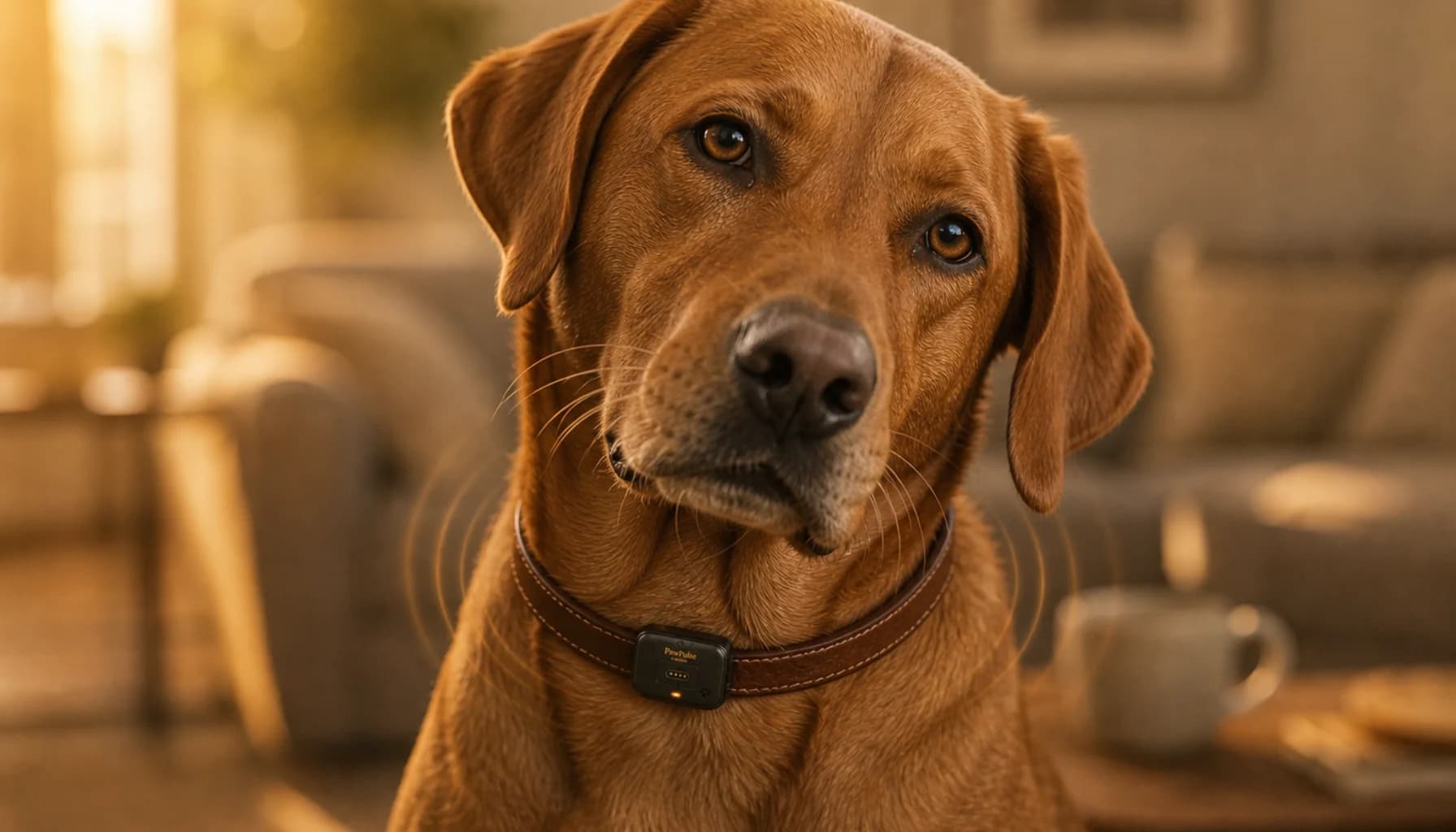
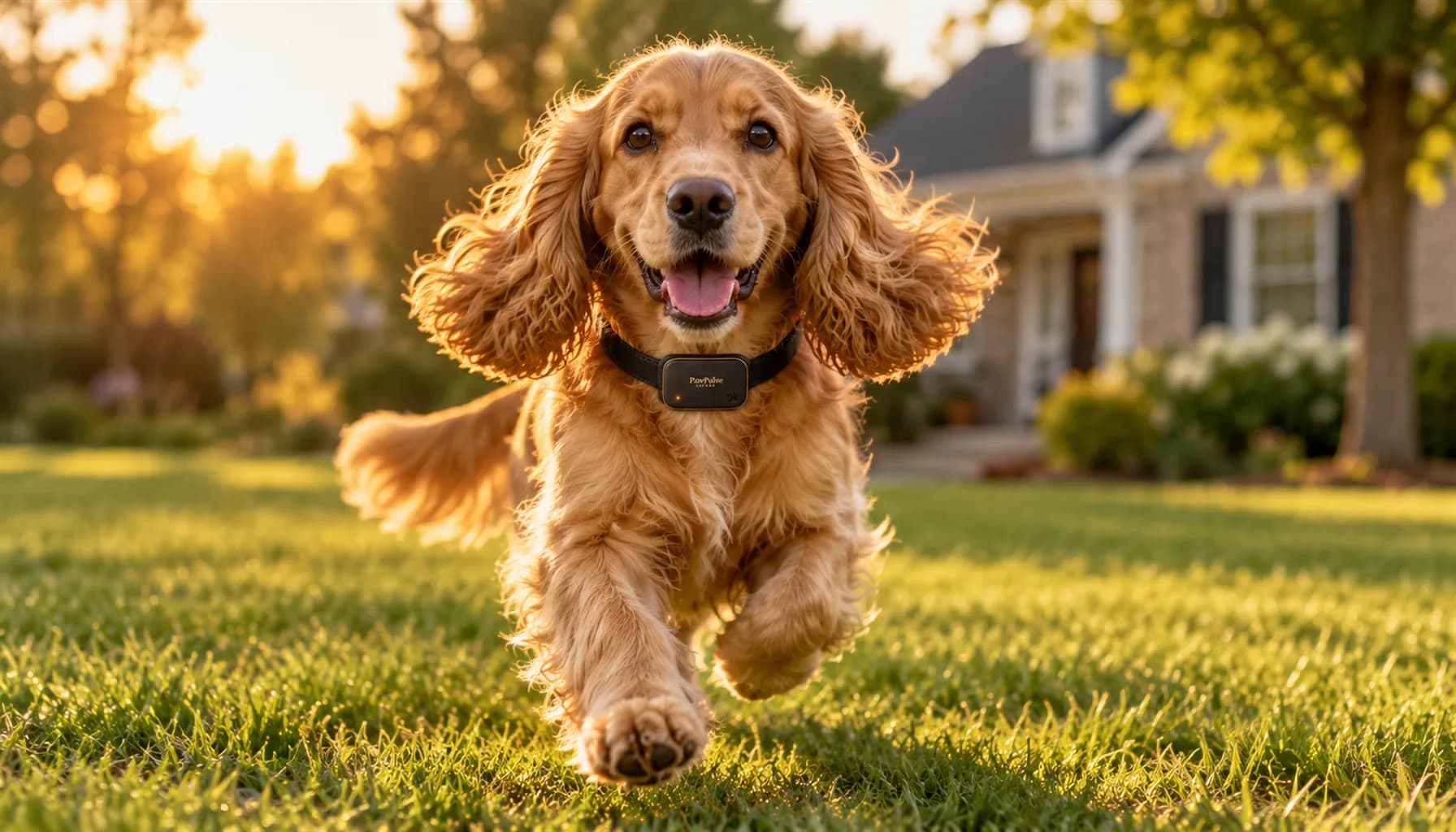
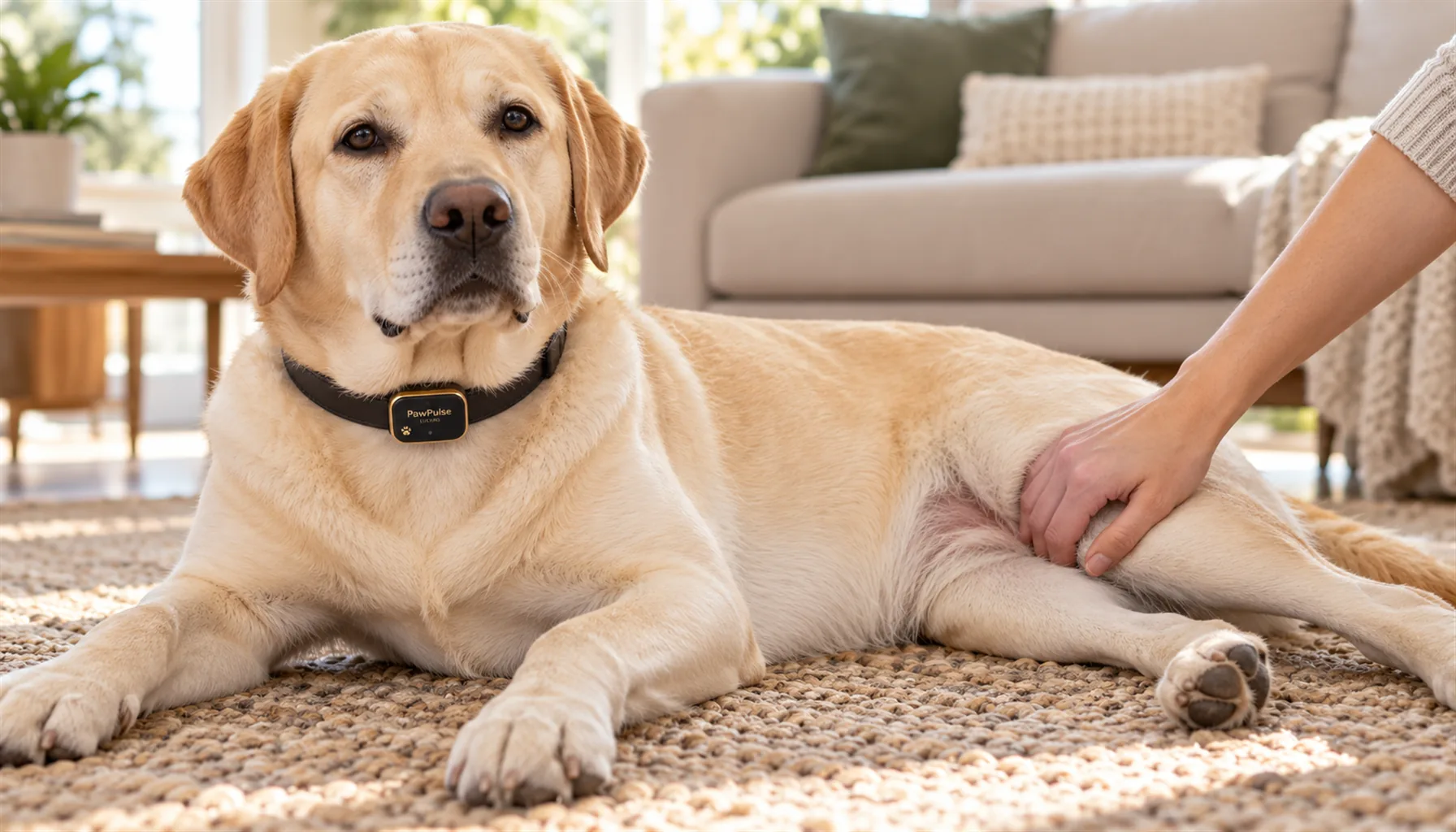
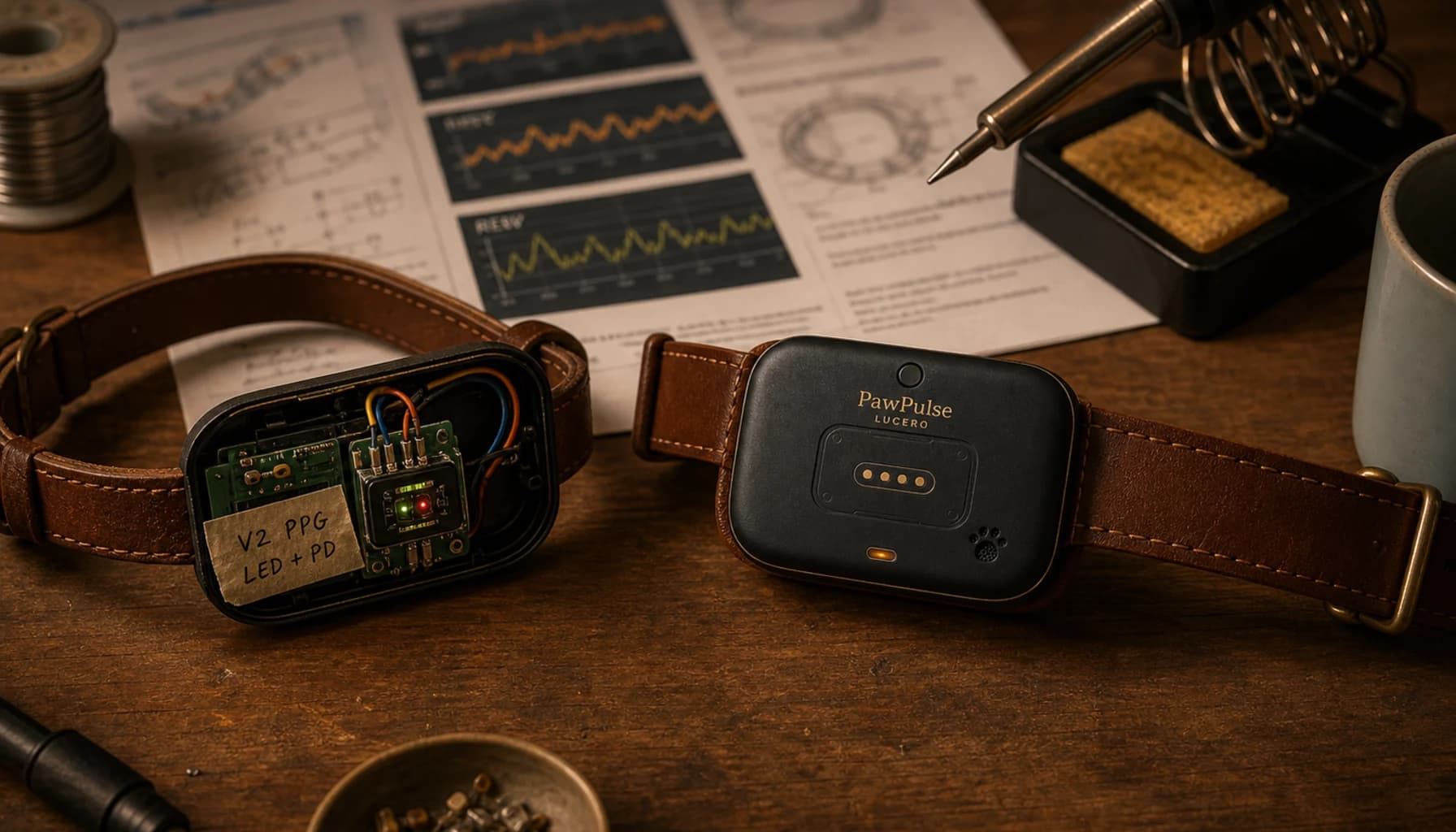
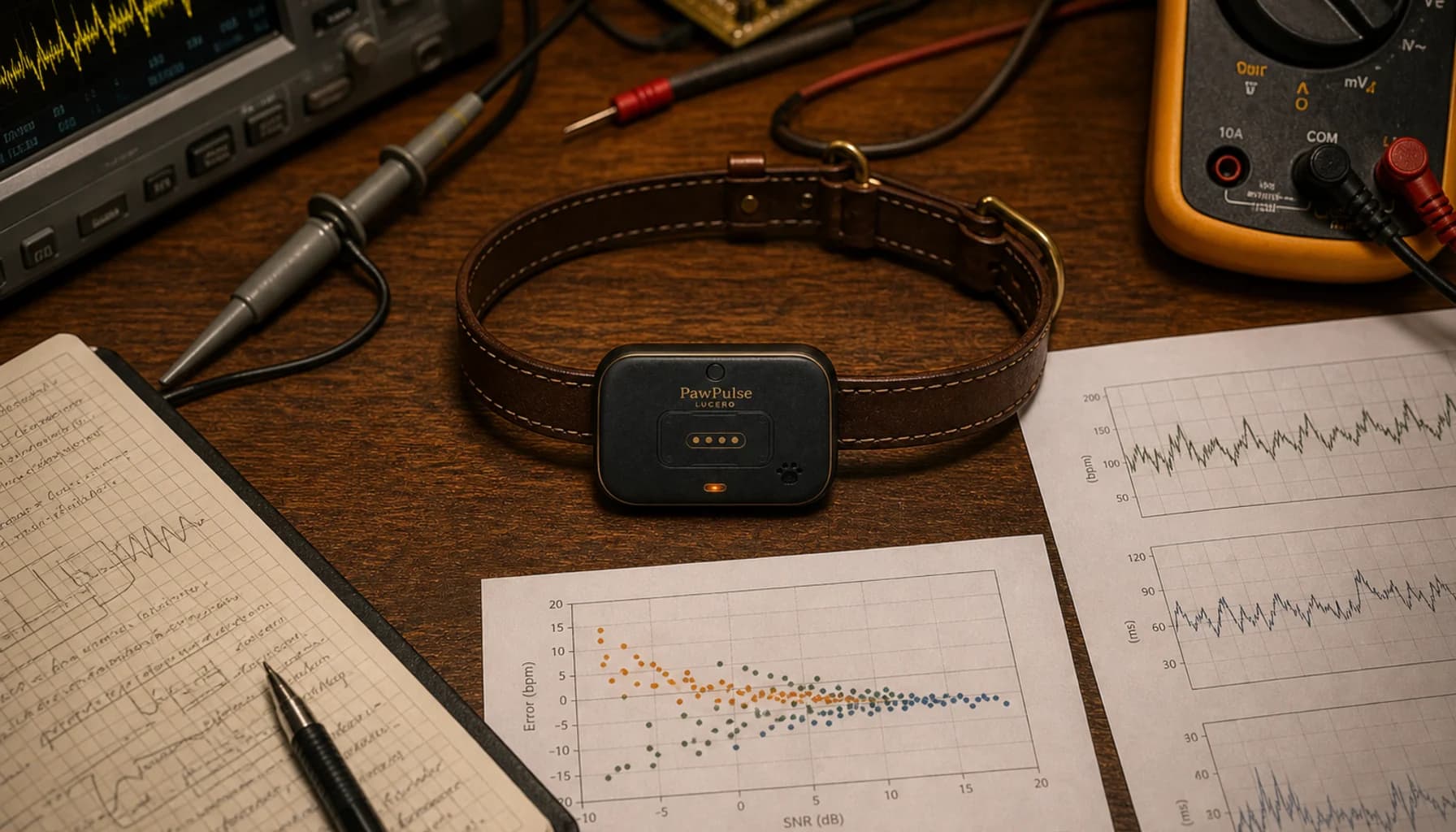
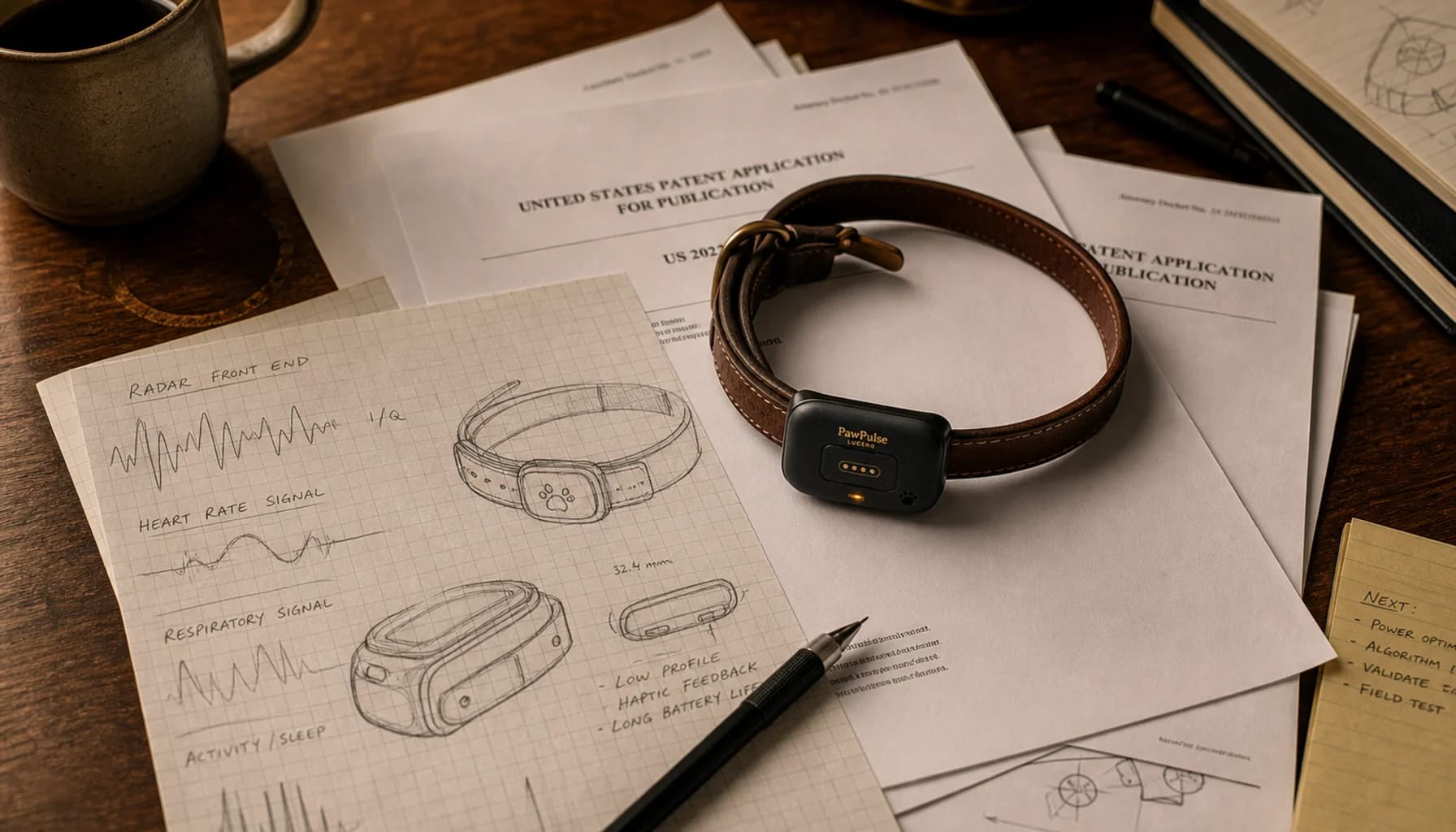
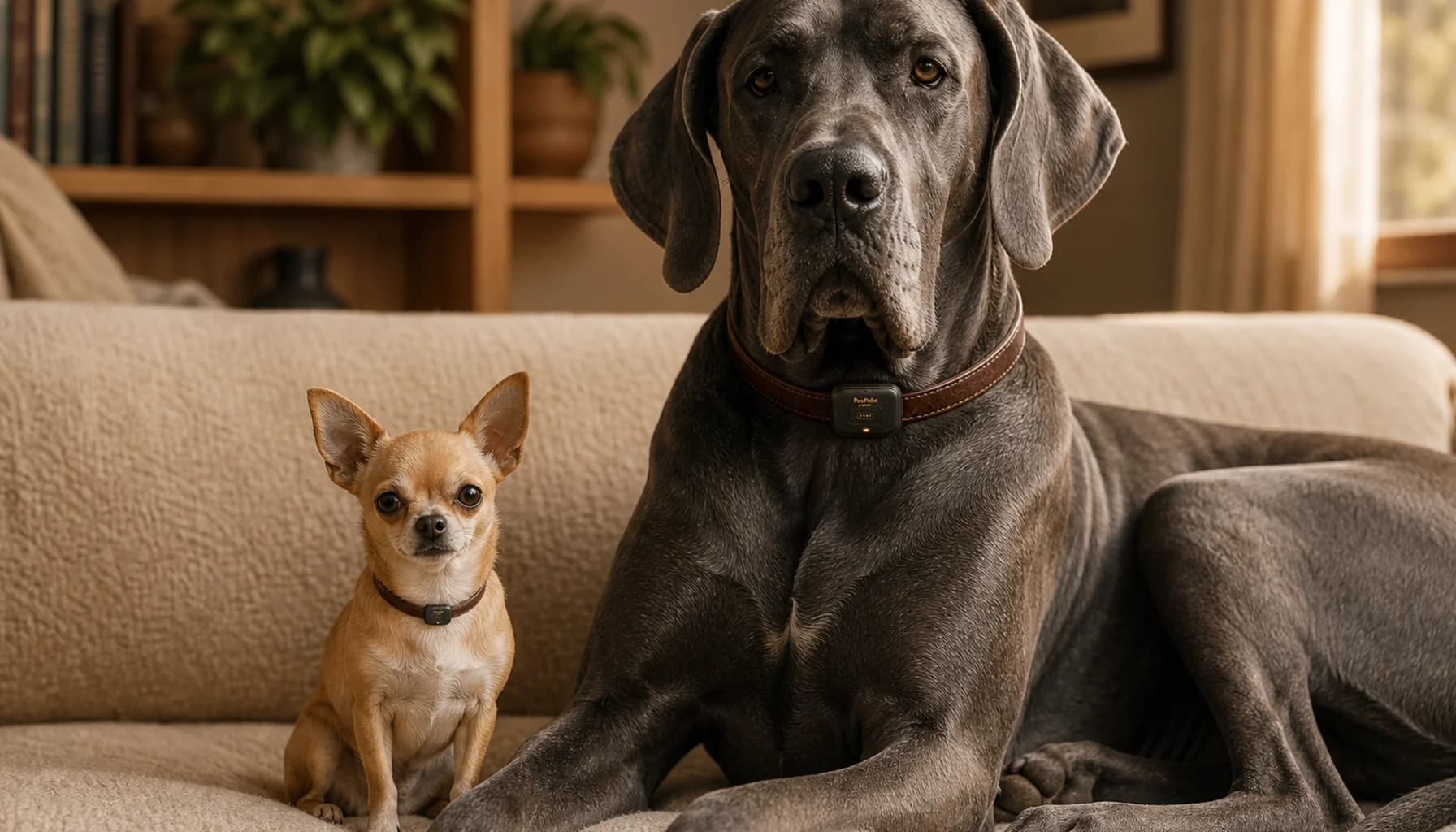
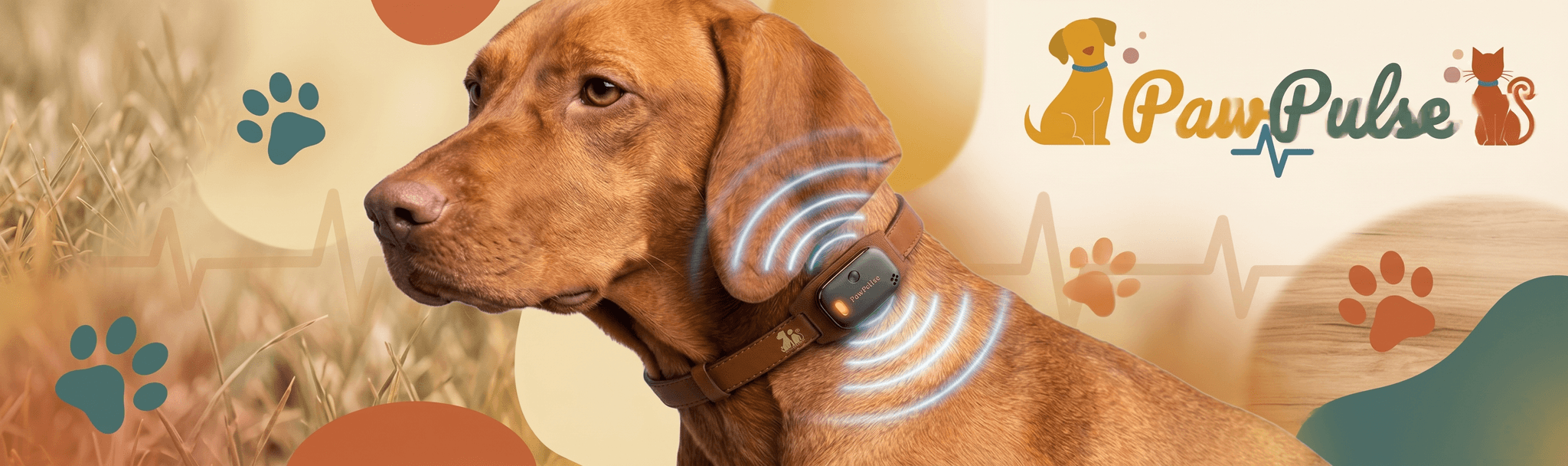
Key takeaway: Haptic calming uses rhythmic vibration to create a conditioned calming response in dogs and cats through classical conditioning - the same learning mechanism Pavlov demonstrated over a century ago. PawPulse's Pulse Rhythm pairs precise haptic patterns with positive reinforcement over a 14-day protocol, building an association between the vibration and a calm state that the collar can then trigger automatically during anxiety events.
Your Dog Can't Meditate. But They Can Be Conditioned to Calm Down.
When you're anxious, you have options. You can take a breath. Go for a walk. Call a friend. Put on music. Eat something you probably shouldn't. Your brain has a toolbox for self-regulation, and you've spent decades learning how to use it.
Your dog has none of that. When anxiety hits - separation, a thunderstorm, an unfamiliar environment, a trip to the vet - their nervous system goes from zero to panic with nothing in between. There's no cognitive override, no rational self-talk, no breathing exercise. There's just the stress response, and it runs until the stressor goes away or the dog exhausts itself.
That's not a training failure. It's a biological limitation. Dogs don't have the prefrontal cortex wiring that lets humans consciously regulate their emotional state.
But they do have something else: an extraordinary capacity for associative learning. And that's the door that haptic calming walks through.
What Is Haptic Calming (and Why Vibration)?
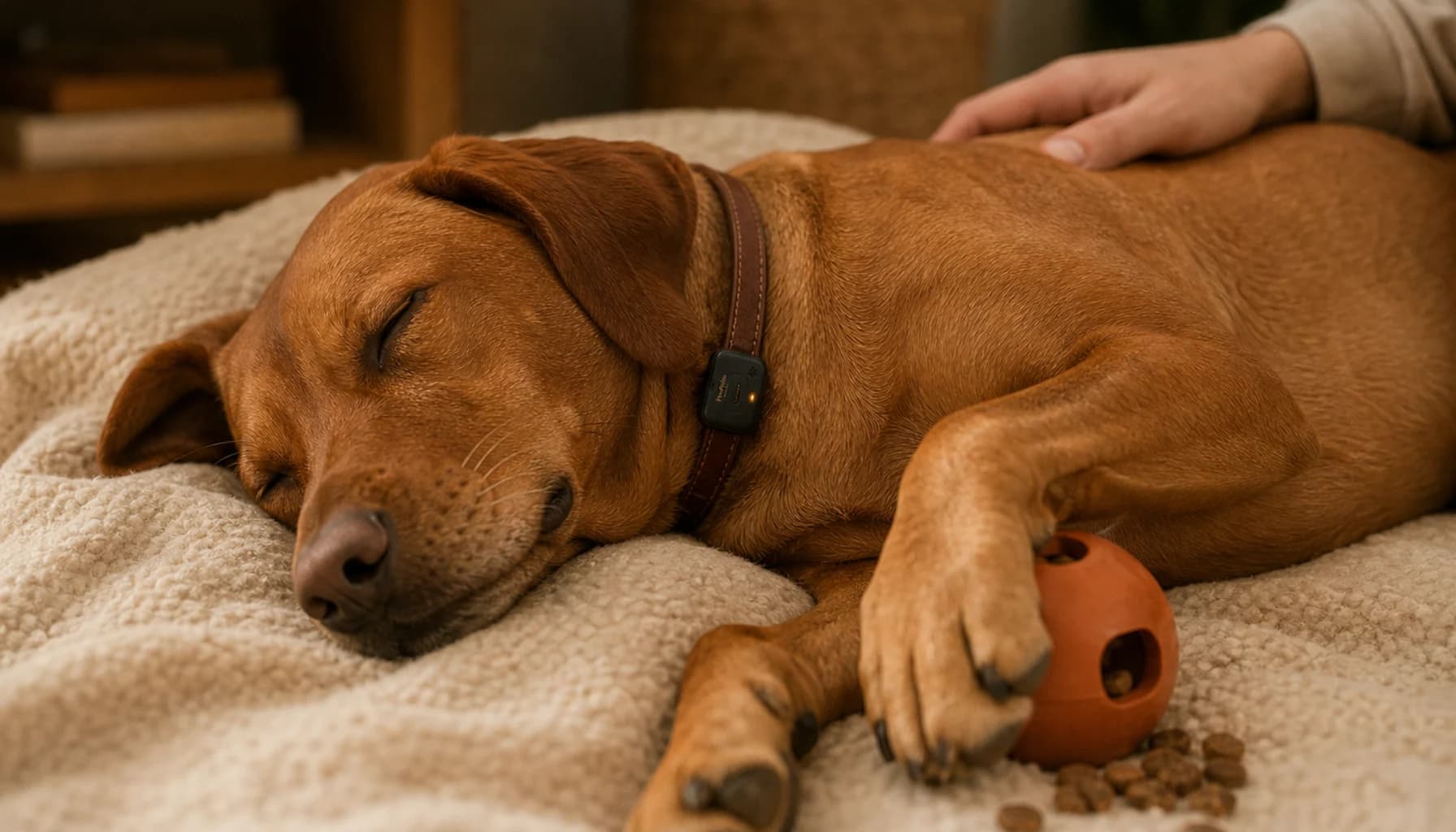
Haptic calming refers to any approach that uses touch or tactile stimulation to influence a physiological or emotional state. In humans, this includes everything from massage therapy to weighted blankets to the deep pressure vests used in autism care. The common thread: the nervous system responds to consistent, predictable tactile input by shifting toward a calmer state. Research published in Acta Psychologica (ScienceDirect) demonstrated that rhythmic haptic vibration reduced both self-reported anxiety and electrodermal arousal in human subjects, confirming that vibrotactile stimulation engages the calming branch of the autonomic nervous system.
The science behind this is well-established. Temple Grandin's pioneering research on deep pressure therapy demonstrated that consistent, even pressure reduces cortisol levels and increases serotonin and dopamine production. A study published in the Journal of Veterinary Behavior found that dogs wearing pressure wraps showed reduced heart rate increases compared to control groups during anxiety-inducing scenarios. A separate study on deep pressure vests found that the vests correlated with increased urine oxytocin levels - suggesting a connection between tactile pressure and the body's own bonding and calming chemistry.
For dogs, tactile therapies have historically been passive: a ThunderShirt applies constant pressure, a weighted blanket sits on the dog, a calming bed provides a nest-like enclosure. These can help, but they share a limitation: they don't adapt, they don't learn, and they can't activate themselves when you're not home.
Pulse Rhythm takes a fundamentally different approach. Instead of passive pressure, it uses active, precisely patterned vibration - and pairs it with classical conditioning to create a learned calming response that the collar can trigger on demand.
The 130-Year-Old Science That Makes This Work
Pavlov's Dogs, Revisited
In the 1890s, Ivan Pavlov discovered that dogs could learn to associate a neutral stimulus (a bell) with a meaningful one (food), eventually responding to the bell alone with salivation. This is classical conditioning, and it remains one of the most reliable learning mechanisms in behavioral science.
The American Veterinary Society of Animal Behavior (AVSAB) confirms that counterconditioning - using classical conditioning to replace a negative emotional response with a positive one - is one of the most effective approaches for anxiety-related behaviors in dogs. A pilot study published in PMC on classical counterconditioning in kenneled dogs demonstrated measurable reductions in stress-related barking after just 10 days of consistent stimulus pairing.
Pulse Rhythm applies this principle directly. The vibration pattern is the neutral stimulus. Positive experiences (treats, praise, safety) are the meaningful stimulus. Through repeated pairing, the dog's nervous system learns: vibration = calm. Once that association is established, the vibration alone can shift the dog's emotional state.
This isn't metaphor. It's the same mechanism that makes your dog excited when they hear you open the treat drawer, or anxious when they hear you pick up your car keys. Classical conditioning runs on autopilot. It doesn't require the dog to "decide" to calm down. The association does the work.
Why Vibration Is Better Than Sound
You might ask: why not use a sound instead of vibration? A few reasons. Sound is ambient - it competes with environmental noise, it can be drowned out by thunder or fireworks, and it reaches both ears equally regardless of whether the dog is wearing the collar. Vibration is direct, body-contact stimulation that the dog feels through the collar regardless of ambient noise. It's also private - it doesn't disturb other animals or people in the household. And critically, it can be precisely controlled in frequency, amplitude, and pattern in ways that sound cannot.
Three Modes, Three Anxiety Profiles
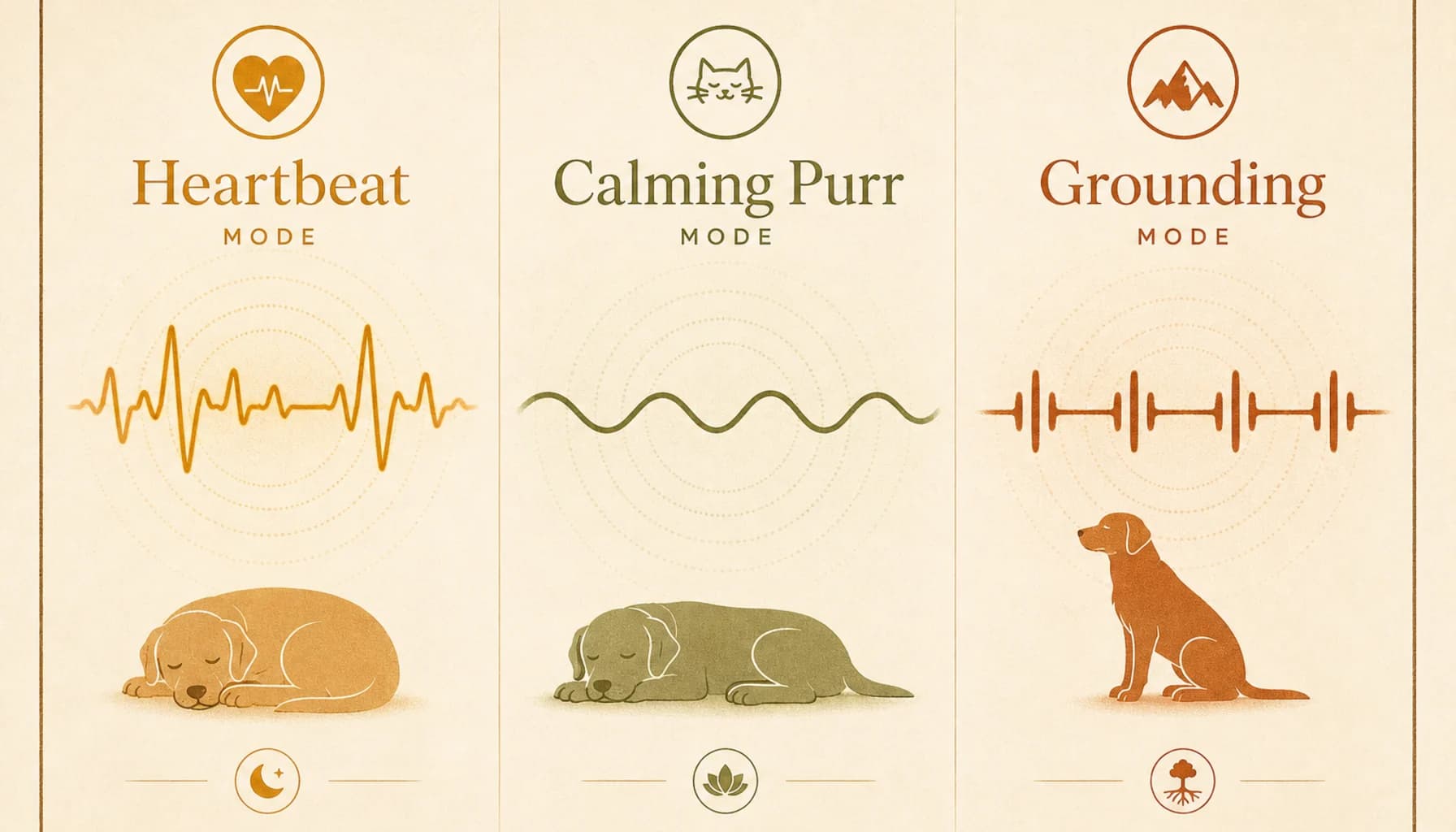
Not all anxiety is the same, and a one-size-fits-all vibration pattern wouldn't address the range of stress states dogs experience. Pulse Rhythm offers three distinct haptic modes, each designed for a specific anxiety profile.
| Mode | Pattern | Best For | How It Works |
|---|
| Heartbeat | 60 BPM rhythmic pulse | Separation anxiety | Mimics a resting heartbeat rhythm. The dog associates the pulse with the safety and proximity of a companion. Star of the conditioning protocol. |
| Calming Purr | Gentle continuous vibration | General day-to-day anxiety | A steady, low-amplitude vibration similar to the tactile experience of being near a purring cat or a calm breathing body. Background calming. |
| Grounding | Deep, firm pulses | Acute startle (thunderstorms, fireworks) | Short, firm vibration pulses designed to interrupt a panic spiral. Provides a strong tactile anchor that redirects the dog's attention to a physical sensation. |
The collar can also run Smart Sequences that combine modes. The De-escalation sequence, for example, starts with 10 seconds of Grounding to break an acute panic spiral, then transitions to 290 seconds of Calming Purr to guide the dog back to baseline. Progressive Relaxation gradually decreases vibration intensity over time, encouraging the dog to self-regulate as the external stimulus fades.
The 14-Day Conditioning Protocol
Pulse Rhythm doesn't work on day one. That's by design. Classical conditioning requires repeated pairing before the association becomes reliable. Rushing it produces a weak response that doesn't hold under real stress. The 14-day protocol is structured to build a durable, automatic calming response.
Days 1-3: Association building. Your dog wears the collar and experiences short Heartbeat Mode sessions paired with treats and positive reinforcement. The goal is simple: vibration happens, good things follow. The dog begins forming the connection.
Days 4-7: Deepening. Sessions get longer. Treat rewards gradually transition to verbal praise and petting. The association between vibration and calm strengthens. By the end of this phase, the auto-calm feature unlocks - the collar can now activate Heartbeat Mode without your manual input.
Days 8-13: Generalization. The vibration is used in different contexts - different rooms, during mild distractions, during brief owner departures. This phase teaches the dog that the calming association holds across environments, not just in the living room where training started.
Day 14: Graduation. Your dog responds to the vibration with calm, settled behavior without any external reward. The conditioned response is established.
After graduation, the collar can auto-activate Heartbeat Mode when PawPulse's radar-based biometric monitoring picks up patterns consistent with rising anxiety - elevated heart rate, increased restlessness, rapid breathing. The detection-to-intervention loop closes: the collar surfaces the stress and responds to it, all while you're away.
How This Differs From Everything Else on the Market
The pet calming market is crowded. Pressure wraps, CBD chews, pheromone diffusers, calming playlists, weighted blankets. Some of these have supporting evidence. Most provide passive, undifferentiated stimulation that doesn't adapt to your dog's state and can't activate when you're not there.
| Feature | Pressure Wraps | CBD/Supplements | Pheromone Diffusers | Pulse Rhythm |
|---|
| Adapts to dog's state | No | No | No | Yes (biometric-triggered) |
| Works when owner is away | Only if pre-applied | Only if pre-dosed | Yes (ambient) | Yes (auto-activates) |
| Builds conditioned response | No | No | No | Yes (14-day protocol) |
| Multiple anxiety profiles | No | No | No | Yes (3 modes + sequences) |
| Drug-free | Yes | Varies | Yes | Yes |
| Backed by conditioning science | Partial (deep pressure) | No | Partial (pheromone) | Yes (classical conditioning) |
The key differentiator isn't just that Pulse Rhythm vibrates. It's that it learns your dog through PawPulse's continuous monitoring, knows when to activate, uses a scientifically structured conditioning protocol to build a real association, and delivers the right pattern for the right type of stress.
Does It Work on Cats?
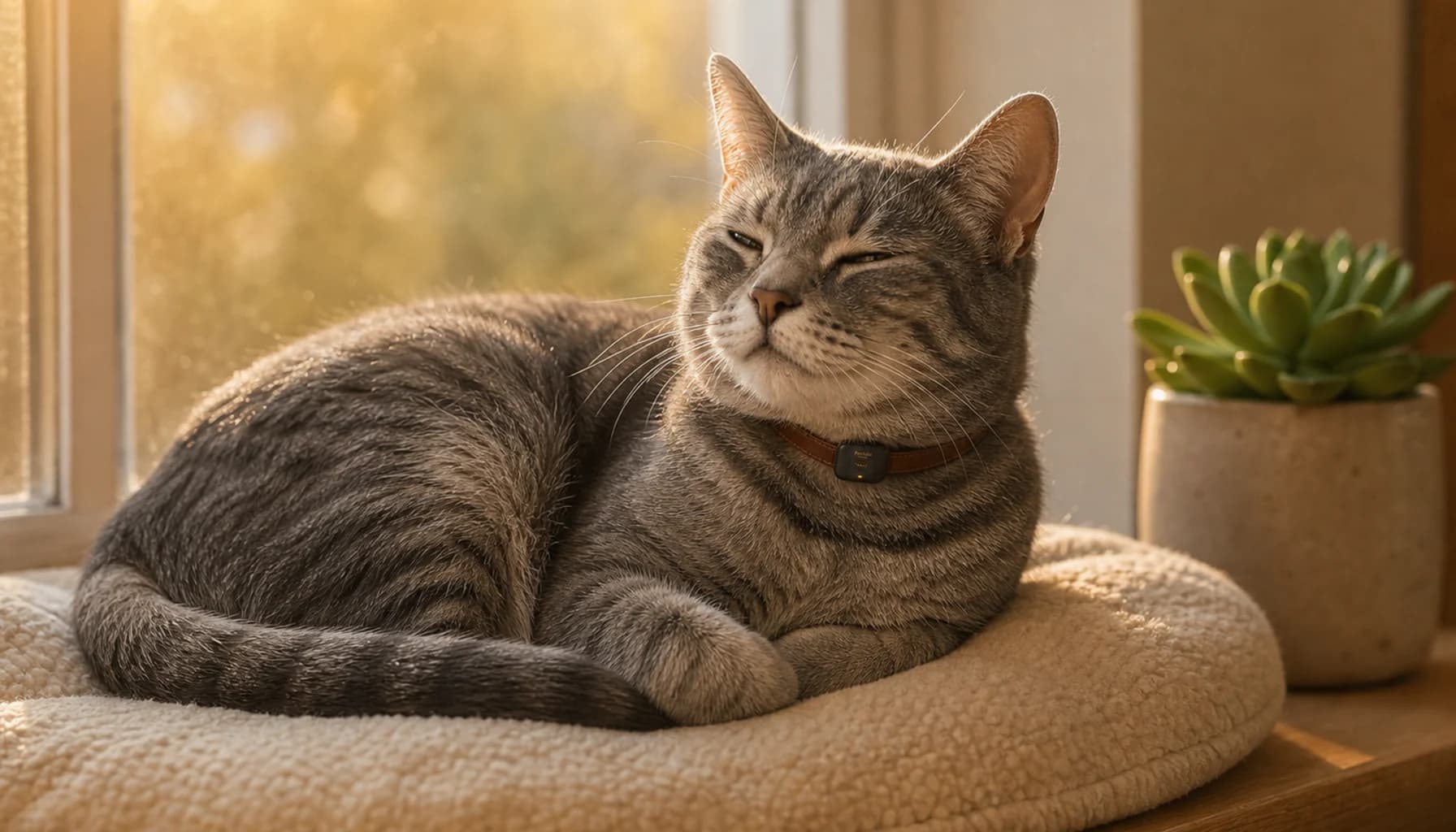
Yes. Cats are equally capable of classical conditioning (despite their reputation for ignoring everything you do). Feline anxiety - particularly stress-related conditions like idiopathic cystitis and over-grooming - follows the same sympathetic nervous system pathways that Pulse Rhythm targets. The collar's vibration patterns work through the same tactile pathways in cats as in dogs, and the 14-day conditioning protocol applies identically.
The main practical advantage for cats: unlike a ThunderShirt that most cats will wrestle off in under 30 seconds, PawPulse's slim collar form factor is tolerated by cats who won't accept body wraps.
What the Research Still Needs
We want to be transparent: haptic vibration calming for pets is an emerging field. The classical conditioning principles are well-established across a century of behavioral science. Deep pressure therapy has published veterinary evidence. But large-scale, controlled studies specifically on vibration-based conditioning for canine and feline anxiety are still limited. We're actively collecting data from early PawPulse users to contribute to this evidence base.
What we can say: the behavioral science is sound, the conditioning protocol follows established principles, and the early results from our testing are encouraging. We'll share data as it matures.
Frequently Asked Questions
How does haptic calming differ from a ThunderShirt?
A ThunderShirt applies passive, constant pressure to the dog's torso. Pulse Rhythm delivers active, precisely patterned vibration through the collar and pairs it with a 14-day classical conditioning protocol to build a learned calming response. The key difference is that Pulse Rhythm creates a conditioned association that can be triggered automatically by the collar, while a ThunderShirt must be manually applied before each anxiety event.
Is haptic vibration calming safe for dogs and cats?
Yes. The vibration patterns used in Pulse Rhythm are gentle, low-amplitude haptic stimulations - similar in intensity to a phone vibration. They produce no heat, no electrical stimulation, and no pain. The 14-day conditioning protocol is built entirely on positive reinforcement. If a dog or cat shows any discomfort, the vibration can be paused or adjusted through the app.
How long does it take for Pulse Rhythm to work?
The conditioning protocol takes 14 days to establish a reliable calming response. Days 1-7 build the association between vibration and calm. Days 8-13 generalize the response across different environments. By Day 14, the dog responds to the vibration with settled behavior without external rewards. After graduation, the collar can auto-activate during anxiety events.
Can Pulse Rhythm replace anxiety medication?
Pulse Rhythm is designed as a drug-free complementary tool, not a replacement for veterinary-prescribed medication. Some pet owners may find that conditioning-based calming reduces the need for medication over time, but any changes to a medication protocol should be discussed with your veterinarian. PawPulse's Vet Dashboard allows your vet to review your pet's biometric trends alongside any therapy or medication changes.
What triggers Pulse Rhythm to auto-activate?
After the 14-day conditioning protocol is complete, PawPulse's radar-based monitoring tracks your pet's heart rate, respiratory rate, and restlessness patterns. When the biometric data suggests rising anxiety - for example, elevated heart rate and increased movement shortly after you leave - the collar activates the appropriate Pulse Rhythm mode automatically. You receive a notification that a session was triggered.
Does the vibration bother other animals in the household?
No. The haptic vibration is delivered through direct collar contact and is not audible or perceptible to other animals nearby. Unlike sound-based calming tools, Pulse Rhythm is private to the animal wearing the collar.
Learn more about PawPulse Lucero and built-in Pulse Rhythm, the haptic conditioning protocol that keeps dogs calm in the moments they need it most.
Related reading: drug-free calming support for separation anxiety, how chronic stress affects your dog's body, and how AI is helping us understand dogs' emotions.
-- The PawPulse Team