Key takeaway: If you are asking why is my dog panting at night when the room is cool and there was no recent exercise, the usual causes are pain, anxiety, age-related cognitive change, or a medical problem such as heart disease or Cushing's disease. Cornell lists excessive panting even at rest as a sign of pain in dogs. Panting that keeps your dog from settling deserves a vet visit.
Is It Normal for a Dog to Pant at Night?
Sometimes. Panting is how dogs cool down. VCA Animal Hospitals (2025) lists heat among the ordinary reasons dogs pant, along with excitement and stress. So a dog that has just come in from a late walk, is lying next to a heater, or is sleeping under a pile of blankets may pant for a while, and that is normal.
What is not normal is panting that starts without a reason you can see. A dog that pants hard in a cool, quiet room at 2 in the morning, cannot settle, and does it again the next night is telling you something. The job at home is not to work out what. It is to notice the pattern, write it down, and get it to your vet.
We are the team behind PawPulse, a smart dog collar with contactless heart rate and breathing monitoring. Night breathing is one of the questions we hear most from owners, especially owners of older dogs. This guide is owner education, not veterinary advice. Only a veterinarian can find the cause of your dog's panting.
How Much Panting Is Normal for a Dog?
There is no single number for panting, because panting is a fast, shallow breathing pattern rather than a rate you can easily count. The more useful test is whether it settles. Panting after play or warmth should ease as your dog rests and cools off. VCA Animal Hospitals (2024) lists excessive panting with lethargy and distress as a sign of heatstroke and says labored breathing needs veterinary care as soon as possible, so panting that does not settle with rest, or gets worse, is a reason to call.
For a sleeping dog, you can count. Healthy adult dogs breathe slowly in calm sleep, and veterinary sources treat a sleeping rate that is consistently above 30 breaths per minute as abnormal. Our guide to counting your dog's sleeping respiratory rate explains how, and our dog vital signs chart puts that number next to heart rate, gum color and temperature.
What Can Cause a Dog to Pant at Night?
This table is a list of possibilities your vet may consider, not a way to diagnose your dog at home. Several of these can happen at once, especially in older dogs.
| Possible cause | What owners often notice | Worth writing down | Source |
|---|
| A warm room or recent exercise | Panting that eases within a short rest once the dog cools off | Room temperature, bedding, time since the walk | VCA 2025 |
| Pain, including arthritis | Panting at rest, restlessness, trouble getting comfortable, slow to rise | Stiffness, limping, reluctance on stairs, licking one spot | Cornell 2025 |
| Anxiety or fear | Panting with a trigger such as noise, visitors or being left alone | What happened just before, and whether it stops when the trigger ends | VCA 2025 |
| Age-related cognitive change | Sleeping in the day, restless or pacing at night, seeming lost at home | Time of night, wandering, confusion, house-training lapses | AAHA 2023 |
| Heart disease | Panting at rest, tiring easily on walks, sometimes a cough | Sleeping breathing rate, cough, stamina on walks | VCA (heart failure) |
| Cushing's disease (hyperadrenocorticism) | Panting at rest in a middle-aged or older dog | Age, thirst, appetite, energy, and whether panting happens at rest | Merck 2024; O'Neill et al. 2016 |
| Heatstroke | Heavy panting that does not ease, with weakness, vomiting or collapse | Do not wait to log; go to a vet | VCA 2024 |
Why Is My Dog Panting When It Is Not Hot?
If the room is cool and your dog has not been active, heat is unlikely to be the whole story. The causes below are the ones veterinary sources raise most often.
Pain. The Cornell University College of Veterinary Medicine guide to recognizing pain in dogs (updated 2025) lists "excessive panting even at rest" as a sign of pain, along with pacing or an inability to settle, and dogs that sleep more or cannot get comfortable trying to sleep. Night is when many owners first notice it, because the house is quiet and the dog is supposed to be still.
Anxiety. VCA Animal Hospitals (2025) lists panting among the signs of stress, and says panting without recent exercise or heat may point to stress. Fear-related panting usually has a trigger you can find and fades once the trigger is gone. Panting that has no trigger and does not fade points elsewhere.
Heart and hormone problems. VCA Animal Hospitals lists an increased resting respiratory rate or excessive panting among the signs of heart failure, along with coughing at rest or when sleeping and tiring out more easily on walks. The Merck Veterinary Manual (2024) lists panting among the most common signs of Cushing syndrome in dogs, a condition of excess cortisol that usually affects middle-aged and older animals. Both need a veterinary workup; neither can be confirmed at home.
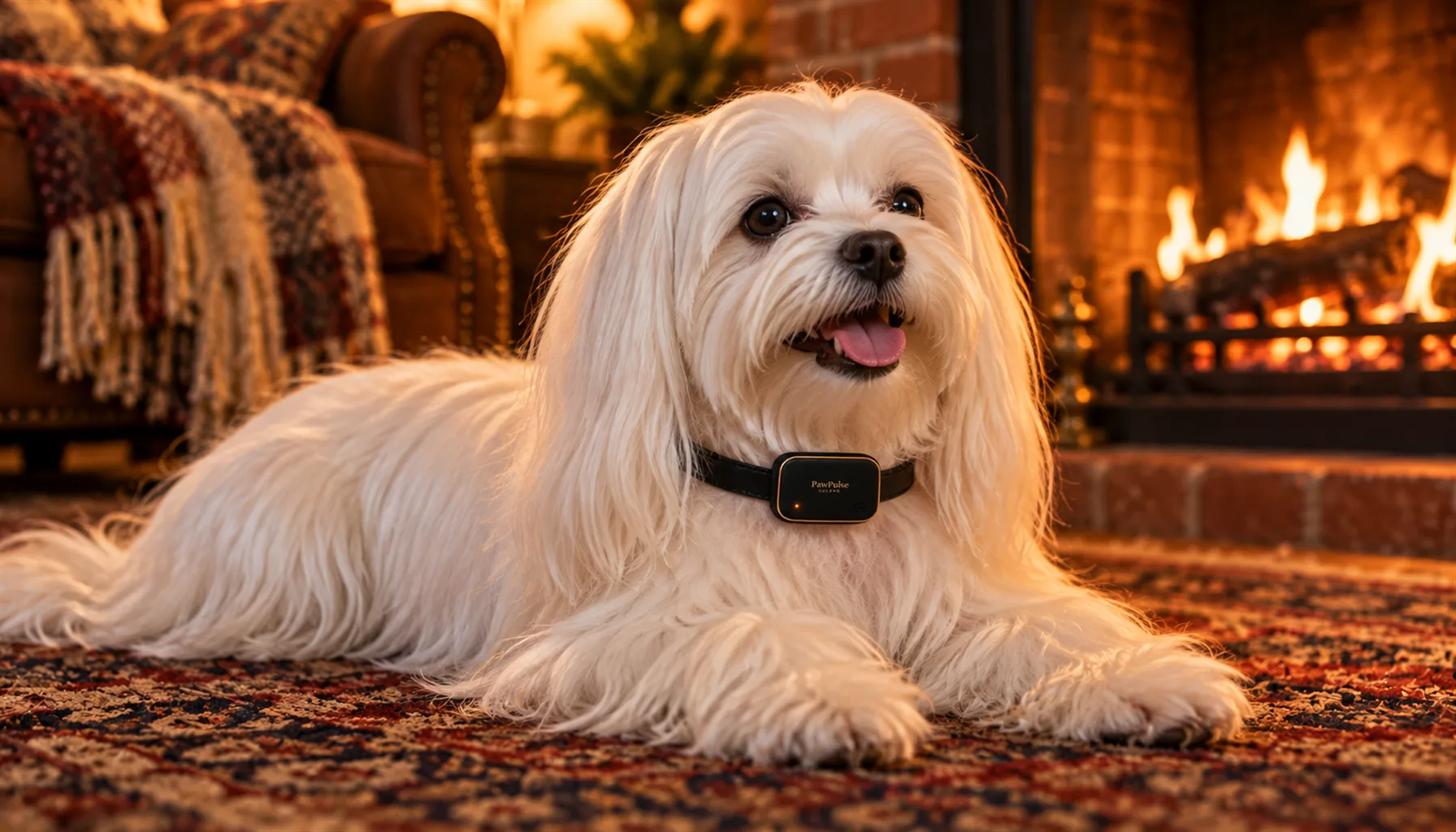
Can Dog Panting Be a Sign of Pain?
Yes. Cornell lists excessive panting even at rest as a possible pain sign, and arthritis is a common source of pain in older dogs. Pain at night is also hard to see in other ways, which is why owner observations matter.
A study from North Carolina State University shows how subtle this can be. In PeerJ (Knazovicky et al., 2015), researchers studied client-owned dogs with painful osteoarthritis. When the dogs received pain treatment instead of a placebo, owners reported better night-time sleep quality on a structured questionnaire, but collar-mounted accelerometers showed no significant change in night-time movement. In other words, the improvement was in things owners noticed rather than in how much the dogs moved. The study did not include a comparison group of dogs without arthritis, and part of it was funded by Boehringer Ingelheim, a maker of veterinary pain medicines; the authors state the funders had no role in the design or analysis.
The takeaway for owners is not to treat anything at home. It is that your own observations of restless, uncomfortable nights are real evidence, and worth bringing to your vet.
Why Is My Old Dog Panting at Night?
Older dogs collect more of the causes above at once: arthritis, heart changes, hormone problems and cognitive change are all more common with age. Our guide to when a dog becomes a senior covers the other signs worth watching.
Cushing's disease is one example of an age-linked cause. A VetCompass study of 210,824 dogs at UK primary-care practices, published in the Journal of Small Animal Practice (O'Neill et al., Royal Veterinary College, 2016), estimated that 0.28% of dogs were diagnosed with it, and dogs aged 12 and over had 5.7 times the odds of diagnosis compared with dogs aged 6 to 8.9. It is not common overall, but it becomes more likely with age.
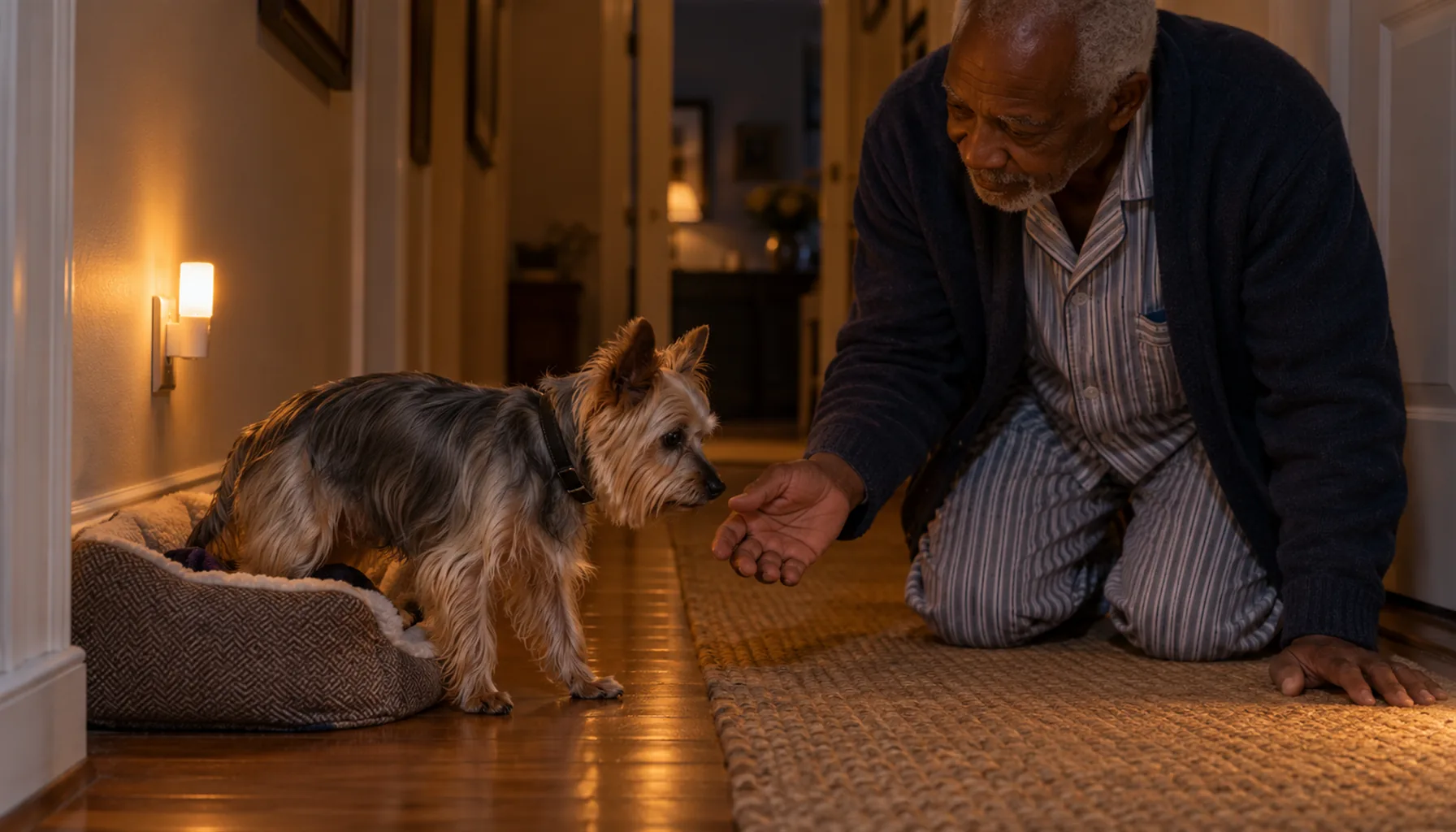
Why Is My Dog Panting and Pacing at Night?
Panting together with pacing points toward discomfort or distress rather than heat. Cornell lists pacing or an inability to settle as a pain sign. The 2023 AAHA Senior Care Guidelines list daytime sleeping and nighttime restlessness among the most common signs of canine cognitive dysfunction in dogs, and they use a dog "panting and pacing all night" as an example of a problem that wears out the whole household and may need attention first.
Research on cognitive decline backs up the timing many owners describe. A 2026 survey of 205 owners of dogs aged 8 and over, published in The Veterinary Journal (Taylor, Tuke and Hazel, University of Adelaide), found that dogs with more severe cognitive impairment slept less at night and more during the day, and more than half of the dogs were most unsettled between 2 and 5 in the morning.
Pacing and panting can come from pain, cognitive change or both, which is why the next step is a vet visit rather than a guess.
What to Write Down Before You Call the Vet
Your notes can be the most useful part of the appointment, because night panting rarely happens on an exam table. For a few nights, record:
- When it starts and how long it lasts, and what time your dog finally settles.
- The room: temperature, heating, bedding, and whether a window or door was open.
- What happened before: a late walk, a meal, a visitor, fireworks, a new medication.
- Other signs: pacing, whining, licking a joint, coughing, drinking more, toileting at night, seeming lost.
- A sleeping breathing count once your dog does settle, counted over a full minute.
- A short video of the panting and of how your dog moves when it gets up.
Cornell suggests the same thing for suspected pain: photos, videos or notes before the visit, because anxiety at the clinic can hide pain behaviors.

When Is Dog Panting an Emergency?
When in doubt, call. These lines draw on VCA's emergency guide and Cornell's list of distress signs above, and are deliberately conservative.
Go to a vet now, or an emergency clinic if yours is closed, if your dog:
- has pale or blue gums, or gums or tongue turning dark red, blue or purple
- collapses, cannot stand, is gasping, or is having difficulty breathing
- is panting heavily after heat exposure and also vomiting, has diarrhea, is wobbly, trembling or having a seizure
- keeps panting hard and cannot settle even after rest in a cool, quiet room
Call your vet soon if:
- your dog pants at rest in a cool room on more than one night
- panting comes with pacing, restlessness or trouble getting comfortable
- your dog is drinking more, tiring more easily on walks, or has started coughing
- your dog's sleeping breathing rate stays above 30 breaths per minute on repeat counts
Our post on dog breathing fast while sleeping covers the related question of fast breathing during dreams.
Where PawPulse Lucero Fits
The hardest thing about night panting is that it happens while you are asleep. You notice it once, wonder whether it happened the night before, and have no way to know.
That is part of why we built PawPulse Lucero. It is designed to measure heart rate and breathing through fur without touching the skin (Kinetic sensing), along with rest and activity, so you can see whether restless, fast-breathing nights are new, occasional or becoming the pattern. PawPulse Lucero does not identify the cause of panting and is not a medical device. It gives you trends and context to share with your vet, who still needs to examine your dog.
Frequently Asked Questions
Why is my dog panting at night when it is not hot?
If the room is cool and your dog has not been active, panting may reflect pain, anxiety, age-related cognitive change, or a medical problem such as heart disease or Cushing's disease. Cornell lists excessive panting at rest as a pain sign. Note when it happens and what else you see, then talk to your vet.
Can dog panting be a sign of pain?
Yes. Cornell lists excessive panting even at rest as a possible sign of pain, along with restlessness and altered sleeping patterns. Arthritis is a common cause in older dogs. Do not give pain medicine without your vet; bring notes and a short video of the panting to the appointment.
Why is my old dog panting at night?
Older dogs are more likely to have arthritis, heart changes, hormone problems such as Cushing's disease, or cognitive dysfunction, and any of these can disturb nights. AAHA lists nighttime restlessness among the most common signs of cognitive dysfunction. A senior dog that starts panting at night should see a vet.
Why is my dog panting and pacing at night?
Panting plus pacing usually points to discomfort or distress rather than heat. Cornell lists pacing and inability to settle as pain signs, and AAHA lists nighttime restlessness as a common sign of cognitive dysfunction in older dogs. A 2026 study found many affected dogs were most unsettled between 2 and 5 a.m.
How much panting is normal for a dog?
Panting after exercise, excitement or warmth is normal and should ease with rest, water and shade, as VCA's stress and emergency guides describe. Panting that starts without a clear reason, happens at rest in a cool room, or does not settle is not typical. For sleeping dogs, a count consistently above 30 breaths per minute is worth a vet call.
When is dog panting an emergency?
Go to a vet immediately if panting comes with pale, blue, dark red or purple gums or tongue, collapse, gasping, difficulty breathing, or vomiting, trembling or seizures after heat exposure. Panting that does not ease after rest in a cool, quiet room also needs prompt care. When in doubt, call your vet.
If you want to see how we read resting heart rate and breathing through fur and turn them into trends you can share with your vet, take a look at PawPulse Lucero.
-- The PawPulse Team