Key takeaway: Winter paw care for dogs comes down to three habits: wipe paws after every walk, use pet-friendly ice melt at home, and treat antifreeze as an emergency. Road salt dries and irritates paw pads and is harmful if licked off. Ethylene glycol antifreeze is deadly in small amounts; in a 2026 Canadian study, only a third of poisoned dogs survived to discharge.
Can Dogs Walk on Salted Sidewalks?
Yes, most dogs can, with a little care afterward. Salt is a nuisance far more often than an emergency.
In a Tufts Now Q&A (2018), Cummings School veterinarian Jonathan Babyak wrote that owners need not "stress too much" about salt and chemical deicers on paws. Licking a little off the feet usually causes, at most, an upset stomach. Eating a large amount is different: he notes that a dog that ate a bag of these products would need a trip to the veterinary ER.
So the realistic goal is not to avoid every salted sidewalk. It is to keep salt off the paws once you are home and keep the bag out of reach.
We are the team behind PawPulse, a smart dog collar with contactless heart rate and breathing monitoring, and most of us walk dogs through snowy winters. This guide covers what salt and ice melt do, a simple after-walk routine, ice balls between the toes, boots, and the one winter hazard that never waits: antifreeze. It is owner education, not veterinary advice.
What Do Salt and Ice Melt Do to a Dog's Paws?
VCA Animal Hospitals' ice melt guide describes rock salt and other salt-based deicers as "very drying" to paw pads and the delicate skin between the toes. VCA also says they are toxic if eaten directly off the ground or licked off the paws once your dog is inside, and warns that some deicers even contain ethylene glycol, the poisonous ingredient in many antifreezes.
That is why the after-walk wipe matters. It is not about how the salt feels on the street. It is about what your dog licks off later on the sofa.
Are Pet-Safe Ice Melts Really Safe?
They are safer, not harmless. VCA names potassium chloride, magnesium chloride and calcium magnesium acetate (CMA) as examples of pet-safer deicers. The ASPCA cold weather safety tips recommend pet-friendly ice melts whenever possible, but also warn that ice melts can be dangerous if ingested.
A "pet-safe" label is a reason to choose that product for your own steps and driveway. It is not a reason to let your dog eat it, and it tells you nothing about what your neighbors or the city spread. Store any bag where your dog cannot chew it open.
Why Do a Dog's Paws Not Freeze on Snow?
Dogs are surprisingly well built for cold ground. A Veterinary Dermatology study by Ninomiya and colleagues (2011) examined the blood vessels in dog footpads and found a vein-artery-vein arrangement that works as a counter-current heat exchanger: warm blood heading to the pad warms the cooler blood returning to the body, which helps limit heat loss. The authors note paws lose heat easily because they lack fur and have a high surface area for their volume.
That design helps, but it is not armor. Paws still crack, cut and get irritated by salt, and ice can pack between the toes.
How to Clean Dog Paws After Winter Walks
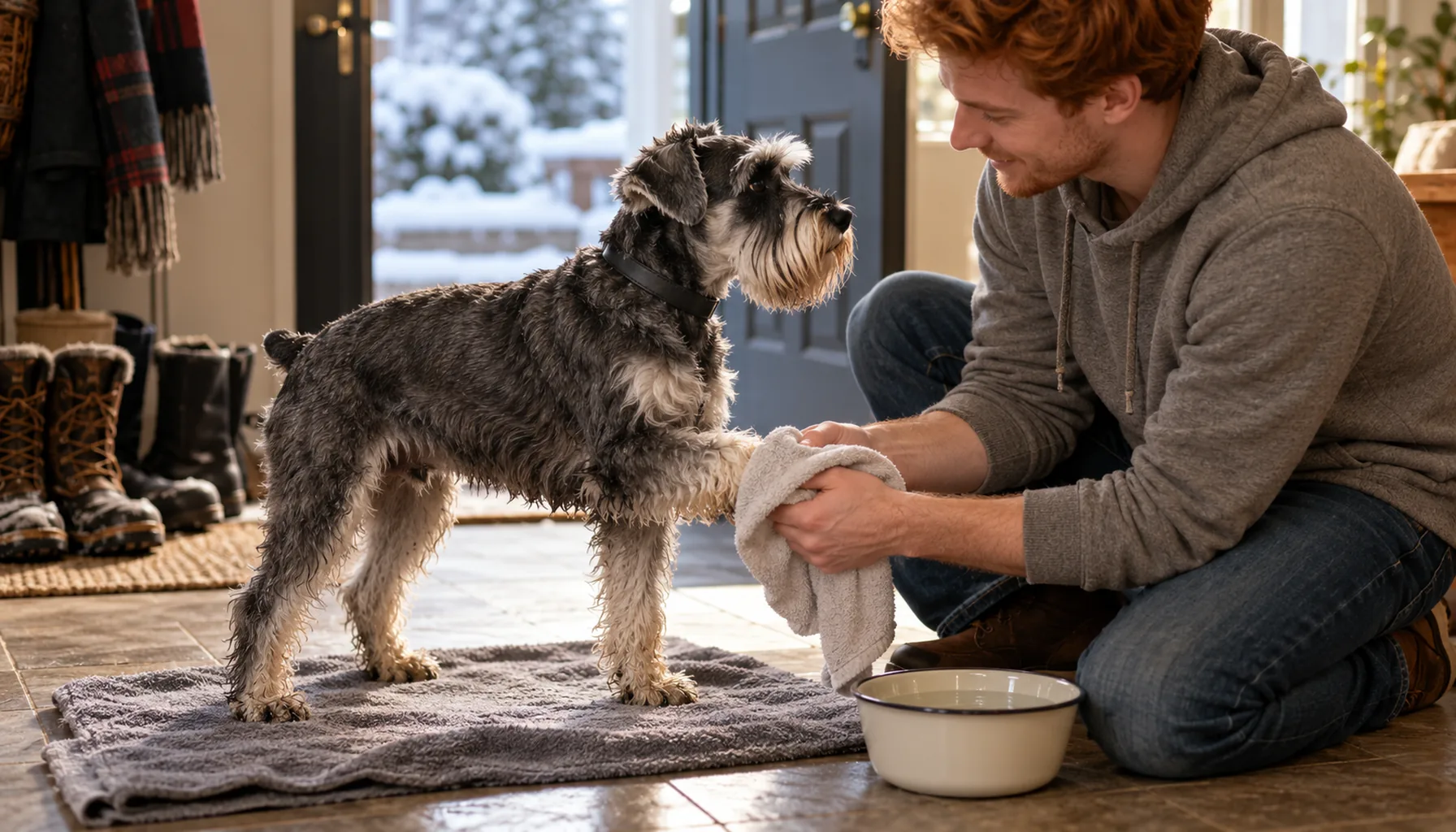
This routine uses only steps our sources recommend. It takes about two minutes.
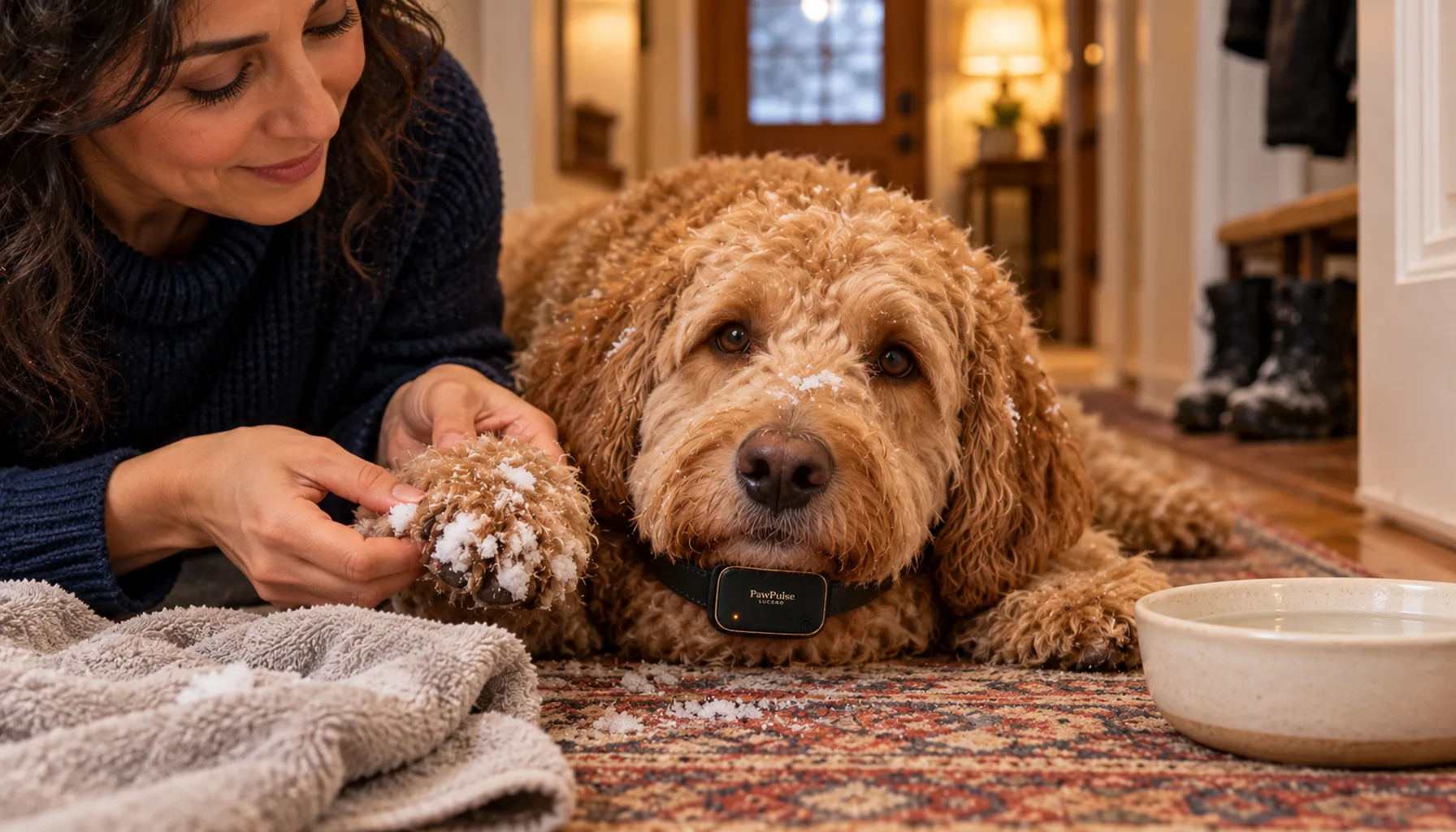
- Keep a towel and a bowl of lukewarm water by the door. ASPCA advises washing and drying your dog's feet after walks to remove ice and chemicals.
- Wipe every pad and between the toes. Tufts suggests a damp washcloth after each walk; VCA recommends washing or wiping paws to remove chemicals.
- Dry thoroughly, including the fur between the pads. ASPCA also advises towel-drying your dog as soon as they come inside.
- Look for cracks, cuts or redness. The Cornell Riney Canine Health Center notes that paws can get cracks or cuts from ice and salt on the roads.
- Consider a paw protectant before walks. ASPCA suggests petroleum jelly or another vet-approved paw protectant on the pads. Tufts notes petroleum jelly is nontoxic but recommends wiping it off afterward, since licking it can cause minor stomach upset.
- Store ice melt and antifreeze out of reach, and clean any spill right away.
How Do You Get Ice Balls Out of Dog Paws?
Long-haired and curly-coated dogs collect snow between their toes, and it packs into hard little balls. Tufts describes the tell: prancing in place, shifting weight from foot to foot, and biting at the cold bits between the toes.
Do not pull them out, which tugs the fur. Hold the paw in your hand or dip it in lukewarm water until the ice melts, then dry the paw well. Some owners keep the fur between the pads trimmed short through winter so less snow sticks; ask your groomer or vet whether that suits your dog.
Do Dogs Need Boots in Snow?
Some do. Tufts notes that some pets benefit from a jacket and even snow booties, and ASPCA lists booties as extra protection. They are most useful for dogs with sensitive or cracked pads, dogs that pick up ice balls, and long walks on heavily salted streets.
Expect an adjustment period. A small Frontiers in Veterinary Science study (Bieber et al., 2022) at the University of Veterinary Medicine Vienna walked and trotted five Labrador Retrievers over a pressure platform with and without boots. Wearing boots changed the forces and pressure patterns of their steps, most clearly when only one boot was worn. That does not make boots bad. It means fit matters, all four is more balanced than one, and a short practice indoors helps.
Winter Paw Care Checklist
| Hazard | What it does | What to do |
|---|
| Rock salt and salt-based deicers | Dries and irritates pads and skin between toes; harmful if licked off (VCA) | Wipe and dry paws after every walk |
| "Pet-safe" ice melt | Safer, but still dangerous if eaten (ASPCA) | Use at home; store the bag out of reach |
| A dog that ate ice melt | Large amounts need the ER (Tufts, 2018) | Call your vet or an animal poison control line now |
| Ice and snowballs between toes | Prancing, weight shifting, biting at feet (Tufts, 2018) | Melt with lukewarm water, never pull; dry well |
| Cracked or cut pads | Ice and salt can crack pads | Paw protectant, boots, vet check if sore or bleeding |
| Antifreeze (ethylene glycol) | Lethal to dogs (ASPCA) | Clean spills now; treat any lick or puddle as an emergency |
Why Is Antifreeze So Dangerous for Dogs?
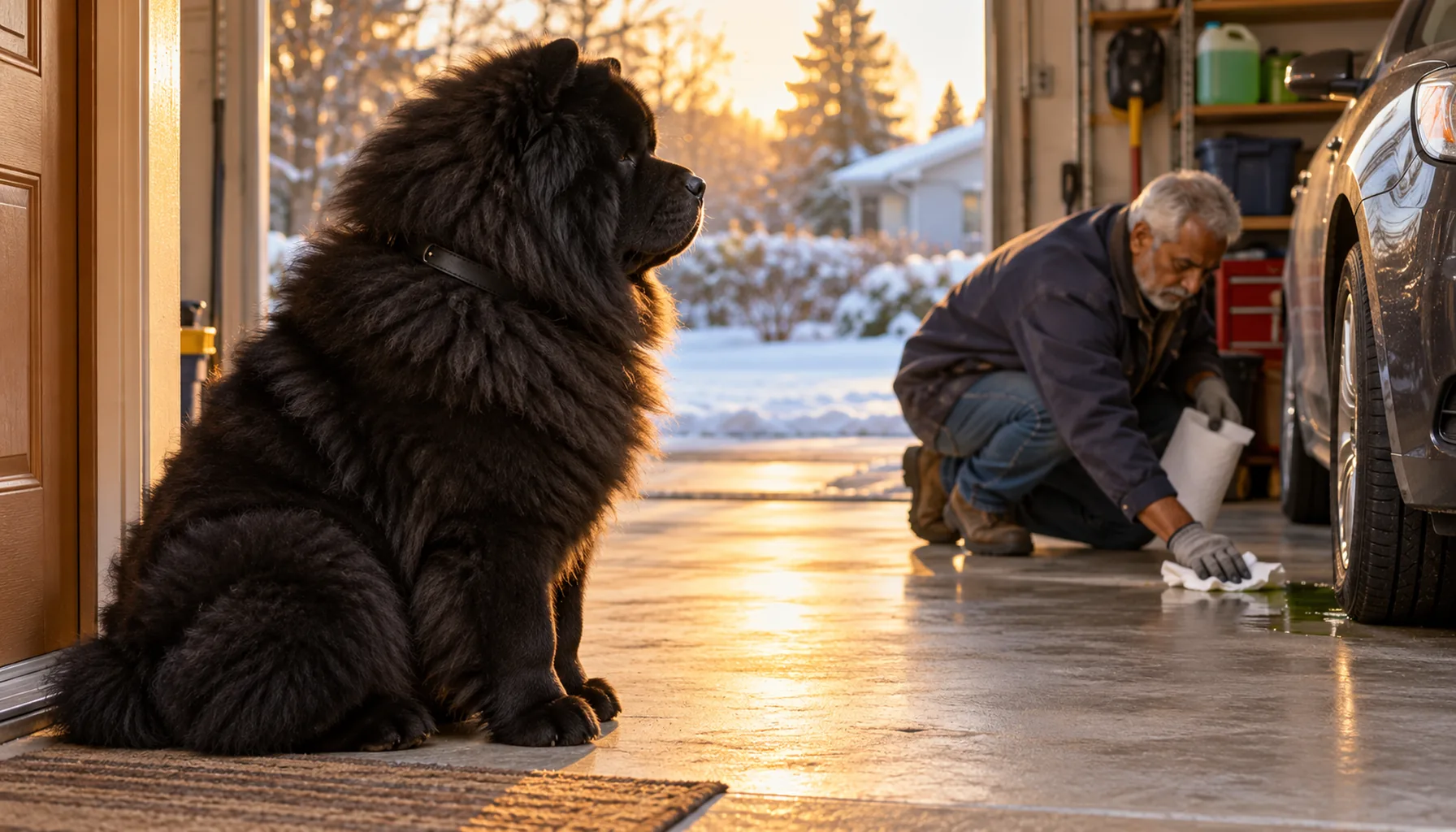
This is the one winter hazard that is never a wait-and-see. ASPCA says antifreeze is lethal to dogs, advises cleaning up spills thoroughly, and suggests choosing products that contain propylene glycol rather than ethylene glycol. VCA notes that some deicers contain ethylene glycol too.
The numbers are sobering. A retrospective study at a Canadian veterinary teaching hospital (Sauder et al., Canadian Veterinary Journal, 2026) reviewed 17 years of ethylene glycol cases. Of the 15 dogs, only 33 percent survived to discharge. Animals were often brought in more than 8 hours after signs began, every survivor arrived within 7 hours, and the authors concluded that late presentation made the antidote unsuccessful. They also saw more cases in summer than in other seasons, so antifreeze is a year-round risk, not just a winter one.
If you think your dog has licked or drunk antifreeze, or walked through a puddle and licked its paws, call an emergency vet or an animal poison control line immediately. Do not wait for signs. Do not try home remedies, and do not try to make your dog vomit unless a veterinarian tells you to. Bring the container or a photo of the label if you can.
When Should You Call Your Vet?
These thresholds come from the sources above and are deliberately conservative. If your vet tells you something different for your dog, follow your vet.
Call an emergency vet or animal poison control now if:
- your dog may have swallowed any antifreeze, or licked it off its paws
- your dog ate ice melt from a bag or a pile, rather than a few licks off its feet
Call your vet soon if:
- a paw is bleeding, swollen or cracked deeply, or your dog keeps licking or limping
- your dog vomits or seems unwell after licking salty paws
- a paw, toe or pad looks pale, discolored or painful after a cold outing; frostbite can take days to show, which we cover in how cold is too cold for dogs
If an icy walk ends with a dog slipping a collar or bolting from a door, our guide to what to do in the first 24 hours after a dog goes missing is worth reading now, before you need it.
Where PawPulse Lucero Fits
Paw care is a towel-and-a-bowl job, and no collar changes that.
What PawPulse Lucero adds is a longer view. It is designed to measure heart rate and breathing through fur without touching the skin (Kinetic sensing), and its motion sensor is designed to track activity and rest. Over weeks, that builds your dog's own baseline. If your dog is less active than usual on winter walks, that change can show up as a trend worth checking, starting with a look at the paws. It is context to share with your vet, not a diagnosis, and it does not detect poisoning.
PawPulse Lucero is also designed to share live location over cellular, plus a satellite-ready backup. Satellite availability depends on carrier support and certification.
Frequently Asked Questions
Can dogs walk on salted sidewalks?
Yes, most dogs can. A Tufts veterinarian wrote in 2018 that a few licks of salt usually cause at most an upset stomach, while eating a large amount needs the ER. Salt does dry and irritate paw pads, so wipe and dry your dog's paws after every walk and keep ice melt bags out of reach.
Are pet-safe ice melts really safe?
They are safer, not harmless. VCA lists potassium chloride, magnesium chloride and calcium magnesium acetate as pet-safer examples, and the ASPCA recommends pet-friendly ice melts while warning that ice melts can be dangerous if eaten. Use them on your own steps, but still wipe paws and store the bag securely.
How do you get ice balls out of dog paws?
Do not pull them out. Hold the paw in your hand or dip it in lukewarm water until the ice melts, then dry thoroughly between the toes. Tufts notes dogs with ice balls often prance, shift their weight and bite at their feet. Some owners keep the fur between the pads short through winter.
How do you clean dog paws after winter walks?
Keep a towel and a bowl of lukewarm water by the door. Wipe each pad and between the toes to remove salt and chemicals, as the ASPCA and VCA advise, then dry well. Check for cracks or cuts. A vet-approved paw protectant before walks helps; wipe off petroleum jelly afterward so your dog does not lick it.
What should I do if my dog drinks antifreeze?
Call an emergency vet or animal poison control immediately, even if your dog seems fine. Ethylene glycol antifreeze is lethal to dogs, and a 2026 Canadian study found only a third of poisoned dogs survived, often because they arrived late. Do not try home remedies or make your dog vomit unless a vet tells you to.
Do dogs need boots in the snow?
Not all dogs, but boots help dogs with sensitive or cracked pads, dogs that collect ice balls, and long walks on salted streets. A small 2022 Vienna study found boots changed how five Labradors loaded their paws, especially with just one boot. Fit them well, use all four, and practice indoors first.
Learn more about PawPulse Lucero, the smart dog collar designed to measure heart rate and breathing through fur without touching the skin, with activity and rest trends and context to share with your vet. Reservation holders get their Lucero first. We will confirm your delivery month when the Kickstarter is announced.
-- The PawPulse Team