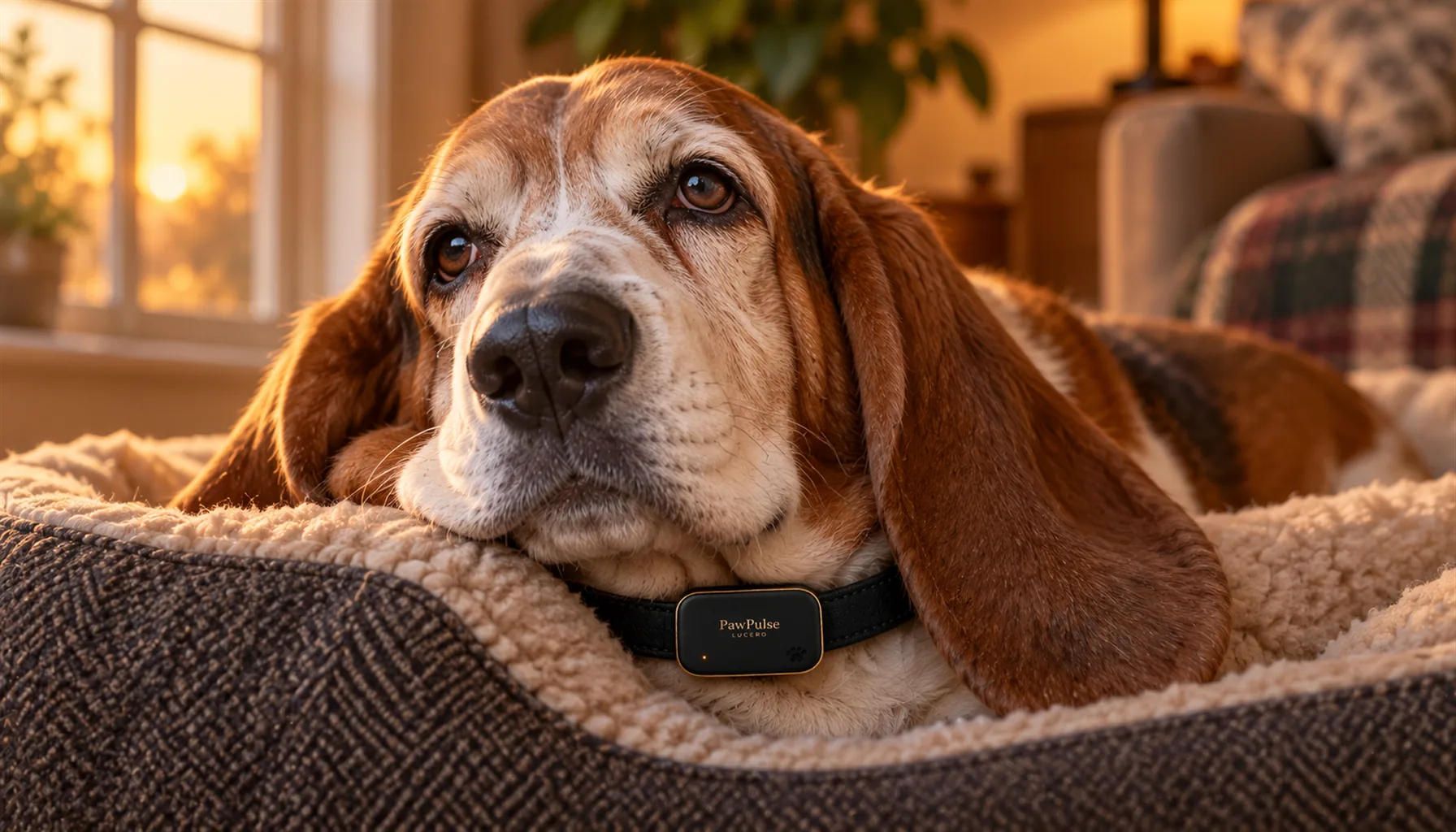
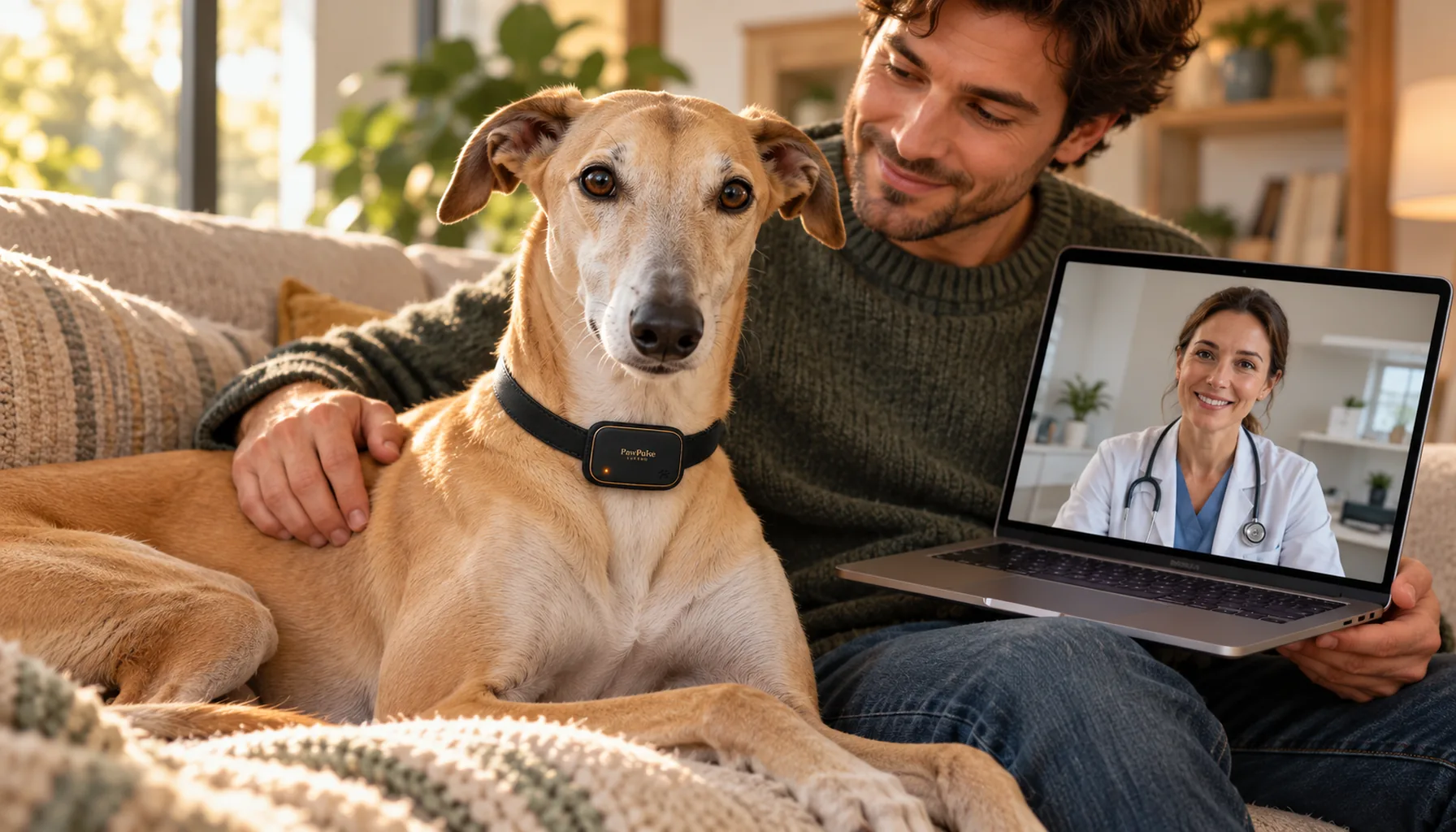
Key takeaway: The global pet wearable market was valued at $4.16 billion in 2025 and is projected to reach $13.12 billion by 2034 at a 13.6% CAGR. This growth isn't driven by novelty. It's driven by pet owners who've experienced the gap between annual vet visits and want continuous visibility into their pet's health, the same way human wearables transformed personal health awareness.
The Fitbit Moment for Pets Is Happening Right Now
Ten years ago, most people thought strapping a sensor to your wrist to count steps was silly. Now, 30% of Americans wear a fitness tracker or smartwatch, and the data from those devices has fundamentally changed how people think about their own health. Resting heart rate trends, sleep scores, and activity goals went from niche to normal.
The same shift is happening with pets, and it's accelerating.
According to Fortune Business Insights, the global pet wearable market is projected to grow from $4.16 billion in 2025 to $13.12 billion by 2034 at a 13.6% CAGR. The pet health monitoring segment specifically is growing even faster, at over 16% CAGR, as owners move beyond GPS tracking toward continuous health data.
This isn't a fad. It's a structural shift in how pet owners approach care, driven by three converging forces: rising vet costs, pet humanization, and the proven model of human wearable health monitoring.

Force 1: Vet Costs Are Rising Faster Than Inflation
The AVMA reports that veterinary prices have outpaced general inflation every year since 2019, and vet visits have declined roughly 3% as owners feel the squeeze. The average dog owner spends approximately $580 per year on veterinary care, with diagnostic testing accounting for a significant share.
This creates a painful dynamic: the owners who can least afford veterinary surprises are the ones most likely to delay care until problems become expensive emergencies. The reactive care cycle (wait for symptoms, rush to vet, pay for emergency diagnostics) is the most expensive way to own a pet.
Data-driven care inverts this cycle. Continuous monitoring surfaces subtle changes early, when intervention is simpler and cheaper, the case we make in why annual checkups are not enough. Catching conditions early can cost far less than treating them after they progress. A dental issue caught early averages $172 versus $532 when it advances.
Pet owners aren't adopting wearables because they love technology. They're adopting them because prevention is cheaper than crisis.
Force 2: Pet Humanization Has Changed the Standard of Care
The pet industry uses the term "humanization" to describe the trend of treating pets as family members rather than animals. It's the reason premium pet food outsells economy brands, pet insurance adoption has surged, and pet owners now spend more on healthcare per pet than at any point in history.
According to Global Market Insights, the global pet tech market reached $15.6 billion in 2025 and is projected to grow to $52.9 billion by 2035 at a 12% CAGR. The fastest-growing segment: health and fitness monitoring, at 16.7% CAGR.
This isn't surprising when you consider the parallel. Human wearable health monitoring is now a mainstream category worth billions. Pet owners who track their own heart rate, sleep, and activity want the same visibility for their dog or cat. The expectation has shifted from "take them to the vet when something seems wrong" to "know how they're doing all the time."
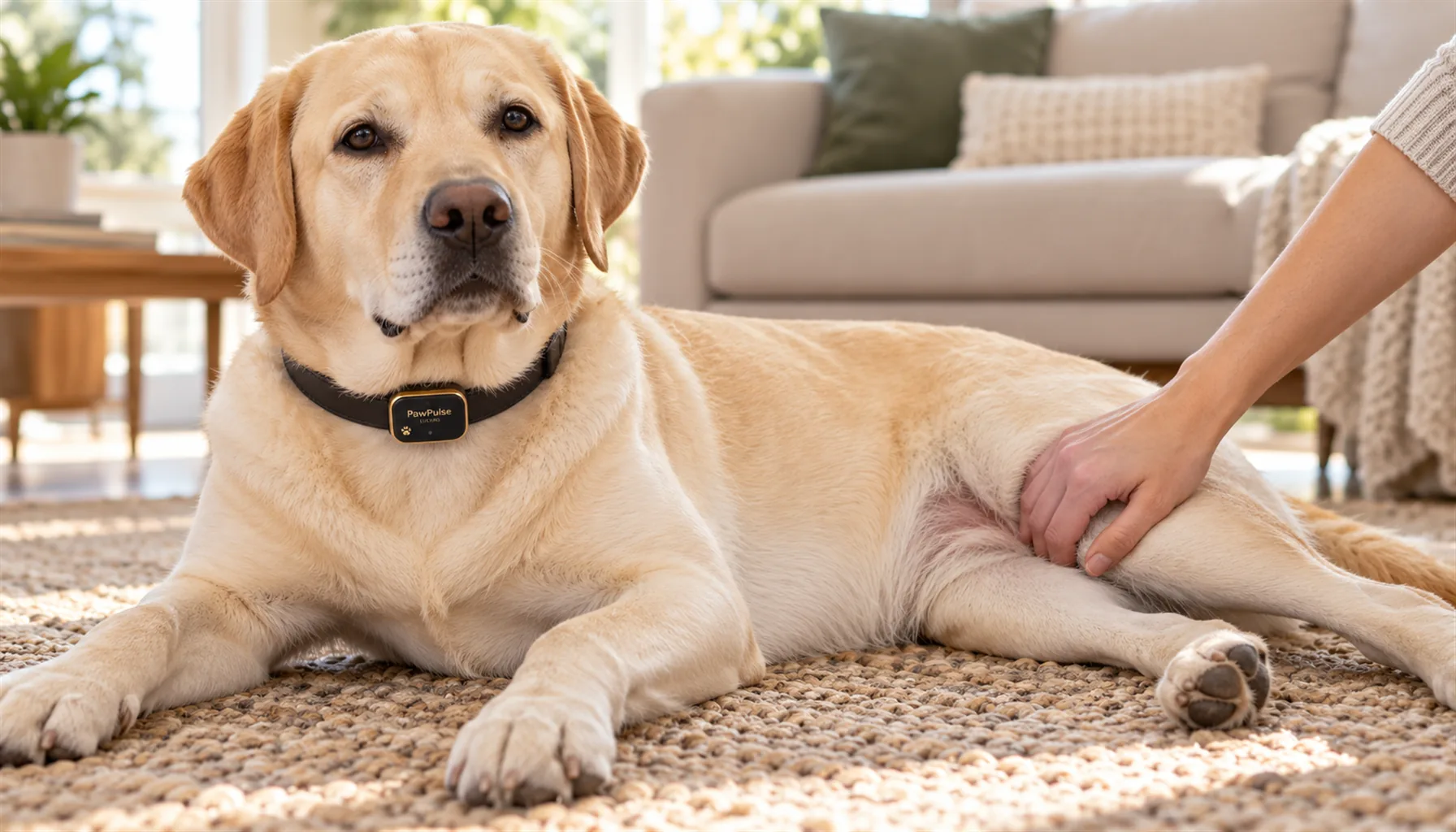
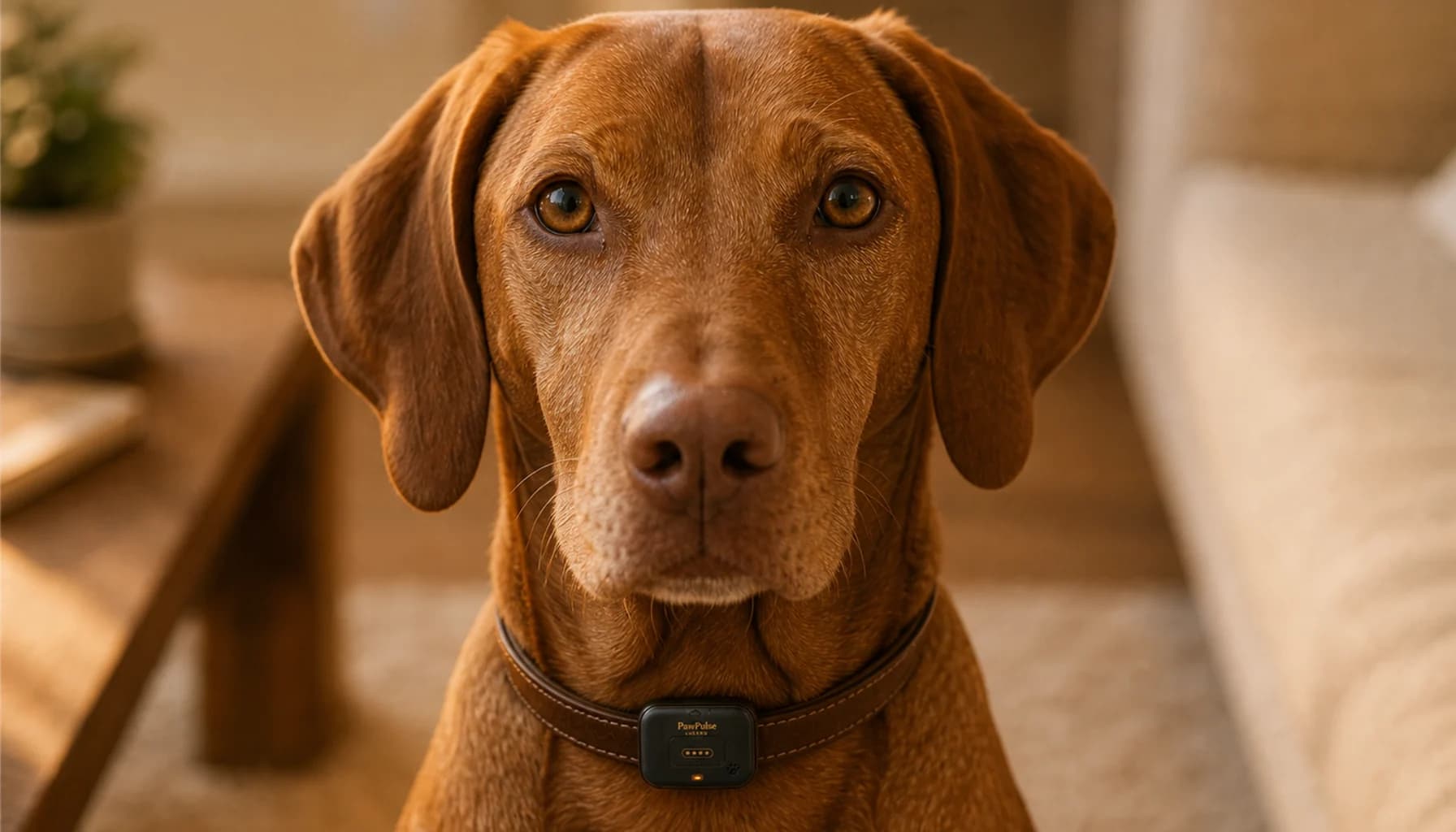
PawPulse is built for this expectation. The Lucero collar provides the same continuous health data that human wearable users take for granted: heart rate, HRV, respiratory rate, sleep quality, and activity, all tracked passively and compared against a personal baseline by Prism Insights AI.
Force 3: The Human Wearable Model Proved It Works
The most important validation for pet health wearables didn't come from the pet industry. It came from the human health industry.
Apple Watch, Fitbit, Garmin, and Oura proved that continuous health monitoring changes behavior. People who track their resting heart rate notice when it rises. People who track their sleep change their habits. People who see their HRV decline take rest days. The data creates a feedback loop that moves people from reactive ("I feel bad, time to see a doctor") to proactive ("my metrics shifted, I should pay attention").
The exact same model applies to pets. The difference: your pet can't read a dashboard. That's why PawPulse surfaces the insights for you and your veterinarian, rather than presenting raw numbers and hoping you interpret them correctly.
What Data-Driven Pet Care Actually Looks Like
This isn't about turning every pet owner into a data analyst. It's about having the information available when it matters.
The daily experience: You don't check the app every hour. The collar monitors passively. You get a notification only when something changes: "Resting heart rate has been elevated for 3 consecutive days. Review in app."
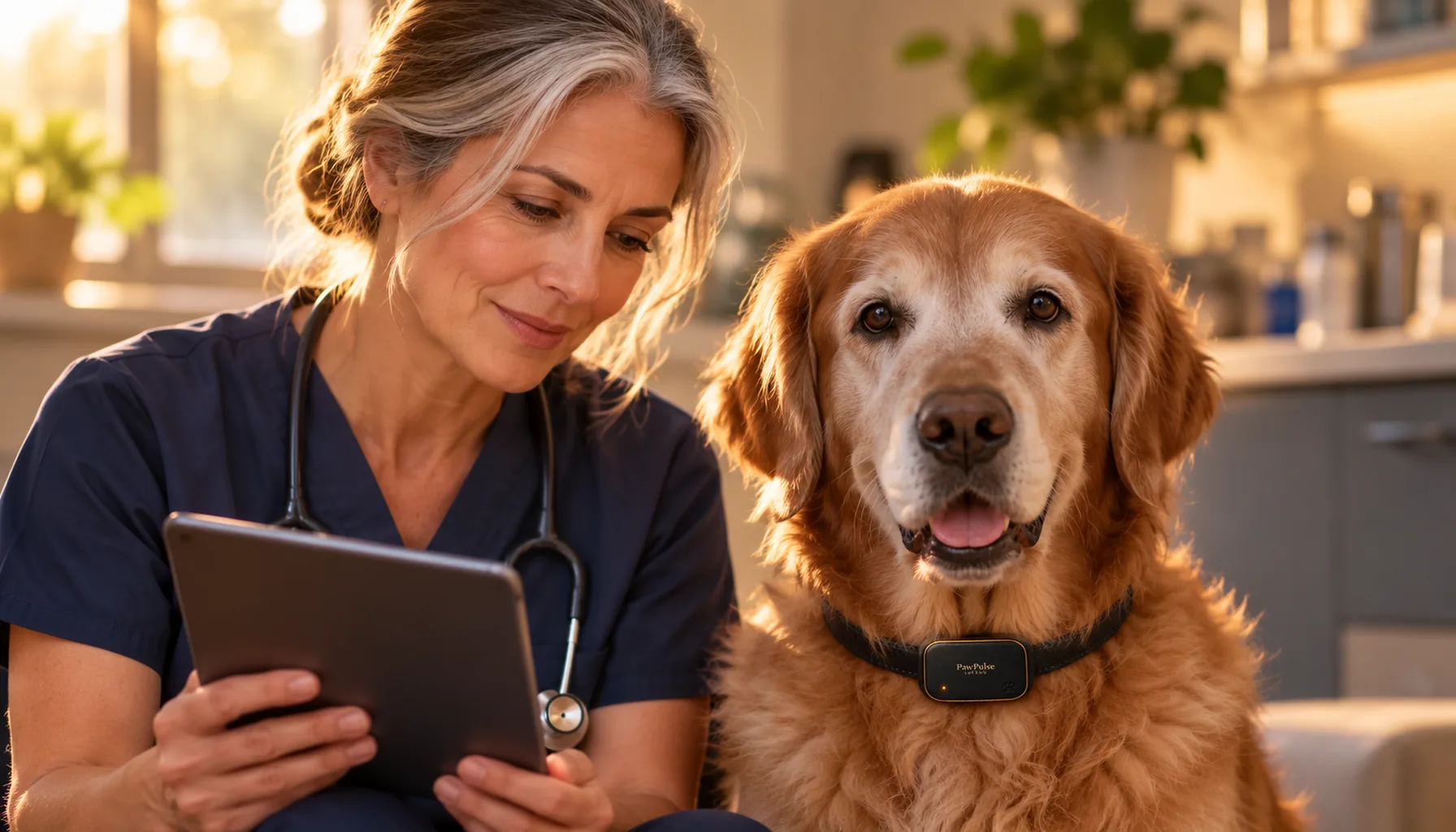
The vet visit experience: Instead of "he's been off lately," you walk in with weeks of trend data. Your vet sees exactly when metrics shifted, which ones moved together, and how the current readings compare to your pet's personal baseline.
The peace-of-mind experience: No notification means everything is within normal range. The collar is quietly confirming that your pet is fine. For most owners, this daily silence is the most valuable feature.
The intervention experience: For dogs with anxiety, Pulse Rhythm provides real-time calming when biometric patterns suggest rising stress. The collar doesn't just observe. It responds.
The Vet Side of the Equation
Data-driven care isn't just an owner trend. The veterinary profession is moving toward it too.
The veterinary telehealth market is projected to reach $802 million by 2030, growing at 19% CAGR. Approximately 52% of veterinary clinics now integrate IoT-based diagnostics into daily operations. The Coalition for Connected Veterinary Care, a 40+ organization alliance, is actively working to integrate remote monitoring into standard practice.
For veterinarians, continuous patient data solves a structural problem: they see each patient for 15 minutes a year, and they're expected to assess the animal's entire health status from that snapshot. Wearable data fills the gap between visits with objective, longitudinal information that makes every appointment more productive.
The PawPulse Vet Dashboard was designed specifically for this workflow: a clinical timeline that any vet can review in under a minute, with baseline comparisons, anomaly flags, and exportable reports that become part of the patient file.
What's Driving Adoption (It's Not Early Adopters Anymore)
The pet wearable market's first wave was enthusiasts: tech-forward pet owners who bought everything with a Bluetooth chip. The current wave is different. It's driven by practical need:
| Adopter Type | Why They Buy | What They Care About |
|---|
| Senior pet owners | Aging pet with increasing health concerns | Recovery tracking, trend data, vet-ready reports |
| Anxious pet parents | Separation anxiety, noise phobia, general worry | Pulse Rhythm, real-time alerts, peace of mind |
| Rural/outdoor owners | Off-grid coverage, lost pet prevention | Satellite backup, geofencing, GPS |
| Post-surgical households | Objective recovery monitoring | Heart rate trends, sleep quality, vet dashboard |
| Cost-conscious owners | Want to avoid surprise vet bills | Early trend visibility, fewer emergency visits |
| Multi-pet households | Different needs, can't watch everyone | Per-pet baselines, individual health profiles |
These aren't gadget buyers. They're problem solvers. The wearable is a tool, not a toy.

Cats Are the Fastest-Growing Segment (Quietly)
Dogs represent roughly 70% of the pet wearable market, but the cat segment is expanding rapidly. Cat owners face an even wider information gap than dog owners: fewer vet visits, more effective symptom hiding, and less observable behavior to work with.
For indoor cats specifically, GPS tracking adds minimal value. Health monitoring adds enormous value. Continuous tracking of heart rate, HRV, respiratory rate, and sleep quality through PawPulse's radar-based sensor gives cat owners visibility that was previously impossible without stressful, repeated clinic visits.
As the pet wearable market matures, expect cat-specific monitoring to become one of its fastest-growing subsegments.
The Shift Is Irreversible
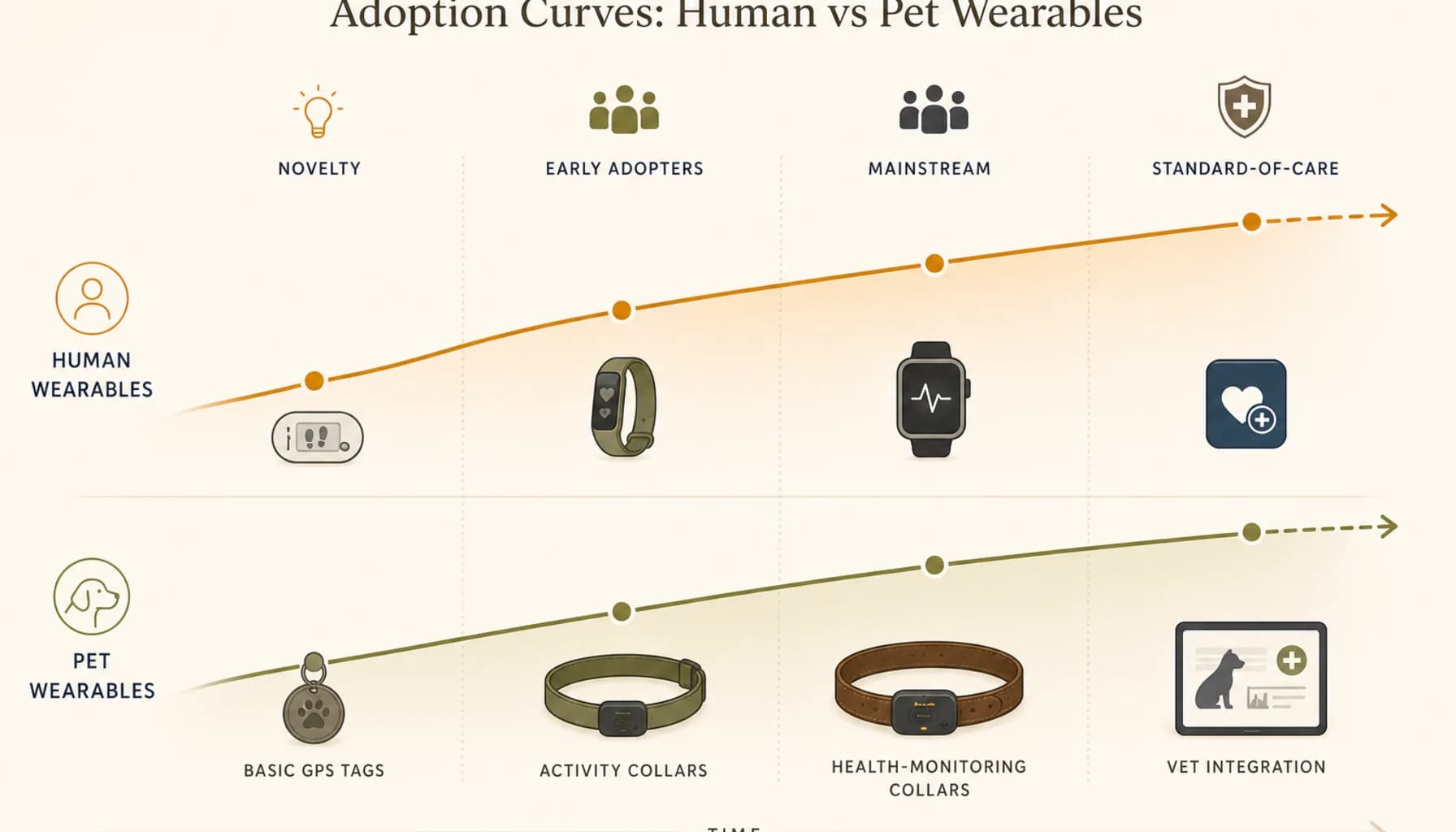
The move from reactive to proactive pet care follows the same adoption curve as human health wearables. Once an owner experiences the confidence of knowing their pet's health metrics are being tracked, going back to "wait and see" feels reckless.
The pet wearable market isn't growing because of marketing. It's growing because the product category solves a real problem that every pet owner has experienced: the gap between "seems fine" and "actually fine." Continuous data closes that gap.
The question isn't whether data-driven pet care will become the norm. It's how quickly. For the owners and veterinarians already using the Lucero collar and similar tools, the answer is: it already is.
Frequently Asked Questions
How big is the pet wearable market?
The global pet wearable market was valued at $4.16 billion in 2025 and is projected to reach $13.12 billion by 2034 at a 13.6% CAGR. The health and fitness monitoring segment is growing even faster, at over 16% CAGR, as owners move beyond GPS tracking toward continuous health data.
Why are pet owners adopting health wearables?
Three converging forces: rising veterinary costs that make prevention cheaper than emergency care, pet humanization that has raised the standard of care to match human expectations, and the proven model of human wearable health monitoring that demonstrated continuous data changes health behavior and outcomes.
Is data-driven pet care just for tech-savvy owners?
No. PawPulse is designed so owners don't need to interpret data. The collar monitors passively, Prism Insights AI compares against personal baselines, and the app surfaces insights only when something changes. The daily experience for most owners is simply: no notification means everything is normal.
Are veterinarians adopting wearable data?
Yes. Approximately 52% of veterinary clinics now integrate IoT-based diagnostics into daily operations. The veterinary telehealth market is projected to reach $802 million by 2030. The Coalition for Connected Veterinary Care (40+ organizations) is working to integrate remote monitoring into standard veterinary practice.
What's driving pet wearable growth beyond GPS?
The market is shifting from location tracking (a solved problem using commodity components) to health monitoring (a harder problem requiring radar sensing, AI baselines, and trustworthy data). Owners who already know where their dog is now want to know how their dog is. Health monitoring is the faster-growing segment because it addresses a more valuable unmet need.
Do pet health wearables work for cats?
Yes, and the cat segment is one of the fastest-growing in the market. Indoor cats don't benefit from GPS, but they benefit significantly from continuous health monitoring. PawPulse's radar sensor tracks heart rate, HRV, respiratory rate, and sleep on all cat breeds regardless of coat type, giving cat owners health visibility that was previously unavailable without frequent vet visits.
Learn more about PawPulse Lucero and the PawPulse Vet Dashboard, built for the owners and clinics treating pet care like a data conversation instead of a guessing game.
Related reading: what your vet wishes you would bring to every appointment and 5 things your dog's sleep reveals about their health.
-- The PawPulse Team