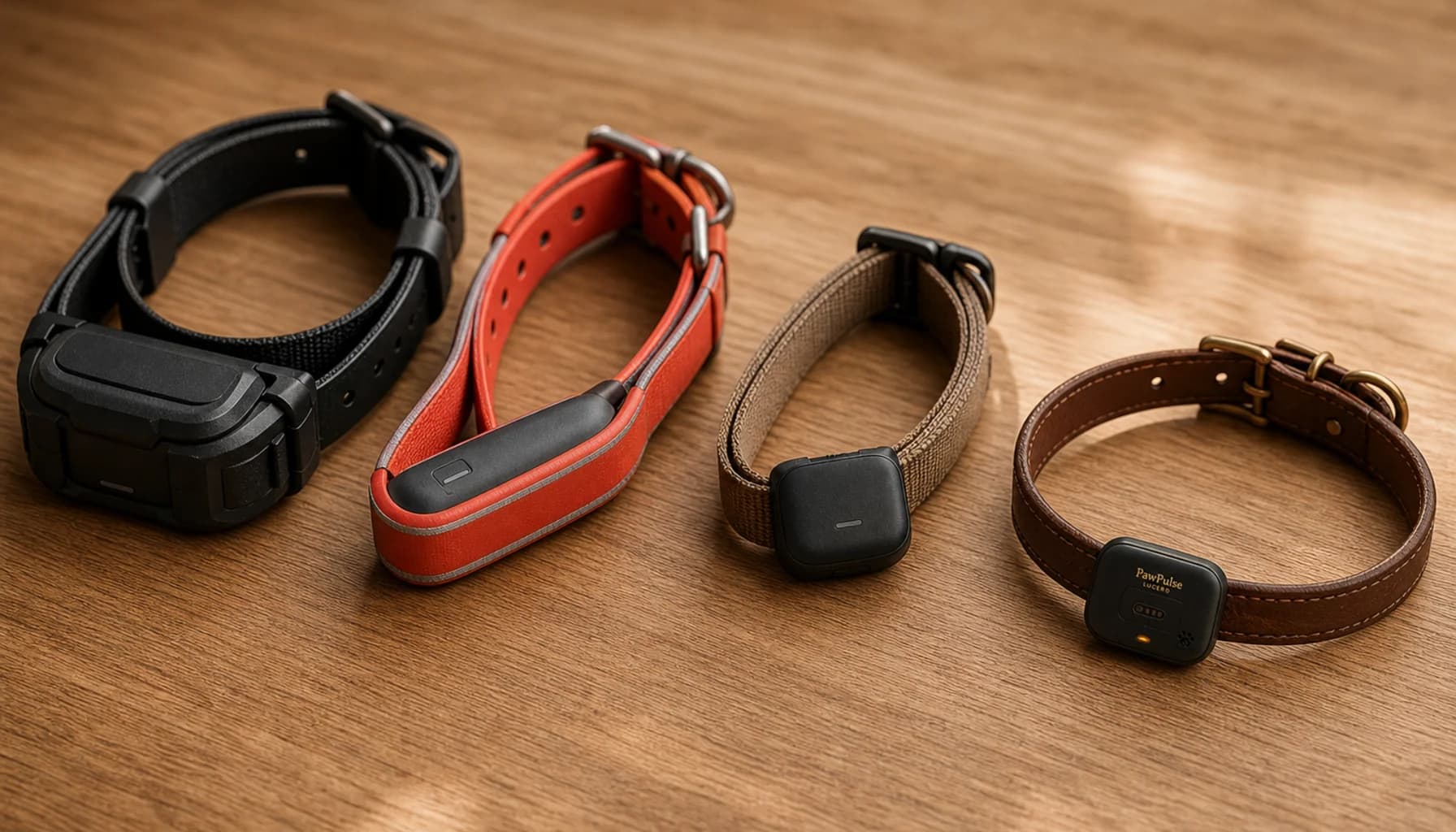
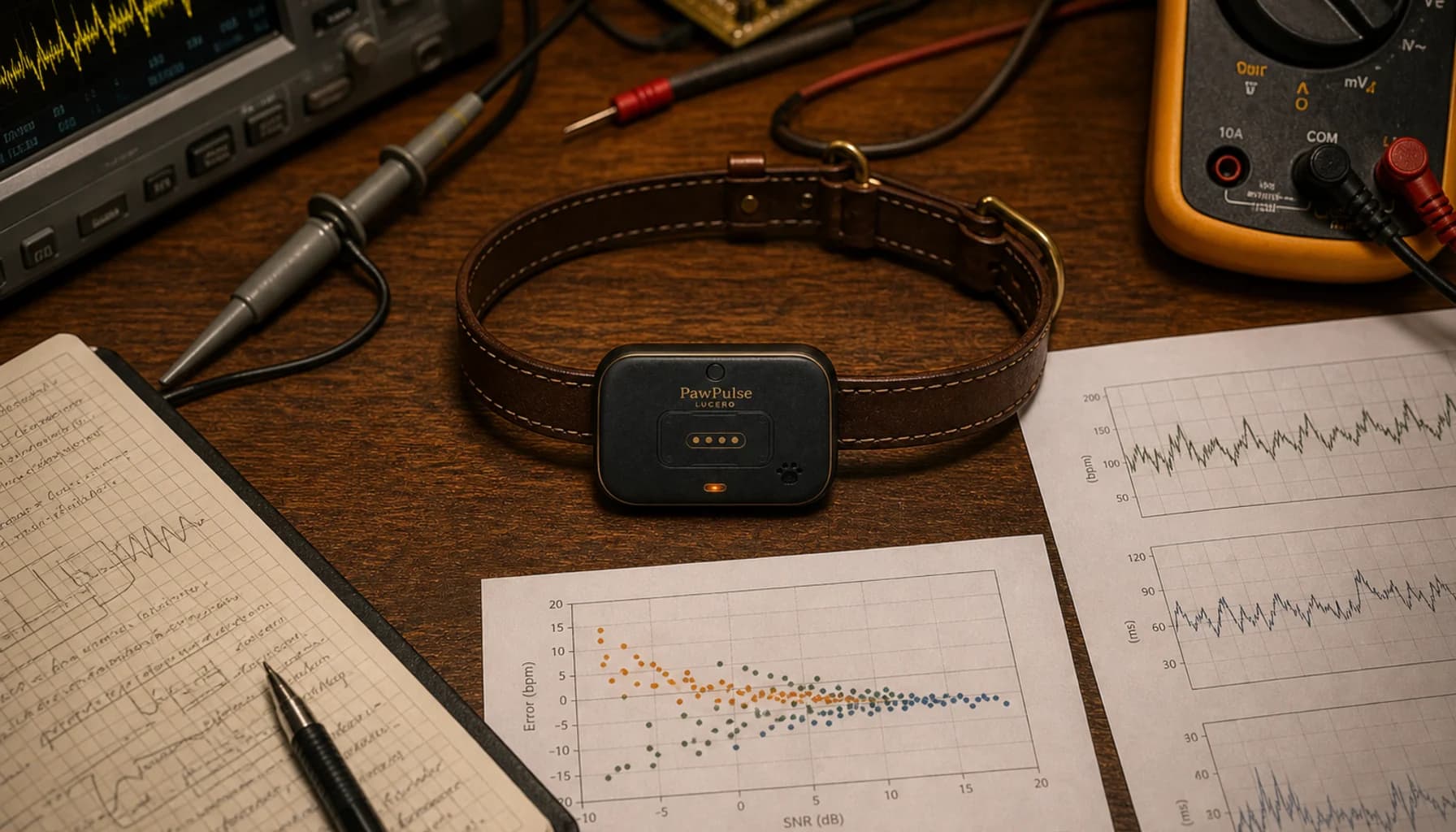
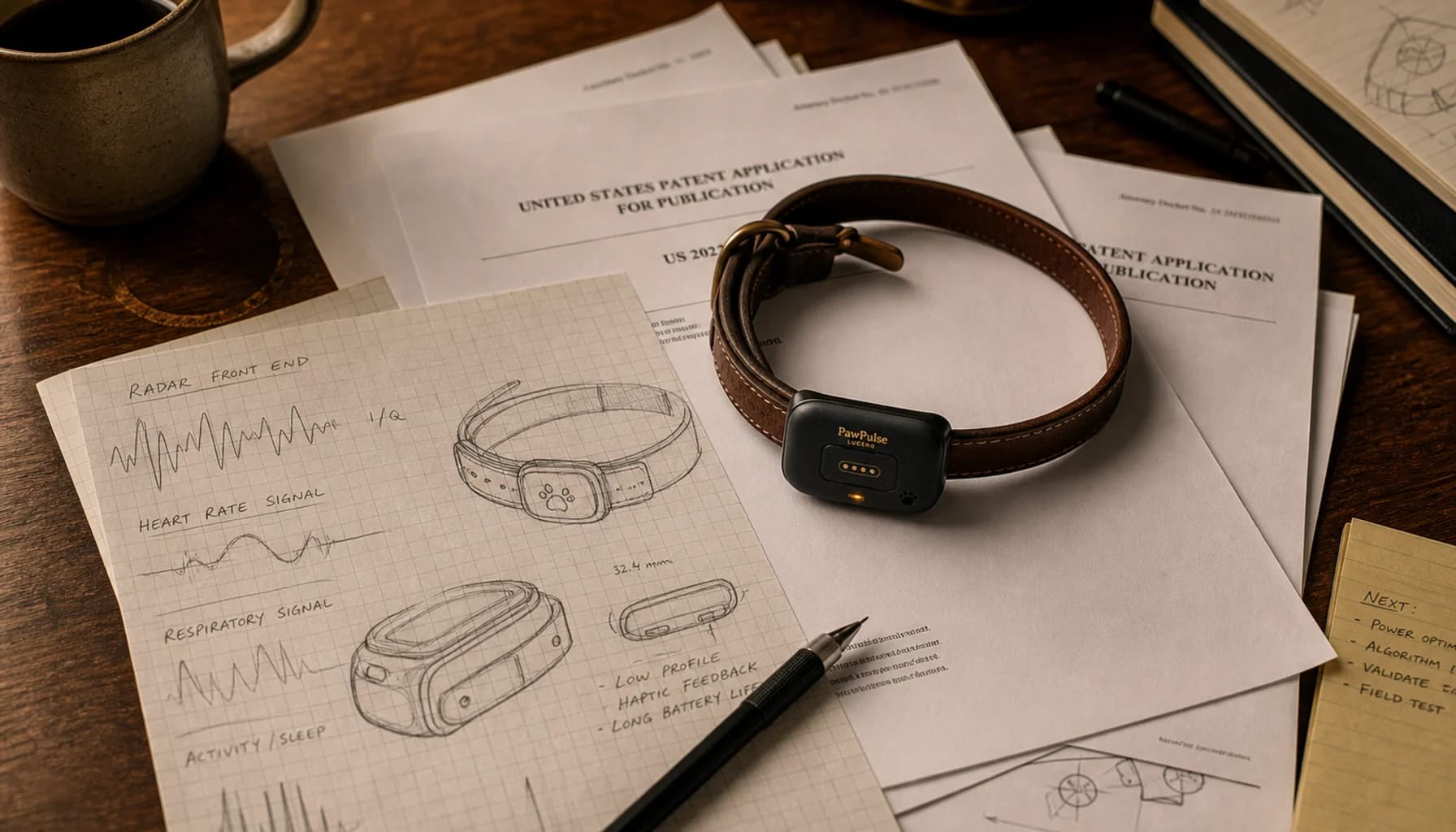
Key takeaway: The smart collar market is dominated by GPS trackers that answer one question: "Where is my dog?" But the question most pet owners actually need answered is "How is my dog?" Location tracking is solved technology. Health monitoring, haptic calming, and AI-driven baselines are the features that change outcomes for pets, and most collars don't offer any of them.
You Know Where Your Dog Is. Do You Know How They Are?
There's a good chance you're reading this because you already own a smart collar, or you're shopping for one. And if you search "best smart dog collar," you'll find dozens of options that all do roughly the same thing: GPS tracking, activity counting, maybe a virtual fence.
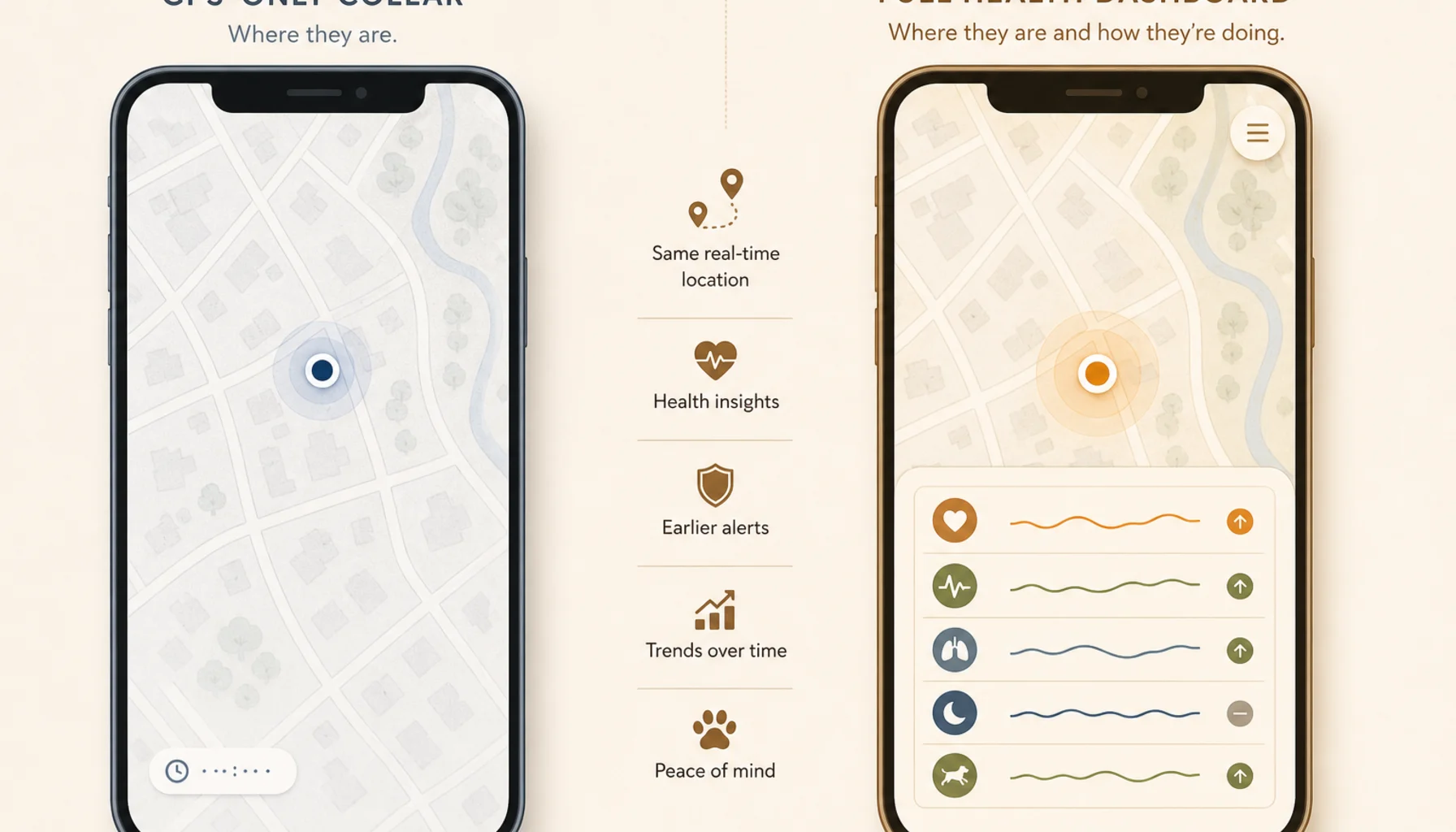
They'll tell you your dog is in the backyard. They'll tell you your dog walked 3 miles today. They'll send you an alert if your dog leaves a geofence.
What they won't tell you: your dog's resting heart rate has been climbing for 10 days. Their heart rate variability has dropped. Their sleep is fragmenting. Something may be changing, and you have no idea because your collar only tracks location.
This isn't a criticism of GPS tracking. Knowing where your dog is matters. But the smart collar category has spent a decade refining location and ignoring health, and the result is a market full of products that solve the easy problem and skip the hard one.
What Most Smart Collars Actually Include
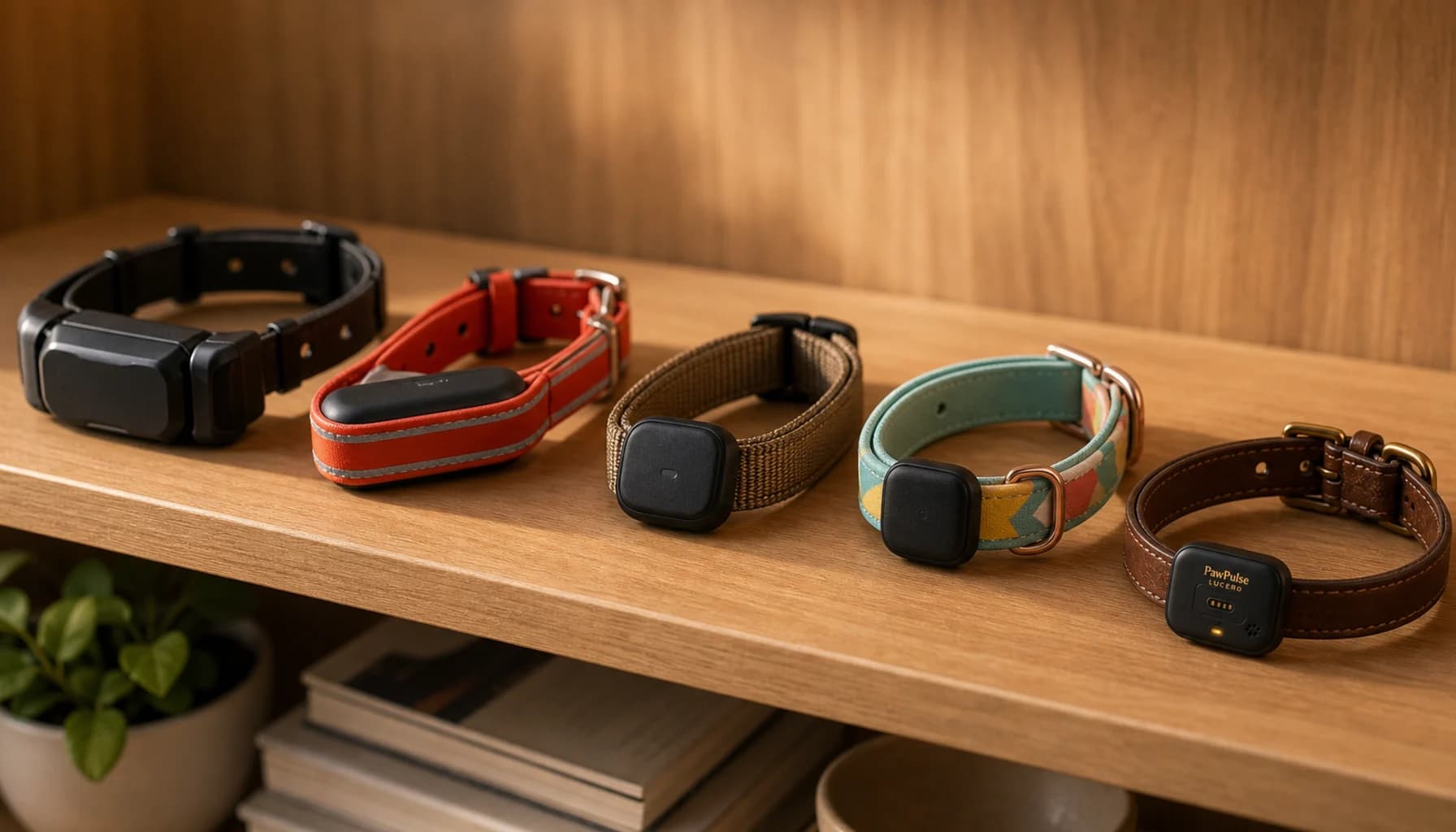
Here's what the typical "smart collar" feature set looks like across the market's top sellers:
| Feature | Most GPS Collars | PawPulse Lucero |
|---|
| GPS location tracking | Yes | Yes |
| Geofencing | Yes | Yes (cellular + satellite) |
| Activity tracking | Accelerometer-based | Accelerometer + radar-based context |
| Heart rate monitoring | No (or PPG, unreliable on furred breeds) | Yes (radar, on every coat) |
| Respiratory rate | No | Yes |
| Heart rate variability (HRV) | No | Yes |
| Sleep quality tracking | Basic (motion-based) | Advanced (respiratory pattern analysis) |
| AI adaptive baselines | No | Yes (Prism Insights) |
| Haptic calming | No | Yes (Pulse Rhythm, 3 modes) |
| Satellite backup | No | Yes (NTN satellite-ready backup) |
| Vet Dashboard | No | Yes |
| Battery life | 1-5 days | 30+ days |
The left column describes a location tracker with a basic fitness feature bolted on. The right column describes a health monitoring platform that also tracks location.
The price difference between these two categories is real. The capability difference is enormous. According to Fortune Business Insights, the pet wearable market is projected to reach $13.12 billion by 2034, with health monitoring growing faster than any other segment at over 16% CAGR, confirming that the market is moving beyond GPS.
The Three Problems GPS-Only Collars Can't Solve
1. Health Visibility Between Vet Visits
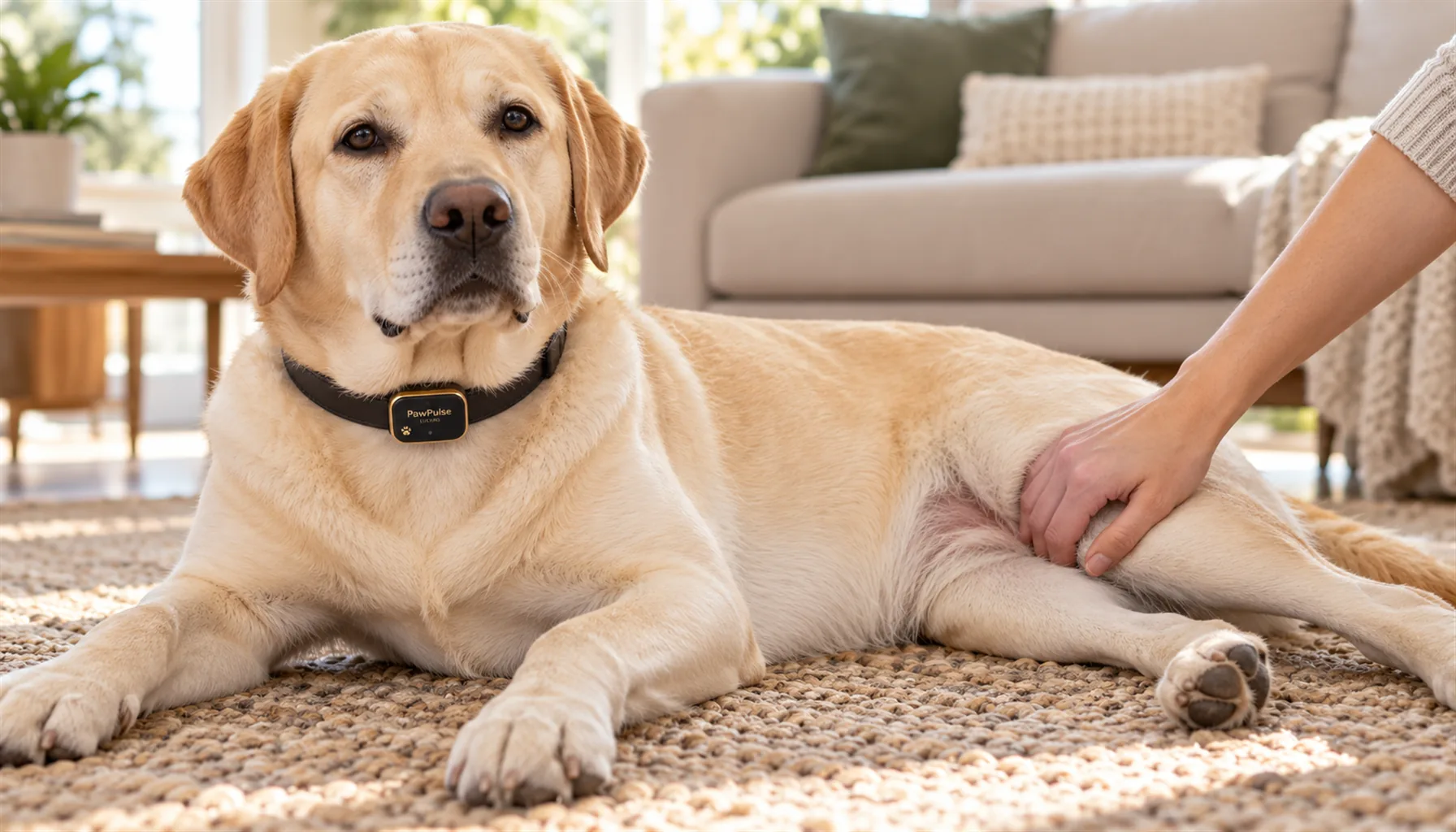
Your dog sees a vet once a year. That's a 365-day gap where conditions develop, progress, and compound without anyone noticing. As we covered in our post on the myth of the healthy dog, up to 1 in 5 apparently healthy dogs have hidden abnormalities on wellness screening.
A GPS collar contributes zero data to this gap. It knows your dog walked 4 miles on Tuesday. It doesn't know that your dog's resting heart rate during sleep has been trending upward for two weeks. That trend is the kind of information that, shared with your vet, can lead to earlier conversations about conditions that would otherwise go unnoticed until symptoms appear.
2. Anxiety and Stress Intervention
Roughly 20-40% of dogs suffer from anxiety-related disorders. According to the AVMA, the cost of prevention is consistently a fraction of treating conditions once they advance. A GPS collar can tell you your dog paced around the house for 3 hours while you were gone. It can't do anything about it.
PawPulse's Pulse Rhythm provides real-time intervention: when the collar's biometric monitoring surfaces patterns consistent with rising anxiety, it delivers a conditioned haptic calming response automatically. The collar doesn't just observe the problem. It responds to it.
No GPS-only collar offers anything comparable.
3. Objective Recovery and Trend Data for Veterinarians
When you visit the vet with a GPS collar's data, you bring step counts and a geofence log. That's not useful for diagnosis.
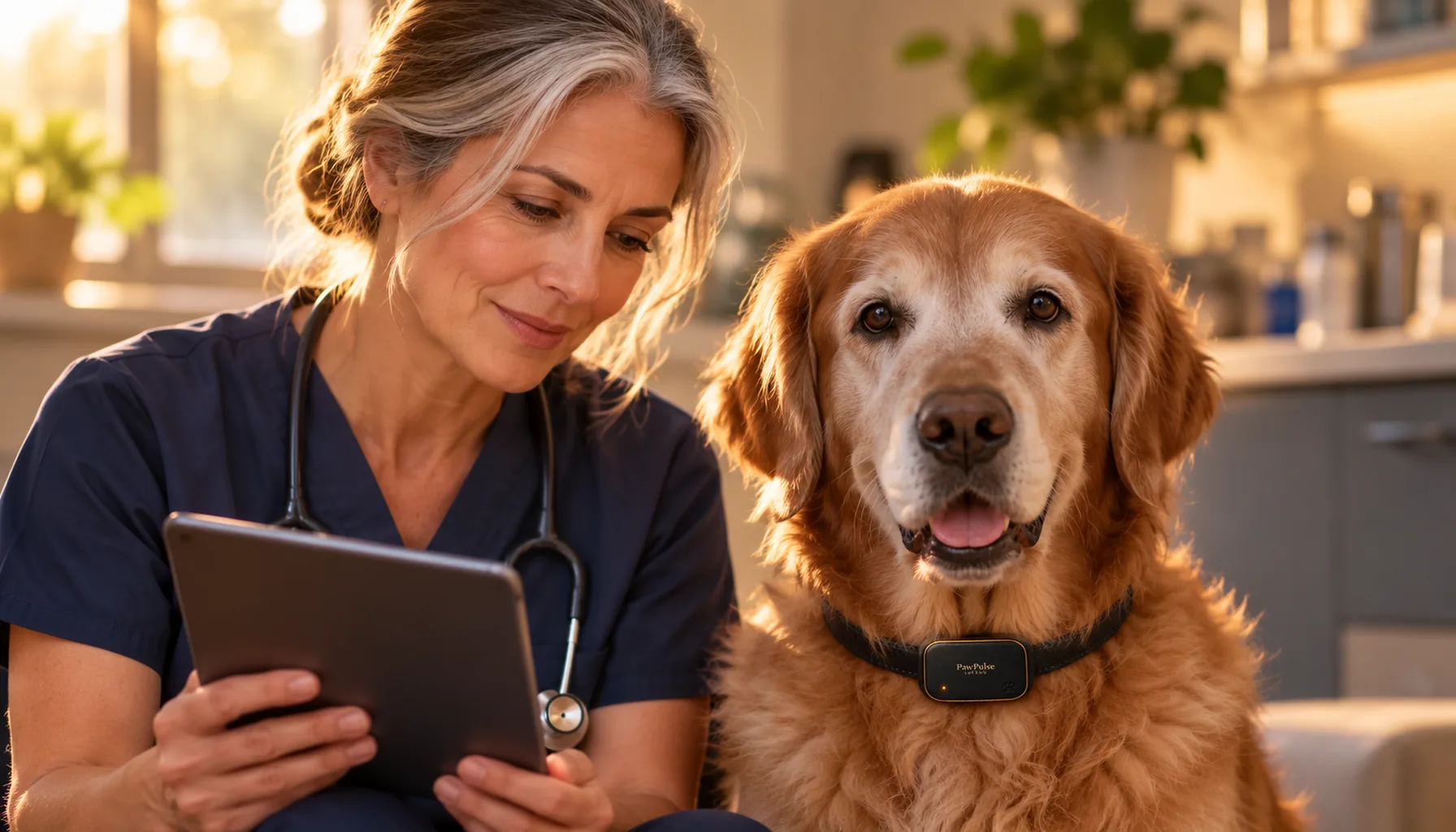
When you visit with PawPulse's Vet Dashboard data, you bring weeks of heart rate trends, HRV patterns, respiratory data, sleep analysis, and activity levels, all compared against your pet's individual baseline. That's the difference between "he's been a bit off" and "here's exactly what changed and when."
Published research consistently shows that objective health data improves diagnostic accuracy and reduces unnecessary testing. A Tufts University review noted that while activity trackers are becoming popular, most consumer devices have not been clinically validated, and the data they produce has limited veterinary utility.
Why the Market Is Stuck on GPS
The answer is economics, not technology.
GPS tracking is commodity technology. The modules are cheap, the firmware is well-documented, and the development cycle is short. A startup can build a GPS collar in months using off-the-shelf components and compete on price, design, and marketing. The barrier to entry is low, which is why there are dozens of nearly identical GPS collars on the market.
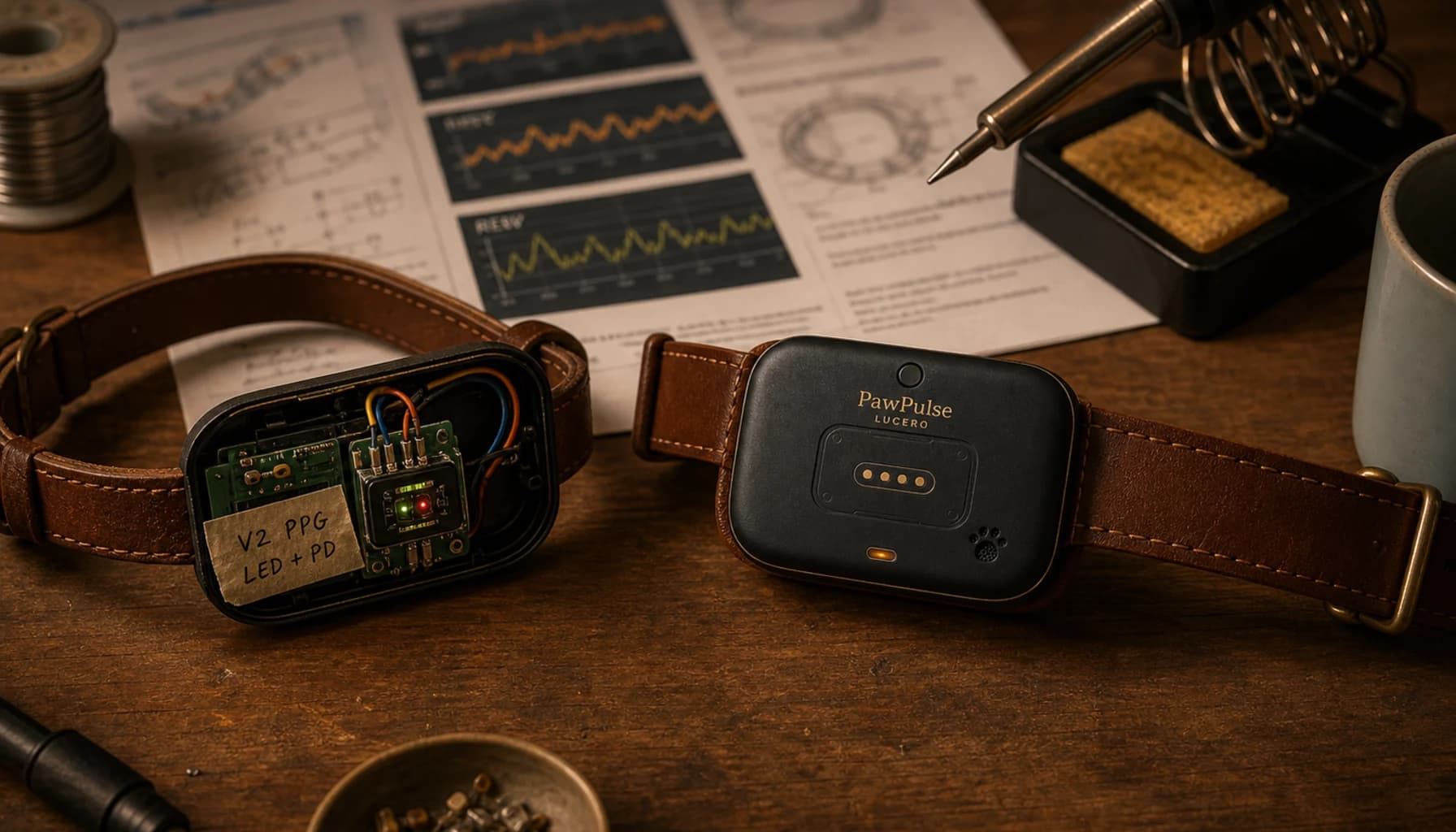
Health monitoring requires different engineering entirely. Reading vitals reliably on a furred pet requires radar (not PPG, which fails on most breeds). Building adaptive baselines requires machine learning infrastructure. Haptic calming requires a conditioning protocol backed by behavioral science. Satellite connectivity requires integrating NTN into the modem stack. Each of these is a multi-month (or multi-year) engineering effort.
Most companies choose the path that gets a product to market fastest. As we explained in our look at the radar sensing we built instead, we chose the path that gets a product to market that actually works.
What to Ask Before You Buy Any Smart Collar
If you're evaluating collars, these five questions separate location trackers from health monitors:
"Does it read heart rate through fur?" If the answer involves PPG, caveats about coat type, or shaving, the sensor doesn't work on most dogs. If the answer is radar-based, it works on all breeds.
"Does it build a personal baseline for my specific pet?" Generic breed-average thresholds miss subtle individual changes. A real health monitor learns what's normal for your pet and surfaces deviations from that personal baseline.
"Does it work without cell service?" If there's no satellite backup, the collar goes offline in exactly the environments where dogs are most likely to run. Cellular-only is a fair-weather feature.
"What can my vet do with the data?" Step counts and location logs have minimal veterinary utility. Heart rate trends, HRV, respiratory data, and sleep patterns are the metrics that change diagnostic conversations.
"What happens when my dog is anxious?" A GPS collar observes. Does the collar intervene? Pulse Rhythm provides real-time calming through conditioned haptic patterns. Most collars offer nothing.
The Lucero Difference, in Plain Terms
PawPulse didn't build a better GPS tracker. We built a health monitoring platform that also tracks location. The GPS is a feature. The health monitoring is the product.
Every capability in the Lucero collar, from radar sensing to Pulse Rhythm to satellite connectivity to Prism Insights AI, exists because we asked: "What does this pet actually need?" not "What's the cheapest feature set we can ship?"
The answer to the first question is always more expensive, takes longer to build, and requires harder engineering. It also produces a product that genuinely changes outcomes for pets and the people who love them.
Cats Don't Need a GPS. They Need a Health Monitor.
For indoor cats (the majority of pet cats), location tracking is almost irrelevant. Your cat is in the house. You know this. A GPS collar adds nothing.
What indoor cat owners do need is health visibility. Cats hide illness better than any domestic animal, visit the vet less frequently, and are diagnosed at later stages of disease. Continuous monitoring of heart rate, HRV, respiratory rate, and sleep quality gives cat owners the data their vet needs, without the stressful clinic visits that cats hate and owners dread.
PawPulse's collar provides that monitoring for cats of all breeds, using radar sensing that works regardless of coat type or collar fit tolerance.

Frequently Asked Questions
What's the difference between a GPS collar and a health monitoring collar?
A GPS collar tracks your pet's location using satellite positioning and transmits it via cellular. A health monitoring collar like PawPulse additionally measures heart rate, respiratory rate, HRV, sleep quality, and activity through a radar sensor, builds personal health baselines using AI, and offers features like haptic calming and satellite backup. GPS answers "where." Health monitoring answers "how."
Do GPS collars monitor my dog's health?
Most do not. Some include basic accelerometer-based activity tracking (step counts, calories), but this measures movement, not physiological health. A few include PPG optical heart rate sensors, but published research shows these fail on the majority of furred breeds. Reliable health monitoring requires sensors designed for animals, not repurposed from human fitness trackers.
Is PawPulse more expensive than a basic GPS collar?
Yes. PawPulse includes radar-based health sensing, AI baselines, haptic calming, satellite connectivity, and a Vet Dashboard, none of which exist in commodity GPS collars. The price reflects fundamentally different technology and engineering investment. The relevant comparison isn't cost per collar but value per insight.
Why don't more smart collars include health monitoring?
Health monitoring requires sensors that work on every coat (radar, not PPG), machine learning for adaptive baselines, haptic calming hardware, and satellite integration for off-grid connectivity. Each is a significant engineering and R&D investment. GPS tracking uses commodity components with low development costs, which is why the market is flooded with GPS-only options.
Do indoor cats need a smart collar?
Indoor cats don't need GPS tracking, but they benefit significantly from health monitoring. Cats hide illness more effectively than dogs and visit the vet less frequently. Continuous monitoring of heart rate, HRV, respiratory rate, and sleep quality surfaces subtle changes that would otherwise go unnoticed between annual (or less frequent) vet visits.
Can PawPulse replace my existing GPS collar?
Yes. The Lucero collar includes GPS tracking, geofencing, and satellite backup alongside its health monitoring features. It combines location tracking and health monitoring in a single device with a single subscription, replacing both a GPS collar and whatever manual health observation you currently rely on.
Learn more about PawPulse Lucero, the smart dog collar that combines contactless radar health monitoring, GPS with satellite-ready backup, and built-in Pulse Rhythm - the full stack location-only collars cannot match.
Related reading: why GPS collars fail in off-grid dead zones and why most GPS collars fail when you need them most.
-- The PawPulse Team