
Key takeaway: Dogs instinctively mask pain, making post-surgical recovery one of the hardest periods for owners to assess accurately. Published research shows that heart rate, cortisol levels, and behavioral pain scores are all elevated after surgery, but owners frequently misjudge their pet's pain level based on observation alone. Continuous vital sign monitoring gives both owners and veterinarians objective recovery data instead of guesswork.
"He Seems Fine" Is Not a Recovery Assessment
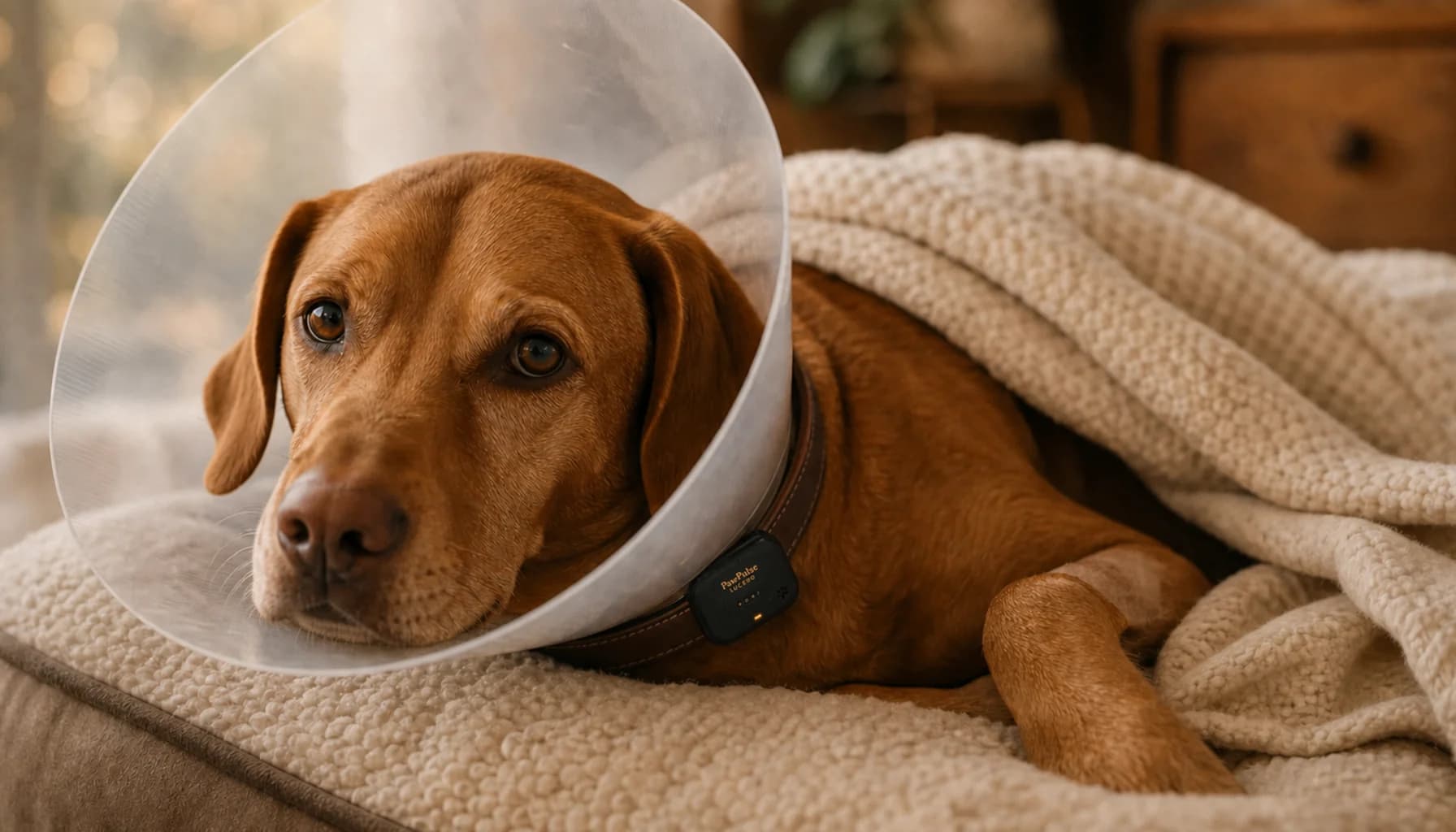
Your dog just had surgery. The vet sent you home with pain medication, an e-collar, and a list of care instructions. You're watching your dog closely, and honestly, they seem okay. Eating a little. Moving around. Not crying.
So you think: he's fine. Recovery is going well.
But here's the problem: dogs don't show pain the way humans expect them to. A dog that's walking around, eating, and not whimpering can still be in significant pain. They're not being brave. They're following millions of years of evolutionary programming that says "don't look vulnerable."
Research published in PMC on stress biomarkers in surgical dogs found that heart rate and cortisol levels were significantly elevated in dogs assessed with high pain scores, even when those dogs appeared behaviorally quiet. The pain was real. It just wasn't visible.
This is why post-surgical recovery is one of the most valuable use cases for continuous health monitoring. You can't reliably assess what you can't see. But you can track it.
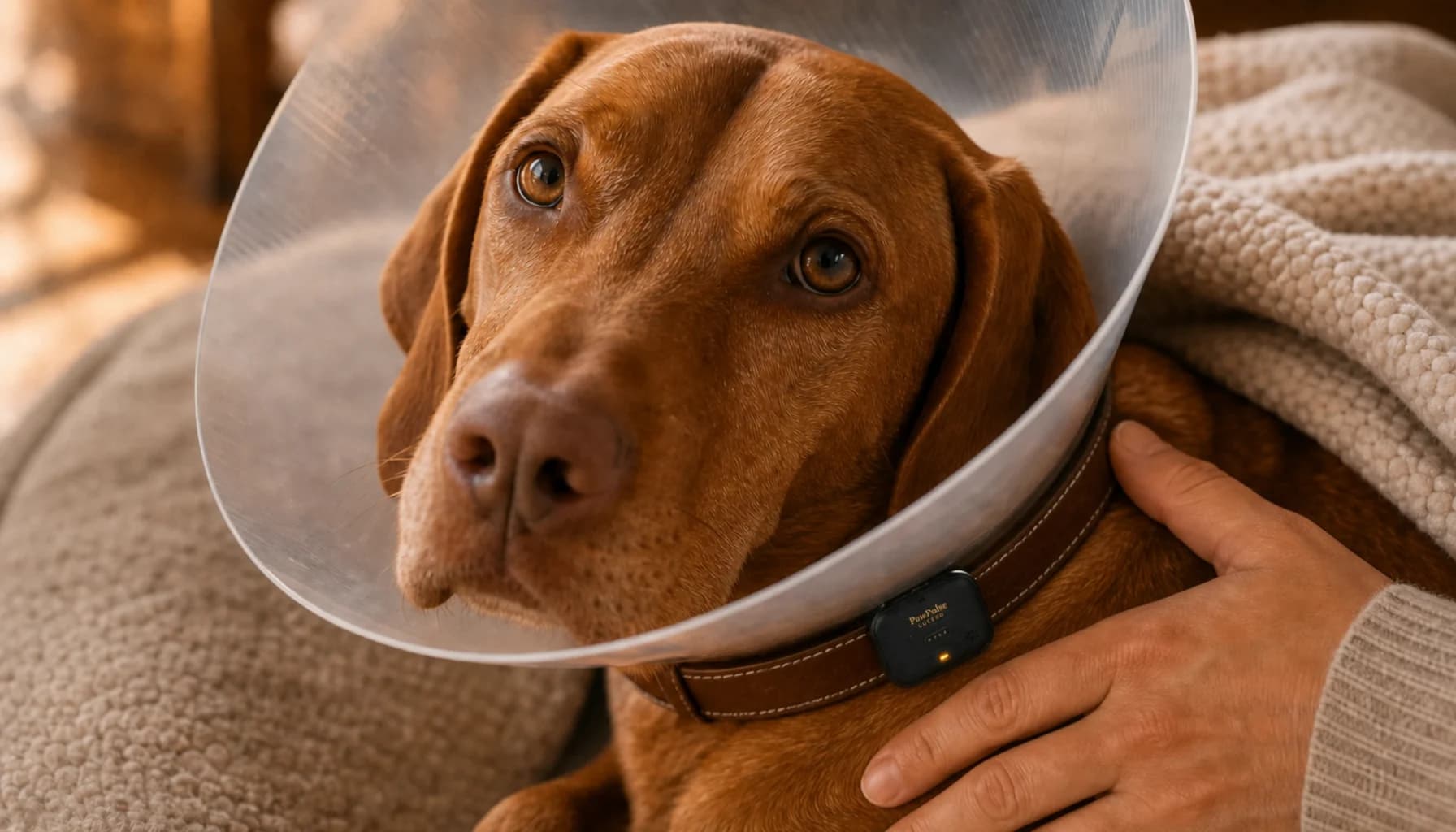
The Signs Owners Miss (and the Signs They Misread)
What Pain Actually Looks Like in Dogs
The Glasgow Composite Measure Pain Scale (CMPS-SF), the validated tool veterinarians use to assess acute pain in dogs, evaluates behaviors most owners wouldn't connect to pain:
| Sign | What Owners Think | What It May Actually Indicate |
|---|---|---|
| Quieter than usual | "He's just tired from anesthesia" | Pain-induced withdrawal |
| Restless, can't settle | "He's uncomfortable with the cone" | Unable to find a position that doesn't hurt |
| Not lying on the incision side | "He just prefers this side" | Guarding the surgical site |
| Eating less but still eating | "Appetite is coming back" | Eating through pain (survival instinct) |
| Panting at rest | "The room is warm" | Physiological stress response to pain |
| Lip licking, yawning | "He's sleepy" | Stress signals associated with discomfort |
The challenge: every one of these signs has an innocent explanation. Without objective data, even attentive owners default to the interpretation that feels most reassuring.
What the Data Shows Instead
Continuous monitoring cuts through the ambiguity. Instead of guessing whether your dog's panting is heat or pain, you can see whether their resting heart rate is elevated above their pre-surgical baseline. Instead of wondering if restlessness is the cone or the incision, you can see whether their sleep is fragmented compared to their normal pattern.
A study published in PMC on post-operative pain and owner interaction found that validated pain scores decreased measurably after positive owner interaction, confirming that pain in post-surgical dogs is real, quantifiable, and responsive to intervention. The key word is "quantifiable." If pain shows up in measurable physiological signals, trend data can show you when something has changed, and give your vet more to go on than "he seems off."
How PawPulse Tracks Recovery (Without You Playing Vet)
The Lucero collar doesn't stop working during recovery. In fact, the post-surgical period is when its data becomes most valuable.
The Recovery Curve
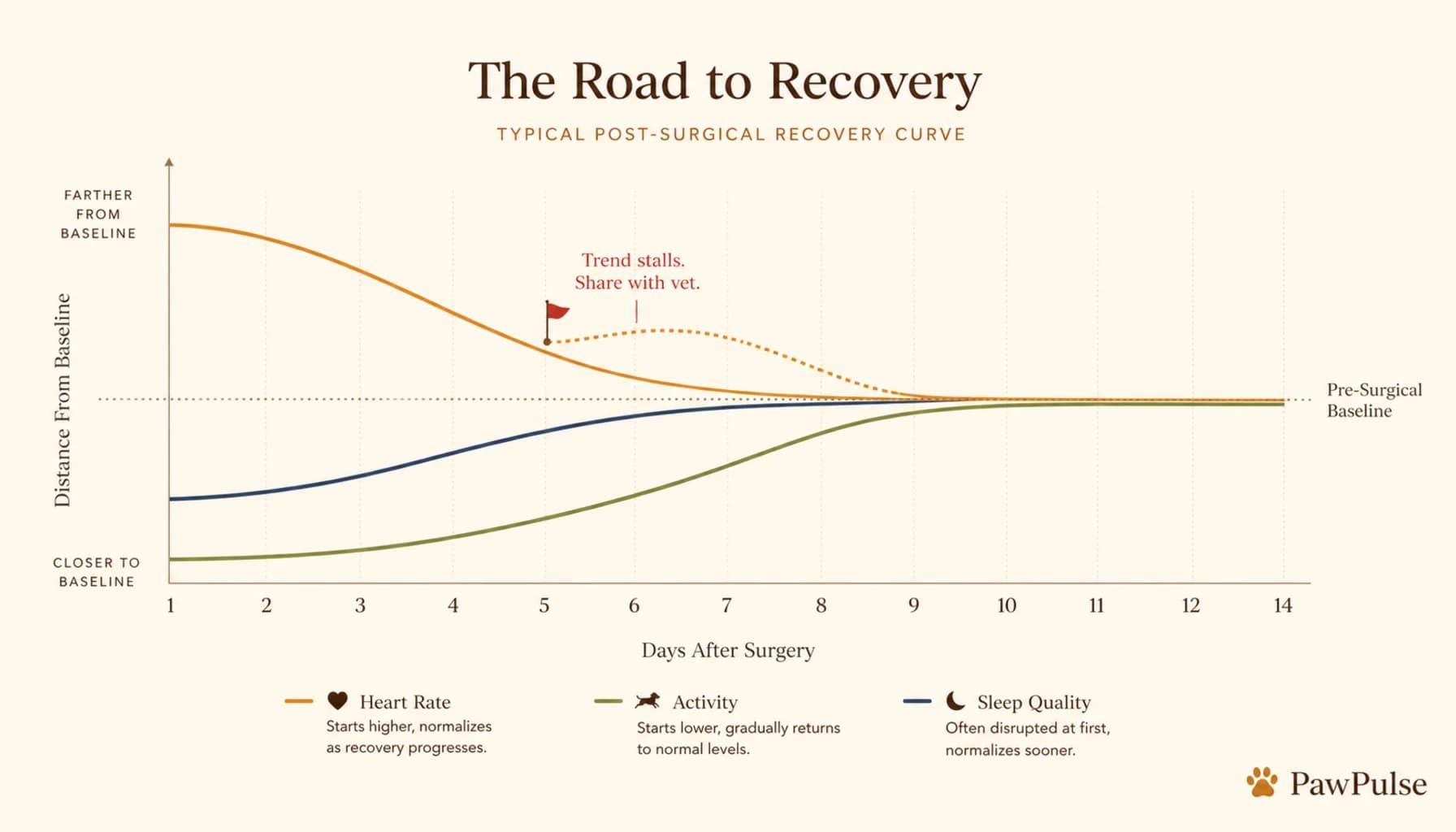
Here's what a healthy post-surgical recovery looks like in PawPulse data:
Day 1-2: Heart rate elevated above baseline (expected). Sleep increased. Activity significantly reduced. HRV suppressed. These are normal post-surgical readings. Prism Insights AI knows to expect deviation from baseline during this period.
Day 3-7: Heart rate begins trending back toward baseline. Sleep normalizes. Activity gradually increases. HRV starts recovering. This is the recovery curve, and it should move in one direction: toward baseline.
Day 7-14: Metrics approach or return to pre-surgical baseline. Activity levels rebuild. Sleep quality improves. The recovery is on track.
Red flag pattern: Heart rate plateaus or rises again after initial improvement. HRV fails to recover or declines. Sleep remains fragmented. Activity doesn't increase on schedule. These patterns may correlate with complications like infection, unmanaged pain, or inflammation, and they're worth sharing with your veterinarian immediately.
What You See in the App
You don't need to interpret raw heart rate numbers. The app shows your pet's recovery trajectory compared to their pre-surgical baseline. Green means trending toward normal. Amber means the recovery has stalled or slowed. Red means something has moved in the wrong direction for multiple days.
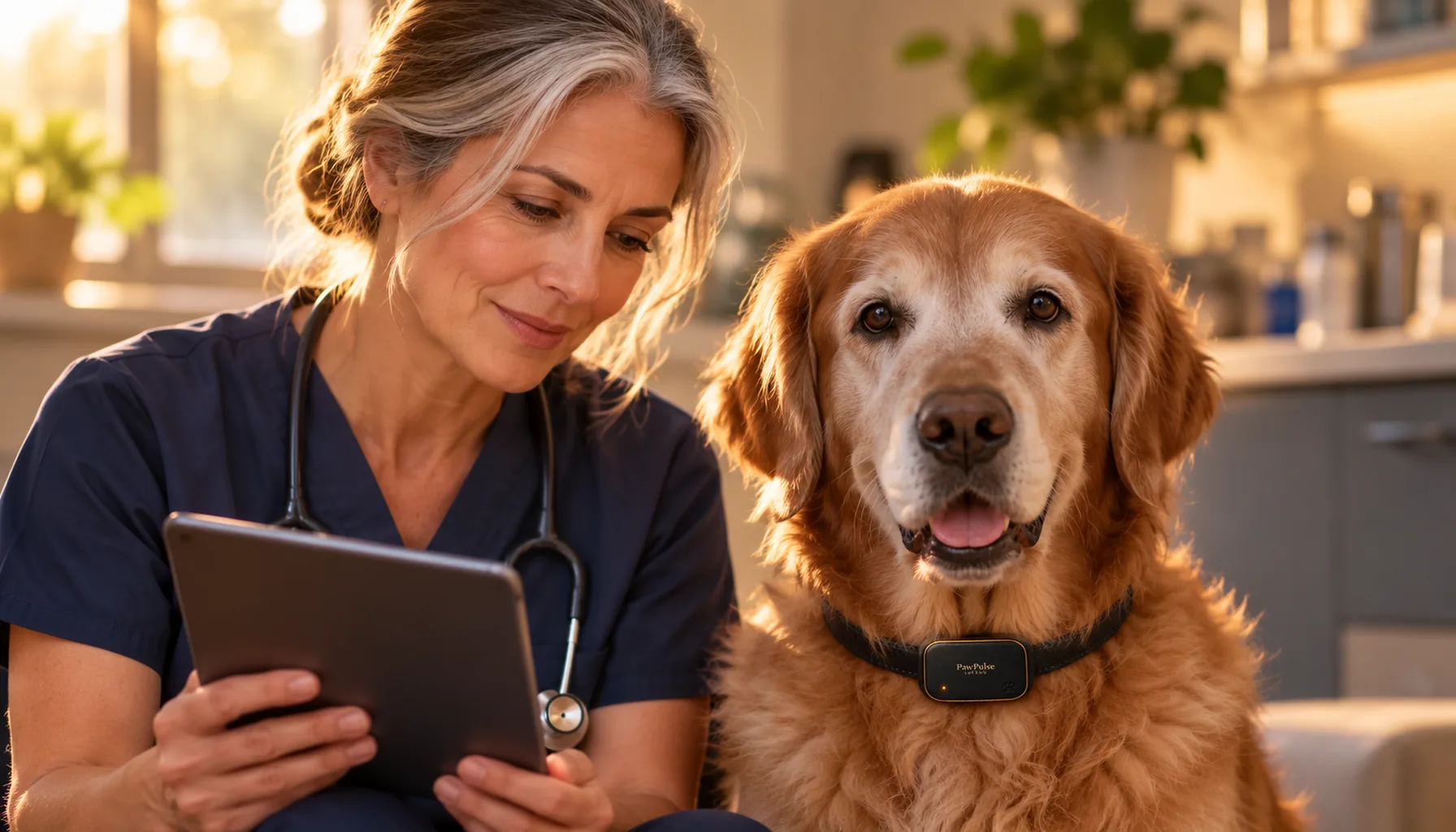
Your vet sees the same data through the Vet Dashboard, which means follow-up conversations shift from "I think he's getting better" to "his resting heart rate returned to baseline on day 9, and his activity levels are at 80% of pre-surgical normal."